Echo Scan Prices for a Cavalier Heart
Discovering your beloved Cavalier King Charles Spaniel needs a cardiac ultrasound can be incredibly stressful, not just emotionally, but financially. Many owners feel overwhelmed and unprepared for the diagnostic costs involved in identifying and managing heart conditions like Mitral Valve Disease, often without a clear understanding of what an echo scan entails or how much it truly costs. This guide will walk you through everything you need to know about echocardiogram prices for your Cavalier's heart, helping you navigate these crucial medical decisions with confidence and clarity.
What is a Cavalier Heart Echo Scan and Why is it Needed?
When your vet first mentions a heart murmur, it’s natural to feel a wave of panic. For Cavalier King Charles Spaniels, in particular, heart issues are unfortunately all too common, with a significant percentage developing a murmur by a young age. An echocardiogram, often simply called an "echo scan," is the gold standard diagnostic tool for understanding the true nature and severity of these murmurs. It's much more than just a stethoscope listening; it’s a detailed look inside your dog's heart.
What an Echocardiogram Reveals
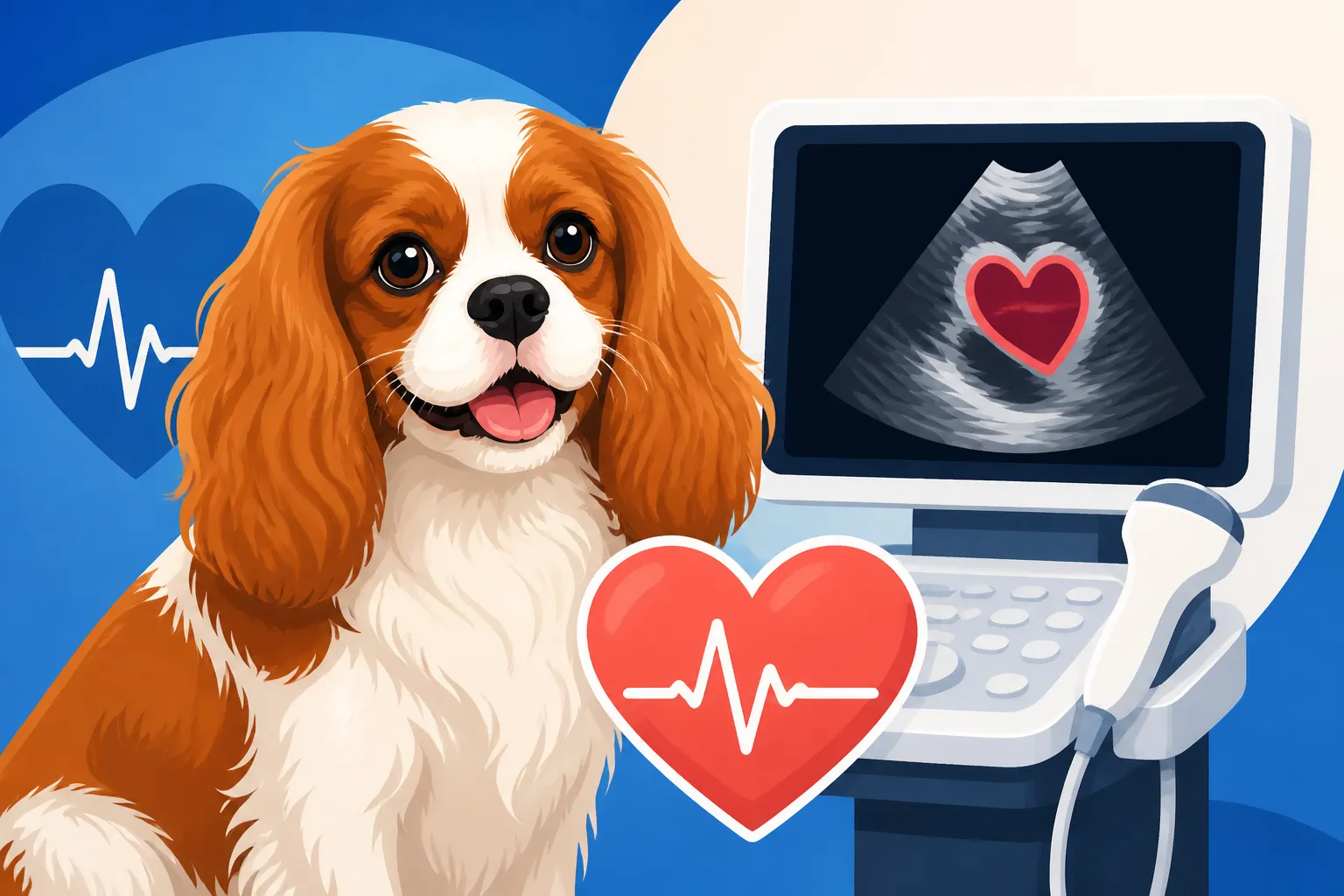
Imagine being able to see your Cavalier's heart beating in real-time, its valves opening and closing, and the blood flowing through its chambers. That's exactly what an echocardiogram offers. This non-invasive ultrasound imaging technique provides dynamic, detailed images of the heart's structure and function. Specifically, for Cavaliers, who are notoriously prone to Mitral Valve Disease in the Cavalier King Charles Spaniel, an echo scan is critical. It allows a veterinary cardiologist to measure the size of the heart chambers, assess the thickness of the heart walls, and most importantly, visualize the mitral valve. They can see if the valve leaflets are degenerating, how much blood is leaking backward (known as regurgitation), and whether the heart is enlarging to compensate for the extra workload. This information is absolutely vital because it helps determine the stage of heart disease, guiding treatment decisions.
Without an echo, a heart murmur is just a sound; with it, you gain a clear picture of the underlying problem. It helps distinguish between an innocent murmur and one indicative of progressive disease, which is particularly important given that Why Half of Cavaliers Have a Murmur by Five is a sad reality for the breed. The cardiologist can measure parameters like left atrial size, left ventricular diameter, and ejection fraction – all numbers that tell a story about how well the heart is coping.
When Your Cavalier Needs One
The most common reason for an echo scan is the detection of a heart murmur by your primary veterinarian during a routine check-up. While some murmurs in puppies can be benign, a persistent or newly developed murmur in an adult Cavalier almost always warrants further investigation. If your dog exhibits symptoms like coughing, especially Coughing at Night in a Cavalier, reduced exercise tolerance (they might be A Cavalier That Tires on Short Walks), lethargy, or changes in breathing, an echo is urgently needed to determine if these are signs of advancing heart failure. These symptoms are tell-tale signs that the heart might be struggling significantly.
Even if your Cavalier isn't showing any symptoms, regular screening is crucial for this breed. The breed's predisposition to early-onset MVD means that a baseline echo scan, even for seemingly healthy dogs, can be incredibly valuable, especially for breeding dogs. Many reputable breeders adhere to strict cardiac screening protocols, which include regular cardiologist exams and echo scans, often as outlined in guidelines like The Cavalier MVD Breeding Protocol. Early detection through an echo allows for proactive management, potentially delaying the onset of symptoms and improving your Cavalier's quality of life. Knowing How Cavalier Heart Disease Progresses Stage by Stage means understanding that early intervention, guided by echo results, can make a real difference.
Understanding the Factors Influencing Echo Scan Costs
The price tag on a Cavalier heart echo scan isn't a fixed number; it's influenced by several variables that can make comparing costs a bit like comparing apples and oranges. It’s important to understand these factors so you’re not caught off guard and can make informed decisions.
Geographic Location and Clinic Type
Just like human healthcare, veterinary costs vary significantly depending on where you live. A comprehensive echo scan in a major metropolitan area like New York City or Los Angeles is almost certainly going to be more expensive than in a rural clinic in the Midwest. The cost of living, overhead for clinics, and demand for specialized services all play a role. For example, you might find an echo scan costing upwards of $700-$1000 in a top-tier cardiology practice in San Francisco, while a similar service in a less urbanized part of say, Arkansas, might be closer to $400-$600.
Beyond geography, the type of facility also matters. A primary care veterinary office that offers basic cardiac screening with a general practitioner might quote a lower price for an "echo," but this is rarely the same level of detailed assessment you'd get from a board-certified veterinary cardiologist. A general practice vet might simply use an ultrasound machine to check heart size, but they lack the specialized training and equipment to perform a full, diagnostic echocardiogram. A specialist clinic is equipped with advanced technology and staff dedicated to cardiovascular health, which naturally comes with a higher price point.
The Specialist vs. General Vet Difference
This is perhaps the most critical distinction when it comes to echo scan pricing and quality. A board-certified veterinary cardiologist has undergone extensive additional training beyond veterinary school, completing an internship and a multi-year residency program, followed by rigorous examinations. Their expertise in interpreting the complex images of an echocardiogram is unparalleled. When you take your Cavalier to a cardiologist for an echo, you're not just paying for the scan itself, but for years of specialized education and experience.
A general practitioner might offer a "screening echo," which can be useful for initial assessment, but it’s usually not as thorough or as precise as one performed by a specialist. The equipment used by a cardiologist is also typically far more advanced, allowing for clearer images and more accurate measurements. While a general vet might charge $200-$400 for a basic screening ultrasound of the heart, a full diagnostic echocardiogram performed by a cardiologist will almost always be in the $400-$1000 range. This initial consultation fee with a specialist, separate from the echo itself, can also add to the overall Cardiologist Fees for a Cavalier. For a breed so susceptible to complex cardiac issues, entrusting this critical diagnostic to a specialist is often the wisest, albeit more expensive, choice.
Anesthesia and Sedation Costs
For most Cavaliers, an echocardiogram can be performed without sedation. The procedure is non-invasive and generally well-tolerated. Your dog lies quietly on a special table with a cutout, or on their side, while the cardiologist gently holds the probe against their chest. They'll often have a technician there providing comfort and tasty treats to keep them calm. This means you avoid the additional costs and potential risks associated with anesthesia.
However, some Cavaliers can be particularly anxious, wiggly, or even a little reactive, making it impossible to get clear, still images of the heart. In such cases, mild sedation might be necessary. This will add to the overall cost, typically ranging from an extra $50 to $200, depending on the sedative used, the dose, and the monitoring required. If your Cavalier has advanced heart disease, the cardiologist will carefully consider the risks of sedation, which can be heightened. Therefore, they will try to avoid it if at all possible. It’s always best to discuss your dog's temperament with the clinic beforehand to get a more accurate estimate.
Typical Price Ranges for Cavalier Heart Echo Scans Across the US
Understanding the general cost framework is helpful, but what about actual numbers? While these are estimates, they reflect what many Cavalier owners encounter when seeking these crucial cardiac diagnostics.
Regional Cost Variations
As mentioned, location is a huge factor. Here’s a breakdown of typical ranges you might encounter for a full, diagnostic echocardiogram performed by a board-certified veterinary cardiologist:
- Northeast (e.g., New York, Boston, Philadelphia): Expect prices to be on the higher end, typically ranging from $600 to $1,000+. Major cities in this region have a higher cost of living and specialized veterinary care is in high demand.
- West Coast (e.g., Los Angeles, San Francisco, Seattle): Similar to the Northeast, these areas also see premium pricing, often $650 to $1,000+. The concentration of advanced veterinary facilities and high living costs contribute to this.
- Mid-Atlantic (e.g., Washington D.C., Maryland, Virginia): Generally slightly lower than the absolute highest, with ranges often between $550 to $900.
- Midwest (e.g., Chicago, Minneapolis, Denver): You might find more moderate pricing here, usually from $450 to $750. There can still be significant variations between major cities and smaller towns.
- Southeast (e.g., Florida, Georgia, North Carolina): Costs tend to be in the $500 to $850 range, with popular areas like Miami or Orlando potentially at the higher end.
- Southwest (e.g., Texas, Arizona): Prices often fall between $450 and $700, with major cities like Dallas or Phoenix having competitive, yet substantial, rates.
These figures are for the echocardiogram itself, and often do not include the initial consultation fee with the cardiologist (which can be $150-$300 on its own) or any additional tests.
Here's a simplified table to give you a quick overview:
| Region | Typical Echo Scan Price Range (Cardiologist) |
|---|---|
| Northeast | $600 – $1,000+ |
| West Coast | $650 – $1,000+ |
| Mid-Atlantic | $550 – $900 |
| Midwest | $450 – $750 |
| Southeast | $500 – $850 |
| Southwest | $450 – $700 |
Basic vs. Comprehensive Scans
When getting quotes, it’s crucial to understand what kind of "echo" is being offered. A "basic screening echo" by a general practice veterinarian, as mentioned earlier, might cost $200-$400. This might be sufficient for a very young puppy without a murmur, or for initial screening, but it's not adequate for diagnosing or staging MVD in a Cavalier. This basic scan usually involves a quick look at the heart to check for obvious abnormalities and major chamber enlargement.
A "comprehensive diagnostic echocardiogram" performed by a board-certified cardiologist is what your Cavalier truly needs if a murmur is detected or heart disease is suspected. This involves detailed measurements, Doppler flow studies (to assess blood flow velocity and direction), and a thorough evaluation of all heart structures. The cardiologist will spend considerable time taking multiple views and measurements, and then writing a detailed report for your referring veterinarian. This is the service that commands the higher prices listed in the table above because of the expertise, time, and advanced equipment involved. When talking to clinics, always specify that you're seeking a diagnostic echocardiogram with a board-certified cardiologist to ensure you get an accurate quote and the right level of care for your Cavalier.
Navigating Additional Costs Associated with a Cardiology Workup
An echocardiogram is a cornerstone, but it's rarely the only test involved in a full cardiac workup for a Cavalier King Charles Spaniel. There are often other essential diagnostics that contribute to the overall picture and, of course, to the total cost.
Initial Consultations and Follow-ups
Before any specialized testing like an echo, your Cavalier will need an initial consultation with the veterinary cardiologist. This appointment typically runs from $150 to $300, sometimes more depending on the region and the complexity of the case. During this consultation, the cardiologist will perform a thorough physical exam, review your Cavalier's history, listen intently to their heart, and discuss your concerns and observations. This is also the time they'll recommend the specific diagnostic plan, which will almost certainly include an echocardiogram.
After the echo and other tests are completed, you'll have a follow-up consultation, either in person or via phone, to discuss the results and the recommended treatment plan. These follow-up visits are crucial for tracking your Cavalier's progress, adjusting medications, and deciding on the timing of future echo scans, which are often recommended annually or bi-annually. Each follow-up visit will incur its own fee, typically in the $75-$200 range, especially as your Cavalier enters the later stages of heart disease and requires more frequent monitoring. This consistent monitoring is key to managing Caring for a Cavalier Past Nine with a chronic condition.
Other Diagnostic Tests
While the echo is paramount, other tests provide complementary information that helps the cardiologist form a complete picture of your Cavalier's heart health.
- Chest X-Rays: These are commonly performed alongside an echo, especially if symptoms like coughing or exercise intolerance are present. Chest X-Rays in a Cavalier Heart Workup allow the cardiologist to assess the size and shape of the overall heart silhouette, look for fluid in the lungs (pulmonary edema), and check the pulmonary vessels. They are relatively quick and less expensive than an echo, typically costing $150-$300.
- Blood Tests (NT-proBNP): A blood test called NT-proBNP is becoming increasingly common. This test measures a biomarker that is elevated when the heart muscle is stretched or stressed. A Cavalier Heart Blood Test Called NT-proBNP can help identify heart disease even before clinical signs appear and can aid in determining the severity and prognosis. The cost for this test usually ranges from $100-$200 and is often run in conjunction with a full blood panel to assess kidney and liver function, which is important before starting certain heart medications.
- Electrocardiogram (ECG/EKG): An ECG measures the electrical activity of the heart and can detect abnormal heart rhythms (arrhythmias). While not always necessary for routine MVD diagnosis, it's often included if your Cavalier experiences fainting spells or weakness. An ECG generally costs $50-$150.
Medication Costs
Once heart disease is diagnosed and staged, medication is almost always part of the treatment plan. The cost of these medications can add up significantly over your Cavalier's lifetime. Medications like pimobendan (Vetmedin), furosemide (a diuretic), enalapril or benazepril (ACE inhibitors), and spironolactone are commonly prescribed. For example, Pimobendan for a Cavalier With an Enlarged Heart can dramatically improve quality of life and lifespan, but it comes with a monthly cost that varies depending on the dose and the pharmacy.
A typical month's supply of generic pimobendan for a 15-pound Cavalier might range from $40-$80, while the brand-name Vetmedin can be higher. Diuretics, crucial for a Cavalier in heart failure, might cost $10-$30 per month. These costs are ongoing, for the rest of your dog's life, and must be factored into your budget. Many owners find value in ordering these medications from reputable online pharmacies like Chewy, which can offer competitive pricing and convenient delivery for recurring prescriptions. It's a journey, and the initial diagnosis is just the first step in managing your Cavalier's heart health.
Strategies for Managing the Expense of Cavalier Cardiac Care
Facing the reality of a Cavalier's heart condition and the associated costs can be daunting. However, there are proactive steps and resources available to help you manage these expenses without compromising your dog’s care.
Payment Plans and Financial Aid
It's absolutely worth discussing payment options with your veterinary cardiology clinic. Many specialist hospitals understand that unexpected, high-cost veterinary care can put a strain on pet owners and offer various solutions. Some clinics have their own in-house payment plans, allowing you to spread the cost of an echo scan or a full workup over several months. You might need to provide references or go through a credit check, but it can be a lifesaver.
Additionally, third-party medical credit cards like CareCredit are widely accepted in veterinary practices. These cards function like a credit card but are specifically for healthcare expenses and often offer promotional periods with 0% interest if the balance is paid within a certain timeframe (e.g., 6, 12, or 18 months). This can provide crucial breathing room to cover a large, unexpected bill. Beyond that, numerous non-profit organizations exist to provide financial assistance for pet owners facing vet bills, such as The Pet Fund, RedRover, and state-specific programs. A quick online search for "pet financial aid [your state]" can often reveal local resources.
Breeder Support and Guarantees
When considering a Cavalier puppy, it's critical to choose a responsible breeder who prioritizes health testing. Reputable breeders will actively screen their breeding dogs for cardiac disease, often following The Heart Testing a Cavalier Breeder Must Do guidelines established by breed clubs. They should provide you with verifiable documentation of annual cardiac clearances, including echocardiograms, for the parents of your puppy.
Some breeders offer limited health guarantees that might cover hereditary conditions for a certain period, which could include the early onset of MVD. While rare for guarantees to cover all costs associated with chronic disease, a responsible breeder might offer support, advice, or even partial refunds if a severe hereditary condition manifests early. This is why it’s so important to ask Whether a Cavalier Breeder's Heart Clearance Is Current and understand any health guarantees before bringing a puppy home. While it doesn't cover all eventualities, starting with a well-bred Cavalier can mitigate some of the early, unexpected health surprises.
Pet Insurance and Covering Echo Scan Costs
For many Cavalier owners, pet insurance can be an absolute game-changer when it comes to managing the often-staggering costs of heart disease. However, it's crucial to understand how it works, especially concerning pre-existing conditions.
How Pet Insurance Works for Cardiac Issues
Pet insurance plans vary widely, but most operate on a reimbursement model. You pay your veterinary bill upfront, then submit a claim to your insurance provider, who reimburses you a percentage of the covered costs (typically 70-90%) after your deductible is met. For cardiac conditions, a good comprehensive "accident and illness" policy will generally cover diagnostic tests like echocardiograms, chest X-rays, blood work, specialist consultations, and ongoing medication costs.
The key is enrolling your Cavalier in pet insurance as early as possible – ideally when they are a puppy, before any signs of a heart murmur or other health issues emerge. Providers like Healthy Paws are popular for their comprehensive coverage, but it's important to compare policies, deductibles, reimbursement percentages, and annual limits across different companies. Reviewing the policy carefully to understand what is covered and what isn't, especially regarding breed-specific conditions, is paramount. This proactive step can save you thousands of dollars over your Cavalier's lifetime. Understanding Whether Pet Insurance Is Worth It for a Cavalier becomes clear once you see the potential bills.
When an Echo Scan Becomes a Pre-Existing Condition
This is the most critical aspect of pet insurance for Cavalier owners. If your Cavalier is diagnosed with a heart murmur or any heart disease before you enroll in pet insurance, or during the policy's waiting period, it will almost certainly be classified as a "pre-existing condition." This means the insurance company will not cover any costs related to that condition, including echo scans, medications, or specialist visits. This is a painful reality for many owners who wait until symptoms appear to consider insurance.
This is why enrolling a Cavalier puppy is so important. By insuring them early, before a murmur appears (which often happens by age five, if not earlier), you can ensure that if a heart condition does develop later, it will be covered. If your Cavalier already has a murmur, even an innocent one, it's highly likely that any future cardiac issues will be considered pre-existing. Some policies might have exceptions or review periods for "curable" conditions, but chronic, progressive diseases like MVD are rarely excluded from the pre-existing clause. For a more detailed look, understanding What a Murmur Does to a Cavalier's Premium is crucial when evaluating coverage options, and many plans won't cover it at all if it's already present. Always read the fine print and consider discussing with an insurance agent if you have an older Cavalier with an existing murmur to see if any limited coverage is available, though it's typically very difficult.
Disclaimer
This article is intended for informational purposes only and does not constitute veterinary advice. The pricing information provided is an estimate based on general market trends and can vary significantly. Always consult with a qualified veterinary professional or board-certified veterinary cardiologist for any health concerns regarding your Cavalier King Charles Spaniel and to receive accurate cost estimates for your specific location and situation.