A Cavalier That Barks at the Doorbell
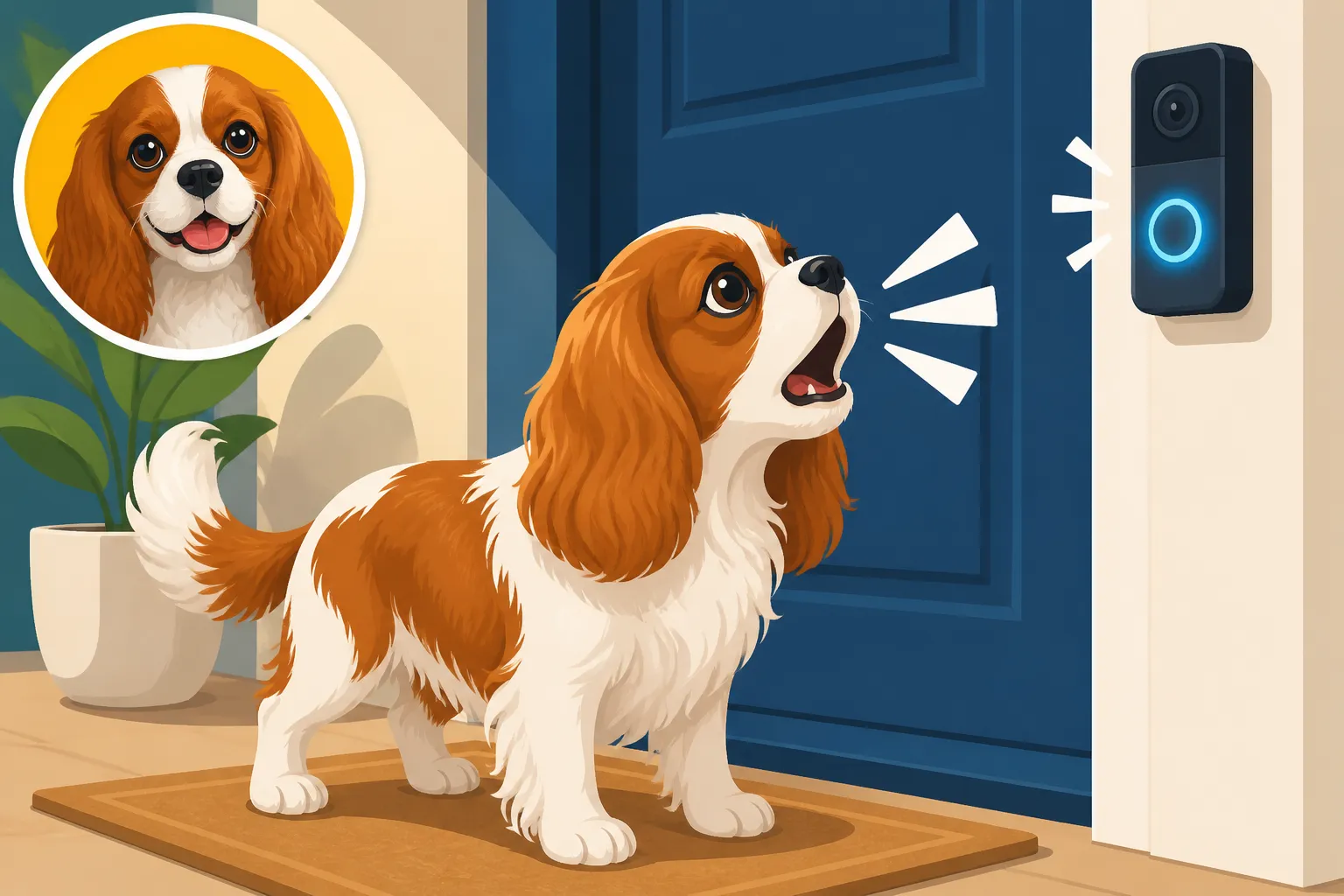
Oh, the doorbell! It's one of those sounds that can instantly transform your sweet, cuddly Cavalier King Charles Spaniel into a barking bundle of furry fury. You're not alone if you've found yourself jumping out of your skin every time the mail carrier dares to approach, or even when a doorbell chimes on the television. This guide is going to dive deep into why your beloved Cavalier turns into the "doorbell defender" and, more importantly, equip you with actionable strategies to help calm the chaos.
Why Your Cavalier Becomes the "Doorbell Defender"
It’s easy to get frustrated when your Cavalier starts barking like there’s a genuine intruder every time the doorbell rings. But understanding why they do it is the first step toward finding a solution. It's rarely out of malice; it's usually deeply rooted in their instincts and learned experiences.
The Cavalier's Natural Alertness and Excitement
Despite their reputation as gentle lapdogs, Cavaliers are still spaniels at heart. Their ancestors, even those court spaniels nestled on laps, had a role in alerting their human companions to new arrivals or changes in their environment. That innate desire to be aware of what’s happening, and to communicate it, hasn't completely disappeared. When that doorbell rings, it signals an event – a new person, an exciting possibility, or something unexpected. Your Cavalier, ever the loyal companion, feels it's their job to tell you about it, loud and clear!
Think about it from their perspective: a loud, sudden sound, then a person appearing on their "territory" (your home), often followed by you reacting. It's a whole chain of events that screams "IMPORTANT!" to their little brains. They aren't trying to annoy you; they're trying to communicate, protect, or simply express their overwhelming excitement or curiosity. For some Cavaliers, it's pure joy at the thought of a new visitor to greet. For others, it might be a subtle sense of anxiety about who or what is at the door, or perhaps a feeling of responsibility to guard their space. This is a common aspect of The Spaniel Instincts Left in a Cavalier.
Learned Behavior and Reinforcement
Unfortunately, what often starts as a natural alert quickly becomes a learned behavior that's accidentally reinforced. Every time your Cavalier barks at the doorbell, and a person appears, your dog's brain makes a connection: "My barking made that person appear!" or "My barking got your attention!" Even if your attention is a frustrated "No!" or "Quiet!", it's still attention, and for many dogs, any attention is good attention. The mail carrier drops a package and leaves – from your Cavalier's perspective, their barking "made" the scary person go away!
This cycle of barking leading to an outcome reinforces the behavior, making it stronger over time. Your dog is a master of association. The sound of the doorbell becomes a powerful cue for them to launch into their barking routine. It's not just the real doorbell; often, the sound on a TV show or even a phone notification with a similar chime can trigger the same intense reaction. They've learned that this sound means action, and they want to be part of it. This pattern shows why it's so important to understand Why a Cavalier Announces Everyone Who Walks Past.
Underlying Anxiety or Territoriality
While many Cavaliers are eager greeters, some might bark from a place of genuine anxiety or territorial instinct. A Cavalier might feel threatened by an unknown presence outside their home, especially if they haven't been properly socialized to strangers or if they've had negative experiences. This isn't usually overt aggression, but rather a vocal display of apprehension or a plea for the "intruder" to leave.
Similarly, some Cavaliers develop a strong territorial drive for their home and family. They see the doorbell as a challenge to their space and feel compelled to "warn off" potential threats. This can be exacerbated if they spend a lot of time by windows, observing the world outside and feeling a need to comment on every passing squirrel or person. It's important to differentiate between excited barking and fear-based barking, as the approach to training might differ slightly. A truly anxious dog may need a more gentle and gradual approach to counter-conditioning. Knowing Whether a Cavalier Would Ever Warn You can help gauge their motivations.
Practical Strategies to Manage Doorbell Barking
Managing doorbell barking in your Cavalier involves a two-pronged approach: managing the environment to reduce triggers and actively training a more desirable behavior. It takes consistency, patience, and a good dose of empathy for your furry friend.
Management Techniques to Reduce Triggers
Before you even start formal training, you can implement some simple management strategies to immediately reduce the intensity and frequency of the barking episodes. The less your Cavalier practices the unwanted behavior, the easier it will be to change.
One of the easiest things to do is simply to mute the doorbell on your TV. This might sound trivial, but for many Cavaliers, the sound on screen is just as real as the one at the front door. Another useful tactic is to cover windows or use frosted film in areas where your Cavalier can see outside and bark at every passerby. If they can't see the "threat" or excitement, they're less likely to react. For the actual doorbell, consider disconnecting it or putting a "Please Knock" sign on your door for a period. This gives you control over when the sound occurs, allowing you to set up structured training sessions.
When someone actually comes to your door, try to manage your Cavalier's access. A baby gate can be invaluable here. Create a "safe zone" for them further inside the house, away from the immediate doorway. This prevents them from rushing the door and feeling responsible for greeting or warning. If you’re expecting a delivery, have your Cavalier on a leash or behind a gate before the doorbell rings. This control allows you to prevent the barking from escalating and gives you an opportunity to redirect them. Creating a designated "place" for them can also be incredibly helpful for Getting a Cavalier to Switch Off Indoors.
Teaching a New Response and Counter-Conditioning
The ultimate goal isn't just to stop the barking, but to teach your Cavalier a new, more appropriate behavior when the doorbell rings. This involves counter-conditioning (changing their emotional response to the doorbell) and teaching an incompatible behavior (something they can do instead of barking).
Start by teaching your Cavalier a "go to your mat" or "go to your bed" command. Practice this in calm environments, rewarding them generously for lying quietly on their designated spot. Once they understand this, you can start incorporating the doorbell sound. Have a helper ring the doorbell (or use a recording on your phone at a low volume). The instant the doorbell rings, tell your Cavalier "Go to your mat" and lead them there, rewarding them with a high-value treat before they have a chance to bark. If they do bark, wait for a moment of quiet, then prompt "go to your mat." The key is to reward the desired behavior, not the barking.
Increase the duration of quiet time on the mat and the volume of the doorbell sound gradually. The goal is to create a new association: doorbell means "go to your mat and get a delicious treat!" instead of "doorbell means bark wildly!" For dedicated training programs, resources like BAXTER & Bella can provide structured guidance and video tutorials on teaching "place" commands and managing doorway greetings, which can be incredibly useful for busy owners looking for comprehensive support. Similarly, you can find a wide array of clickers and high-value training treats on platforms like Amazon to aid your efforts.
| Strategy | Description | Benefits | Challenges |
|---|---|---|---|
| Environmental Management | Disconnecting the doorbell, using "Please Knock" signs, covering windows, using baby gates to block access to the door. | Immediate reduction in barking incidents, less reinforcement of unwanted behavior. | Requires consistent human effort, doesn't address the underlying behavioral cause. |
| Counter-Conditioning | Pairing the doorbell sound with something positive (e.g., a high-value treat). | Changes the dog's emotional response to the doorbell from negative/excitable to positive. | Takes time and repetition, requires careful timing. |
| Incompatible Behavior | Teaching an alternative action, like "go to your mat," that your Cavalier cannot perform while barking. | Gives your dog a clear, acceptable action to perform, builds impulse control. | Requires prior training of the alternative behavior in a calm setting. |
| Desensitization | Playing doorbell sounds at very low volumes, gradually increasing volume as the dog remains calm and performs the new behavior. | Helps the dog habituate to the sound without reacting, reduces anxiety. | Needs careful monitoring to avoid overwhelming the dog and triggering barking. |
Remember to keep training sessions short, positive, and consistent. Every interaction shapes your Cavalier's understanding. Don't punish barking; instead, interrupt it and redirect to the desired behavior, then reward. This positive reinforcement approach is crucial for Cavaliers, as Why Harsh Corrections Break a Cavalier is a real concern.
Advanced Training and Tools for Persistent Barkers
Sometimes, despite your best efforts, your Cavalier’s doorbell barking persists or seems rooted in deeper issues. This is where you might need to bring in the big guns – professional help, specialized tools, and a deeper dive into your dog's overall well-being.
Professional Help and Support
If you've been consistent with your training and management strategies but still aren't seeing significant improvement, it might be time to consult a certified professional dog trainer or a veterinary behaviorist. These experts have the knowledge and experience to assess your Cavalier's specific situation, identify any underlying anxiety or fear, and develop a tailored training plan. They can observe your Cavalier's reactions firsthand and provide hands-on guidance, which is often invaluable. They might suggest specific exercises or techniques that you hadn't considered, or help you fine-tune your timing and reinforcement.
A professional might also help you explore if there are any medical reasons for increased reactivity or anxiety, though this is less common for simple doorbell barking. They can also provide insights into Trainer Rates for Cavalier Separation Anxiety if the doorbell barking is just one symptom of a broader anxiety issue. Sometimes, what looks like mere excitement is actually an early sign of a deeper anxiety about strangers or noise.
Training Aids and Environmental Adjustments
There are various tools and environmental adjustments that can complement your training efforts, especially for a Cavalier who is particularly sensitive to sounds or easily overstimulated.
Consider using a silent doorbell or a doorbell extender that only rings on your phone. This completely removes the auditory trigger for your Cavalier while still allowing you to know when someone is at the door. You can then use your helper to ring a different, controlled sound for training purposes. For sound-sensitive Cavaliers, a white noise machine or classical music played near the front of the house can help muffle outside noises and the doorbell sound itself, making it less jarring for your dog.
Calming diffusers or sprays, which release synthetic pheromones, can sometimes help reduce general anxiety levels in dogs. While not a magic bullet for barking, a calmer dog might be less prone to overreacting to triggers. You can often find these readily available on sites like Amazon, along with other training aids. Another simple but effective tool is a high-quality, comfortable harness for when you are greeting guests. A front-clip harness can give you better control over your Cavalier, preventing them from lunging or pulling excitedly at the door. Ensuring your Cavalier is comfortable and secure in their harness is important, as a well-fitting harness offers better control and prevents discomfort, something detailed in Harnesses Suited to a Cavalier's Neck.
Remember, these tools are aids, not replacements for consistent training. They can help create an environment where training is more likely to succeed by reducing the intensity of the trigger. It's about setting your Cavalier up for success.
Preventing Doorbell Barking in Cavalier Puppies
If you're bringing a new Cavalier puppy into your home, you have a fantastic opportunity to prevent doorbell barking from becoming an ingrained habit. Early intervention and positive associations are key!
Early Socialization and Positive Associations
The period between 8 and 16 weeks is crucial for puppy socialization. During this time, introduce your Cavalier puppy to a wide variety of sights, sounds, and experiences in a positive and controlled manner. This includes the doorbell! Don't wait for it to become a problem.
Start by deliberately ringing the doorbell (or having a helper do it) at a very low volume while your puppy is engaged in something positive, like eating their meal or playing with a favorite toy. The instant the doorbell rings, give them a high-value treat. The goal is to create the association: "Doorbell sound means good things happen!" Keep the volume low initially, and only increase it very gradually as your puppy consistently remains calm and looks to you for a treat.
When visitors come to your home, manage the situation so it's a positive experience. Have your puppy on a leash or in a playpen. Ask visitors to ignore your puppy until they are calm, then allow for gentle, supervised interactions. Reward your puppy for calm greetings, not for frantic barking. Introduce your puppy to various Sounds a Cavalier Puppy Should Meet Early to build their resilience. Make it a point to expose your puppy to different types of people and gentle handling so they learn that strangers are not a threat. This proactive approach to Socializing a Cavalier Puppy Gently can make a world of difference in shaping their future behavior, ensuring that the doorbell remains a pleasant signal, not a barking trigger.
Disclaimer
This article is for general informational purposes only and does not constitute professional advice. Laws, prices and regulations vary by location and change over time. Consult a qualified professional for guidance on your specific situation.