A Slicker Brush on Cavalier Feathering
Oh, the sheer beauty of a Cavalier King Charles Spaniel’s coat! Those long, silken ears, the lush feathering on their legs and tail – it’s truly one of their most defining and charming features. But if you’re a Cavalier parent, you know that this gorgeous coat comes with its own set of challenges, particularly when it comes to keeping those delicate tufts free of tangles and mats. It's a never-ending dance between admiration and diligent grooming, and sometimes, it feels like the tangles win before you even start. This guide is all about mastering one of the most essential tools in your grooming arsenal: the slicker brush, and how to wield it effectively to maintain your Cavalier's stunning, healthy coat.
Understanding Your Cavalier's Unique Coat and Feathering
Before we dive into the specifics of brushing, let’s take a moment to truly appreciate what makes your Cavalier’s coat so special, and why it requires a particular approach to care. It’s not just "dog hair" – it's a finely tuned, single-coated marvel that behaves very differently from many other breeds.
The Cavalier's Single Coat vs. Double Coats
Unlike breeds such as Golden Retrievers or Huskies, who boast dense, insulating double coats with a soft underlayer and coarser guard hairs, your Cavalier sports a single coat. This means their hair is uniform in texture: long, silken, and typically fine. There’s no thick undercoat to shed in huge seasonal clumps, which many owners initially find appealing. However, this finer texture is precisely what makes it prone to tangling and knotting. Think of it more like fine human hair – beautiful when cared for, but quick to snarl if neglected. This single layer often means they aren't as insulated against extreme temperatures, but it also gives them that classic, flowing appearance we adore.
Because they lack an undercoat, Cavaliers don't "blow coat" in the same dramatic way as double-coated breeds. Their shedding is usually more consistent year-round, shedding individual hairs rather than clumps of fluff. This doesn't mean they don't shed, of course – anyone with a Cavalier knows that their delicate strands can still find their way onto furniture and clothing! Understanding this fundamental difference is the first step in appreciating why your grooming routine needs to be tailored specifically for their unique hair type.
Where Feathering Appears and Why It's Prone to Tangles
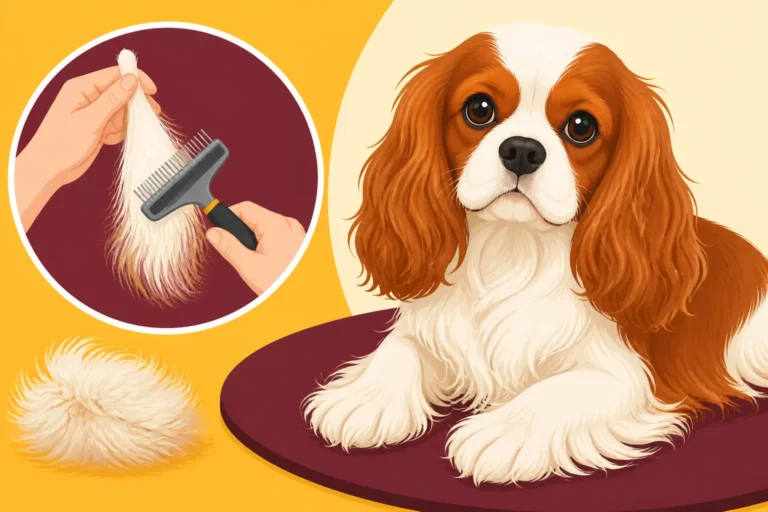
The hallmark of the Cavalier’s coat is its luxurious feathering. This refers to the longer hair found in specific areas, creating that elegant, flowing silhouette. You’ll find it most prominently on their long, pendulous ears, giving them that adorable floppy look. It also graces their chest, creating a natural bib, and extends down their front and hind legs, often forming "trousers" or "skirts." And, of course, that beautiful, plumed tail is another area of magnificent feathering.
These feathered areas are, unfortunately, also the most susceptible to tangles and mats. Why? Well, think about a Cavalier’s daily life. Those glorious ears dip into water bowls, get rubbed against furniture, and often end up under a paw during naps. The leg feathering collects debris from walks, gets wet in the rain, and rubs together constantly as they move. The chest hair can get caught under harnesses or collars, and the tail, while lovely, swishes constantly, creating friction. All of this friction, combined with loose hairs and external elements, creates the perfect storm for knots to form. It’s a battle between natural activity and maintaining that pristine, silky look. For a deeper dive into the overall grooming needs, you might find Brushing a Cavalier's Feathering Three Times a Week helpful.
The Challenges of Maintaining a Silky Coat
Let's be real: maintaining a Cavalier's silky coat is a commitment. It's not just about aesthetics; mats can become genuinely painful and problematic for your dog. A small tangle, if left unchecked, can quickly snowball into a tight, felted mat that pulls on the skin, restricts movement, and can even lead to skin infections underneath due to trapped moisture and lack of air circulation. It’s a frustrating scenario for owners because you know how quickly it can happen. You might brush diligently one day, and by the next, a new mat seems to have sprung up out of nowhere behind an ear.
The fine texture of their hair means that these mats often tighten rapidly, especially if they get wet. Bathing a matted Cavalier without first detangling can turn a small knot into an impenetrable felt. This constant vigilance is why regular, even daily, brushing sessions are non-negotiable for many Cavalier owners. It's about preventing discomfort for your beloved companion, as much as it is about keeping them looking regal. Understanding The Five Minutes a Day a Cavalier Coat Takes might put the daily commitment into perspective.
Why a Slicker Brush is Essential for Cavalier Feathering
Given the delicate nature of Cavalier feathering and its propensity for tangles, not just any brush will do. The slicker brush stands out as a true hero in the Cavalier grooming kit, offering specific benefits that other brush types simply can't match.
What Makes a Slicker Brush Different
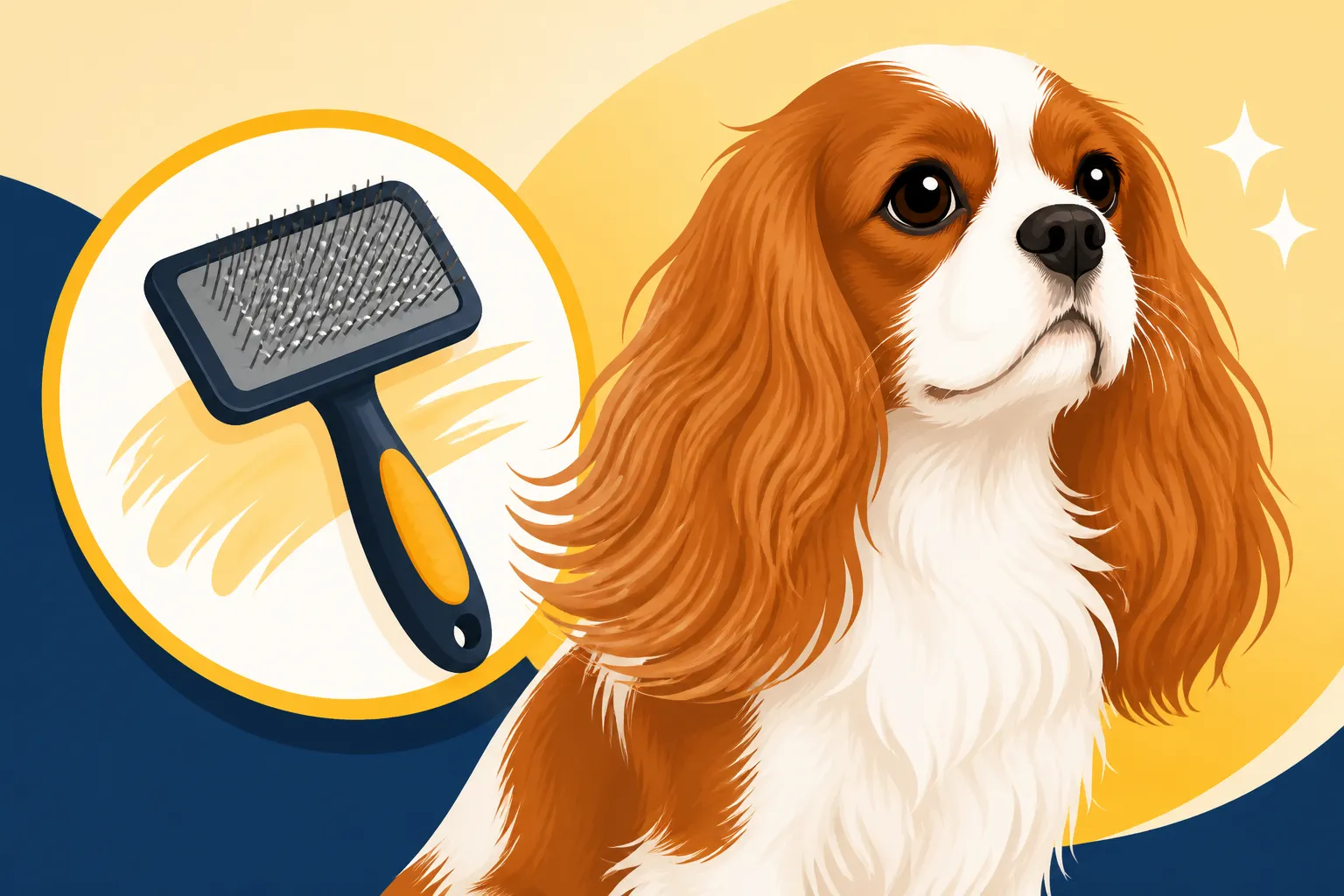
A slicker brush is easily identifiable by its design: it features a wide, flat, or sometimes slightly curved head densely packed with fine, short wire pins. These pins are typically angled, often set on a rubber or cushioned base, which provides a bit of flexibility. This unique construction is what sets it apart from other brushes you might have. For instance, a pin brush, with its widely spaced, rounded metal or plastic pins, is great for general detangling and fluffing but often glides over the smaller, forming tangles that are so common in Cavalier feathering. A bristle brush, made of natural or synthetic bristles, is excellent for distributing oils and smoothing the coat’s surface but doesn't have the reach to get down to the roots or through any developing knots.
The magic of the slicker brush lies in its ability to gently grab and separate individual hairs without damaging the delicate coat. The angled pins work like tiny rakes, meticulously working through the dense feathering. The cushioned base allows the pins to flex slightly, which makes for a more comfortable experience for your Cavalier and helps prevent you from accidentally scratching their skin if you apply too much pressure. It’s a targeted tool designed for precise work on fine, long coats.
How a Slicker Brush Works to Prevent and Remove Mats
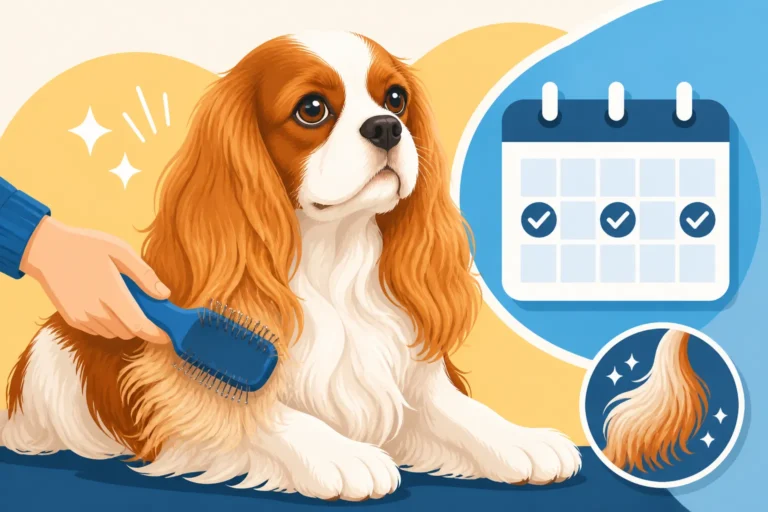
The primary role of a slicker brush is twofold: prevention and gentle removal. For prevention, regular use of a slicker brush, even for just a few minutes daily, helps to remove loose hair before it has a chance to bind with other hairs and create a tangle. It also aids in separating the existing hairs, reducing the friction that leads to knot formation. Think of it as proactively untangling microscopic knots before they become visible, painful masses. This is particularly crucial for areas like Mats in a Cavalier's Armpits and Groin, which are notorious for matting up quickly.
When it comes to removing existing tangles, the slicker brush's fine pins can penetrate deep into the feathered sections, carefully teasing apart the knotted hair. The angled pins hook onto the edges of a mat, allowing you to gently pull small sections apart without causing undue stress or pain to your dog. It's a delicate dance, but the slicker brush provides the precision needed. It also helps to stimulate blood circulation to the skin, which promotes a healthy coat, and distributes the natural oils from the skin throughout the hair, adding shine and helping to keep the coat moisturized and less prone to breakage.
Choosing the Right Slicker Brush for Your Cavalier
Not all slicker brushes are created equal, and choosing the right one can make a big difference in your grooming routine. You'll find a variety of sizes and pin configurations on the market. For most Cavaliers, a medium-sized slicker brush works well for the general body and leg feathering. However, for those delicate, hard-to-reach spots, or for smaller Cavaliers, a smaller slicker brush with a more compact head can be incredibly useful. These are perfect for around the face, behind the ears, or in the armpits.
Consider the pin type as well. Some slicker brushes have very soft, flexible pins, while others are firmer. For a Cavalier’s fine, silky coat, you generally want a slicker with relatively soft or medium-flex pins to avoid irritation. Brands like Chris Christensen offer highly-regarded slicker brushes known for their quality, but you can find excellent options on platforms like Amazon or specialized pet supply stores such as Chewy. Look for a brush with a comfortable handle that fits your hand well, as you'll be using it frequently. You might even consider having a couple of different sizes on hand for various parts of their body. For more general advice on what tools you'll need, check out The Brush and Comb a Cavalier Coat Needs.
Step-by-Step Guide to Using a Slicker Brush on Your Cavalier
Now that we understand why the slicker brush is so important, let's talk about how to use it effectively. Proper technique is key to making grooming a positive experience for your Cavalier and achieving that beautifully maintained coat.
Preparing Your Cavalier and Your Tools
Setting the stage for a successful grooming session is half the battle. First, choose a calm environment where your Cavalier feels relaxed. This might be on a grooming table if they're accustomed to it, or simply on your lap or a comfortable rug on the floor. The goal is to make it a positive, bonding experience, not a chore. Have plenty of small, high-value treats on hand to reward good behavior and distract them if needed.
Gather all your tools before you start. This includes your slicker brush (and perhaps a smaller one for detailed work), a good quality metal comb with both wide and fine teeth (this is crucial for checking your work and finding hidden tangles), and a detangling spray. Many excellent detangling sprays are available, and you can easily find them on sites like Amazon or Chewy. Some owners even like to use a conditioning spray to add moisture and shine. Make sure your Cavalier has had a chance to relieve themselves and has burned off a little energy so they’re more inclined to settle down. If you have an older Cavalier, consider their comfort during longer sessions; Grooming an Older Cavalier That Cannot Stand Long has some excellent tips.
The Proper Technique for Brushing Feathering
The key to brushing a Cavalier’s feathering effectively is the "line brushing" technique. This involves working in small sections, layer by layer, rather than just brushing over the top of the coat.
- Start with a section: Begin at the bottom of the feathering on a leg or behind an ear. Use your free hand to gently hold up the hair above the section you’re working on, exposing the skin.
- Brush upwards and outwards: With your slicker brush, start at the very end of the hair and brush gently upwards, away from the skin. Use short, light strokes. Work slowly, making sure the pins are reaching all the way to the skin without scratching it.
- Work in layers: Once you’ve brushed a small section, drop a bit more hair from the section you're holding up, and repeat the process. Continue this way, gradually working your way up the leg, ear, or tail.
- Be gentle: Always use a light hand. The pins of a slicker brush are fine and can scratch the skin if too much pressure is applied. Your goal is to separate the hairs, not to tug or pull. If you encounter resistance, stop and investigate.
- Focus on problem areas: Pay extra attention to the areas most prone to matting: behind the ears, in the armpits, on the chest, and the "trousers" on their hind legs.
- Use a comb to check your work: After you've brushed a section with the slicker, run your metal comb through it, starting with the wide-toothed side. If the comb glides through smoothly from root to tip, you've done a great job. If it catches, go back with your slicker brush and gently work on that area again. This is where Whether a Cavalier Needs a Metal Comb can provide more insights into supplementary tools.
Addressing Mats and Tangled Areas Safely
Finding a mat can be frustrating, but resist the urge to pull or yank! This will only cause pain and make your Cavalier associate grooming with discomfort. Here’s how to safely address mats:
- Assess the mat: Feel the mat to understand its size and how tightly it’s formed. Small, loose tangles are easier to address than large, dense felted mats.
- Apply detangling spray: Liberally spray a good quality detangling spray (you can find highly-rated ones on Ollie, Chewy, or Amazon) directly onto the mat. Work it in gently with your fingers. Let it sit for a minute or two to help loosen the hair.
- Work from the edges: Never try to brush through the center of a mat immediately. Instead, hold the hair at the base of the mat (closest to the skin) to minimize pulling on the skin. Then, use the very tips of your slicker brush or the fine teeth of your metal comb to gently tease apart the outer edges of the mat, hair by hair.
- Patience is key: This process requires patience. Work slowly and steadily. You might only be able to remove a few hairs at a time. If the mat is very tight, you can try "slicing" it carefully with a mat splitter tool, but only if you're confident and your dog is cooperative. Otherwise, this is best left to a professional. Working a Mat Out of Cavalier Feathering provides more detail on this often tricky task.
- Avoid cutting with scissors: Unless you are a professional groomer, avoid using scissors to cut out mats. It’s incredibly easy to accidentally cut your dog’s skin, especially when the mat is tight against the body. If a mat is too severe for your slicker brush and detangling spray, it's time for professional help.
Here’s a helpful table summarizing a routine that incorporates the slicker brush:
| Grooming Task | Frequency | Tools | Key Focus Area |
|---|---|---|---|
| Slicker Brushing | Daily/Every other day | Slicker brush, metal comb, detangling spray | Ears, leg feathering, chest, tail |
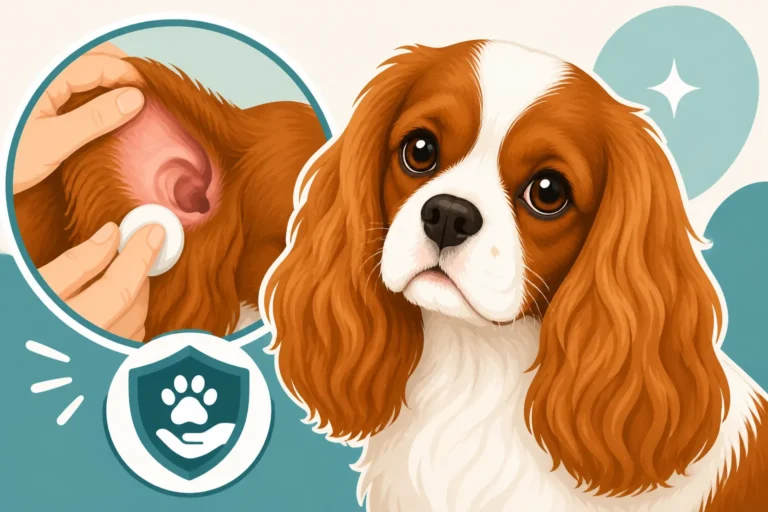
| Ear Checks/Cleaning | Daily | Ear cleaner, cotton balls | Inside ear flap, under long ear leather |
| Full Detangling Session | 2-3 times/week | Slicker brush, wide-toothed comb, detangler | All feathered areas, armpits, behind ears |
| Nail Trim | Every 2-4 weeks | Nail clippers or grinder | All paws, dewclaws if present |
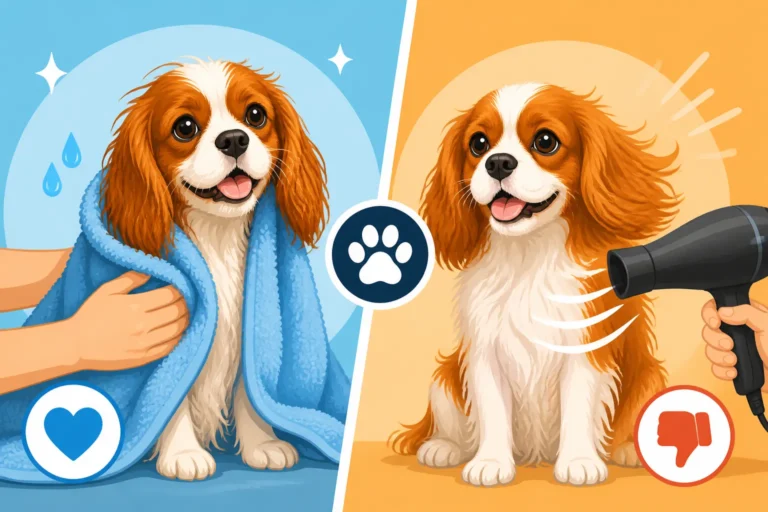
| Bath | Every 4-6 weeks | Dog shampoo, conditioner, blow dryer | Entire coat, focus on clean rinsing |
Common Mistakes and Troubleshooting
Even with the best intentions and the right tools, grooming can present its fair share of challenges. Knowing what to avoid and how to address common issues can make the process much smoother for both you and your Cavalier.
Over-Brushing and Skin Irritation
While frequent brushing is vital for a Cavalier's coat, there's a fine line between diligent care and over-doing it. The main concern with over-brushing, or more accurately, harsh brushing, is skin irritation. The fine wire pins of a slicker brush, if used with too much pressure or repeatedly dragged over the same spot, can cause skin redness, scratches, or even "brush burn" which can be quite uncomfortable for your dog.
Always use a light, gentle hand, especially on areas where the skin is thinner or more sensitive, such as the belly or inner thighs. If you notice your Cavalier flinching, trying to move away, or showing any signs of discomfort, ease up on the pressure. Take breaks, offer treats, and ensure your strokes are gentle and deliberate, aiming to just skim the surface of the skin while still reaching the base of the hair. Your goal is to separate hairs, not to exfoliate their skin vigorously! If you notice any persistent redness, consult your vet to rule out any underlying skin conditions.
Dealing with a Reluctant Cavalier
Not all Cavaliers are born lovers of the grooming table. Some might be fidgety, some might see it as a wrestling match, and others might genuinely be nervous. It’s crucial to make grooming a positive experience from a young age, if possible. If you have a puppy, introduce the slicker brush for very short sessions, paired with lots of praise and high-value treats. Let them sniff the brush, touch it gently to their coat, and then immediately reward them. Gradually increase the duration as they become more comfortable.
For an adult Cavalier who is already reluctant, patience and positive reinforcement are your best friends. Start with even shorter sessions, perhaps just a minute or two, focusing on an area they tolerate well. Reward calm behavior generously. If they tolerate a few strokes, that’s a win! You can slowly build up from there. Sometimes, a distraction like a lick mat smeared with peanut butter can keep them occupied while you work. Remember, consistency is key, and every positive interaction helps build their confidence. Techniques discussed in Teaching a Cavalier to Accept Grooming can be incredibly useful here, as can Getting a Cavalier Used to Ear Cleaning for a typically sensitive area.
When to Seek Professional Help
There are times when a mat or a coat issue is simply beyond what you can safely handle at home, and that's perfectly okay. Don't feel guilty about seeking professional help from a reputable groomer. Severe mats, especially those that are tight against the skin or cover large areas, are often best dealt with by a professional who has specialized tools and experience. Trying to remove these at home can be painful for your dog and risky if you accidentally cut their skin.
A professional groomer might recommend shaving down the matted areas or even the entire coat if the mats are extensive. While you might initially be sad to see their beautiful feathering go, remember that your Cavalier’s comfort and health are paramount. Hair grows back! A professional groomer can also provide advice on ongoing coat care, suggest specific products, and demonstrate proper techniques tailored to your Cavalier's unique coat type and behavior. Regular visits to a groomer, even just for maintenance trims and professional detangling, can be a valuable part of your Cavalier's overall care routine.
Disclaimer
This article is for general informational purposes only and does not constitute professional advice. Laws, prices and regulations vary by location and change over time. Consult a qualified professional for guidance on your specific situation.