Ice Balls in a Cavalier’s Foot Hair
Winter walks with your beloved Cavalier King Charles Spaniel can quickly turn into a painful ordeal when pesky ice balls form between their paw pads and within their beautiful foot feathering. This isn't just an annoyance; these frozen clumps can cause significant discomfort, lameness, and even serious injury, turning a joyful romp into a miserable experience. This comprehensive guide will walk you through why your Cavalier is particularly susceptible to these icy nuisances, how to prevent them, and the safest ways to remove them once they've formed.
Why Cavalier Foot Feathering Is an Ice Magnet
If you've ever seen your Cavalier limping or trying to shake something off their paw during a snowy walk, chances are they've fallen victim to ice balls. Our Cavaliers, with their delightful long coats and feathered feet, are just asking for trouble when it comes to snow and ice. Unlike some breeds with shorter, wiry coats or minimal foot hair, the Cavalier's delicate feathering acts like a natural magnet for frozen precipitation.
The Physics of Feathered Feet and Freezing
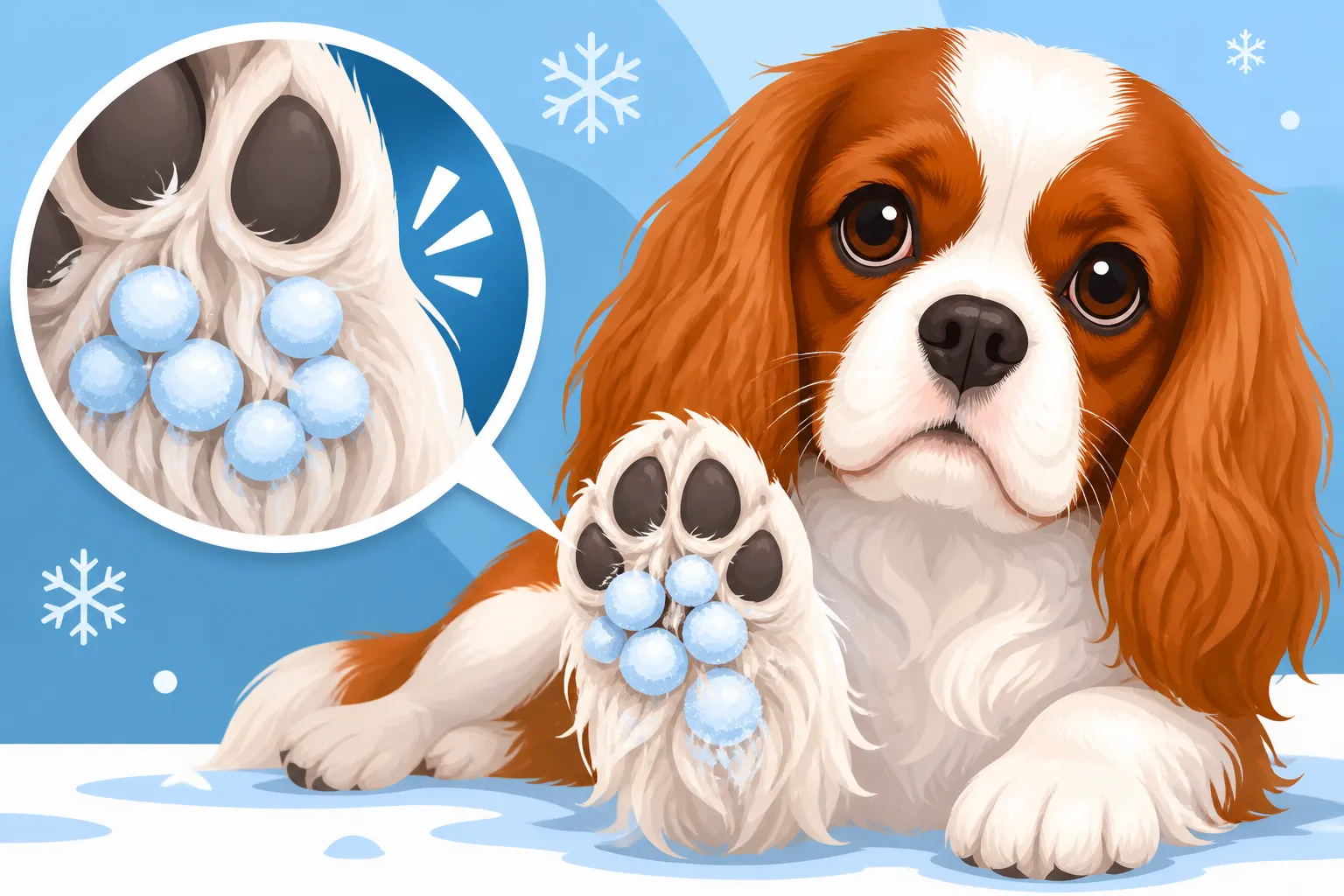
Think about it: snow is wet. As your Cavalier trots through fresh powder or slush, water naturally collects on their fine, silky hair. When the ambient temperature is at or below freezing, this water quickly freezes, creating small, hard ice pellets. These pellets then clump together, incorporating more hair and snow, growing into larger, increasingly uncomfortable ice balls. It's a compounding problem – the more snow and ice accumulate, the more surface area there is for even more snow and ice to stick, leading to bigger, denser formations.
This isn't just about superficial discomfort; these ice balls can press on the sensitive skin between their paw pads, pull at their delicate toe webbing, and even extend up their legs if the feathering is particularly long. Imagine walking with tiny, hard rocks stuck between your toes – that's what your Cavalier is experiencing. The combination of their naturally long, flowing foot hair and their relatively low-to-the-ground stature means they're constantly brushing through snow and picking up moisture, making them prime candidates for this winter woe. You might also notice similar issues with mats behind a Cavalier's ear leather, another area of fine, long hair.
The Risks Beyond Discomfort
While limping and general reluctance to walk are immediate signs of trouble, the risks associated with ice balls extend far beyond simple discomfort. These frozen masses can cause friction and pressure on the paw pads and between the toes, leading to skin irritation, abrasions, or even open sores. In severe cases, especially during prolonged exposure in very cold temperatures, these areas can be susceptible to frostbite. Your Cavalier might also try to chew or lick the ice balls off themselves, potentially leading to ingestion of ice, snow, or de-icing chemicals that could upset their stomach or be toxic.
Moreover, the pain from ice balls can alter your Cavalier's gait, making them walk awkwardly or put weight on their joints in an unnatural way. This can exacerbate existing joint issues, like Loose Kneecaps in a Thirteen-Pound Cavalier or Early Arthritis in a Cavalier's Elbows, leading to further strain and pain. A Cavalier that usually enjoys their walk and suddenly stops or repeatedly lifts a paw is clearly telling you something is wrong. Ignoring these signs can lead to more serious problems down the line, requiring vet visits and potentially pain management for a senior cavalier.
Preventing Ice Balls: Trimming, Protection, and Preparation
The old adage "an ounce of prevention is worth a pound of cure" certainly applies to ice balls on your Cavalier's feet. Proactive steps can save both you and your furry friend a lot of grief this winter.
Strategic Trimming of Foot Feathering
One of the most effective ways to prevent ice balls is to keep the hair on your Cavalier's feet trimmed short. While the breed standard for show dogs often calls for untrimmed feet, for a companion Cavalier who enjoys winter walks, a neat trim is a practical necessity. Focus on the hair that grows out between their paw pads and around the edges of their feet, forming what's often called "slippers." This feathering acts like tiny snow shovels, gathering snow with every step.
You can do this yourself at home with blunt-nosed scissors or a small clipper designed for delicate areas. Gently separate the paw pads to get to the hair growing in between, being very careful not to nick the skin. Then, trim the hair around the perimeter of their foot, aiming for a neat, rounded "cat foot" appearance. Don't go too short on the top of their foot where their main feathering starts, but ensure there's no long hair dangling that can pick up snow. If you're unsure or your Cavalier is sensitive about their feet, your professional groomer can easily handle this for you. Ask them specifically for a "sanitary paw trim" or to "tidy up the feet" to prevent ice balls. They'll know exactly what to do, often using specialized tools to make it a quick and stress-free process. This is closely related to Whether to Trim a Cavalier's Foot Feathering and Cutting Hair Between a Cavalier's Toes.
Protective Paw Balms and Waxes
Another excellent preventive measure is to create a barrier on your Cavalier's paw pads and foot hair using specialized paw balms or waxes. These products form a protective layer that repels moisture and helps prevent ice and snow from sticking. Think of it like a non-stick coating for their paws. Apply a generous amount before each winter walk, making sure to work it into the hair between the pads and across the entire paw surface.
Popular options like Musher's Secret or various organic paw waxes are readily available at pet stores or online retailers like Chewy and Amazon. They're typically made with natural ingredients like beeswax, lanolin, and vitamin E, so they're safe for your Cavalier even if they lick their paws. Not only do they prevent ice buildup, but they also protect against harsh elements like salt, sand, and de-icing chemicals that can irritate or dry out delicate paw pads. Remember, healthy paw pads are crucial for your Cavalier's comfort year-round.
Canine Boots for Ultimate Protection
For the ultimate defense against ice balls, and indeed against cold, salt, and sharp ice, canine boots are an invaluable tool. While some Cavaliers might initially protest wearing them, with a little positive reinforcement and patience, most can learn to tolerate them. It's truly worth the effort, especially if you live in an area with harsh winters or frequently walk on treated sidewalks.
When choosing boots, look for ones that are waterproof, durable, and have good traction. The fit is crucial: they should be snug enough to stay on but not so tight that they restrict circulation. Many brands offer different sizes and styles, so you might need to try a few before finding the perfect pair for your Cavalier's small, delicate feet. Some even come with straps that help secure them above the dewclaw. Introducing them slowly indoors with treats and praise can make the transition easier. Imagine the peace of mind knowing your Cavalier's paws are fully protected during a long winter stroll.
Here's a quick comparison of popular prevention methods:
| Prevention Method | Pros | Cons | Ideal Scenario |
|---|---|---|---|
| Foot Trimming | Highly effective, long-lasting, natural feel. | Requires regular maintenance, precision needed. | Most Cavaliers, especially those with abundant feathering. |
| Paw Balms/Waxes | Easy to apply, protects against chemicals, no training needed. | Needs reapplication for each walk, can be messy. | Mild to moderate snow, good for quick trips, city walks. |
| Canine Boots | Fullest protection, no ice, salt, or sharp objects. | Can be difficult to fit, some dogs resist, potential loss. | Harsh winters, deep snow, long walks, older Cavaliers. |
Safely Removing Ice Balls from Your Cavalier's Paws
Despite your best preventative efforts, sometimes ice balls still happen. Maybe you took a spontaneous walk, or the snow was unexpectedly sticky. Whatever the reason, knowing how to safely and gently remove them is essential.
The Gentle Thaw Method
The absolute gentlest way to remove ice balls is to let them melt. This avoids any pulling, tugging, or potential skin damage. If you're home, bring your Cavalier inside and apply a warm, damp cloth to their paws. You can also simply let them stand in a shallow basin of lukewarm water for a few minutes. The warmth will quickly melt the ice, releasing the trapped hair without discomfort. Make sure the water is comfortably warm, not hot, to prevent scalding their sensitive paw pads.
As the ice melts, you can gently massage the area to encourage the clumps to break apart. Avoid trying to chip or pull at the ice with your fingers, as this can easily pull out hair or tear skin. Patience is key here. Once the ice has melted, thoroughly dry your Cavalier's paws, especially between the toes, to prevent chapping or skin irritation. This is also a good time to check for any redness or tenderness.
On-the-Go Solutions
What if you're out on a walk and notice the problem? You can't exactly carry a basin of warm water with you! For on-the-go removal, warm up your hands by rubbing them together or putting them in your pockets, then cup your warm hands around your Cavalier's icy paw. Your body heat will start to melt the ice, allowing you to gently crumble the ice balls with minimal pulling.
Another trick is to carry a small bottle of lukewarm water or even an insulated thermos with you. You can drizzle a small amount over the ice balls, which will help them loosen and melt. Again, resist the urge to yank or break off the ice forcefully. If the ice balls are particularly stubborn or your Cavalier is clearly in pain, it's often best to cut the walk short and head home for a proper thaw. The momentary frustration of a shorter walk is far better than causing your beloved companion unnecessary pain or injury.
Using Clippers or Scissors as a Last Resort
In rare cases, if the ice balls are exceptionally large, dense, and your Cavalier is in significant distress, you might need to resort to carefully clipping them out. This should only be done with extreme caution and as a last resort, as the risk of cutting skin is high.
If you absolutely must use tools:
- Use blunt-nosed scissors or a small electric trimmer. These are much safer than sharp, pointed scissors.
- Separate the hair and ice from the skin. Try to get a comb or your fingers between the ice ball and your Cavalier's paw pad to create a barrier.
- Cut only the hair that is completely embedded in the ice. Cut away from the paw pads, pointing the scissors or trimmer outwards.
- Work slowly and methodically. If your Cavalier is squirming, stop and try the thawing method again. A nervous dog and sharp objects are a bad combination.
Remember, prevention through regular Brushing a Cavalier's Feathering Three Times a Week and Cavalier Nail, Paw and Foot Feathering Care is always preferable to corrective measures.
Aftercare and What to Watch For
Once you've successfully removed the ice balls, your job isn't quite done. Aftercare is crucial to ensure your Cavalier's paws recover fully and to identify any potential issues that may have arisen.
Thorough Drying and Inspection
After melting or removing the ice, take the time to thoroughly dry your Cavalier's paws, paying extra attention to the areas between the pads and toes. Leftover moisture can lead to skin irritation, fungal infections, or make them more susceptible to cold. You can use a soft towel, or even a low-heat hairdryer if your Cavalier tolerates it, ensuring the air isn't too hot.
Once dry, gently inspect each paw. Look for any redness, swelling, nicks, cuts, or cracked pads. Feel between the toes for any lingering tenderness or sore spots. If you notice any minor abrasions or redness, a soothing paw balm or a thin layer of petroleum jelly can help protect and heal the skin. Products like Vaseline, which you can easily find at any pharmacy or supermarket, or specialized paw balms from Chewy or Amazon, create a protective barrier.
Monitoring for Ongoing Discomfort
Even if the paws look fine, keep an eye on your Cavalier for the next 24-48 hours. Are they still limping? Are they licking or chewing their paws excessively? Any persistent signs of discomfort, lameness, or changes in their gait warrant a call to your veterinarian. It's possible that a deeper injury or irritation occurred that isn't immediately visible, or perhaps a pre-existing condition like Cavalier Hip Dysplasia and Early Arthritis was aggravated.
Severe cases of frostbite can sometimes manifest as discolored skin (pale, blue, or grey), swelling, pain, or even blistering in the days following exposure. While less common in casual walks, it's a serious condition that requires immediate veterinary attention. Promptly addressing any concerns will help ensure your Cavalier remains happy and healthy, ready for many more walks – perhaps with their paws prepped and protected next time!
Disclaimer
This article is for general informational purposes only and does not constitute professional advice. Laws, prices and regulations vary by location and change over time. Consult a qualified professional for guidance on your specific situation.