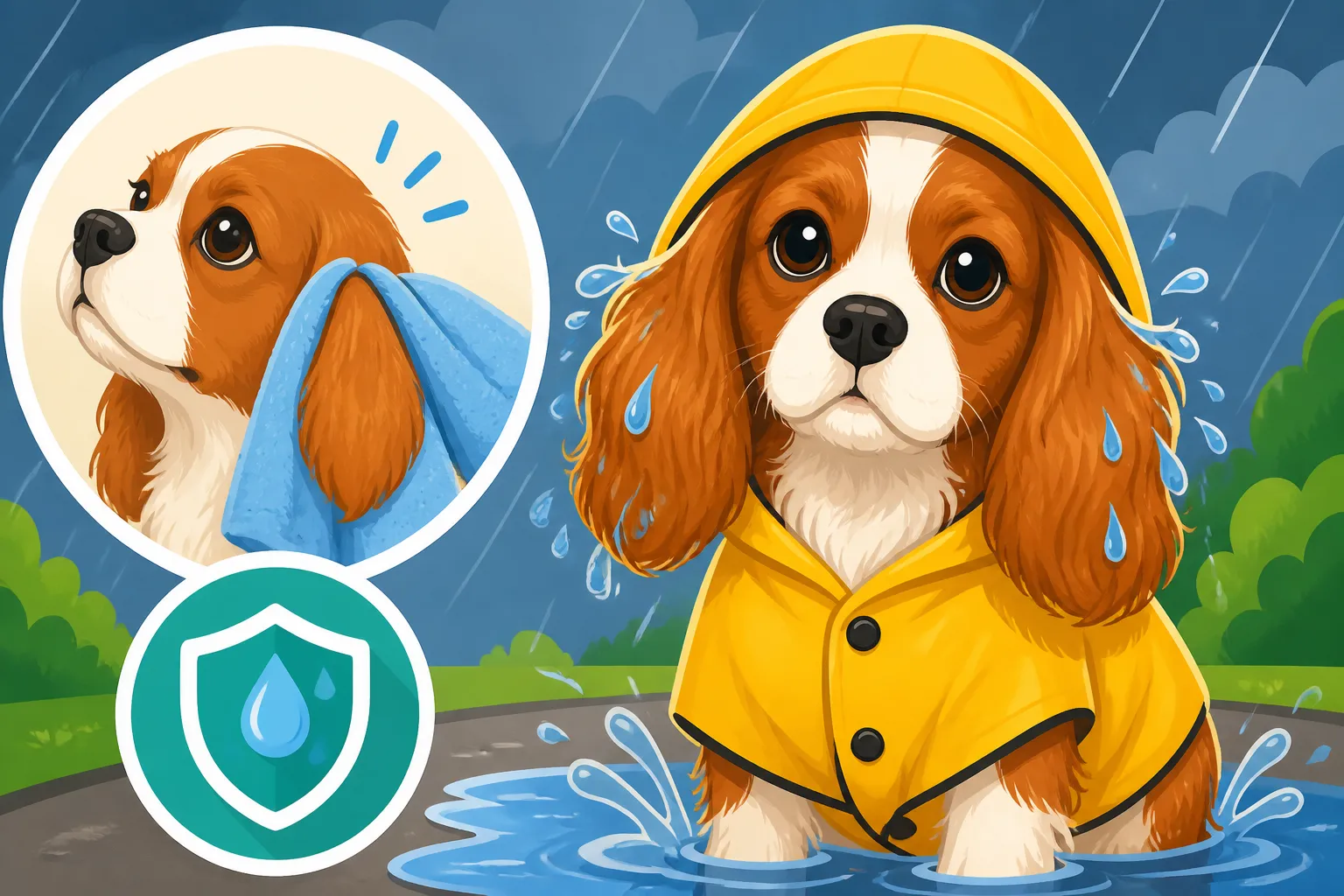
Keeping Cavalier Ears Dry in Wet Weather
Oh, the joys of living with a Cavalier King Charles Spaniel! Their gorgeous, silky drop ears are undeniably one of their most charming features. But let's be real, those beautiful ears are also fantastic at soaking up every last bit of moisture from the environment, turning a simple wet walk into a potential ear infection nightmare. It's a frustration many Cavalier owners know all too well: one minute you're admiring their frolicking in the damp grass, the next you're bracing yourself for a trip to the vet. This guide is all about tackling that exact problem, offering practical, real-world strategies to help you keep those precious Cavalier ears as dry as possible, even when the weather isn't cooperating.
Why Cavalier Ears Get So Wet (and Why It's a Problem)
It’s not just bad luck that Cavalier ears seem to attract every drop of moisture; it's a direct consequence of their unique anatomy. Understanding why they get so wet is the first step in effectively preventing issues.
The Anatomy of a Cavalier's Ear: Heavy and Prone to Trapping Moisture
Imagine a beautiful, luxurious curtain of hair, perfectly designed to hang low and heavy. That's essentially what a Cavalier's ear is. Their long, pendulous ear flaps, often adorned with copious feathering, don't allow for much airflow around the ear canal. When your sweet Cavalier sniffs the ground, investigates a damp bush, or even just walks through dewy grass, those long ear leathers and their feathery fringe act like tiny sponges, soaking up moisture from everything they touch.
Think about it: the outer ear leather itself is thick and covered in fur, which can hold onto water. Then you have the delicate skin of the inner ear, which also gets damp. But the real culprit often lies in the hair around the ear canal. This hair, combined with the heavy, unventilated ear flap, creates a dark, warm, and wonderfully humid microclimate. It’s the perfect storm for moisture to linger, setting the stage for bigger problems down the line. It's a design flaw, really, albeit a beautiful one.
The Link Between Moisture and Ear Infections
That warm, moist environment we just described? It’s not just uncomfortable for your Cavalier; it’s an absolute five-star resort for yeast and bacteria. These microscopic organisms thrive in such conditions, and a damp ear canal provides everything they need to multiply rapidly. What starts as a little lingering dampness can quickly escalate into a full-blown, painful ear infection.
Many Cavalier owners find themselves in a constant battle against recurrent ear infections. It’s disheartening because you’re doing your best, but the structural predisposition of their ears is a formidable opponent. When yeast, bacteria, or both take hold, you’ll notice a tell-tale odor, redness, discharge, and your Cavalier will often start shaking their head or scratching at their ears incessantly. Left unchecked, chronic moisture can even contribute to more severe conditions, such as Glue Ear in a Cavalier and How It Is Found, where thick mucus gets trapped in the middle ear. The cycle of infection can be relentless and costly, both emotionally and financially. This is why prevention is so crucial.
Practical Strategies for Keeping Cavalier Ears Dry Outdoors
Since we know those beautiful ears are practically magnets for moisture, our best bet is to implement proactive strategies to protect them before they get soaking wet.
Snoods: Your Cavalier's Best Friend in Wet Weather
If you haven't discovered the magic of a snood yet, prepare for a game-changer. A snood is essentially a fabric tube or cowl that slips over your dog's head, holding their ears snugly against their head and out of the way. Think of it as a fashionable, practical hat for their ears. While often associated with keeping ears clean during meal times, snoods are absolutely invaluable for keeping Cavalier ears dry during walks.
When you're heading out in drizzle, light rain, or even just dewy grass where your Cavalier loves to sniff every blade, a snood will elevate those long, feathery ears, preventing them from dragging through puddles, brushing against wet foliage, or getting saturated by raindrops. They come in various materials, from light cottons for feeding to more water-resistant fabrics for outdoor adventures. You can find a huge variety of styles and sizes on platforms like Amazon or Chewy, making it easy to find one that fits your Cavalier comfortably without being too tight or too loose. Many owners keep a stash of snoods ready, just like they do with leashes and harnesses. It's a simple, low-cost solution that makes a massive difference in preventing those dreaded wet ears. Check out Snoods That Keep Cavalier Ears Out of Dinner for more ideas on types and uses.
Harnessing Technology: Raincoats with Hoods
Beyond snoods, a good quality raincoat with a well-designed hood can offer another layer of defense. Not all raincoats are created equal, especially when it comes to ear coverage. Look for raincoats where the hood is generous enough to cover the entire ear flap, not just the top of the head. Some brands even design hoods with adjustable drawstrings to ensure a snug fit around your Cavalier's face, preventing water from dripping down into the ears.
When selecting a raincoat, consider one that is lightweight but genuinely waterproof. Heavy, bulky coats can be uncomfortable and restrict movement, which is the last thing you want for your happy-go-lucky Cavalier. Ensure the fit allows for full range of motion, especially around the neck and shoulders. A good raincoat will keep their body dry, which is important for overall comfort and warmth, but a hood that specifically addresses ear coverage is what we’re really after. It’s not always easy to find the perfect one, but a combination of a snood under a hooded raincoat can create an almost impenetrable barrier against moisture.
Strategic Walk Planning
Sometimes, the simplest solutions are the most effective. While we can't always avoid walking in the rain, we can be smarter about how and where we walk.
- Avoid the deep stuff: Steer clear of areas with standing water, deep puddles, or excessively tall, wet grass if you can. These are prime culprits for ear saturation. Opt for paved paths or areas with shorter, drier ground cover.
- Shorter, focused walks: In heavy rain, sometimes a quick "potty break" in a covered area or a very short, efficient walk is all that's needed. Save the longer sniffaris and play sessions for drier days.
- Path choice matters: If your usual park has a muddy trail and a paved loop, choose the paved loop on a rainy day. It might be less exciting, but it’s far better for your Cavalier’s ear health.
- Timing: If possible, try to time walks for lulls in the rain or when the ground has had a chance to dry a little. This isn't always feasible, especially for those with busy schedules, but every little bit helps.
By being mindful of where and when you take your Cavalier out in wet conditions, you can significantly reduce their exposure to moisture and keep those ears much drier.
Managing Moisture After the Rain (or Bath!)
Even with the best preventative measures, some moisture is bound to get in. What you do immediately after a wet exposure can be just as crucial as what you do before. This applies not only to rain but also to bath time, which can be another sneaky source of ear moisture.
Immediate Post-Walk Routine
The moment you get back inside after a wet walk, it's time for an ear-drying ritual. Don't underestimate the power of a good towel. Keep a dedicated, absorbent microfiber towel by the door specifically for your Cavalier.
Gently but thoroughly towel-dry their ears. Pay special attention to the underside of the ear flap, the inside of the ear leather (avoiding going into the ear canal with the towel), and all that beautiful feathering. Really work to absorb as much surface moisture as possible. You'll be surprised how much water those ears can hold! Don't rub too vigorously, as this can irritate the delicate skin. Instead, blot and squeeze the feathering gently. A simple, absorbent cloth from Chewy can be a great addition to your routine. Remember, the goal is to get the ears dry, not just damp. If your Cavalier recently had a bath, this routine applies even more so. Read Drying a Cavalier's Ears After a Bath for more detailed techniques on ensuring thorough drying.
Ear Cleaners and Drying Powders (Use with Caution)
Sometimes, simply towel-drying isn't enough, especially if your Cavalier loves to go full "water dog." This is where ear cleaners and drying powders can come into play, but they must be used correctly and judiciously.
- Ear Cleaners: An ear cleaner designed for dogs can help flush out debris and dry up moisture. Look for cleaners with specific drying agents. Always follow the product instructions carefully. Typically, you apply a small amount into the ear canal, massage the base of the ear to help distribute it, and then allow your Cavalier to shake their head. After they shake, gently wipe away any excess liquid or debris from the visible parts of the ear with a cotton ball or soft cloth. Never use cotton swabs inside the ear canal, as this can push debris further in or damage the eardrum. For suitable options, consult Ear Cleaner Worth Using on a Cavalier.
- Drying Powders: Some owners find drying powders helpful, especially for dogs with very hairy ear canals. These powders absorb moisture and can help keep the environment dry. However, use them sparingly and with caution. Too much powder can clump and create its own issues. Always ensure the ear is clean before applying powder, as it can trap existing debris or infection. If you're unsure, always consult your veterinarian before introducing powders or new cleaners, especially if your Cavalier already has sensitive ears or a history of infections.
The key with both cleaners and powders is moderation and correct application. They are tools to aid drying, not a replacement for basic towel drying or veterinary care.
Regular Ear Checks and Maintenance
Proactive maintenance goes a long way in preventing serious ear issues. Make it a habit to check your Cavalier's ears regularly, even daily if they're prone to problems or if you've been out in wet weather.
- Visual Inspection: Lift the ear flap and look inside. A healthy Cavalier ear should be clean, pale pink, and free of any redness, swelling, or discharge. Note any changes in color or texture.
- The Smell Test: Seriously, give their ears a sniff. Healthy ears have a very faint, almost neutral smell. A strong, yeasty, or foul odor is a major red flag that an infection might be brewing. This smell often precedes visible signs. The Smell That Means a Cavalier Ear Infection is a definite read for any Cavalier owner.
- Hair Management: For some Cavaliers, the hair growing inside the ear canal can be excessive, further impeding airflow. Your vet or a professional groomer can advise if this hair needs to be gently plucked or trimmed. This should never be done without proper guidance, as it can be painful or cause irritation if done incorrectly. For grooming specifics, see Cavalier Ear Cleaning Supplies as a Standing Cost.
Consistent vigilance will help you catch potential problems early, often before they become full-blown infections requiring more intensive treatment. Regular How Often to Check a Cavalier's Ears is a non-negotiable part of Cavalier care.
When to Call the Vet (Signs of Trouble)
Despite your best efforts, sometimes an ear infection will still sneak through. Knowing when to stop home remedies and seek professional help is critical for your Cavalier's comfort and long-term health.
Recognizing the Red Flags of Ear Infections
Your Cavalier will often give you clear signals if something is amiss with their ears. Don't ignore these subtle (or not-so-subtle) signs:
- Head Shaking: This is one of the most common and earliest indicators. If your Cavalier is constantly shaking their head, especially more than usual after a quick scratch, it’s a sign something is irritating their ears. A Cavalier That Shakes Its Head Constantly can be a frustrating symptom for owners.
- Ear Scratching: Frequent or vigorous scratching at the ears, often with a back paw, is another obvious sign of discomfort. They might even rub their ears on furniture or the carpet.
- Redness or Swelling: Gently lift the ear flap. Is the skin redder than usual? Does it look swollen or inflamed? These are clear signs of irritation.
- Discharge: Any discharge from the ear canal – whether it's waxy, dark brown, yellowish, or pus-like – is abnormal and indicates a problem.
- Odor: As mentioned before, a foul or yeasty smell emanating from the ear is a strong indicator of infection.
- Pain or Sensitivity: If your Cavalier yelps, pulls away, or shows any signs of pain when you try to touch their ears, it's definitely time for a vet visit. They might even hold one ear slightly lower or tilted.
- Behavioral Changes: Sometimes, a painful ear can lead to more generalized behavioral changes, such as irritability, lethargy, or a decrease in appetite. It’s also important to distinguish ear pain from other neurological conditions like syringomyelia, which can cause phantom scratching or neck pain that might seem like ear issues. For a deeper dive, read Syringomyelia Against Ear Pain in a Cavalier.
If you notice any of these signs, don't delay. The sooner an ear infection is diagnosed and treated, the less pain your Cavalier will endure and the easier it will be to resolve.
Proactive Veterinary Care
Your veterinarian is your best partner in managing your Cavalier's ear health. Don't wait until an infection is raging to consult them.
- Early Diagnosis and Treatment: A vet can properly diagnose the type of infection (yeast, bacterial, or a combination) and prescribe the appropriate medication, whether it's ear drops, oral antibiotics, or anti-inflammatories. Self-diagnosing and treating with over-the-counter remedies can sometimes make things worse or simply delay effective treatment, allowing the infection to become more entrenched.
- Regular Check-ups: Incorporate ear health discussions into your Cavalier's routine vet visits. Your vet can perform a thorough otoscopic exam, checking deep into the ear canal, and offer guidance on preventive care tailored to your dog. Routine Vet Bills for a Cavalier for these check-ups are an essential part of responsible ownership.
- Discussing Preventive Strategies: Talk to your vet about your concerns regarding wet weather and ear infections. They might recommend specific ear cleaning solutions, offer advice on plucking ear hair (if necessary), or suggest dietary changes if allergies are suspected to be contributing to ear issues. Sometimes, underlying allergies manifest as recurrent ear infections, so addressing the root cause is crucial.
By being diligent with home care, proactive with protective measures during wet weather, and swift in seeking veterinary attention when needed, you can significantly reduce the incidence and severity of ear infections in your beloved Cavalier. It's a commitment, but one that will ensure your furry friend stays happy, comfortable, and itch-free.
Here’s a quick overview of ear care methods:
| Method | Description | Pros | Cons | Best Used For |
|---|---|---|---|---|
| Snood | Fabric tube worn over head to hold ears up. | Highly effective for preventing ears from dragging in wet/dirty areas. | Can be removed by determined dogs; some dogs dislike wearing them. | Walks in wet grass, light rain, mealtimes. |
| Hooded Raincoat | Dog raincoat with a hood designed to cover ears. | Keeps both body and ears dry; good for moderate to heavy rain. | Hood might not stay on securely; can be bulky for some Cavaliers. | Moderate to heavy rain, overall protection. |
| Towel Drying | Immediate and thorough blotting/squeezing of ears after wet exposure. | Simple, universally applicable, no special equipment. | Requires consistency and attention; may not reach deep moisture. | Post-walk, post-bath, dewy mornings. |
| Ear Cleaners | Liquid solutions designed to clean and dry the ear canal. | Helps remove debris and moisture from deeper parts of the ear. | Incorrect use can cause irritation; not for daily use; vet guidance recommended. | After swimming, suspected mild dampness, vet-recommended maintenance. |
| Drying Powders | Fine powders applied sparingly to absorb moisture. | Good for absorbing residual moisture in hairy ear canals. | Can clump if overused or if ear is already wet; vet guidance recommended. | Very minimal moisture, long-term dryness for hairy ears. |
Disclaimer
This article is for general informational purposes only and does not constitute professional advice. Laws, prices and regulations vary by location and change over time. Consult a qualified professional for guidance on your specific situation.