What a Cavalier Litter Eats Before Eight Weeks
Bringing a new Cavalier King Charles Spaniel puppy home is a joyous occasion, but for those who are involved in the earliest stages of a Cavalier's life, whether as a breeder or someone caring for a very young, unweaned pup, knowing exactly what to feed them before they reach eight weeks can feel like a minefield. This isn't just about throwing down some kibble; it’s a delicate process of supporting incredible growth and development, ensuring these tiny bundles get the best possible start to a healthy life. This guide will walk you through the essential feeding stages from birth to eight weeks, helping you understand the nutritional needs of a Cavalier litter every step of the way.
The Critical Role of Mother's Milk in Early Weeks
The first few weeks of a Cavalier puppy's life are entirely dependent on their mother. Nature has designed her milk to be the absolute perfect food, packed with everything a rapidly growing newborn needs. Understanding this crucial initial phase is key to supporting healthy development.
Nature's Perfect First Food: Colostrum and Beyond
From the moment they are born, Cavalier puppies instinctively seek out their mother for sustenance, and that very first milk, known as colostrum, is nothing short of miraculous. Colostrum is rich in maternal antibodies, which are absolutely vital for providing passive immunity against common diseases. Puppies are born with very little natural immunity, so this initial dose of antibodies is their primary defense against infections during those vulnerable first days. Without it, their chances of survival plummet dramatically.
This golden liquid not only jumpstarts their immune system but also provides a highly concentrated source of protein, fat, and essential vitamins, giving them the energy needed for those first exhausting hours of adapting to the world outside the womb. Over the next 24-48 hours, the mother's milk transitions from colostrum to mature milk, which remains perfectly balanced to meet the high-energy demands of rapid growth. This milk is easily digestible, preventing upset tummies in their delicate systems, and provides consistent hydration, which is crucial for puppies who can dehydrate quickly. The suckling action itself also fosters important bonding between the mother and her pups, contributing to their emotional well-being and development of natural instincts.
When the Mother's Milk Supply Isn't Enough
Sometimes, despite a mother's best efforts, her milk supply might not be sufficient to nourish an entire litter, especially if it’s a particularly large one, or if the mother herself is recovering from a difficult birth or is unwell. It's a heartbreaking scenario to witness, seeing tiny pups struggle. Signs that puppies aren't getting enough milk include constant crying, restlessness, puppies fighting excessively for nipples, or, most tellingly, a lack of consistent weight gain. A healthy Cavalier puppy should be gaining weight daily, often doubling their birth weight within the first week. Daily weigh-ins are crucial for monitoring this.
If you suspect the mother's milk is insufficient, intervention is necessary to save the litter. This is where puppy milk replacers become indispensable. These specially formulated powders, mixed with water, mimic the nutritional profile of canine mother's milk. Brands like Esbilac or PetLac are widely recognized and can be found at most pet supply stores or conveniently ordered from online retailers such as Chewy or Amazon. It's important to use a commercial puppy milk replacer, not cow's milk or other substitutes, as these lack the correct balance of nutrients for canine puppies and can cause severe digestive upset. Feeding orphaned or supplemental puppies requires patience, a dedicated feeding schedule (often every 2-4 hours around the clock for newborns), and careful attention to hygiene to prevent illness.
Introducing Solid Food: The Weaning Process
Around three to four weeks of age, a significant shift happens in a Cavalier puppy's life: the introduction of solid food. This period, known as weaning, is a gradual transition away from relying solely on mother's milk, preparing them for a lifetime of eating kibble.
Timing is Everything: When to Start Weaning a Cavalier Litter
The decision of when to start weaning a Cavalier litter isn't always a hard and fast date on the calendar, though typically it begins around three to four weeks of age. Rather, it's often dictated by a combination of developmental cues from the puppies themselves and the needs of their hardworking mother. You might notice the puppies starting to sprout tiny teeth, a clear sign that their gums are ready for something more substantial than just milk. At this age, they also become incredibly curious about their surroundings, including what their mother is eating. They might try to sneak a lick from her bowl or mouth at her food, showing a natural inclination towards exploring new textures and tastes.
Beyond the puppies' readiness, the mother's comfort is also a factor. By three to four weeks, a large, hungry litter can be quite demanding, constantly suckling and potentially causing discomfort to the mother. She might start to actively discourage nursing sessions, standing up and moving away, or showing signs of being "fed up" with the constant demand. Starting the weaning process at this juncture not only eases the burden on the mother but also satisfies the puppies' burgeoning independence and their increasing nutritional needs that milk alone can no longer fully provide. This crucial stage ensures that by the time they are The Weight a Cavalier Reaches at Six Months, they are well on their way to independent eating.
The First "Mush": Preparing and Presenting Weaning Food
Once you’ve identified that the time is right, preparing their first "mush" is exciting! The goal is to create a soft, easily digestible consistency that won't overwhelm their tiny digestive systems. Start with a high-quality puppy kibble specifically formulated for small breeds, as Cavaliers benefit from the appropriate nutrient profile and kibble size. Many reputable brands offer such formulations, and you can find excellent choices from online pet stores like Chewy or even specialized services like Ollie, which can offer customized meal plans (though typically for older dogs, their commitment to quality applies).
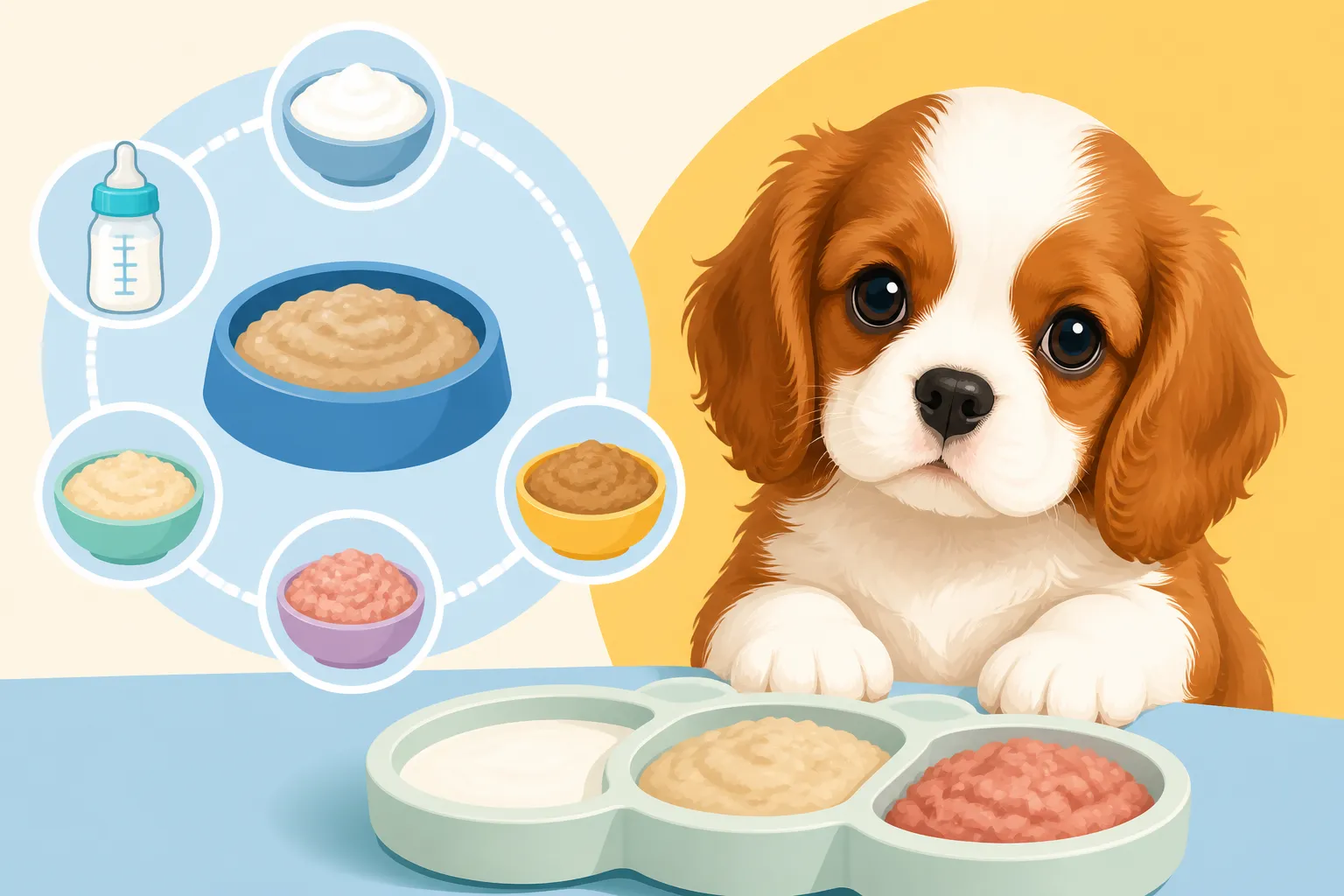
To prepare the mush, take a small amount of puppy kibble and add warm water or, even better, a puppy milk replacer. Let it sit for about 10-15 minutes until the kibble softens completely and can be easily mashed into a gruel-like consistency with a fork or by hand. It should be thin enough for them to lap up but thick enough to provide some substance. When presenting it, use a shallow, flat dish – think a pie plate or a heavy ceramic saucer – that won't tip over easily. Place the puppies around the dish and gently encourage them to investigate. You might need to dip a finger into the mush and allow them to lick it off, or even carefully place a tiny bit on their noses to pique their interest. Expect mess, lots of it! This is a learning process, and they'll likely walk through it, play with it, and get more on themselves than in their tummies initially. Just keep offering small amounts multiple times a day. If you notice A Cavalier Puppy That Will Not Eat, it might be worth trying a slightly different texture or a different brand of puppy food to tempt them.
Transitioning to Kibble: Getting Puppies Ready for Their New Homes
The journey from mother's milk to solid kibble is a gradual one. By the time Cavalier puppies are ready to go to their forever homes at eight weeks, they should be confidently eating dry or lightly moistened puppy kibble, fully weaned from their mother. This transition requires patience and consistency.
Gradual Changes: From Gruel to Moistened Kibble
As the puppies grow stronger and their digestive systems mature, typically between four and six weeks, you’ll gradually start to reduce the amount of liquid you add to their mush. The aim is to slowly increase the texture and firmness of their food. Instead of a watery gruel, you'll move towards a consistency that's more like a thick oatmeal, then to softened kibble, and eventually to mostly dry kibble with just a splash of warm water to take the edge off. This slow progression helps their digestive systems adapt without shocking them, and it also encourages them to chew more, which is important for jaw development and dental health.
During this phase, increasing the frequency of meals, while keeping portion sizes small, is often beneficial. Three to four meals a day are usually appropriate for their growing bodies. Consistency is key, so try to feed them at regular intervals. Remember, they are still learning to eat independently, and some may be more enthusiastic than others. Keep an eye on the smaller or shyer pups in the litter to ensure they're getting their fair share. This steady change also makes it easier for their new families to continue the established feeding routine, whether they refer to guides like The Ration a Cavalier Puppy Needs at Each Age or simply follow the breeder's advice.
What a Well-Nourished Eight-Week-Old Cavalier Eats
By the time a Cavalier puppy reaches the eight-week mark, they should be fully weaned and comfortably eating small-breed puppy kibble. This means the kibble should be small enough for their tiny mouths and developing teeth, and the formulation should be rich in nutrients to support their rapid growth and high energy levels. While some owners might choose to slightly moisten the kibble with warm water for the first few days in a new home to ease the transition, the goal is for them to be able to crunch through dry kibble without issue. This dry kibble also helps to keep their developing teeth cleaner.
At this age, puppies are usually eating three to four meals a day. The exact quantity will depend on the specific food brand and the puppy's individual metabolic rate, but generally, the feeding guide on the back of the puppy food bag is a great starting point. Always ensure fresh water is available at all times. Monitoring their energy levels and ensuring they have healthy, firm stools are good indicators that they are being well-nourished. An eight-week-old Cavalier should be playful, curious, and have a soft, shiny coat. This consistent nutrition lays the groundwork for their overall health, including their development of strong bones and muscles, and helps them thrive as they begin their lives in their new homes. It also contributes to their readiness for other important milestones like Vaccinating a Cavalier Puppy and beginning Cavalier Puppy Toilet Training Indoors. Don't forget to consider Whether a Cavalier Puppy Needs Small Breed Food as these specialized formulas are often best for tiny mouths and rapid growth rates.
Here's a simple overview of the feeding journey for a Cavalier litter before they reach eight weeks:
| Age Range | Primary Food Source | Key Milestones / Notes |
|---|---|---|
| Birth to 3-4 Weeks | Mother's Milk (Colostrum) | Essential for immunity, rapid growth. Monitor for sufficient weight gain. |
| 3-4 Weeks (approx.) | Mother's Milk & Weaning Mush | Teeth erupting, curiosity in mother's food. Start with gruel-like softened puppy kibble. |
| 4-6 Weeks | Weaning Mush & Moistened Kibble | Gradually decrease liquid, increase kibble texture. Introduce multiple small meals daily. |
| 6-8 Weeks | Moistened to Dry Puppy Kibble | Fully weaned. Eating small-breed puppy kibble 3-4 times a day. Ready for new homes. |
When you choose a Cavalier Puppy Prices From a Reputable Breeder, they will be able to provide detailed guidance on the specific food their litter is eating and any special considerations. It’s always helpful to also get copies of important documents like Reading a Cavalier Puppy's Health Certificates so you have a full picture of their early care. Preparing for a new puppy means considering everything, including Setting Up for a Cavalier Puppy's First Weeks, and proper nutrition is certainly at the top of that list.
Disclaimer
This article is for general informational purposes only and does not constitute professional advice. Laws, prices and regulations vary by location and change over time. Consult a qualified professional for guidance on your specific situation.