Building a Cavalier’s Tolerance for Being Left
One of the most heartbreaking challenges Cavalier King Charles Spaniel owners face is witnessing their beloved companion’s distress when left alone. These sweet, devoted dogs are bred for companionship, and for many, separation from their human can feel like an existential crisis, leading to destructive behaviors, incessant barking, or even self-harm. This guide is here to offer a compassionate, practical roadmap to gradually building your Cavalier’s confidence and tolerance for alone time, transforming frantic panic into calm, settled independence.
Understanding Why Cavaliers Struggle with Alone Time
It's crucial to first understand the deep-seated reasons behind a Cavalier's difficulty with being left alone. It's not about being "naughty" or "stubborn"; it's often a genuine, profound emotional struggle rooted in their very nature and early experiences. Dismissing it as mere misbehavior only compounds the problem and damages the bond you share.
The "Velcro Dog" Nature of Cavaliers
Cavaliers earned the nickname "Velcro dogs" for a reason. They are almost universally described as wanting to be physically close to their people, often following you from room to room, preferring a lap to an empty dog bed, and being intensely attuned to your presence. This isn't a flaw; it's a defining trait of the breed, stemming from centuries of being lap companions to royalty and aristocracy. They thrive on connection and affection, and their entire history is built around close human contact.
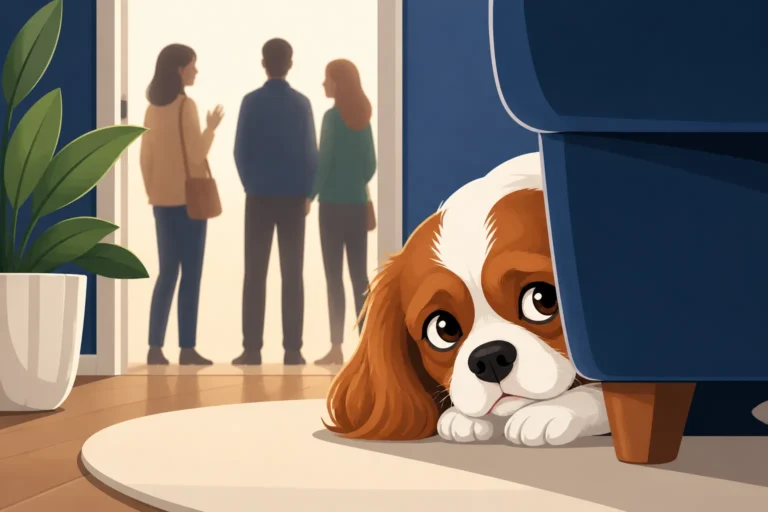
This inherent need for closeness means that being left alone goes against their very grain. For many Cavaliers, the sudden absence of their person isn't just boring; it's genuinely frightening. They don't understand that you'll be back, or that your departure is temporary. Instead, their deep-seated instinct for companionship kicks in, triggering anxiety. You might notice them start to pace, whine, or even chew on things they normally wouldn't as soon as you pick up your keys. Understanding Why Cavaliers Are Called Velcro Dogs is the first step in approaching this challenge with the empathy your dog deserves.
The Impact of Early Experiences on Alone Time Tolerance
Just like humans, a Cavalier's early experiences play a significant role in shaping their emotional resilience, especially when it comes to being alone. A puppy that was always with its littermates or human family and then suddenly left for long periods can develop severe separation distress. Similarly, a rescue Cavalier who might have experienced neglect or abandonment in a previous home could be deeply scarred, making alone time particularly terrifying.
Even well-meaning owners can inadvertently contribute to the problem. If a puppy is never given opportunities for short, positive periods of independence, they won't learn how to self-soothe or enjoy their own company. It's not about forcing them to be alone, but gently introducing the concept that you always come back and that alone time can be calm and even pleasant. Conversely, sometimes a Cavalier who seemed fine alone as a youngster can develop issues later in life due to changes in routine, a new home, or even a stressful event. It's a journey, not a fixed state.
Differentiating Between Mild Discomfort and Separation Anxiety
It's important to distinguish between a Cavalier who is simply a bit bored or mildly sad when you leave, and one experiencing true separation anxiety. Mild discomfort might manifest as a sigh, watching you leave, or greeting you enthusiastically upon return. There might be a bit of whining initially, but it quickly settles. Your dog usually doesn't cause damage or harm itself.
True separation anxiety, however, is a panic attack. Your Cavalier isn't choosing to be destructive; they are genuinely terrified and can't control their reactions. Signs include excessive vocalization (howling, incessant barking, crying), destructive chewing (especially around exits like doors or windows), inappropriate urination or defecation, pacing, drooling, panting, or even attempts to escape that can result in injury. Signs a Cavalier Is Distressed When Alone are critical to recognize, as the approach to training changes significantly based on the severity of the issue. If you suspect true separation anxiety, a consultation with a veterinary behaviorist or a certified professional dog trainer specializing in anxiety is highly recommended.
Laying the Foundation for Successful Alone Time Training
Before you even think about leaving your Cavalier for extended periods, you need to build a strong foundation of security and confidence. This isn't about quick fixes; it's about shifting their entire perspective on independence and creating positive associations with your absence.
Establishing a Secure Base and Independent Play
Your Cavalier needs to feel utterly secure in your home and with your presence before they can feel secure in your absence. This means consistent routines, clear expectations, and plenty of quality time together. However, "quality time" doesn't always mean physical contact. Encourage independent play sessions where your Cavalier engages with puzzle toys, chews, or snuffle mats away from your immediate presence. This teaches them to entertain themselves and associate positive experiences with being self-sufficient.
Start by simply being in the same room but not directly interacting. You might be reading, working on a laptop, or doing chores. If your Cavalier tries to solicit attention, gently redirect them to a chew toy or a designated "place" like a dog bed. The goal is to show them that your presence doesn't always equal direct interaction, and that independent activity is rewarding. Many Cavaliers struggle with What an Adult Cavalier Has to Unlearn if they've been allowed to demand constant attention, making this foundational step incredibly important.
Crate Training as a Safe Haven
For many Cavaliers, a crate can become a den, a safe, quiet space where they feel secure and can relax. This is not a punishment, but a sanctuary. Introduce the crate slowly and positively, using high-value treats and toys. Never force your Cavalier into it. The door should be left open initially, allowing them to explore and retreat as they wish. Feed meals inside the crate, and toss in favorite toys.
Once your Cavalier willingly enters and settles, you can start closing the door for very short periods while you're still in the room, gradually increasing the time. This teaches them that the crate is a pleasant, calm place to be, even when the door is shut. It can be particularly effective for Crate Training a Cavalier That Panics, providing them with a confined, secure space that can reduce overall anxiety during your absence. Remember, the crate should always be associated with good things, never with scolding or isolation. For some Cavaliers, particularly those with a history of trauma, a crate might not be the answer, and a small, puppy-proofed room might be a better alternative.
Building a Relaxing Pre-Departure Routine
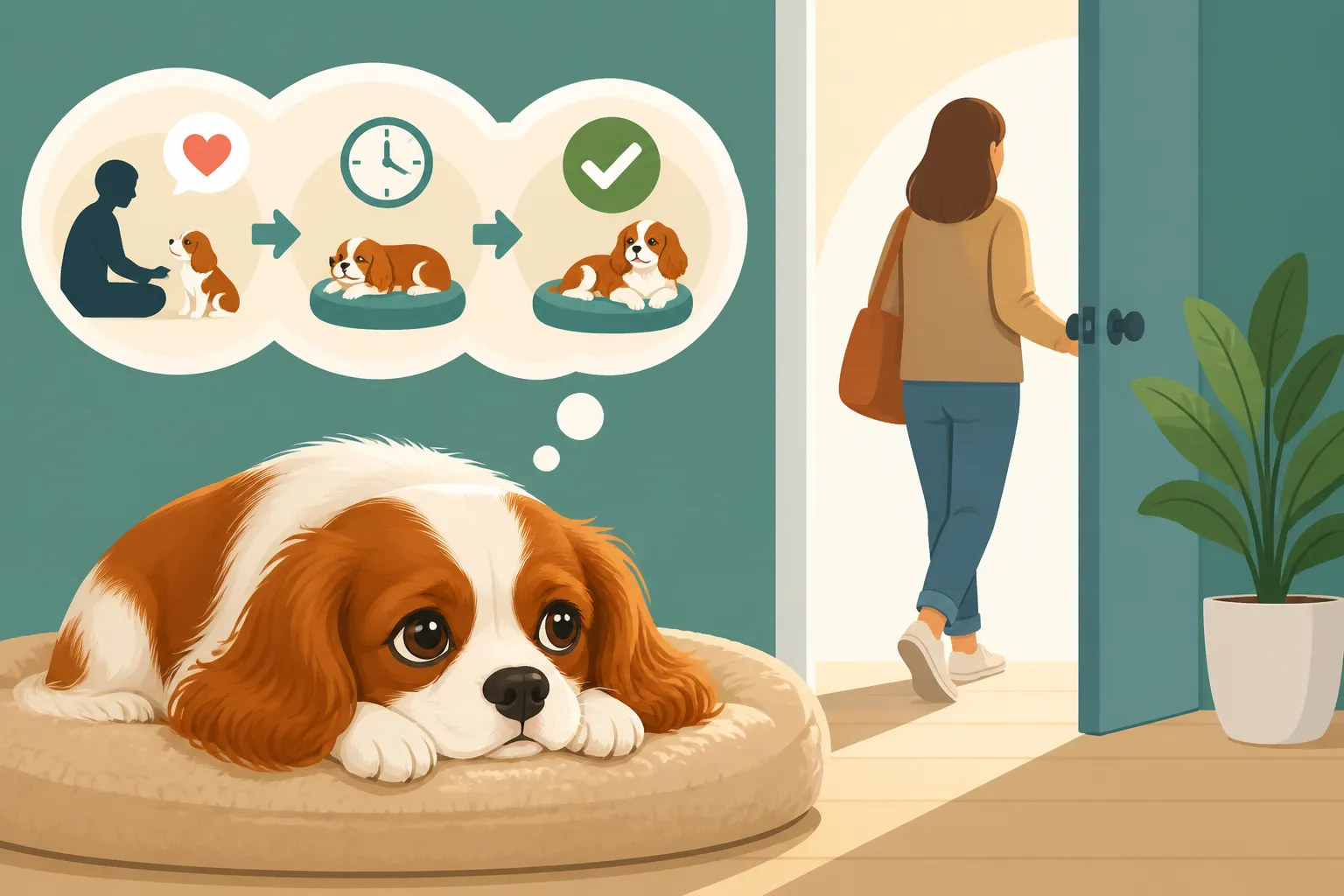
Dogs are incredibly astute at picking up on our cues. The jingle of keys, putting on shoes, grabbing your bag – these often become triggers for anxiety in Cavaliers struggling with alone time. To counter this, create a calming and consistent pre-departure routine that signals your upcoming absence in a low-stress way. This routine should be distinct from your actual departure, so your dog learns to associate these actions with a predictable, calm outcome, rather than immediate panic.
Your routine might involve taking your Cavalier out for a potty break, followed by a quiet chew toy or puzzle feeder in their safe space (crate or designated room). Avoid making a big fuss or emotional goodbyes. A simple, calm statement like "Be a good boy, I'll be back" is sufficient. The idea is to make your departure as uneventful as possible. Practice Departure Routines That Calm a Cavalier even when you're not actually leaving, desensitizing your dog to these triggers. Consistency is key, so everyone in the household should follow the same routine.
The Gradual Process of Increasing Alone Time
This is where the real work begins, and patience is your most valuable tool. The goal is to gradually expose your Cavalier to your absence in such small, manageable increments that they hardly notice you're gone. Rushing this process will only undo your hard work and reinforce their anxiety.
Starting with Micro-Absences
You're not going to jump straight to leaving your Cavalier for an hour. You're going to start with literally seconds. Place your Cavalier in their safe space with a high-value chew or puzzle toy (like a KONG stuffed with peanut butter or wet food, frozen to last longer). Say your calm departure phrase, then step out of sight for just 5-10 seconds. Then, calmly return. Don't make a big greeting; just walk back in as if you'd simply gone to another room. If your Cavalier is quiet, reward them with a small treat or calm praise.
Repeat this many, many times over several days, or even weeks. Gradually increase the duration by tiny increments: 15 seconds, 30 seconds, 1 minute. The key is to return before your Cavalier shows any signs of distress. If they start whining or barking, you've gone too far, too fast. Next time, reduce the duration. This process of Building From Thirty Seconds With a Cavalier takes time, but it's the most effective way to teach them that your departures are always followed by your return and that they can cope during that time.
Incrementally Extending the Time You're Away
Once your Cavalier is comfortable with you being out of sight for a few minutes, you can start adding a tiny bit more duration and even incorporating leaving the house. Again, the principle is the same: go slow, observe, and reward calm behavior. You might step outside and close the door, wait 1 minute, then return. If that goes well, try 2 minutes, then 5.
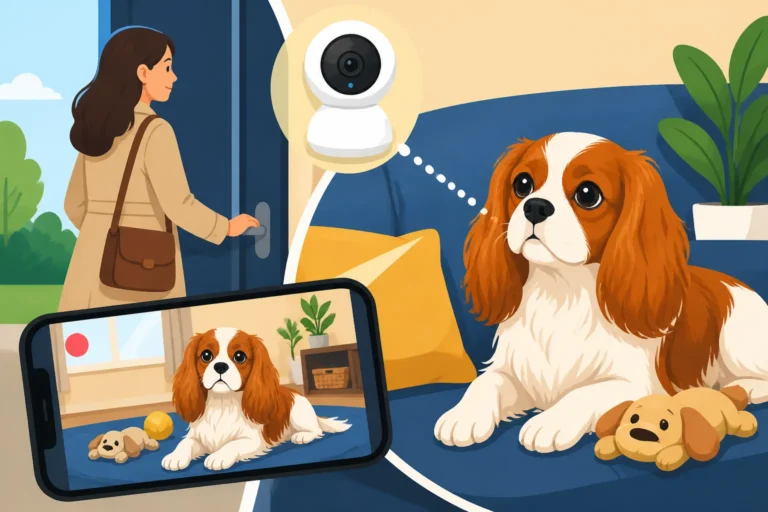
Use a camera or baby monitor to observe your Cavalier's behavior while you're gone. This is incredibly helpful for timing your returns perfectly. You want to return when they are calm, not when they are panicking. If you find they consistently become distressed after a certain amount of time (e.g., 7 minutes), then that's your current limit. You need to work on reinforcing calm behavior at 5-6 minutes before trying to extend again. This isn't a race; it's a marathon. For monitoring, many pet parents use devices like the Furbo or even just an old smartphone with a video app. For quality training content, BAXTER & Bella offers online resources that can guide you through these incremental steps, often with video demonstrations.
Managing Setbacks and Plateaus
There will be days when your Cavalier regresses. Maybe they were fine for 10 minutes yesterday, but today they started whining after 3. Don't get discouraged! This is a normal part of the learning process. It could be due to a change in weather, a loud noise outside, or simply an off day for your dog. When a setback occurs, simply go back to an earlier, shorter duration where they were consistently successful. Build back up from there.
Plateaus are also common. You might find your Cavalier is great at 15 minutes, but struggles to break through to 20. This is a sign to stick with 15 minutes for a longer period, really solidifying that calm behavior. You can also vary the intervals – sometimes 10 minutes, sometimes 15, sometimes just 5 – so they don't simply learn a fixed "timer" for your return. The goal is true confidence, not just rote memorization. Remember, How Long a Cavalier Lives After Diagnosis of various conditions shows us that these dogs often face health challenges, and sometimes, unexplained regression can be a subtle sign of discomfort or pain that needs veterinary attention. Always rule out underlying medical issues if behavior suddenly changes.
Tools and Strategies to Support Your Cavalier
While gradual exposure is the cornerstone of alone time training, there are many supportive tools and strategies that can make the journey smoother and more successful for both you and your Cavalier.
Calming Aids and Environmental Enrichment
Creating a calm environment and providing engaging distractions can significantly help your Cavalier cope with your absence. Before you leave, make sure your dog has had adequate exercise and a potty break. A tired Cavalier is a calmer Cavalier. Then, set up their space. Play calming music or a white noise machine to block out external sounds that might trigger anxiety. Some owners swear by specific dog-calming music channels available on platforms like Amazon Music.
Provide highly appealing, long-lasting chew toys or puzzle feeders that will occupy them for a good chunk of your absence. These should be things they only get when you leave, making your departure a positive association. Think frozen KONGs, West Paw Toppl toys, or Snuffle Mats. Consider Calming Supplements for an Anxious Cavalier if your dog's anxiety is mild to moderate. These might include L-Theanine, Zylkene, or various herbal blends, but always discuss these with your veterinarian first, as they can interact with other medications or conditions. Pheromone diffusers designed for dogs can also help create a sense of security in their designated area.
Utilizing Technology for Monitoring and Comfort
Technology has become an invaluable aid for owners working on alone time training. As mentioned, a pet camera is essential. Being able to watch your Cavalier's behavior in real-time allows you to time your returns perfectly, gauge their stress levels, and understand their triggers. Many cameras offer two-way audio, so you can speak to your dog (though some dogs find this more unsettling than comforting – observe your Cavalier's reaction carefully). Some even dispense treats, which can be a nice distraction if timed correctly.
Beyond cameras, there are smart home devices that can control lights or music, allowing you to create a consistent environment even when you're not there. For instance, you could schedule lights to come on gradually as dusk approaches, mimicking a natural transition. You might be interested in reading about Filming a Cavalier While You Are Out for more detailed advice on choosing and using these devices effectively. The data you gather from monitoring is crucial for adapting your training plan.
When Professional Help is Needed
If your Cavalier's separation distress is severe, involves self-harm, extreme destruction, or if you're making little progress despite consistent effort, it's time to seek professional help. This is not a failure on your part; it's an acknowledgment that your Cavalier needs specialized support. A Certified Professional Dog Trainer (CPDT) who specializes in separation anxiety, or a Veterinary Behaviorist (DACVB), can provide a tailored plan, identify specific triggers, and guide you through advanced desensitization techniques.
In some cases, especially with severe separation anxiety, medication might be necessary to help your Cavalier learn. Just like with humans, anxiety medication for dogs doesn't "cure" the problem, but it can lower their anxiety levels enough to make them receptive to training. A vet behaviorist can prescribe appropriate medication and work with you to combine it with behavior modification. For more information on this, explore topics like Medication for Cavalier Separation Anxiety. Don't feel guilty about considering medication; sometimes it's the kindest thing you can do to alleviate your dog's suffering and help them learn to cope.
Maintaining Progress and Preventing Regression
Achieving success in alone time training is a huge milestone, but it's not a "one and done" situation. Cavaliers, by their very nature, can easily slip back into old habits if the training isn't reinforced consistently. Long-term commitment is essential to ensure your Cavalier remains confident and comfortable when left alone.
Continuing Short, Regular Alone Time Practice
Even after your Cavalier can comfortably handle longer periods alone, it's vital to continue practicing short absences regularly. Think of it like maintaining a skill – if you don't use it, you might lose it. Don't save alone time for only when you have to leave for work or errands. Incorporate brief departures into your daily routine. Step out for 10 minutes to check the mail, or just sit in your car for 5 minutes. This keeps the idea of you leaving and returning normal and predictable.
Vary the durations and the times of day. Sometimes leave for a quick errand, other times for a slightly longer one. The unpredictability within a predictable framework helps solidify their understanding that departures are normal. If you suddenly have a period where you are home much more often (like a vacation or working from home), be extra diligent about scheduling these short practice sessions. This prevents your Cavalier from becoming overly dependent again.
Recognizing and Addressing New Triggers
Life happens, and sometimes new situations can trigger old anxieties or create new ones. A change in schedule, moving to a new house, a new pet joining the family, or even construction noise outside can all potentially disrupt your Cavalier's hard-won progress. Stay observant. If you notice your Cavalier starting to show signs of anxiety again, even subtle ones, address them immediately.
Go back to basics. Shorten your absences and re-establish your calming departure routines. Reinforce positive associations with their safe space and high-value treats. If the trigger is external (like new noisy neighbors), try to mitigate it with white noise or calming music. Being proactive is much easier than trying to re-train severe anxiety once it's fully resurfaced. Regularly assess Hours a Cavalier Can Cope With Alone as their life circumstances or age changes, as their needs might evolve.
The Long-Term Commitment to a Confident Cavalier
Building your Cavalier's tolerance for being left alone is truly a long-term commitment. It's about ongoing management, patience, and understanding. Your Cavalier will always be a devoted companion, but with consistent training, they can also learn to be a confident, independent one. This journey often deepens the bond you share, as you learn to communicate and understand each other's needs on a more profound level.
Embrace the small victories, forgive the setbacks, and always approach the training with kindness and empathy. The peace of mind for both you and your Cavalier, knowing they are comfortable and safe when you're away, is absolutely worth every bit of effort. And sometimes, even with the best training, a Cavalier's strong need for companionship means that options like a trusted pet sitter or even Whether Daycare Suits an Anxious Cavalier might be part of your long-term strategy for extended absences.
| Alone Time Training Stages | Goal | Duration of Absence (Approx.) | Key Strategies | Essential Tools |
|---|---|---|---|---|
| Foundation | Build general confidence & independence | Zero (present in room) | Independent play, positive crate association, predictable routines, ignoring attention-seeking | Crate, high-value chews, puzzle feeders |
| Micro-Absences | Introduce brief out-of-sight moments | 5 seconds – 1 minute | Step out of sight, return calmly before distress, repeat frequently | Pet camera, timer, high-value treats |
| Gradual Extension | Increase time outside the home | 1 minute – 30 minutes (or more) | Incrementally extend duration, observe via camera, return while calm, vary intervals | Pet camera, long-lasting chews, calming music |
| Maintenance | Sustain confidence | Varies | Regular short practice, vary durations, address new triggers immediately | All of the above, ongoing vigilance |
Disclaimer
This article is for general informational purposes only and does not constitute professional advice. Laws, prices and regulations vary by location and change over time. Consult a qualified professional for guidance on your specific situation.