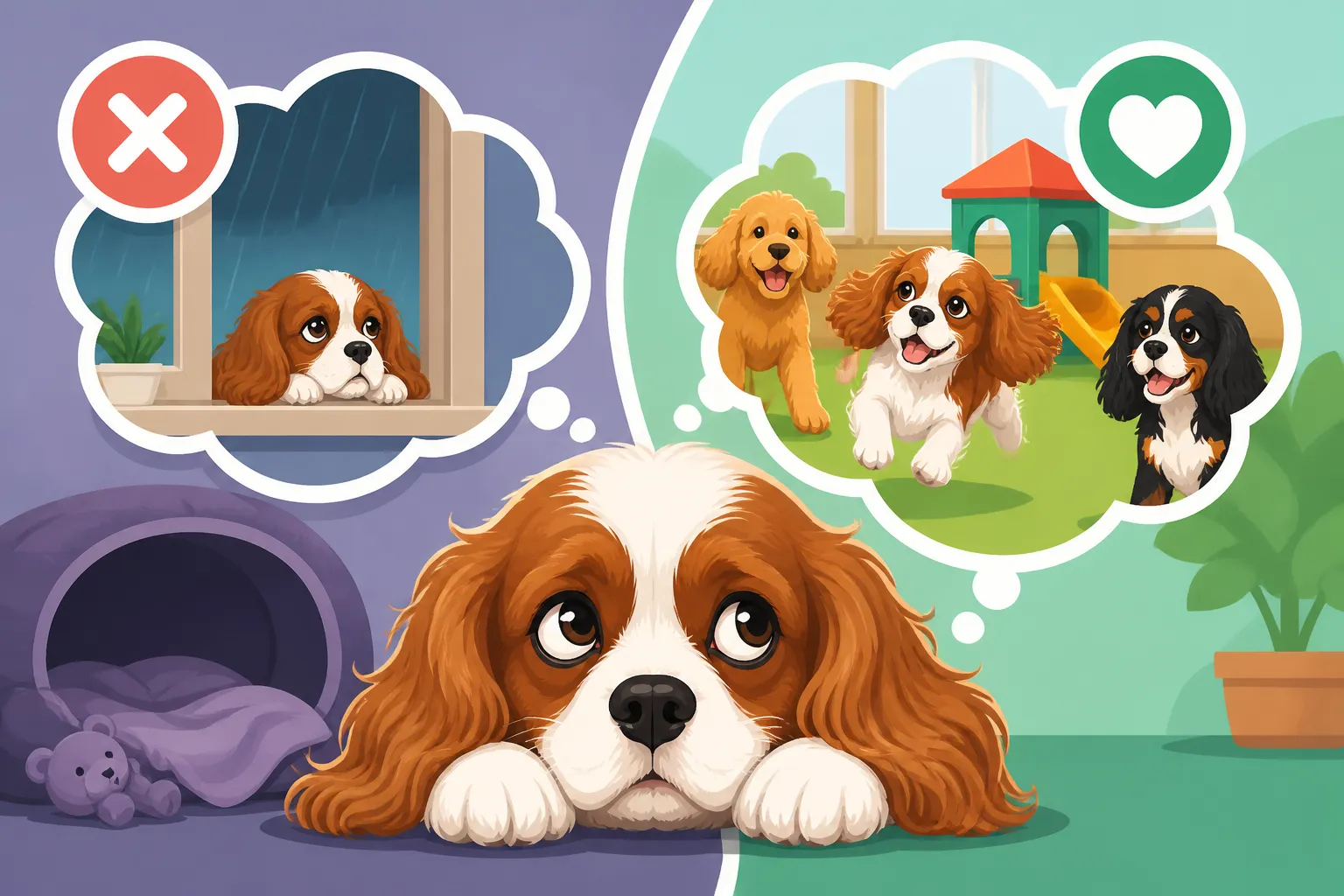
Whether Daycare Suits an Anxious Cavalier
As Cavalier King Charles Spaniel owners, we often face the heartbreaking dilemma of leaving our beloved, clingy companions alone. When daily life demands we step out, the idea of dog daycare can feel like a lifeline, promising social interaction and supervised fun. But for a Cavalier who struggles with anxiety, particularly separation anxiety, the bustling environment of a daycare might not be the peaceful, enriching experience we envision, leaving us wondering if it's truly a solution or just adding to their stress. This guide will delve into the unique considerations for placing an anxious Cavalier in daycare and explore alternatives to ensure their well-being.
Understanding Cavalier Sensitivity and Anxiety
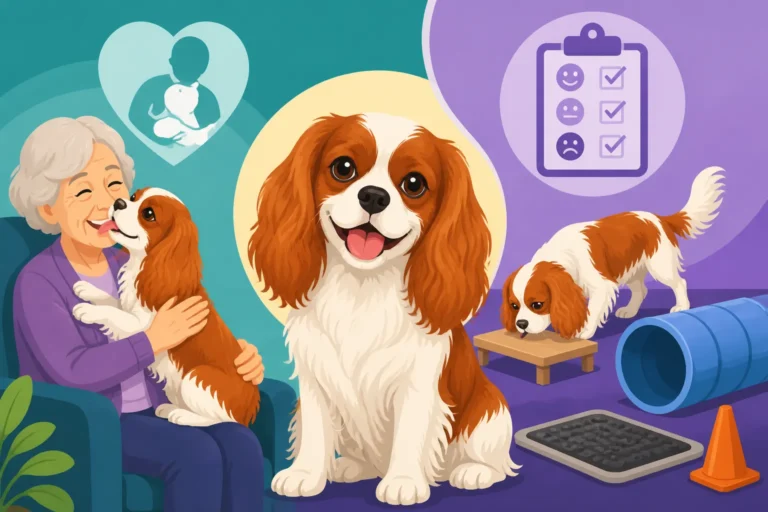
Cavaliers are renowned for their sweet, gentle nature and their intense devotion to their families. They are truly companion dogs, bred for centuries to be warm lap warmers and constant shadows. This inherent desire for closeness often manifests as what we affectionately call "Velcro dog" syndrome. While endearing, it also means they can be particularly susceptible to separation anxiety.
The Deep Bonds Cavaliers Form
Our Cavaliers thrive on companionship. They form incredibly strong attachments to their human family members, often choosing one person as their primary focus, though they adore everyone. This bond, while a source of immense joy, is also the root of their potential struggles with being left alone. When you leave, even for a short while, it can feel like a profound loss to them, triggering feelings of panic and distress. They don't understand that you're coming back; they just feel your absence acutely. This isn't naughtiness; it's genuine emotional turmoil. You can read more about this in Why a Cavalier Follows You Room to Room.
Common Signs of Separation Anxiety
Recognizing separation anxiety in your Cavalier is the first crucial step. It's not just a little whine when you walk out the door. True separation anxiety can manifest in destructive chewing (especially around exits like doors and windows), excessive barking or howling the moment you're gone, inappropriate urination or defecation, pacing, drooling, or even frantic attempts to escape their crate or containment area. Sometimes, the signs are more subtle, like refusing to eat until you return, or a complete shutdown. Many owners miss these signs because they only happen when the dog is alone. Filming your Cavalier while you are out can be incredibly insightful to really see Signs a Cavalier Is Distressed When Alone and What a Cavalier Does When Left Too Long.
High Sensitivity to Environment and Stimuli
Beyond their attachment, Cavaliers are often quite sensitive to their environment. Loud noises, sudden movements, or a chaotic atmosphere can be overwhelming for them. A busy dog daycare, with multiple dogs barking, playing rambunctiously, and constantly shifting human handlers, can be a sensory overload for a sensitive Cavalier, potentially exacerbating any underlying anxiety rather than alleviating it. Their small size also makes them more vulnerable to accidental bumps or rough play from larger, less inhibited dogs.
The Double-Edged Sword of Dog Daycare
Deciding whether daycare is right for your anxious Cavalier is a complex decision, fraught with good intentions and potential pitfalls. It's not a one-size-fits-all solution, and what works for one dog might be detrimental to another, especially with a breed as unique as the Cavalier.
Potential Benefits: Socialization and Exercise (If the Fit is Right)
On paper, daycare offers several appealing benefits. For a dog that genuinely enjoys the company of other dogs, it provides crucial socialization opportunities. They learn appropriate play behaviors, how to share space, and how to navigate a pack environment. For a high-energy dog (which many Cavaliers are, despite their lapdog reputation), daycare can offer a much-needed outlet for physical activity, helping to burn off excess energy that might otherwise contribute to anxiety at home. The structured environment, with trained staff, can also prevent boredom and destructive behaviors that often arise from being left alone with nothing to do. If your Cavalier simply needs company and thrives on being with other canines, a well-run daycare could be wonderful.
The Downside: Overstimulation, Stress, and Exacerbated Anxiety
However, for an anxious or sensitive Cavalier, these perceived benefits can quickly turn into stressors. The constant noise, the sheer number of dogs, and the unpredictable nature of group play can be incredibly overstimulating. Instead of learning to relax, your Cavalier might spend the entire day in a heightened state of anxiety, trying to avoid interaction, hiding, or feeling constantly on edge. This isn't healthy socialization; it's a forced endurance test.
Imagine being an introverted person placed in a crowded, noisy party for eight hours a day, five days a week. You wouldn't emerge feeling refreshed and socialized; you'd likely be exhausted, drained, and even more averse to social interaction. The same can be true for a sensitive Cavalier. A constant state of low-level stress can even have negative long-term health impacts. It's crucial to understand that forcing an anxious dog into an environment that overwhelms them won't "cure" their anxiety; it often makes it worse. This can lead to new behavioral issues developing, or their existing separation anxiety becoming more severe.
Important Considerations for Daycare Selection
If you're still considering daycare, due diligence is paramount. You need to find a facility that truly understands dog behavior, especially canine anxiety and stress signals. Look for:
- Low Dog-to-Staff Ratios: More staff means more individual attention and better supervision, reducing the likelihood of your Cavalier being overwhelmed or unnoticed.
- Separation of Play Groups: A good daycare will separate dogs by size, temperament, and play style. Your small, gentle Cavalier should not be lumped in with boisterous large breeds. Quiet areas or "chill zones" for dogs needing a break are also a huge plus.
- Trained Staff: Staff should be knowledgeable about dog body language, able to identify stress signals (lip-licking, yawning, whale eye, tucked tail, stiffness), and intervene before situations escalate. They should be able to tell you how your Cavalier actually spent their day, not just that they "played well."
- Trial Days: Most reputable daycares offer trial days. This is non-negotiable for an anxious Cavalier. Ask for honest feedback on how your dog coped, what their interactions were like, and whether they seemed stressed. Don't be afraid to pull your dog if the feedback isn't reassuring or if your Cavalier seems more stressed at home after attending.
- Cleanliness and Safety: While not directly related to anxiety, a clean, safe environment is crucial for your dog's overall well-being.
Preparing Your Anxious Cavalier for Daycare (If It's the Right Fit)
Even if you find an ideal daycare, sending an anxious Cavalier requires careful preparation. You can't just drop them off and expect them to thrive. The goal is to set them up for success, gradually acclimatizing them to new experiences and building their confidence.
Gradual Acclimation and Short Stays
Start with very short visits, perhaps just an hour or two, and slowly increase the duration as your Cavalier shows signs of comfort. Many daycares understand this need for a phased approach. The first few times might just be about dropping off and picking up quickly, so they associate the place with positive experiences rather than being abandoned. This process can take weeks, even months, so patience is key. The idea is to build positive associations, not overwhelm them immediately.
Working on Home-Based Anxiety First
Often, addressing the root causes of their anxiety at home can significantly improve their ability to cope in other environments. This might involve working with a professional positive reinforcement trainer to teach independence and build confidence. Resources like BAXTER & Bella offer online training programs that can help you with foundational skills and separation anxiety protocols from the comfort of your own home, making it less daunting for your sensitive Cavalier.
Teaching your Cavalier that being alone for short periods is okay, through gradual desensitization, can be incredibly beneficial. This includes practicing polite greetings, reinforcing calm behavior, and making departures and arrivals low-key. For some Cavaliers, specific calming aids can help, such as pheromone diffusers or calming supplements that you can easily find on Amazon. Always discuss any supplements or medication with your vet before introducing them.
What to Pack and What to Communicate
When your Cavalier does go to daycare, clear communication with the staff is vital. Inform them explicitly about your dog's anxiety, triggers, and any specific calming strategies that work at home.
| Item | Purpose | Notes |
|---|---|---|
| Familiar Blanket/Bed | Comfort item that smells like home, reduces stress | Ensure it's washable and clearly marked with your dog's name. |
| Favorite Treat | High-value reward for positive associations, calming chews | Consult daycare rules on outside treats; avoid anything that could choke. |
| Comfort Toy | Something familiar for quiet time | Choose a durable toy they won't ingest; again, marked with name. |
| Medication (if applicable) | For anxiety, pain, or other conditions (e.g., Pain Relief for a Cavalier With Syringomyelia) | Clearly labeled with dosage and instructions; always discuss with vet. |
| Contact Information | Essential for emergencies or questions | Primary and secondary contacts. |
| Emergency Vet Info | Crucial for immediate action if needed | Include your regular vet's contact if different from the emergency one. |
A snood, readily available on Amazon, can also be a good idea for Cavaliers, especially during mealtimes, to keep their beautiful long ears out of their food and water bowls, preventing matting and infections.
Alternative Solutions for the Severely Anxious Cavalier
Sometimes, despite our best efforts, daycare just isn't the right fit. For some Cavaliers, the stress outweighs any potential benefits, and forcing the issue only creates more problems. This doesn't make you a bad owner; it means you're a responsible one, recognizing your dog's individual needs.
In-Home Pet Sitters or Dog Walkers
For many anxious Cavaliers, the best solution is care within their own familiar environment. An in-home pet sitter or a dedicated dog walker offers one-on-one attention without the overwhelming stimuli of a group setting. They can stick to your Cavalier's routine, provide comfort, and offer individualized exercise and potty breaks. This significantly reduces stress and maintains a sense of normalcy for your dog. Finding a reliable pet sitter who understands Leaving a Cavalier on Heart Medication With Someone or other special needs is crucial. A good starting point is seeking recommendations from your vet or trusted friends, or using reputable platforms that screen caregivers. This is often the ideal choice for a Cavalier that struggles with being alone, as it minimizes disruption to their daily life.
Family and Friend Support
If you have trusted family members, friends, or neighbors who adore your Cavalier, enlisting their help can be invaluable. A familiar face in a familiar setting is often the least stressful option. They know your dog's quirks, routines, and comfort preferences, and your Cavalier already has a bond with them. This isn't always feasible for regular, extended periods, but it can be a wonderful backup for shorter absences or occasional needs.
Building Confidence and Managing Separation Anxiety at Home
The most impactful long-term solution for an anxious Cavalier often lies in dedicated training and behavior modification at home. This isn't a quick fix, but it addresses the core issue.
- Desensitization and Counter-Conditioning: Gradually accustoming your Cavalier to your departures, starting with very short absences and slowly increasing duration. Pair your departure with a high-value, long-lasting chew or puzzle toy.
- Establishing a "Safe Space": A comfortable, quiet den or crate (if they are crate-trained without distress) where they can feel secure when you're gone. Some Cavaliers may do better in a dog-proofed room rather than a crate if crating causes further anxiety. You can find comfortable beds and crates for a Beds and Crates for a Fifteen-Pound Cavalier on Amazon.
- Enrichment: Providing plenty of mental and physical enrichment when you are home can help tire them out and build their confidence, reducing their reliance on your constant presence for stimulation. Puzzle toys, training sessions, and sniff walks are excellent.
- Professional Help: Don't hesitate to consult a veterinary behaviorist or a certified professional dog trainer specializing in separation anxiety. They can develop a tailored plan, which might include prescription Medication for Cavalier Separation Anxiety in conjunction with behavior modification, to help your Cavalier cope more effectively. Understanding Trainer Rates for Cavalier Separation Anxiety can help you budget for this essential support.
Ultimately, the best care for an anxious Cavalier is one that prioritizes their emotional well-being. Whether that's a carefully chosen, low-key daycare, an attentive pet sitter, or a dedicated home-based training plan, your Cavalier deserves an environment where they feel safe, loved, and understood. For more insights on this common Cavalier challenge, check out Living With a Cavalier That Panics When Alone and Building a Cavalier's Tolerance for Being Left.
Disclaimer
This article is for general informational purposes only and does not constitute professional advice. Laws, prices and regulations vary by location and change over time. Consult a qualified professional for guidance on your specific situation.