Whether a Cavalier Reads Bigger Dogs Correctly
It’s a common misconception that because Cavaliers are naturally sweet-natured and generally friendly, they inherently know how to interact with every dog, especially those much larger than themselves. Many of us have watched our little Cavaliers, all tail wags and innocent enthusiasm, barrel up to a massive Labrador or a stoic German Shepherd, seemingly oblivious to potential social faux pas or outright danger. But do Cavaliers truly "read" bigger dogs correctly, or are they often operating on a different wavelength entirely? This guide will dive deep into the nuances of Cavalier-big dog interactions, helping you understand their unique perspective and how to keep them safe and happy.
The Cavalier's Perspective: Why They Might Misinterpret Signals
Cavalier King Charles Spaniels are renowned for their loving, gentle dispositions. They tend to assume the best in everyone, whether two-legged or four. This wonderful trait, however, can sometimes lead to misunderstandings when they encounter dogs that operate with a different social code, especially larger breeds whose communication might be more subtle or, conversely, more imposing.
A Lack of Fear or Naivety?
One of the most charming, yet potentially risky, aspects of the Cavalier temperament is their apparent lack of fear, or perhaps more accurately, their incredible trust. A Cavalier will often approach a dog three, four, or even five times its size with the same joyful abandon it would a puppy from its own litter. This isn't necessarily bravery; it's often a lack of understanding of canine social cues, combined with an inherent belief that all interactions will be positive. They haven't been "trained" to be wary, nor do their instincts always kick in to signal caution in the same way a larger, more independent breed might. Their primary instinct is often to seek connection and companionship, a trait deeply rooted in their history as lap dogs.
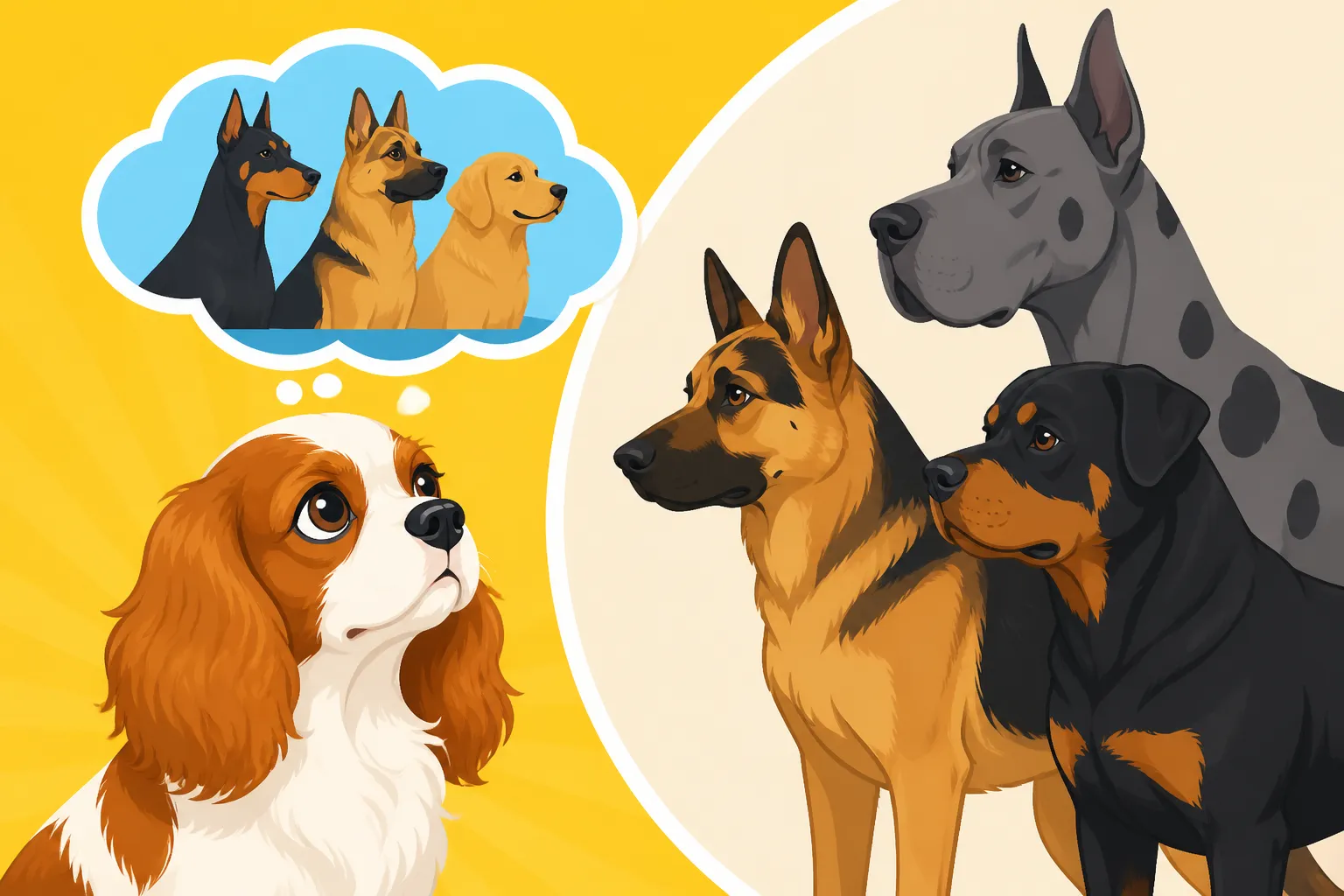
Imagine your Cavalier, let's call her Pippa, trotting confidently towards a majestic Great Dane in the park. Pippa sees a potential friend, a playmate, maybe even a new lap to occupy. The Great Dane, however, might be giving off subtle signals that Pippa simply doesn't register. Perhaps the Dane's tail is stiff, not wagging loosely, or its gaze is direct and unblinking – signals that in the canine world often mean "stay back" or "I'm assessing you." Pippa, with her cheerful, bouncy approach, might just interpret the stiff posture as a curious stance and the direct stare as an invitation to engage. This difference in interpreting foundational body language is where the seeds of misunderstanding are often sown, not from malice, but from a fundamental difference in how they perceive the world and its inhabitants.
Differences in Play Style and Size
Beyond subtle signals, the sheer difference in physical size profoundly impacts how Cavaliers and larger dogs play and interact. A Cavalier's play style is often characterized by a lot of wiggling, tail wagging, and close-quarters engagement. They love to chase, be chased, and engage in gentle wrestling. When they try to engage a much larger dog in this way, the dynamics change dramatically. What might be a soft nudge from a Cavalier could feel like an insistent poke to a bigger dog. A playful nip that's perfectly acceptable between two small dogs could be misinterpreted as a challenge by a large breed, or simply not felt at all, leading the Cavalier to escalate their attempts to get attention.
Furthermore, bigger dogs often have a more robust play style. A gentle bump or a clumsy pounce from a larger dog can easily knock a Cavalier off their feet, or even cause injury. The larger dog might not even realize their own strength or the fragility of their smaller playmate. It's like a toddler trying to play football with professional athletes; the intentions might be pure, but the physical disparity makes truly equitable play difficult and potentially dangerous. This is why careful supervision, particularly during initial meetings and play sessions, is absolutely non-negotiable. You can't assume that because your Cavalier is friendly, every large dog will appreciate their unique brand of exuberance, or even be able to play safely with them.
Common Misunderstandings and Their Consequences
When a Cavalier, with its boundless optimism and charming personality, misreads the signals of a larger dog, the consequences can range from awkward social blunders to serious physical harm. It’s crucial for us as owners to be the interpreters and protectors, bridging the communication gap.
Over-Enthusiasm and Ignoring Cues
One of the most frequent issues is a Cavalier's tendency to be over-enthusiastic and, in turn, to ignore polite or even firm "back off" cues from larger dogs. Imagine a scenario where a large retriever is lying down, perhaps enjoying a quiet moment, and your Cavalier bounds over, sniffing intently, maybe even trying to lick its face or jump on it. The retriever might initially offer a soft growl, turn its head away, or even stand up and walk a few steps away – all clear signals in canine language for "I need space." However, our Cavaliers, bless their hearts, often interpret these as part of the game or an invitation to follow. Their small stature and often submissive body language (a low tail wag, soft eyes) might inadvertently be perceived as pushiness by a dog that doesn't understand their specific breed nuances.
This persistent, oblivious approach can quickly escalate. A dog that was merely uncomfortable can become agitated or even genuinely defensive if its warnings are repeatedly ignored. This isn't always about aggression; it's often about a breakdown in communication and a larger dog feeling its boundaries are being invaded. A Cavalier might get right up in a bigger dog's face, or try to crawl under them, actions that would be a major breach of etiquette in the dog world, especially if the larger dog is already feeling uneasy. Understanding Whether a Cavalier Should Be Clipped in Summer is more about grooming, but understanding their general temperament helps explain why they might be so bold.
The Risk of Accidental Injury
Beyond social faux pas, the most pressing consequence of a Cavalier misreading a bigger dog is the very real risk of accidental injury. A Cavalier is a small, delicate breed. Their bones are tiny, their bodies are light, and they simply cannot withstand the same rough and tumble play or accidental bumps that a larger, more robust dog can. A large dog might not intend harm, but a playful pounce, a quick turn, or even an excited run can result in your Cavalier being knocked over, stepped on, or shaken.
Consider a busy dog park. Your Cavalier sees a group of larger dogs engaged in a high-speed chase. Thinking it's an open invitation, your Cavalier darts into the middle of the fray. A playful shoulder bump from a fifty-pound dog could send your fifteen-pound Cavalier tumbling, potentially leading to sprains, fractures, or even internal injuries. A simple nip from a larger dog, meant as a warning, could inflict a significant wound on a Cavalier. It’s a terrifying thought for any owner, and it’s why understanding the potential for accidental harm is paramount. This risk also applies when considering things like Whether Agility Is Safe for a Cavalier's Knees, as joint health is always a concern for this breed, and accidental impact could exacerbate issues. We must be their diligent advocates, recognizing that their cheerful ignorance is not a defense against physical injury.
Strategies for Safe and Successful Interactions
Given the communication challenges and physical disparities, simply hoping for the best isn't a viable strategy for Cavalier owners. Proactive, thoughtful management and training are essential to ensure your Cavalier enjoys positive interactions and remains safe around larger dogs.
Supervised Introductions and Controlled Environments
The cornerstone of safe interactions is careful supervision, especially during initial introductions. Never just unleash your Cavalier into a group of unfamiliar large dogs and assume everything will be fine. Instead, opt for controlled, neutral environments. A fenced yard or a quiet park area where you can manage the interaction is ideal. Start with one-on-one introductions with a calm, known large dog. Both dogs should be on leashes initially, allowing you to easily guide and separate them if needed. This also allows you to intervene if you see the larger dog displaying any stress signals, or if your Cavalier is being overly persistent.
Pay close attention to both dogs' body language. Are tails wagging loosely, or stiffly? Are ears relaxed, or pinned back? Is play reciprocal, or is one dog constantly initiating and the other tolerating? If either dog seems uncomfortable, it's time to create distance. Even after a successful initial meeting, always keep play sessions brief and supervised. Regular socialization is vital for any dog, and for a Cavalier, it's about teaching them appropriate responses without overwhelming them. Consider seeking out puppy playgroups or structured socialization classes that have separate areas or specific times for small and large breeds, ensuring a safer environment. This is especially important for a Socializing a Cavalier Puppy Gently from a young age.
Teaching Your Cavalier Appropriate Manners
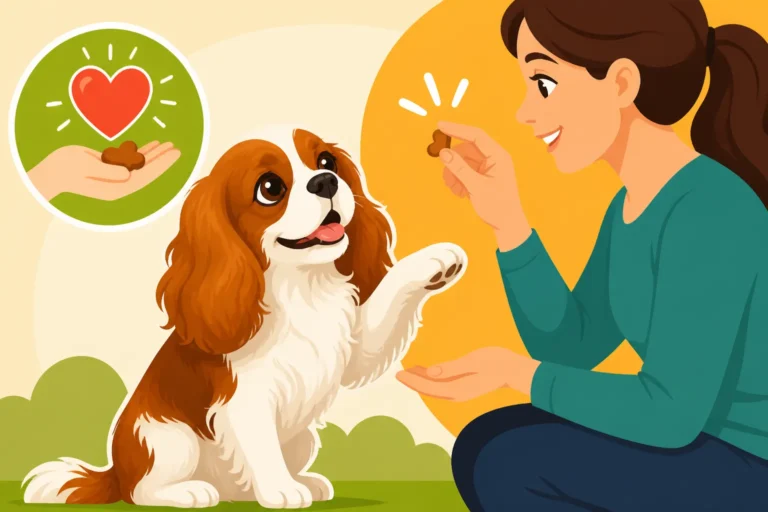
While Cavaliers are sweet, they still benefit immensely from structured training, particularly when it comes to social etiquette around other dogs. A strong "leave it" cue can be a lifesaver, allowing you to redirect your Cavalier's attention away from an inappropriate interaction. "Come" or a reliable recall is equally vital, enabling you to call your Cavalier back to safety if a situation looks like it might escalate. Reward-Based Training With a Cavalier works wonders for teaching these crucial commands, using positive reinforcement to make learning fun and effective.
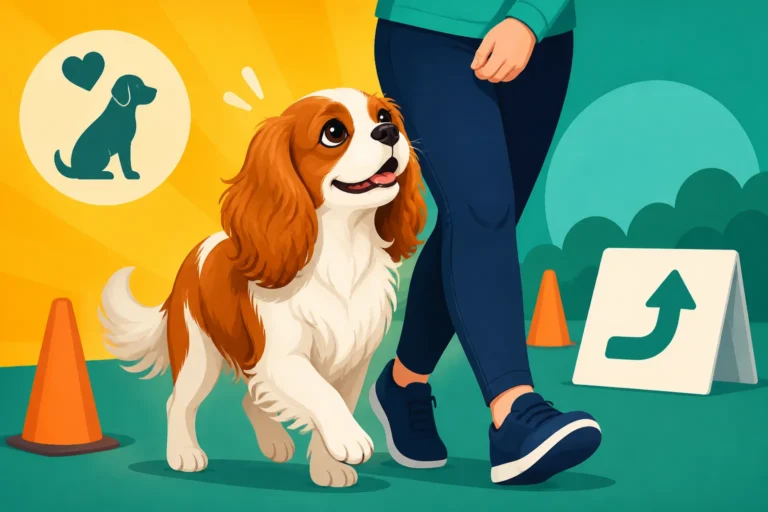
Practicing these commands in various environments, including around other dogs, will build their reliability. You want your Cavalier to understand that while other dogs are interesting, your voice is the most important signal. This isn't about curbing their natural exuberance entirely, but about giving them the tools to navigate the world respectfully and safely. Teaching them to settle on a mat, or to walk politely on a leash without darting towards every dog they see, also contributes to better manners. A good training program, like the one offered by BAXTER & Bella, can provide structured lessons and support to help you teach these vital skills at home, making sure your Cavalier learns how to behave calmly and appropriately in various situations.
Recognizing Red Flags in Bigger Dogs
Just as important as understanding your Cavalier's behavior is being able to "read" the other dogs they encounter. Not all larger dogs are inherently friendly or well-socialized, and it’s your job to identify potential red flags before your Cavalier gets too close.
Here are some signals to watch for in bigger dogs:
- Stiff body posture: A rigid stance, raised hackles, or a high, stiff tail can indicate tension or aggression.
- Hard stare: Direct, unblinking eye contact from a larger dog directed at your Cavalier is rarely a friendly invitation.
- Lip licking or yawning (when not tired): These can be stress signals, indicating the dog is uncomfortable.
- Growling or snarling: Never ignore these vocal warnings. They mean "stay away."
- Attempting to hide or move away: A dog trying to avoid interaction is telling you they don't want to engage.
- Excessive barking or lunging: Clearly aggressive or overstimulated behavior that should be avoided.
If you observe any of these signs, immediately create distance between your Cavalier and the larger dog. It’s perfectly acceptable to remove your dog from a situation that doesn't feel safe, even if it means interrupting a walk or leaving a park. Your Cavalier's safety is always the top priority. Protecting a Small Cavalier From Off-Leash Dogs is a huge concern, and recognizing these warning signs in larger, uncontrolled dogs is vital for proactive prevention.
Tools and Training to Support Your Cavalier
Beyond understanding canine body language and careful supervision, having the right tools and knowing when to seek professional help can make all the difference in ensuring your Cavalier thrives in a multi-dog world.
Harnesses and Leashes for Control
For a small breed like a Cavalier, a properly fitting harness is an absolute must, especially when out and about where they might encounter larger dogs. Collars, while fine for ID tags, can put undue pressure on your Cavalier's delicate neck and trachea if they pull or if you need to quickly restrain them. A harness distributes pressure across their chest and shoulders, offering better control and reducing the risk of injury. There are many options available on platforms like Amazon, but always ensure you choose one that fits snugly without chafing and allows full range of motion.
| Harness Type | Pros | Cons | Best For |
|---|---|---|---|
| Step-in Harness | Easy to put on, good for sensitive heads | Can be less secure if not fitted perfectly | Cavaliers who dislike overhead harnesses |
| Vest Harness | Comfortable, less chafing, good support | Can be hot in summer, may restrict some movement | Everyday walks, extra comfort |
| Front-clip Harness | Helps reduce pulling, redirects attention | Can tangle legs if not used correctly | Cavaliers who tend to pull towards other dogs |
| Back-clip Harness | Standard, comfortable, generally secure | Can allow some pulling, less control than front-clip | Well-behaved Cavaliers, casual walks |
A good quality, sturdy leash, ideally six feet long, provides enough slack for your Cavalier to explore safely while still giving you the ability to reel them in quickly if a larger, potentially unpredictable dog approaches. Retractable leashes are generally not recommended in situations with other dogs, as they offer less control and can lead to dangerous entanglement. Using a fixed-length leash allows you to maintain a consistent connection and react much faster. Finding Harnesses Suited to a Cavalier's Neck is about more than just comfort; it's about safety.
Professional Guidance and Socialization Classes
Sometimes, despite our best efforts, our Cavaliers might still struggle with appropriate interactions, or perhaps you've encountered a particularly challenging situation. In these instances, don't hesitate to seek professional guidance. A certified professional dog trainer or a canine behaviorist can observe your Cavalier's interactions and provide tailored strategies. They can help you understand the nuances of canine communication, teach you advanced handling techniques, and even work with your Cavalier directly to build confidence and refine their social skills. This can be invaluable if your Cavalier exhibits fear, excessive barking, or continued difficulty reading other dogs' signals.
Many communities offer structured socialization classes or workshops, often with separate sessions for different size dogs. These can be fantastic opportunities for your Cavalier to learn and practice appropriate play in a controlled, safe environment under the watchful eye of an experienced instructor. These environments are designed to set dogs up for success, gradually exposing them to new experiences and reinforcing positive behaviors. For those who can't attend in-person classes, online platforms like BAXTER & Bella provide comprehensive training programs that cover everything from basic obedience to more advanced socialization techniques, offering flexible support you can access from home. Remember, continuous learning and adaptation are key to being the best advocate for your Cavalier, ensuring they can enjoy the company of other dogs responsibly and safely.
Disclaimer
This article is for general informational purposes only and does not constitute professional advice. Laws, prices and regulations vary by location and change over time. Consult a qualified professional for guidance on your specific situation.