Whether a Cavalier Was Ever Bred to Work
Many potential Cavalier King Charles Spaniel owners wonder about the breed's historical purpose, often asking if these charming little dogs were ever meant for serious "work." It's a valid question, as so many breeds have distinct jobs in their lineage, but the Cavalier's story is a fascinating evolution from active hunter to devoted companion, and understanding this history helps us appreciate their unique temperament today. This guide will explore the Cavalier's roots, the shift in their role, and how their historical instincts still influence their behavior, even if their "work" now mostly involves snuggling on the sofa.
The Cavalier's Ancestral Roots: More Than Just a Pretty Face
To truly understand whether a Cavalier was ever bred to work, we need to cast our minds back further than the refined, gentle dogs we know today. The Cavalier King Charles Spaniel, despite its delicate appearance, hails from a long line of spaniels, and "spaniel" itself is a name intrinsically linked to a working purpose: hunting.
The Noble Lineage of Spaniels
Before the distinct separation into various spaniel breeds, and long before the Cavalier as we recognize it came into being, there were simply "spaniels." These dogs were highly valued for their ability to work in dense cover, flushing out game for hunters. They weren't retrievers in the modern sense, often just signaling where the game was, but their keen noses and energetic drive made them indispensable in the fields and forests of Europe. It's a far cry from the image of a Cavalier gracefully draped across a velvet cushion, isn't it? These early spaniels were robust, active dogs, built for endurance and a strong sense of smell.
Flushing Game for Centuries
Imagine a time when hunting wasn't just a sport for the aristocracy but often a vital means of putting food on the table. In such a world, a dog that could efficiently locate and flush birds from underbrush was incredibly valuable. These original spaniels would quarter the ground tirelessly, their tails wagging furiously as they picked up a scent, diving into thickets where larger dogs might struggle. They worked closely with their human partners, relying on commands and hand signals, a testament to their intelligence and biddability. Their ears, though perhaps not as long as a modern Cavalier's, were certainly prominent enough to protect against thorns and brambles, and their coats were functional, offering protection from the elements.
Early Spaniel Characteristics: Form Follows Function
The physical characteristics of these early working spaniels were entirely dictated by their job. They needed strong, muscular legs for covering varied terrain, a deep chest for stamina, and a coat that could withstand harsh weather. Their noses were typically longer than the modern Cavalier's, optimizing their scenting ability, and their eyes were set to provide a wide field of vision while working. While the exact genetic makeup is hard to trace, it's clear that the foundational stock for all spaniels, including those that would eventually give rise to the Cavalier, was deeply rooted in working utility. They were not merely pets; they were integral tools for survival and sport. It's truly fascinating how breeds evolve and diverge from their original functions over centuries.
From Sporting Fields to Royal Laps: The Divergence of Spaniels
While the ancestral spaniels were undoubtedly working dogs, a significant shift occurred over time, particularly as certain lines found favor not in the hunting field, but in the laps of royalty and the gentry. This is where the story of the Cavalier begins its divergence from its more rugged cousins.
The Rise of the Companion Spaniel
As early as the Renaissance, small spaniels began appearing in European courts, particularly in England. These dogs were less about flushing pheasants and more about providing comfort and companionship. They were bred for their gentle dispositions, their affectionate nature, and their ability to warm a lap on a chilly evening. Imagine the drafty castles and manor houses of old; a warm, living hot water bottle was a real luxury! The value of these dogs shifted from practical hunting prowess to emotional and physical comfort. They became symbols of status and affection, often depicted in portraits nestled on the laps of queens, kings, and nobles. This period marks the beginning of the "toy" spaniel, a dog whose primary function was to be loved.
Courtly Comfort and Pest Control
Beyond their role as cherished companions, these smaller spaniels served another, perhaps less glamorous, but still vital, "working" function within the confines of royal courts: pest control. In a time before modern sanitation, fleas and other parasites were rampant. It was believed that these little dogs could draw fleas away from their human companions, acting as living flea traps. While we might cringe at the thought today, it was a practical concern. They also helped to warm hands and laps, which was particularly appreciated by ladies who often wore cumbersome, restrictive clothing. So, while they weren't herding sheep or retrieving ducks, they absolutely had a job, albeit one very different from their ancestors.
The Shift Towards Aesthetic Appeal
With their role firmly established as companions and courtly accessories, the breeding priorities for these toy spaniels began to change dramatically. Appearance became paramount. Breeders started to select for smaller sizes, softer coats, and increasingly flattened faces. The King Charles Spaniel (often referred to as the English Toy Spaniel in the US) is a direct descendant of these dogs, showcasing an extreme version of this aesthetic shift with its very domed skull and short muzzle. The long, functional nose of the hunting spaniel was no longer desired; instead, a "prettier," more childlike face was preferred. This artistic and aristocratic preference is crucial to understanding the Cavalier's journey, as it set the stage for the dedicated companion we know and love today.
The Cavalier King Charles Spaniel: A Purpose-Bred Companion
Unlike many working breeds, whose entire existence is tied to performing a specific task, the Cavalier King Charles Spaniel was, from its modern re-establishment, deliberately bred for a singular, glorious purpose: companionship. This isn't a lesser role; in our fast-paced, often lonely world, it's a truly invaluable one.
Bred for Affection, Not Action
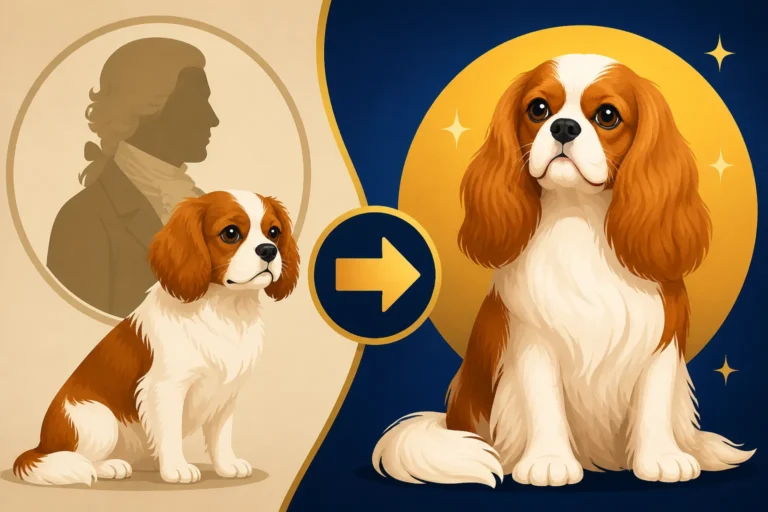
The specific breed we call the Cavalier King Charles Spaniel today largely owes its existence to a revival effort in the early 20th century. After centuries of breeding for the very short-nosed King Charles Spaniel, a wealthy American named Roswell Eldridge offered prize money for "Blenheim Spaniels of the old type," those seen in paintings from the time of King Charles II – dogs with longer noses and flatter skulls. These were not hunting dogs, but rather companion dogs that simply retained more of the original spaniel structure before the extreme changes. How Roswell Eldridge Brought Back the Cavalier is a fascinating read if you're curious about this period.
The dogs bred to Eldridge's specification were chosen for their charming temperaments, their soft expressions, and their ability to form deep bonds with their human families. Their "job" was, and still is, to be the most loving, attentive, and joyful presence in a household. They excel at emotional support, offering comfort, reducing stress, and bringing laughter. This focused breeding for temperament has resulted in a dog that is famously gentle, adaptable, and eager to please, making them wonderful pets for a wide variety of homes.
The Temperament of a True Companion
A Cavalier's temperament is truly its crowning glory. They are renowned for their sweet, affectionate, and outgoing nature. They rarely meet a stranger they don't like, whether it's another dog, a cat, or a new human visitor. This inherent friendliness makes them incredibly easy to live with and a joy to take out in public. They thrive on human interaction and genuinely want to be involved in whatever their family is doing. If you're looking for a dog to patrol your yard or guard your home, a Cavalier probably isn't the best choice – they're more likely to invite the intruder in for a belly rub! Their boundless capacity for love and their adaptable nature truly make them the quintessential companion breed. If you're thinking about adding one to your family, understanding The Cavalier Temperament and the Sporting Spaniel Beneath It is key.
The "Velcro Dog" Phenomenon
One of the most defining characteristics of the Cavalier is their famous "Velcro dog" tendency. They genuinely want to be wherever you are, often following you from room to room. Why a Cavalier Follows You Room to Room explores this endearing trait in detail. This isn't a sign of anxiety (though separation anxiety can occur if they're left alone for too long or without proper training, as we discuss in Living With a Cavalier That Panics When Alone), but rather a manifestation of their deeply ingrained desire for companionship. They are happiest when physically close to their people, whether that means curled up on your lap while you read, lying at your feet while you work, or snoozing next to you on the sofa. Their whole purpose is to connect and share your life, making them incredible emotional anchors for many individuals and families.
Echoes of the Past: How Working Instincts Manifest in Modern Cavaliers
Even though Cavaliers are primarily bred for companionship, their ancestral spaniel roots occasionally peek through in their behaviors. These aren't strong "working drives" in the way you'd see in a Border Collie or a German Shorthaired Pointer, but they are certainly recognizable echoes of their hunting past.
The Scent-Driven Cavalier
Despite their short stature and sweet disposition, Cavaliers possess an incredibly keen sense of smell, a direct inheritance from their gundog ancestors. You'll often see them with their noses to the ground, meticulously investigating every interesting scent during a walk. They might follow an invisible trail for several yards, completely engrossed in the olfactory world around them. This isn't just casual sniffing; it's a genuine drive to explore and understand their environment through scent. In many ways, their nose is their most powerful tool for experiencing the world, much like it was for their game-flushing forebears. Why a Cavalier Follows a Scent explains how this drive works and how you can manage it.
This strong scent drive also means they can be easily distracted by interesting smells, which is something to remember during training sessions outdoors. It's why many Cavalier owners rely on long lines and secure areas for off-leash play, as a captivating scent can send them off on an adventure, oblivious to calls.
The Persistent Chase Drive
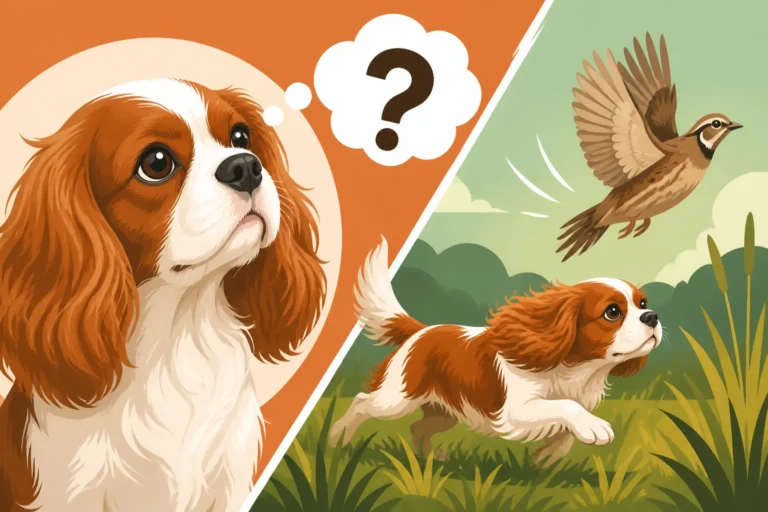
While not built for endurance running or retrieving large game, many Cavaliers retain a surprising chase drive, especially for small, fast-moving objects. Birds, squirrels, rabbits, and even leaves caught in a gust of wind can trigger this instinct. You might witness your sweet, cuddly Cavalier transform into a determined hunter, suddenly bolting after a pigeon in the park. Whether a Cavalier Chases Birds Into the Road highlights the real dangers of this instinct and why good recall training is so vital. This isn't aggression; it's simply a manifestation of that ancient spaniel instinct to "flush" and pursue.
It's important for Cavalier owners to be aware of this, especially in unfenced areas or near traffic. A secure harness and a reliable leash are your best friends in managing this instinct. Even if Whether Cavaliers Still Flush Birds isn't a common sight in your neighborhood, that underlying drive is still there, ready to activate when the right stimulus presents itself.
Canine Good Citizens and Therapy Work
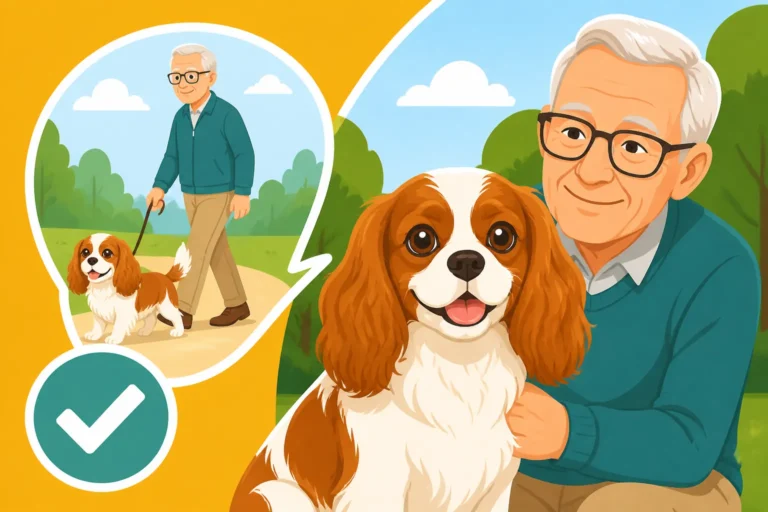
While not "working dogs" in the traditional sense, Cavaliers absolutely excel in roles that leverage their fantastic temperament and biddability. Their gentle nature, eagerness to please, and comfort with strangers make them outstanding candidates for therapy work. They love to be petted, offer a calm presence, and bring smiles to faces in hospitals, nursing homes, and schools. This isn't a job requiring physical exertion, but immense emotional intelligence and a steady disposition. Getting a Cavalier Certified as a Therapy Dog details the process and what makes a Cavalier so well-suited for it.
Furthermore, many Cavaliers achieve Canine Good Citizen (CGC) titles, demonstrating their excellent manners and training. This involves a series of tests proving their ability to be well-behaved in public and respond reliably to basic commands. This is another form of "work" where their intelligence and desire to please truly shine. They may not be herding, but they are certainly performing valuable community service and demonstrating exemplary canine citizenship!
Beyond the Lapdog Label: Modern Activities for Cavaliers
Just because Cavaliers weren't bred for hard physical labor doesn't mean they don't enjoy having "jobs" to do. Engaging their minds and bodies in appropriate ways is crucial for their well-being, and there are many modern activities where their unique blend of intelligence and affection shines.
Low-Impact Sports and Brain Games
Cavaliers are not built for high-impact sports, and owners should always be mindful of their joints and overall health. However, they can absolutely participate in a variety of low-impact canine sports that provide mental and physical stimulation. Rally obedience, for example, is a fantastic option, combining basic obedience commands into a course that the dog and handler navigate together. It's fun, builds teamwork, and isn't physically demanding. Scent work, which taps into their natural sniffing abilities, is another excellent choice.
Brain games and puzzle toys are also incredibly valuable for Cavaliers. These toys, often available from retailers like Chewy, require your dog to figure out how to get a treat, engaging their problem-solving skills. Filling a Kong with peanut butter or creating a "snuffle mat" with kibble hidden inside can keep them happily occupied for a good while. These activities provide mental enrichment, preventing boredom and channeling their intelligence in constructive ways. Scent Work as a Low-Impact Cavalier Sport delves deeper into how much they love these activities.
The Joy of Scent Work and Nose Games
Given their strong natural scent drive, nose work is arguably one of the most fulfilling "jobs" you can give a Cavalier. This activity involves teaching your dog to find specific target odors, much like detection dogs. It's low impact, can be done indoors or outdoors, and deeply engages their innate abilities. Imagine the joy your Cavalier will feel when they successfully locate a hidden treat or toy, using nothing but their incredible nose!
You can start simple at home by hiding treats around the room and encouraging your Cavalier to find them. Gradually increase the difficulty, hide treats under cups, or in different rooms. This kind of mental exercise is incredibly tiring for dogs and can be a wonderful way to bond and build confidence. Many Cavaliers thrive when given a "job" that leverages their natural instincts, even if that job is just finding a piece of kibble.
Making Every Day a "Job" for Your Cavalier
Every Cavalier can have a "job," even if it's not a formal sport or therapy role. Their fundamental job is to be a cherished family member, and you can support this by integrating small, enriching activities into their daily routine.
Consider these "jobs" for your Cavalier:
- "Official Greeter": With their friendly nature, many Cavaliers love to politely greet visitors. Training them to sit calmly for a pet can be a rewarding "job."
- "Mood Booster": Simply being present, offering snuggles, and eliciting smiles is a huge job for a Cavalier.
- "Shadow": Allowing them to follow you and be part of your daily tasks, from watching you cook to supervising your desk work, fulfills their need for closeness and purpose.
- "Entertainment Committee": Playing fetch in the living room or engaging in a game of tug (gently!) are wonderful ways for them to "work" off energy and have fun.
- "Tidy-Upper": Believe it or not, some Cavaliers can be taught to pick up their toys and put them in a basket! This is a fantastic brain game.
Remember, every interaction is a chance to reinforce their role as a loved and valued member of your family. Utilizing positive reinforcement, as discussed in Training a Cavalier With Praise Rather Than Pressure, makes these "jobs" enjoyable for both of you.
Here's a quick comparison of historical spaniel work versus modern Cavalier activities:
| Aspect | Ancestral Spaniels (Working) | Cavalier King Charles Spaniel (Companion) |
|---|---|---|
| Primary Purpose | Locate and flush game for hunters | Provide companionship, affection, and emotional support |
| Physical Demands | High endurance, agility, stamina | Moderate exercise, comfortable on laps and short walks |
| Key "Skills" | Scenting, chasing, biddability in field | Affection, adaptability, gentleness, empathy |
| Working Environment | Fields, forests, dense underbrush | Home, family outings, therapy settings, quiet walks |
| Modern Manifestation | Strong scent drive, chase instinct | "Velcro dog" tendency, love for snuggles, keen nose for treats |
| Activities | Hunting, tracking | Therapy work, rally, scent work, brain games, snuggles |
In conclusion, while the Cavalier King Charles Spaniel as we know it today was specifically developed to be a loving companion, their ancient ancestors absolutely had a working role. The modern Cavalier carries echoes of that past in their keen nose and occasional chase drive, but their true "work" now lies in enriching our lives with their unparalleled affection and sweet nature. It's a job they perform with utmost dedication and joy every single day.
Disclaimer
This article is for general informational purposes only and does not constitute professional advice. Laws, prices and regulations vary by location and change over time. Consult a qualified professional for guidance on your specific situation.