Whether a Cavalier Suits a Student
A Cavalier King Charles Spaniel can be a lovely student companion, but affection alone does not make the arrangement workable. Classes, exams, shared housing, limited budgets, and changing plans can leave a dog without enough company or care. This guide helps you weigh the breed’s needs against student life, identify likely pressure points, and decide whether to wait or make a practical plan.
What student life can feel like for a Cavalier
A people-focused dog needs more than a place to sleep
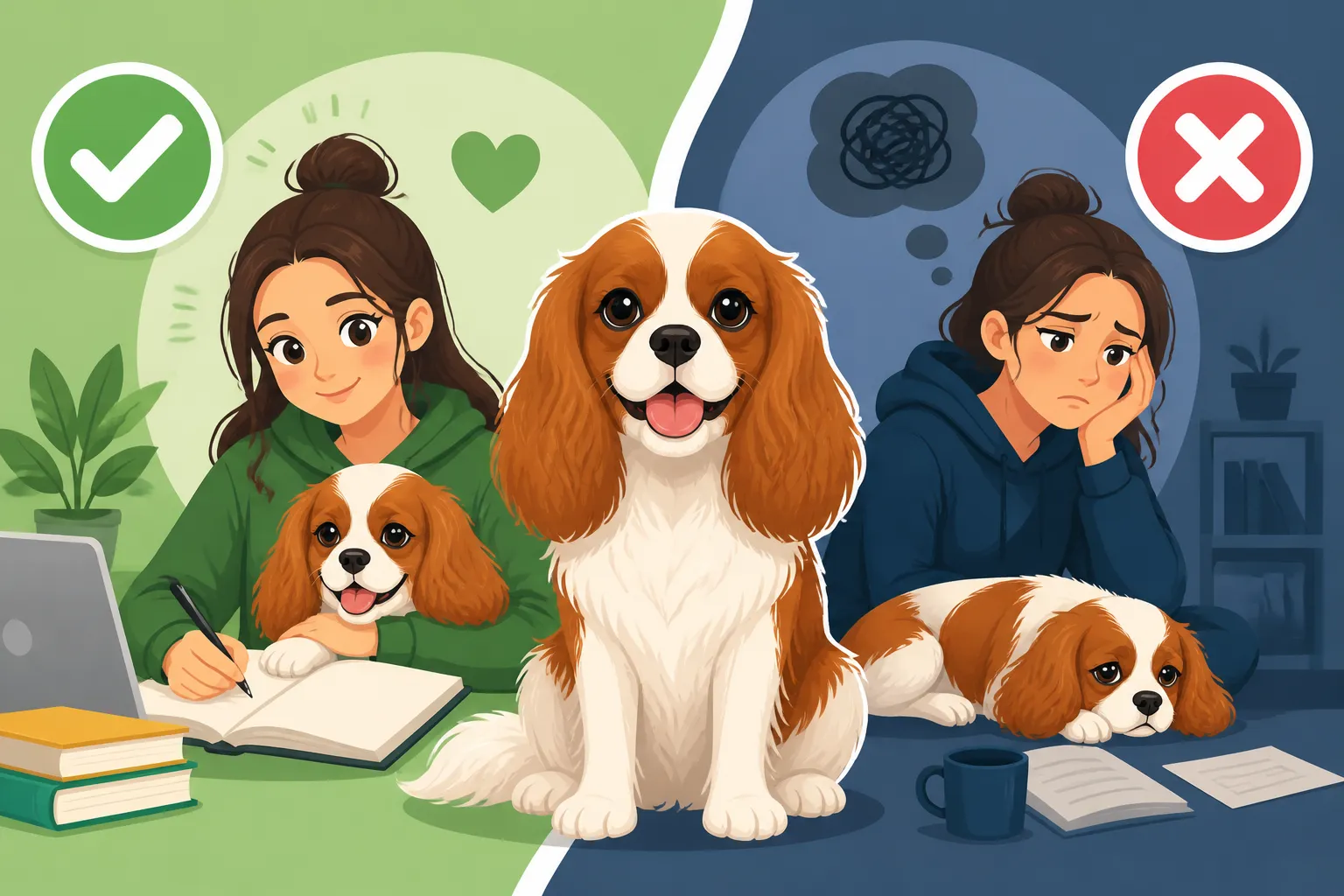
Cavaliers are typically affectionate, sociable dogs that enjoy staying close to their people. That closeness can feel wonderful after a long day of lectures, but it also means a dog may struggle when its person is suddenly gone for long stretches. A puppy or newly adopted dog needs time to settle into the household and learn, gradually, that being alone is safe.
Think through an ordinary weekday, not just the days you imagine spending curled up together. If you leave for morning classes, go straight to a shift, and then meet friends, your dog may have a very different experience of student life than you do. A Cavalier may not be content simply because it has food, toys, and a comfortable bed. Company, interaction, toilet breaks, and predictable care matter too. For a closer look at the breed’s attachment style, see Why Cavaliers Are Called Velcro Dogs.
This does not mean every Cavalier needs constant attention or that students should never have one. It does mean you should plan for absences before bringing a dog home. Consider who can visit during a long day, whether your timetable changes from term to term, and what happens during placements, internships, or exam periods. Hours a Cavalier Can Cope With Alone offers a useful companion read, but a dog’s comfort depends on its age, temperament, training, and health—not only the number of hours on a clock.
Routines matter when classes and plans change
A Cavalier can adapt to a student household, but frequent unpredictability makes the job harder. A morning walk that happens at roughly the same time, meals that are not constantly shifted, and a calm settling routine can help a dog feel secure. That structure is especially useful in a shared house, where housemates may come and go, doors may open unexpectedly, and noise levels can change without warning.
The biggest challenge is often not a single late class. It is the accumulation of long days, spontaneous plans, weekend trips, and changes of address. Before adopting, make a realistic calendar of a typical week and a demanding week. If there is no dependable plan for toilet breaks, exercise, and company on either one, the timing may not be right. Building a Cavalier's Tolerance for Being Left explains why gradual practice is more helpful than expecting a dog to adjust to a sudden full day alone.
Some students can make the arrangement work by coordinating care with a trusted housemate, family member, or dog walker. That backup needs to be genuinely reliable, not just someone who says they might be free. If the dog is anxious, unwell, or still learning its routine, a last-minute solution may not be enough.
Housing, schedules, and the practical fit
Check the rules and the space before you fall in love
Student accommodation can be a major obstacle. Some halls and rentals do not allow dogs, and permission from a landlord may be required even if a housemate is enthusiastic. Get the rules in writing and check what happens if you move, change rooms, or need to find housing again. A dog who has become part of your life cannot simply be packed away when a lease ends.
A Cavalier’s small size can make apartment living possible, but small does not mean maintenance-free. Dogs still need regular walks, training, toileting, and a safe place to rest. In a busy building, you will also need a plan for elevator trips, corridor encounters, barking, and bringing the dog outside in poor weather. A puppy may need frequent toilet opportunities while learning, so a room several flights up can add time and effort to an already busy day. See Cavalier Puppy Toilet Training Indoors for more on the early training period.
Shared housing deserves an honest conversation before adoption. Decide who is responsible for feeding, walks, cleaning, and care when you are ill or away. Ask whether anyone has allergies or is uncomfortable around dogs, and agree on boundaries around bedrooms, furniture, and visitors. A friendly dog may still be startled by a crowded kitchen or a roommate’s overnight guests; good intentions do not replace clear household agreements.
Match care to the timetable you actually have
Cavaliers need daily interaction and age-appropriate activity, but the exact routine will vary from one dog to another. A young dog may need more frequent outings and short training sessions. An older dog may prefer gentler walks, while a dog with a health concern may need medication, monitoring, or a different exercise plan. Do not assume that a busy week can be solved with one long walk at the weekend.
The table below is a practical starting point for evaluating your own situation. It is not a substitute for knowing the individual dog, but it can help you spot where a plan is incomplete.
| Student-life factor | More workable situation | Potential problem to solve |
|---|---|---|
| Class and work schedule | You have predictable blocks away and a dependable care plan | Long, changing days with no midday visit or backup |
| Housing | Dogs are clearly permitted and the space is safe | Uncertain permission or a likely move at the end of term |
| Finances | You can budget for routine care and unexpected veterinary needs | The plan depends on having spare money after rent and essentials |
| Social plans | You can arrange suitable care before going out | You expect the dog to fit into every spontaneous plan |
| Travel and holidays | A trusted sitter or family caregiver is available | You have not decided who will care for the dog when you leave |
| Household support | Everyone understands their role and agrees to the dog | Care responsibilities are vague or assumed rather than agreed |
If you are balancing limited storage space and frequent shopping trips, ordering everyday supplies through a retailer such as Chewy may be convenient for some households. That can help with practical items such as food or cleaning supplies, but it does not solve the more important questions of time, housing permission, or veterinary care.
The emotional and financial responsibilities
Budget for routine care and the possibility of health needs
A student budget should include more than the adoption or purchase cost. Food, routine veterinary visits, preventive care, grooming tools or appointments, training, and replacement supplies all add up over the life of a dog. An emergency fund or suitable insurance plan can help with the financial shock of an unexpected problem, but coverage details and exclusions differ, so read policy terms carefully rather than assuming a condition will be covered.
Cavaliers can develop health problems that need ongoing attention. Heart disease is an important breed concern, and some dogs may also experience neurological, eye, ear, dental, or joint issues. That does not mean a particular Cavalier will become ill, but it does make planning for veterinary care especially important. Learn about the breed’s general health picture in Cavalier Temperament and the Sporting Spaniel Beneath It and Cavalier Lifespan and What Cuts It Short.
If your budget is tight, be realistic about what happens if the dog needs a diagnostic test, a prescription, or repeated follow-up visits. A pet-supply retailer such as Chewy may be one way to arrange ordinary supplies, but a retailer is not a replacement for a veterinarian’s advice or a financial plan for medical treatment. Compare the full expected costs of ownership with your income and savings, and decide in advance what you would do if a large bill arrived during exams.
Consider the dog’s needs during exams, illness, and travel
Student life has predictable crunch points. During exams, you may study late or spend most of the day in a library. During illness, you may have less energy for walks and grooming. During breaks, you might return to family or travel. For each situation, identify the person who would take over and make sure they know the dog’s routine, feeding instructions, emergency contact, and any medication schedule.
A Cavalier may be able to travel with you on some trips, but travel is not automatically simple. Transport rules, accommodation policies, the dog’s comfort, and health needs all matter. If you expect to leave town often, arrange a suitable sitter or boarding option early. A small dog still needs a responsible caregiver, and a friend who is happy to play with the dog for an afternoon may not be prepared to handle several days of feeding, walks, and supervision.
It can also help to plan how you would manage ordinary supplies when you are away from home. Some owners use services such as Chewy for deliveries to their residence, but deliveries do not provide care if you are absent. Keep supplies stocked, avoid last-minute changes to food, and leave clear instructions with the person looking after your dog.
How to decide whether the timing is right
Use a realistic readiness check
Before bringing home a Cavalier, answer these questions honestly:
- Is a dog permitted where I live? Confirm the rules with the accommodation provider or landlord, and consider what happens when you move.
- Who will care for the dog during my longest days? Name a reliable person or service and agree on the arrangement in advance.
- Can I cover ongoing and unexpected expenses? Include veterinary care, supplies, training, and care during travel—not just the initial cost.
- What will change during exams or placements? Make a plan for the weeks when your usual routine becomes less predictable.
- Am I choosing a dog whose needs fit my life? Consider an individual dog’s age, temperament, and health rather than assuming every Cavalier will behave the same way.
If several answers are “I’ll figure it out later,” waiting may be the kindest choice. A dog does not understand that your timetable changed or your roommate moved out. It depends on you to provide a stable plan, including when life becomes inconvenient.
A student with a stable home, manageable absences, reliable support, and room in the budget may be able to offer a Cavalier a happy life. If you are regularly away for long periods, moving between temporary homes, or relying on uncertain help, postponing adoption can be responsible rather than disappointing. Whether a Cavalier Is the Right Dog for You and Whether a Cavalier Suits a Working Owner can help you compare your circumstances with other common lifestyle questions.
Puppy, adult dog, or waiting
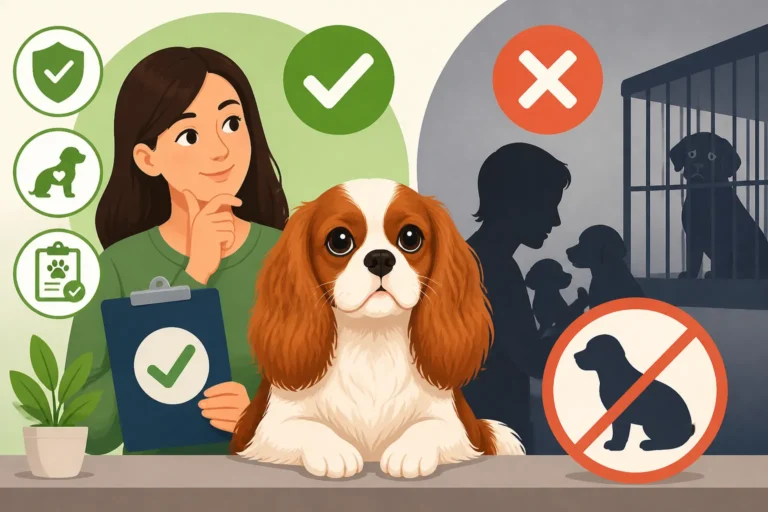
A puppy can be appealing, but the early months usually demand a lot of hands-on time. Toilet training, social experiences, gentle handling, and learning to settle all take repetition. If you have a packed class schedule and no daytime support, a puppy may be particularly difficult. Ask a responsible breeder or rescue organization detailed questions about the dog’s background and needs; useful background reading includes How to Judge Whether a Cavalier Breeder Is Serious.
An adult Cavalier may already have some house-training and a clearer temperament, but adult dogs still need time to adjust, learn household routines, and build trust. A rescue dog’s medical and behavioral history may be incomplete, so ask what is known and what support is available after adoption. Choosing an adult is not a shortcut around responsibility; it is simply a different starting point.
Waiting can also be a positive decision. You might spend a term volunteering with a rescue, dog-sitting for someone you trust, or helping care for a family dog during a break. Those experiences can reveal whether you enjoy the daily routine as much as the cuddles. When you are ready, practical delivery options—such as ordering routine food and supplies through Chewy—may make household logistics easier, but the foundation is still time, stable housing, support, and a willingness to prioritize the dog’s welfare.
Disclaimer
This article is for general informational purposes only and does not constitute professional advice. Laws, prices and regulations vary by location and change over time. Consult a qualified professional for guidance on your specific situation.