Cavaliers for Owners Who Work From Home
Working from home can seem like the perfect setup for a Cavalier King Charles Spaniel: you’re nearby, the house is familiar, and there’s company throughout the day. But a dog who follows you from room to room may struggle when you’re on a call or need to leave. This guide explains how to build a calmer workday for both of you.
Why Cavaliers Often Love a Work-From-Home Household
Company is a real need, not a convenient extra
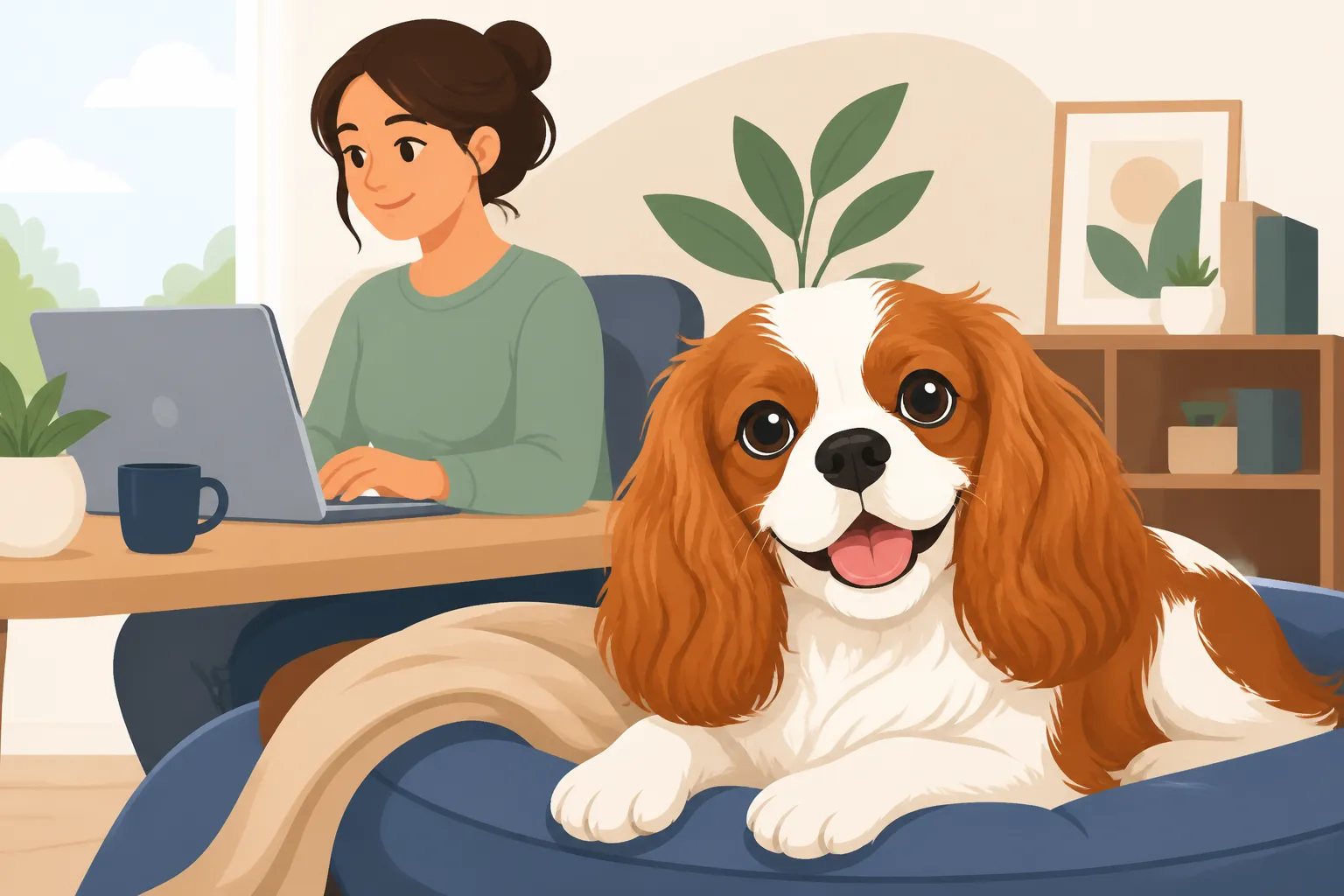
Cavaliers are affectionate companion dogs, and many enjoy being close to their people for much of the day. That can make working from home feel like a natural match. Your dog might snooze beside your desk, wander over for a cuddle between meetings, or settle nearby while you make lunch.
The flip side is that your presence can become part of your dog’s everyday expectation. If your Cavalier has learned that you are almost always available, a closed office door or an unexpected trip out may feel confusing. Some dogs respond by whining, pawing at the door, bringing toys into meetings, or shadowing you more intensely whenever you stand up.
That closeness is often described as being a “Velcro dog,” but it isn’t a diagnosis or a guarantee of separation anxiety. It is a useful reminder to help your dog develop comfortable ways to rest and occupy themselves, even when you’re home. For more on that tendency, see Why Cavaliers Are Called Velcro Dogs.
A good fit still depends on your schedule
A home office can offer a Cavalier companionship and more chances for walks or play breaks, but it doesn’t automatically mean the dog gets enough attention. A day filled with back-to-back calls may leave little time to notice that your dog needs a toilet break, a stretch, or a bit of interaction. And when deadlines pile up, it can be tempting to assume a dog will simply sleep nearby for hours.
Think about the whole household routine before deciding whether this arrangement suits your dog. Can you offer predictable breaks? Is there a quiet place for your Cavalier to nap when you’re busy? What happens on office days, appointments, or errands? It’s worth considering whether your dog can cope with a change in routine, rather than focusing only on how pleasant it is to have company on an ordinary workday. Whether a Cavalier Suits a Working Owner looks at that broader lifestyle match.
A Cavalier may be especially content with a work-from-home owner who makes time for gentle exercise and companionship, while also teaching the dog that resting independently is normal. The goal isn’t to discourage affection. It’s to make sure your dog can feel secure when you’re nearby but not actively engaging.
Set Up a Workday Your Cavalier Can Understand
Build a predictable rhythm around your real calendar
Dogs often settle more easily when the day has familiar cues. You don’t need a rigid timetable that falls apart if one meeting runs late. Instead, anchor the day with a few repeatable events: a morning toilet break and walk, a short sniffing or play activity, a midday break, and a quieter period while you work.
A simple schedule can help you spot where your dog may need support:
| Workday moment | What your Cavalier may need | A practical option |
|---|---|---|
| Before work begins | A chance to toilet and move around | A relaxed walk or sniffing time |
| First work block | A comfortable place to rest | Bed or mat near your desk |
| Between meetings | Brief interaction and a toilet break | Short walk, gentle play, or training |
| Longer busy stretch | A calm activity | Safe chew or food puzzle, if suitable |
| End of the workday | A clear transition out of work mode | Walk, play, or quiet time together |
Use the schedule as a starting point, not a test you can fail. If your Cavalier is restless at a particular time, consider whether they need a toilet trip, a change of position, or a short break with you. If your dog tends to become more energetic late in the afternoon, a walk after work may help signal that the workday has ended.
Make a comfortable resting spot near your desk
Many Cavaliers want to be in the same room as their person. A bed or mat placed within sight of your desk can meet that need without requiring your dog to sit on your lap throughout every call. Keep the spot away from foot traffic and anything your dog might chew, and make sure there is room to stretch out comfortably.
Help the spot feel worthwhile by occasionally offering calm attention when your dog settles there. You might place a few pieces of their usual food on the mat, praise relaxed lying down, or offer a suitable chew during a meeting. If you shop for enrichment or feeding supplies at Chewy, choose items that suit your dog’s size, chewing habits, and any guidance from your veterinarian. A puzzle toy isn’t automatically relaxing for every dog; some get more excited or frustrated by it.
When your dog gets up, try not to turn every movement into an invitation to play. If the behavior is safe and your Cavalier is simply repositioning, you can quietly guide them back to the mat or let them choose another resting place. The goal is a relaxed routine, not a dog who feels they must stay perfectly still to earn approval. For exercises that teach calm settling, see Teaching a Cavalier to Lie on a Mat Nearby and Getting a Cavalier to Switch Off Indoors.
Help Your Cavalier Handle Time Apart
Practice independence while you are still at home
It can be surprising to discover that a dog who happily naps beside your desk becomes upset when you leave the room. Being near you while you work is different from being comfortable alone. Try small, ordinary separations before they become necessary: step into another room briefly, close a door for a moment, or take out the rubbish while your dog stays in a safe area.
Keep early practice easy enough that your Cavalier remains calm. If your dog follows you, scratches at a barrier, or cries, the step may have been too difficult or too long. Go back to a shorter, simpler version rather than waiting for the dog to “get used to it” through prolonged distress. Gradual practice lets your dog learn that your movements around the house don’t always require them to come along.
You can also make independence part of the normal workday. While you’re at your desk, occasionally reward your dog for resting a little farther away, provided they remain comfortable. If your Cavalier already shows intense distress when you leave, or cannot settle even for brief separations, talk with your veterinarian and consider help from a qualified behavior professional. Building a Cavalier's Tolerance for Being Left offers more detail on gradual practice.
Don’t assume being home means your dog is coping alone
A common work-from-home trap is being physically present but unavailable for so long that the dog gets little meaningful interaction. The opposite can happen too: frequent attention every time the dog nudges your hand may teach them to interrupt more often. Aim for a balance. Offer planned breaks, and also make calm, independent resting a normal part of the day.
If you need to leave the house, start by observing what your Cavalier actually does rather than guessing. A camera can show whether your dog settles after a few minutes or remains distressed, paces, vocalizes, or repeatedly tries to escape. Avoid using a camera as a reason to leave a dog in a situation they cannot handle; it is a way to understand the pattern and decide what support is needed. See Filming a Cavalier While You Are Out for ideas on what to look for.
How long a dog can comfortably stay alone varies. Age, health, toilet needs, prior experience, and individual temperament all matter. A puppy, an older dog, or a Cavalier with health needs may require a different plan from a settled adult. Hours a Cavalier Can Cope With Alone can help you think through the factors, but your own dog’s behavior is the most important guide.
Keep the Routine Flexible and Kind
Use walks and enrichment to support—not replace—company
A walk can provide a useful break from the desk, and sniffing gives your Cavalier a chance to explore at their own pace. You don’t need to turn every outing into an intense exercise session. Choose activity that suits your dog’s age, fitness, and health, and ask your veterinarian if you’re unsure what’s appropriate. Cavaliers with heart, joint, or other health concerns may need an individualized approach.
Food puzzles, gentle training, and safe chew activities can add variety during a busy work block. Introduce a new activity when you can supervise and see how your dog handles it. If your Cavalier becomes frustrated, guards the item, or tries to swallow pieces, stop using it and ask your veterinarian or a qualified trainer about safer alternatives.
Chewy may be one place to look for basic supplies such as a bed, food puzzle, or leash, but the product itself matters less than whether it is safe and comfortable for your particular dog. Check the item’s size and materials, and supervise your Cavalier with anything new. Enrichment should make the workday easier, not create another source of worry.
Plan for meetings, errands, and changes in routine
Some days won’t follow the usual pattern. A long video call may overlap with your dog’s usual walk, or an appointment may mean you are away longer than expected. Prepare a few options in advance: a trusted friend or dog walker, a neighbor who can provide a toilet break, or a pet sitter who understands your dog’s routine and any care needs.
Introduce help gradually when possible. A dog walker who arrives only on the day of a long absence may feel like a sudden change to a sensitive Cavalier. Start with a short visit while you’re home, share clear instructions, and explain what your dog finds reassuring. Include practical details such as feeding, toilet habits, favorite resting spots, and any restrictions on treats or activity.
For some households, a dog walker or sitter is useful even when the owner works remotely. It can provide a consistent midday break and prevent the dog from relying on the owner’s availability for every need. Getting a Cavalier Used to a Dog Walker covers ways to make that transition less abrupt. If you’re choosing supplies for the handoff, Chewy may be convenient for restocking familiar food or routine items, but keep the dog’s usual products consistent when a change could upset their stomach or routine.
Know when the arrangement needs adjusting
A Cavalier who settles near your desk, takes breaks comfortably, and can manage occasional separation is likely coping well with the routine. By contrast, repeated distress deserves attention. Watch for persistent vocalizing, frantic attempts to get to you, destructive behavior around exits, inability to eat when alone, or a major change in sleep or behavior. These signs can have more than one cause, so a veterinary check is sensible, especially if the behavior is new.
Also pay attention to your own workday. If you are constantly worried about disturbing your dog, or your dog is interrupting every task, the setup may need a small redesign. Moving the bed, adding a predictable break, using a baby gate for a short period, or arranging help can make a meaningful difference. Avoid treating the dog’s distress as stubbornness; it is information that the current step may be too challenging.
A Cavalier can be a lovely companion for someone who works from home, but the best routine includes both togetherness and gentle independence. Set up a comfortable resting place, keep breaks predictable, and practice brief separations at a pace your dog can handle. If you need outside help, introduce it thoughtfully and choose support that fits your dog’s temperament and health.
Disclaimer
This article is for general informational purposes only and does not constitute professional advice. Laws, prices and regulations vary by location and change over time. Consult a qualified professional for guidance on your specific situation.