What Chiari Malformation Does to a Cavalier Skull
Few things are as heartbreaking as watching your beloved Cavalier King Charles Spaniel show signs of discomfort or pain, especially when it stems from something as fundamental as the structure of their own head. Many owners face the confusing and upsetting reality that their sweet, devoted companion might be suffering from Chiari-like Malformation (CM), a neurological condition where the skull doesn't quite fit the brain, leading to a cascade of painful symptoms. This guide will walk you through exactly what Chiari Malformation entails for a Cavalier's skull, how it impacts their health, and what you can do to support your furry friend.
Understanding Chiari Malformation in Cavaliers
Chiari-like Malformation (CM) is a structural defect in the back of the skull (the occipital bone) that affects Cavaliers more frequently than almost any other breed. It's not just a fancy vet term; it describes a very real, often painful, anatomical abnormality that can severely impact a dog's quality of life. For us Cavalier owners, understanding this condition is the first step in advocating for our dogs.
Defining Chiari Malformation
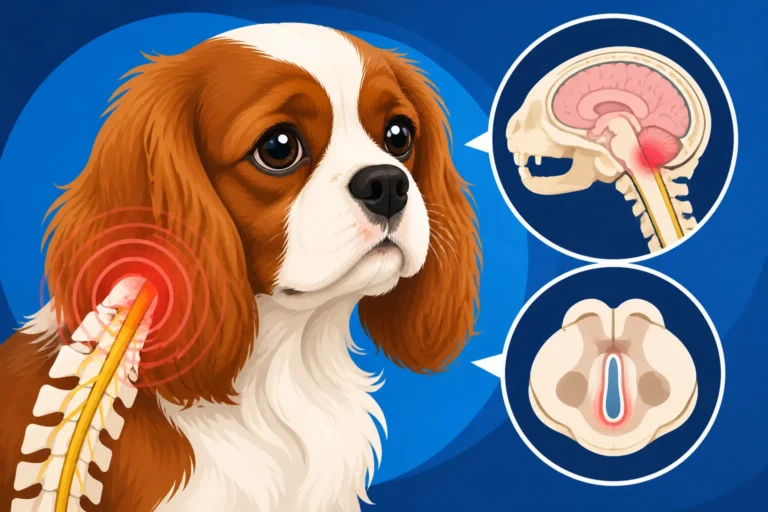
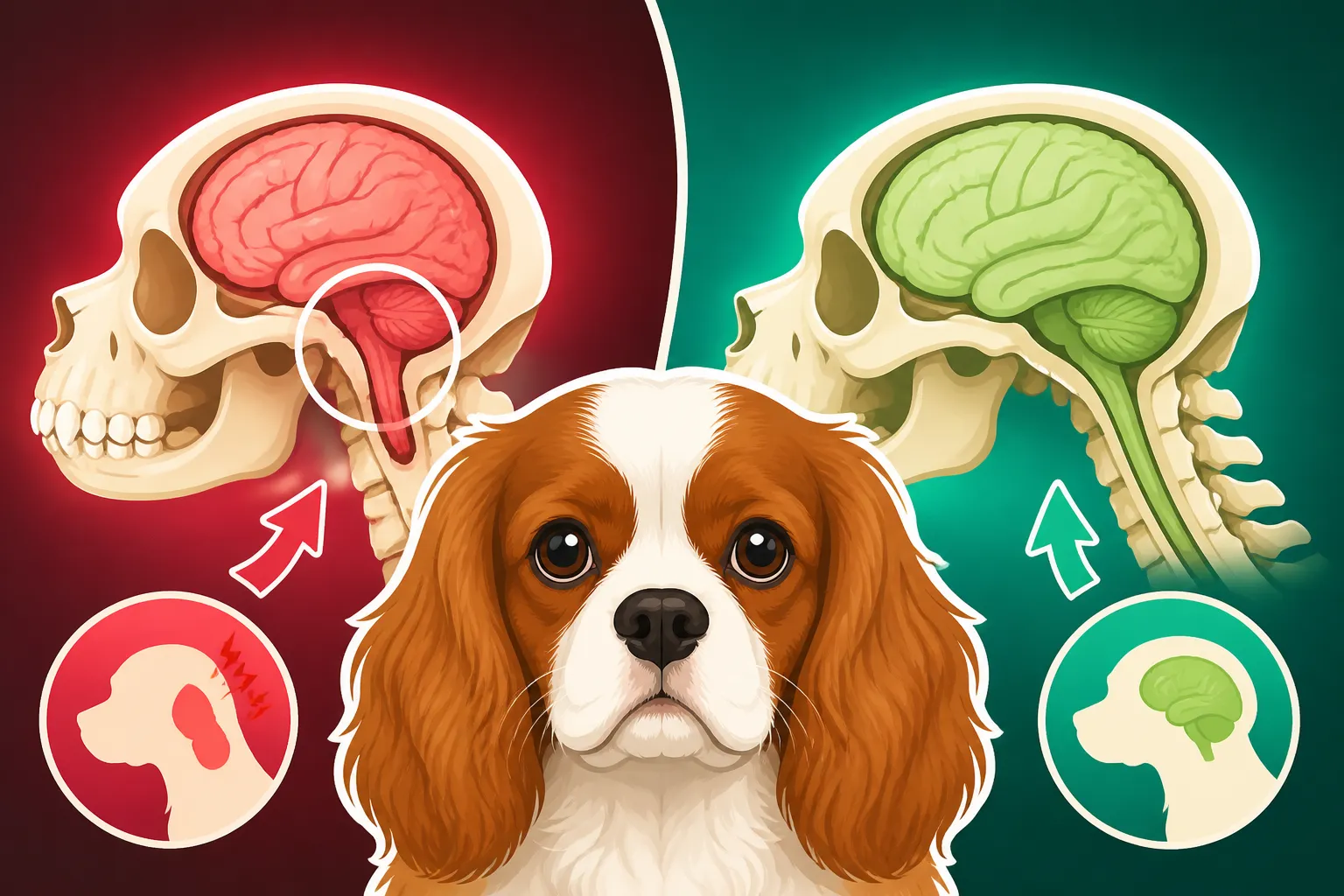
At its core, Chiari Malformation, or more accurately, Chiari-like Malformation (CLM) in dogs, is a condition where the caudal occipital bone, which forms the back and base of the skull, is malformed or too small. Imagine trying to fit a normal-sized brain into a skull that's simply not big enough for it. This anatomical mismatch causes the cerebellum, the part of the brain responsible for coordination and balance, to be crowded and forced through or into the foramen magnum – the opening at the base of the skull where the brainstem connects to the spinal cord. This downward displacement is called cerebellar herniation. It's a bit like squeezing a large stopper into a too-small bottle neck; something's going to get squished, and in this case, it's vital brain tissue.
The consequence of this crowding isn't just about the brain being a tight fit. The abnormal pressure and altered anatomy around the foramen magnum directly interfere with the normal flow of cerebrospinal fluid (CSF). CSF is the clear fluid that surrounds and cushions the brain and spinal cord, delivering nutrients and removing waste. When its flow is disrupted, it can lead to a host of secondary problems, most notably Syringomyelia (SM), which we'll discuss next. So, while CLM is the primary skull abnormality, it sets the stage for more visible and painful neurological issues.
The Link to Syringomyelia
While Chiari-like Malformation describes the skull defect and subsequent brain crowding, it's crucial to understand its direct link to Syringomyelia (SM). In many Cavaliers with CLM, the disruption of CSF flow caused by the malformed skull and herniated cerebellum doesn't just cause discomfort; it can lead to the formation of fluid-filled cavities, or "syrinxes," within the spinal cord itself. These syrinxes are essentially fluid pockets that expand and put pressure on the delicate nerves within the spinal cord. It's this pressure that often causes the severe pain, neurological deficits, and the infamous "air scratching" that many affected Cavaliers exhibit.
Think of it like this: the skull issue (CLM) is the dam, and the syrinx (SM) is the flooded river behind it, slowly eroding the riverbanks – or in this case, damaging the spinal cord. Not every Cavalier with CLM will develop SM, but a very high percentage do, and the severity of the CLM often correlates with the risk and severity of SM. This is why when vets discuss Chiari Malformation in Cavaliers, they are almost always thinking about the potential or actual presence of Syringomyelia as well. Understanding both conditions is paramount for owners seeking to alleviate their dog's suffering, and you can learn more about "Syringomyelia and Chiari Malformation in Cavaliers" in our detailed guide.
The Unique Cavalier Skull: A Breed-Specific Predisposition
The Cavalier King Charles Spaniel is undeniably adorable, with their sweet expressions and soft, floppy ears. However, the very features that define their breed standard – a relatively flat skull and a shorter muzzle – are intrinsically linked to their predisposition for Chiari-like Malformation. This isn't just bad luck; it's a consequence of historical breeding practices that prioritized certain aesthetic traits without fully understanding the underlying anatomical implications.
The Brachycephalic Paradox
Cavaliers are considered a brachycephalic breed, meaning they have a relatively short, broad skull. While not as extreme as a Bulldog or Pug, their skull shape has become progressively more domed and their muzzles shorter over generations. The paradox lies in the fact that while the external appearance of the skull has changed, the brain size has largely remained the same. This creates a severe mismatch: a normal-sized brain packed into an unnaturally small cranial cavity, particularly at the back of the skull. This crowding is the fundamental architectural flaw that predisposes Cavaliers to CLM.
The skull of a Cavalier, when viewed in cross-section or via MRI, often shows a visibly reduced area at the back, where the cerebellum should comfortably sit. Instead, the cerebellum, along with parts of the brainstem, is pushed down into and through the foramen magnum. This 'tight squeeze' puts constant pressure on these delicate structures. It's a condition often described as a "mismatched skull-brain volume," where the available space is simply insufficient for the neurological components it's meant to house and protect. This explains "Why a Cavalier Skull Is Too Small for Its Brain" and highlights a critical health issue within the breed.
Genetics and Inheritance
The pervasive nature of Chiari-like Malformation and Syringomyelia in Cavaliers strongly suggests a genetic component. While the exact mode of inheritance is still being researched and is likely complex, it's widely accepted that the genes responsible for skull development contribute significantly to the risk. This isn't a simple recessive or dominant gene; it's more likely polygenic, meaning multiple genes interact to influence the expression and severity of the condition. This makes eradicating it through breeding particularly challenging.
Responsible breeders are acutely aware of this challenge and strive to make informed decisions to reduce the incidence of CLM and SM. Many breed organizations recommend MRI screening of breeding dogs to assess the severity of CLM and the presence of syrinxes, even though there's no clear-cut "pass/fail" result due to the complexities. The goal is to avoid breeding dogs with severe malformations or those who have produced affected offspring. Despite these efforts, because the condition is so widespread within the breed, eliminating it entirely without drastically narrowing the gene pool is a monumental task. This genetic predisposition means that any Cavalier owner should be aware of the possibility of CM, regardless of their dog's lineage, and be vigilant for symptoms.
How Chiari Malformation Impacts the Brain and Spinal Cord
The structural problem of a too-small skull at the back of a Cavalier's head has profound consequences beyond just a tight fit. The brain and spinal cord are incredibly delicate and vital structures, and any impingement or disruption can lead to a cascade of neurological issues. Understanding these specific impacts helps shed light on the varied and often distressing symptoms affected Cavaliers can display.
Cerebellar Herniation
The most direct impact of Chiari-like Malformation on the brain is cerebellar herniation. This occurs when the cerebellum, which is nestled in the back of the skull, is forced to push down through the foramen magnum – that critical opening at the base of the skull where the brainstem meets the spinal cord. In a healthy dog, this opening allows ample space for the neural tissue and the flow of cerebrospinal fluid. In a Cavalier with CLM, this space is compromised.
This herniation isn't just a minor displacement; it means that the cerebellum and often parts of the brainstem are literally being squeezed and compressed. The cerebellum is vital for coordinating voluntary movements, balance, and posture. When it's under pressure, it can't function optimally, leading to issues with gait, tremors, and a general lack of coordination. Imagine the discomfort of having your brain squished against bone all the time. This constant pressure can cause inflammation and damage to the nerve tissue, which contributes significantly to the pain and neurological signs seen in affected dogs.
CSF Flow Disruption and Syrinx Formation
Perhaps the most devastating consequence of cerebellar herniation is the disruption of cerebrospinal fluid (CSF) flow. CSF is constantly produced, circulates around the brain and spinal cord, and is then reabsorbed. This continuous flow is essential for cushioning the nervous system, transporting nutrients, and removing waste products. When the cerebellum is pushed into the foramen magnum, it acts like a partial blockage, impeding the normal, pulsatile flow of CSF.
This obstruction causes pressure changes and turbulent flow, essentially forcing CSF into the central canal of the spinal cord or creating new cavities within the cord itself. These fluid-filled pockets are what we call syrinxes, and their formation defines Syringomyelia (SM). As these syrinxes expand, they exert pressure on the surrounding spinal cord tissue, leading to nerve damage. This damage manifests as an array of symptoms, from severe neck and shoulder pain to phantom scratching, weakness, and even paralysis in advanced stages. The bigger the syrinx, generally the more severe the pain and neurological signs. It's a cruel consequence of the initial skull malformation.
Nerve Compression
Beyond the cerebellum and the spinal cord itself, the abnormal anatomy associated with CLM can also lead to direct compression of various cranial nerves and nerve roots as they exit the skull and spinal column. The brainstem, which controls many involuntary functions like breathing, heart rate, and sleep, can also be affected by the crowding at the foramen magnum. Compression of these delicate nerve structures can result in a wide range of additional symptoms.
For instance, compression of nerves associated with facial sensation might lead to strange head rubs or facial discomfort. Nerves controlling motor function can lead to weakness in the limbs. In some cases, damage to the brainstem can affect balance, swallowing, and even contribute to seizures, though seizures are less commonly directly attributed to CLM/SM than other neurological issues. The chronic compression of nerve tissue also contributes to persistent pain, making life very challenging for affected Cavaliers. Understanding this nerve compression helps explain why symptoms can be so varied and why a comprehensive neurological exam is so important.
Recognizing the Signs and Symptoms of Chiari Malformation
One of the hardest parts of living with a Cavalier susceptible to Chiari Malformation is recognizing the subtle, and sometimes not-so-subtle, signs that something is wrong. Because dogs can't tell us where it hurts, we have to become keen observers of their behavior and physical cues. The symptoms of CM, especially when accompanied by Syringomyelia, can range from mild discomfort to debilitating pain and neurological deficits.
Early, Subtle Indicators
Often, the first signs of Chiari-like Malformation and developing Syringomyelia are incredibly subtle and can easily be mistaken for normal dog behaviors or minor issues. Your Cavalier might start to scratch more, but not necessarily at fleas; it might be an "air scratch" where their paw doesn't even make contact with their body. They might scratch excessively around their neck, shoulder, or ear area, particularly when excited, lying down, or wearing a collar. This sensation, often described as a "phantom itch," is a classic early sign of nerve irritation caused by a syrinx. You might also notice them rubbing their face or head on furniture more frequently.
Another common early indicator is a change in their resting or sleeping positions. A Cavalier with neck pain from CM/SM might start sleeping with their head elevated or tucked in an unusual way, trying to find a position that alleviates pressure. They might become reluctant to perform actions that previously caused no issue, like jumping on the sofa or going up and down stairs. They could become more withdrawn or show a decreased tolerance for being handled, especially around their neck or ears. These subtle shifts are easy to overlook, but for a vigilant owner, they can be the first red flag. For more on this specific behavior, check out our article on "A Cavalier That Sleeps With Its Head Raised".
Classic "Air Scratching" and Pain Responses
As Chiari-like Malformation and Syringomyelia progress, the symptoms often become more pronounced and indicative of pain. The classic "air scratching," where a Cavalier scratches intensely at their shoulder or neck area without making contact, or barely touching their body, becomes more frequent and dramatic. This isn't just an itch; it's a neuropathic sensation, like pins and needles or burning, caused by the syrinx pressing on the spinal cord nerves. The scratching can even be triggered by excitement, being touched, or wearing a harness. This symptom is so characteristic that we have a whole guide on "Air Scratching as a Cavalier's First Warning Sign".
Beyond scratching, direct signs of pain are common. A Cavalier might yelp or cry out when picked up, especially if touched around the neck, chest, or ears. They might guard their head or neck, become hesitant to play, or even develop a stiff, guarded gait. Some dogs will show heightened sensitivity to touch in certain areas, flinching or reacting negatively when petted on their back, neck, or head. These pain responses can be unpredictable, making it difficult for owners to interact with their beloved pet without causing distress. Even previously docile dogs can snap if the pain is severe enough, especially if startled. For more specific insights, read our post on "A Cavalier That Yelps When Picked Up".
| Symptom Category | Specific Signs | Potential Cause (CLM/SM) |
|---|---|---|
| Pain & Discomfort | Phantom scratching (air scratching), yelping when touched, head rubbing | Syrinx pressing on spinal cord nerves, cerebellar herniation |
| Reluctance to jump/use stairs, crying when picked up, guarded neck posture | Neuropathic pain, neck/spinal cord compression | |
| Neurological | Weakness in limbs, stumbling, uncoordinated gait, tremors | Cerebellar compression, spinal cord damage from syrinx |
| Head tilt, difficulty swallowing (rare), facial nerve issues | Brainstem or cranial nerve compression | |
| Behavioral | Withdrawal, aggression when in pain, changes in sleep patterns (head elevated) | Chronic pain, neurological discomfort, anxiety |
| Loss of appetite (due to pain), reluctance to play/interact | General malaise from pain, decreased quality of life | |
| Physical | Scoliosis (spinal curvature in severe cases), muscle wasting (late stage) | Chronic pressure on spinal cord, nerve damage leading to muscle disuse |
Behavioral Changes and Neurological Deficits
Chronic pain and neurological irritation can lead to significant behavioral changes in Cavaliers. A dog that was once outgoing and affectionate might become withdrawn, preferring to spend time alone or in quiet spaces. They might become irritable or even display uncharacteristic aggression, particularly if their pain is misunderstood or exacerbated by touch. Sleep patterns can be severely disrupted, not just by uncomfortable positioning but by the pain itself, leading to restless nights for both the dog and owner. Understanding "Whether Syringomyelia Changes a Cavalier's Temperament" is crucial for owners struggling with these shifts.
Beyond behavioral shifts, more overt neurological deficits can appear as the condition progresses. These include weakness in one or more limbs, an unsteady or uncoordinated gait (ataxia), stumbling, or even partial paralysis in severe, advanced cases. Some Cavaliers might develop head tremors or a noticeable head tilt. The severity and type of neurological deficit depend on the location and size of the syrinx within the spinal cord and which nerve pathways are being most affected. These signs are often heartbreaking to witness, underscoring the serious impact of Chiari Malformation and Syringomyelia on a Cavalier's overall well-being.
Diagnosis: Unveiling the Hidden Malformation
The unfortunate truth about Chiari Malformation and Syringomyelia is that you can't see them just by looking at your dog. The symptoms might point to a neurological issue, but only specific diagnostic tools can confirm the presence and extent of the skull malformation and any associated syrinxes. This typically involves specialized imaging, often a critical, but sometimes costly, step.
The Role of the MRI
When a Cavalier shows symptoms suggestive of Chiari-like Malformation or Syringomyelia, the gold standard for diagnosis is a Magnetic Resonance Imaging (MRI) scan. Unlike X-rays, which show bone, an MRI provides highly detailed images of soft tissues, including the brain, spinal cord, and cerebrospinal fluid. An MRI will clearly show if the cerebellum is herniating through the foramen magnum (the CLM), and critically, it will reveal any syrinxes (SM) within the spinal cord, indicating their size, location, and fluid content.
The MRI scan usually requires the dog to be under general anesthesia, as they must remain perfectly still for the duration of the procedure, which can last 45 minutes to over an hour. This can be a concern for some owners, particularly if their Cavalier is older or has other health issues. However, the information gained from an MRI is invaluable. It allows veterinary neurologists to precisely map the extent of the disease, differentiate it from other conditions that might mimic its symptoms, and formulate the most appropriate treatment plan. Understanding "What a Cavalier MRI Scan Costs and Shows" can help owners prepare for this essential diagnostic step. Many pet insurance plans, like those offered by Healthy Paws, can be incredibly helpful in covering a portion of these significant diagnostic costs, provided the condition isn't pre-existing.
Other Diagnostic Tools and Assessments
While an MRI is the definitive diagnostic tool, the diagnostic process often begins with a thorough physical and neurological examination performed by your primary veterinarian, who may then refer you to a veterinary neurologist. During this initial assessment, the vet will observe your Cavalier's gait, reflexes, balance, and sensitivity to touch, paying close attention to any areas of pain or discomfort, particularly around the neck and shoulders. They will look for the tell-tale signs like air scratching, head rubbing, or guarding of the neck.
The vet will also want a detailed history of your dog's symptoms, including when they started, what triggers them, and how they've progressed. This information is crucial for pinpointing a neurological issue. In some cases, to rule out other conditions that might present with similar symptoms, such as ear infections (which can cause head shaking and scratching), orthopedic pain, or even allergies, your vet might recommend additional tests like blood work, X-rays of the spine (though these won't show CLM/SM directly), or even a visit to an ophthalmologist if eye issues are suspected. However, it's important to remember that these other tests are usually for ruling out other issues; only an MRI can definitively diagnose Chiari-like Malformation and Syringomyelia. For a clear understanding of when a scan is necessary, see "Getting a Cavalier Scanned for Syringomyelia".
Managing and Living with Chiari Malformation
Receiving a diagnosis of Chiari Malformation and Syringomyelia can be overwhelming, but it's not a death sentence. Many Cavaliers can live full, comfortable lives with proper management. The goal of treatment is always to reduce pain, improve quality of life, and slow the progression of the disease. The approach can vary significantly depending on the severity of the condition and the individual dog's symptoms.
Medical Management
For many Cavaliers with mild to moderate symptoms, medical management is the first line of defense. The primary goal is to alleviate pain and reduce inflammation and fluid pressure around the brain and spinal cord. This often involves a combination of medications:
- Pain Relievers: Non-steroidal anti-inflammatory drugs (NSAIDs) like carprofen or meloxicam are often prescribed to reduce pain and inflammation. For neuropathic pain, which is common with SM, medications like gabapentin are incredibly effective. These drugs work by modulating nerve signals, providing relief from that "phantom itch" or burning sensation. Our article on "Gabapentin for a Cavalier With Neck Pain" offers more in-depth information.
- Steroids: In more severe cases or during flare-ups, corticosteroids (e.g., prednisone) might be used to reduce inflammation and swelling of the brain and spinal cord, which can help alleviate pressure. However, these are often used short-term due to potential side effects.
- Diuretics: Medications that reduce CSF production, such as omeprazole or furosemide, can sometimes be prescribed to decrease the pressure within the central nervous system, thereby reducing the size of the syrinx.
- Other Medications: Muscle relaxants or other adjunctive pain medications might also be used depending on the specific symptoms.
Medical management is often a lifelong commitment, requiring careful monitoring by a vet and consistent administration by the owner. Adjustments to medication dosages or types may be necessary over time as the disease progresses or symptoms change. Regular check-ups with a veterinary neurologist are crucial to assess the effectiveness of treatment and adjust as needed. When considering these ongoing medication costs, having a good pet insurance policy from a provider like Healthy Paws can truly make a difference in managing your Cavalier's health expenses.
Surgical Options
For Cavaliers with severe pain that doesn't respond to medical management, or those exhibiting significant neurological deficits that are rapidly worsening, surgical intervention may be considered. The most common surgical procedure for CLM/SM is called foramen magnum decompression. The goal of this surgery is to relieve the crowding at the back of the skull and restore normal CSF flow.
During the procedure, a small section of the occipital bone is removed, and sometimes a portion of the dura mater (the tough membrane covering the brain and spinal cord) is also resected or patched with a graft to create more space. In some cases, the surgeon may also remove scar tissue around the foramen magnum. The aim is to decompress the cerebellum and brainstem, allowing for better CSF circulation and, hopefully, preventing further syrinx enlargement or even promoting syrinx reduction. It’s a delicate and specialized surgery, typically performed by a board-certified veterinary neurologist or neurosurgeon. The success rates vary, and while many dogs experience significant improvement in pain and quality of life, it's not a guaranteed cure, and symptoms can recur. You can learn more about this in our guide on "Surgery for Cavalier Syringomyelia".
Living with CM and Quality of Life
Living with a Cavalier diagnosed with Chiari Malformation and Syringomyelia requires dedication, patience, and a deep understanding of their condition. Beyond medication or surgery, several lifestyle adjustments can help improve your dog's comfort and quality of life:
- Environmental Modifications: Reduce activities that might exacerbate pain, such as excessive jumping, rough play, or prolonged neck extension. Consider using ramps or steps to help them access furniture safely.
- Harnesses vs. Collars: A harness is often recommended over a neck collar to avoid pressure on the sensitive neck and throat area, especially for dogs with neck pain. Our article on "Harnesses Instead of Collars for a Cavalier" explains why this is so important.
- Pain Management Plan: Work closely with your vet or neurologist to establish a long-term pain management plan that includes medication, regular check-ups, and monitoring for any changes in symptoms. Knowing what to expect in terms of pain management is key.
- Comfort and Support: Provide a comfortable, supportive bed that helps maintain good spinal alignment. Keep their environment calm and stress-free, as stress can sometimes exacerbate symptoms.
- Regular, Gentle Exercise: While intense activity should be avoided, gentle, controlled exercise like short walks can help maintain muscle tone and overall well-being without causing undue strain.
- Emotional Support: Cavaliers thrive on companionship. Ensuring they feel loved and secure can go a long way in managing chronic pain conditions. Pet insurance, like Healthy Paws, can also provide peace of mind for owners facing ongoing treatment, allowing them to focus on their pet's well-being without constant financial worry.
While there's no cure for the underlying anatomical defect of CLM, proactive management can significantly improve a Cavalier's comfort and extend their happy years.
Disclaimer
Please remember that this article is intended for informational purposes only and should not be taken as medical advice. Always consult with a qualified veterinarian or veterinary specialist regarding any health concerns or before making any decisions about your pet's medical care.