Cavalier Cataracts and Retinal Disease
Finding out your beloved Cavalier King Charles Spaniel might be struggling with their vision due to cataracts or a retinal disease can be incredibly upsetting and, let's be honest, a little scary. It’s hard enough to imagine our energetic, loving companions not seeing the world clearly, let alone facing complex diagnoses and potentially costly treatments. This guide is here to walk you through everything you need to know about these eye conditions, from recognizing the subtle signs to understanding diagnosis, treatment, and how to best care for your Cavalier.
Understanding Cavalier Cataracts
Cataracts are one of those terms we often hear, but truly understanding what they mean for our dogs can be a bit more complex than just "cloudy eyes." For Cavaliers, in particular, certain types of cataracts can be more prevalent.
What is a Cataract?
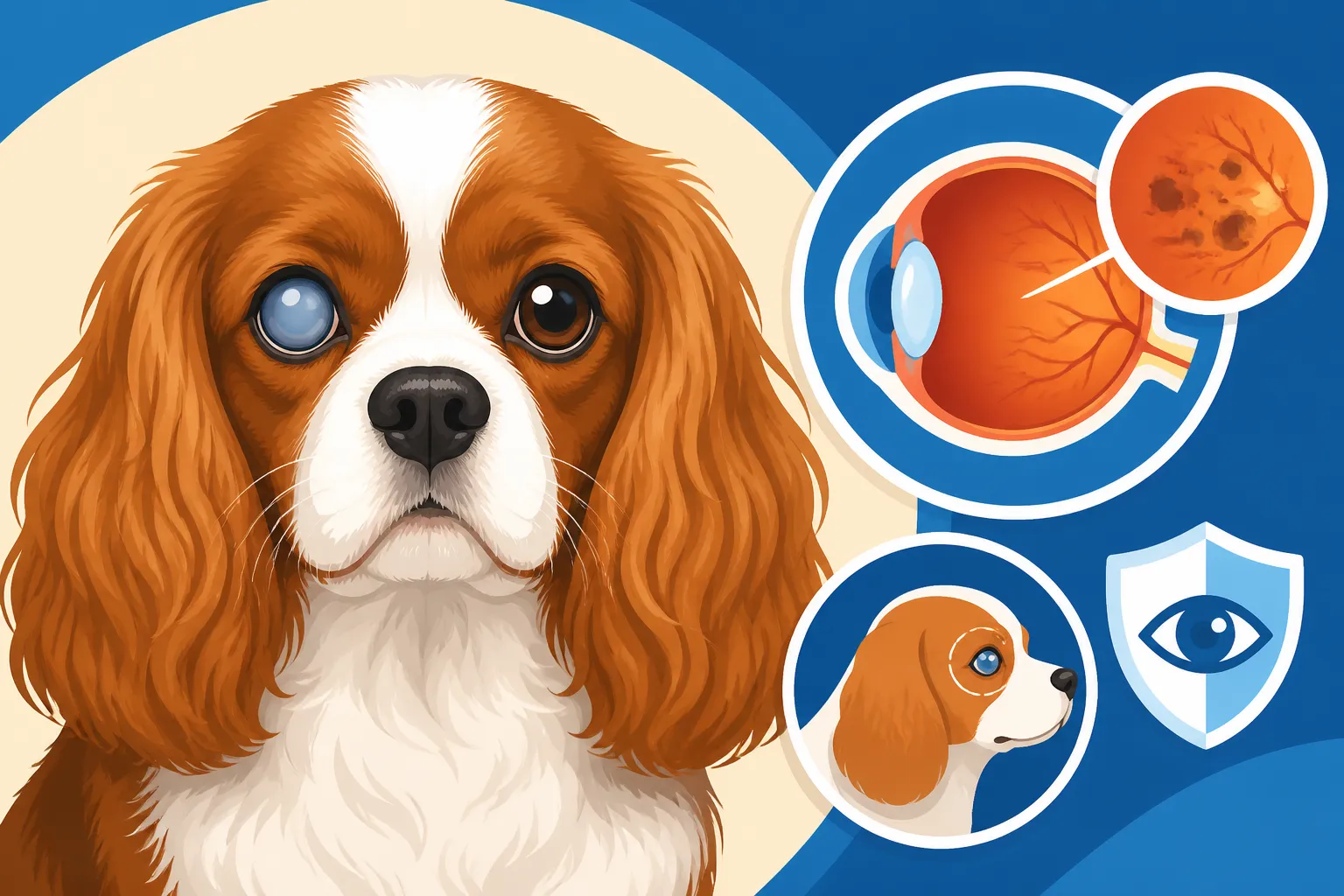
At its core, a cataract is an opacity that develops within the lens of the eye. Think of your dog's eye like a camera: the lens needs to be perfectly clear to focus light onto the retina at the back, allowing for crisp vision. When a cataract forms, it's like smudging that camera lens – the light can't pass through cleanly, resulting in blurred, distorted, or even completely blocked vision. This opacity can appear as a milky, bluish, or whitish discoloration right in the center of the pupil, where it should normally be black.
Cataracts aren't always a sudden event; they can be incredibly sneaky, progressing slowly over months or even years. Initially, you might see just a tiny, pinprick clouding, which might not seem like much of an issue. But as more of the lens becomes affected, your Cavalier’s world gradually dims. There are different classifications, too: a congenital cataract is present at birth, a juvenile cataract develops when the dog is still young, and then there are senile cataracts, which typically appear as part of the natural aging process. Each type has its own implications for prognosis and management, and knowing which type your dog has can help your vet determine the best course of action.
Causes of Cataracts in Cavaliers
While cataracts can affect any dog breed, Cavaliers do have a known genetic predisposition to certain forms, which is a common concern for us as owners. This means that sometimes, despite all your best efforts, genetics just play an unfair hand. Primary cataracts, those that aren't caused by another underlying health issue, are often inherited. This is why reputable breeders go to great lengths to screen their breeding stock, trying to minimize the risk of passing on these troublesome genes.
Beyond genetics, Cavaliers can also develop secondary cataracts. These are cataracts that arise as a result of another disease or condition. Diabetes mellitus is a classic example; high blood sugar levels can wreak havoc on the eye's delicate balance, often leading to rapid cataract formation. Trauma to the eye, severe inflammation (uveitis), or even certain nutritional deficiencies can also contribute to their development. It's crucial for your vet to do a thorough examination, including blood tests if necessary, to rule out these underlying causes, as treating the root problem can sometimes slow or prevent further progression of the cataract. And of course, as our Cavaliers age and mature, just like us, they can develop age-related cataracts, a normal and often manageable part of Caring for a Cavalier Past Nine.
Recognizing the Signs of Cataracts
The earliest signs of cataracts can be subtle, and Cavaliers are so good at adapting that you might not notice a problem until their vision is significantly impaired. One of the most obvious physical signs is that cloudy, milky, or bluish appearance within the pupil that we just talked about. It might start small, barely noticeable in certain lighting, but it will grow over time. However, it's easy to confuse nuclear sclerosis, a normal age-related hardening of the lens that causes a bluish haze but doesn't usually impair vision, with a true cataract, so a vet visit is always warranted.
Behavioral changes are often the first real clues. You might notice your Cavalier hesitating before jumping onto furniture or going down stairs, especially in dim lighting. They might start bumping into familiar objects, or become more hesitant during walks in unfamiliar environments. Perhaps they’re less eager to play fetch or struggle to locate toys right in front of them. Some Cavaliers become more clingy, relying on you as their "eyes," while others might seem startled more easily because they can't anticipate movements. Any change in their confidence or movement, particularly if it seems related to their surroundings, should prompt a conversation with your veterinarian.
Delving into Retinal Diseases in Cavaliers
While cataracts affect the lens, retinal diseases target the retina, the light-sensitive tissue at the back of the eye that's responsible for converting light into electrical signals sent to the brain. These conditions can be devastating for a Cavalier's vision.
Progressive Retinal Atrophy PRA
Progressive Retinal Atrophy, often shortened to PRA, isn't just one disease but a group of inherited degenerative conditions that affect the retina. It's a cruel disease because it essentially causes the photoreceptor cells—the rods and cones that detect light and color—to waste away. Imagine a light switch gradually failing, getting dimmer and dimmer until it gives out entirely. That's what happens to the retina.
In Cavaliers, PRA is typically inherited and can manifest in different forms. Some forms are early-onset, meaning puppies can start showing signs of vision loss alarmingly young, sometimes even before they're a year old. Other forms are late-onset, and symptoms might not appear until a Cavalier is middle-aged or a senior, which can be even more heartbreaking because you've had years of wonderful, sighted companionship. Unfortunately, there is no cure for PRA, and it invariably leads to complete blindness. This is why thorough The DNA Tests Every Cavalier Should Have for breeding dogs are so incredibly important, as responsible breeders work hard to eliminate PRA from their lines.
Other Retinal Conditions Affecting Cavaliers
While PRA is perhaps the most well-known, Cavaliers can be susceptible to other retinal issues too. One such condition is retinal dysplasia, which refers to an abnormal development of the retina. Instead of forming a smooth, perfectly organized layer, the retinal cells might fold, detach, or form rosettes. Depending on the severity and extent of the dysplasia, it can cause anything from mild vision impairment to complete blindness. Sometimes it’s genetic, and other times it can be caused by infections or toxins during pregnancy.
Another concerning, though less common, issue can be related to the optic nerve. Optic nerve hypoplasia means the optic nerve, which transmits visual information from the retina to the brain, is underdeveloped. A coloboma is a defect in the optic nerve or other parts of the eye, where tissue is missing. Both can impair vision to varying degrees. Then there's Sudden Acquired Retinal Degeneration Syndrome (SARDS), which, as its name suggests, causes acute, rapid-onset blindness. It's a particularly frustrating condition because initially, the eyes look perfectly normal to the vet, but the dog is blind. It's thought to involve a sudden dysfunction of the photoreceptors, and sadly, once vision is lost to SARDS, it doesn't return.
Symptoms of Retinal Disease
Recognizing the signs of retinal disease can sometimes be even trickier than cataracts, especially in the early stages. For PRA, the first symptom most owners notice is night blindness. You might observe your Cavalier being hesitant to go outside after dark, bumping into things in dimly lit rooms, or just generally navigating less confidently when the lights are low. This is because the rod cells, which are responsible for vision in low light, are typically affected first.
As the disease progresses, your Cavalier will start to lose their daytime vision as well. Their pupils might appear permanently dilated, even in bright light, as their eyes try to gather every last bit of light available. You might notice an unusual reflective quality to their eyes, often described as an increased "eyeshine" or tapetal reflectivity, which is essentially the back of the eye becoming more visible. Ultimately, complete vision loss will occur. Beyond the physical signs, the behavioral changes will become more pronounced. An anxious or disoriented demeanor, a reluctance to move, bumping into furniture, and an increased reliance on scent and sound are all indicators that your Cavalier is struggling with their sight. Observing these changes and bringing them to your vet's attention promptly can make a world of difference in managing the condition and supporting your beloved pet.
Diagnosis and Screening for Cavalier Eye Conditions
Early and accurate diagnosis is absolutely paramount when it comes to eye health. It helps you understand what you're dealing with, plan for the future, and potentially intervene with treatments if available. For Cavaliers, known for their predisposition to eye issues, proactive screening is even more vital.
The Importance of Regular Eye Exams
It really can't be stressed enough: regular veterinary check-ups are your first line of defense against many health issues, including eye problems. Your general practice vet will typically do a basic eye examination during your Cavalier’s annual check-up, looking for obvious abnormalities. However, given the breed’s specific vulnerabilities, if you suspect any vision changes or if your vet notes anything unusual, a referral to a veterinary ophthalmologist is a critical next step. These specialists have advanced equipment and expertise specifically for diagnosing and treating eye diseases.
For anyone considering breeding Cavaliers, or if you simply want to be proactive about your pet's genetic health, the Eye Certification Examination by an American College of Veterinary Ophthalmologists (ACVO) diplomate is the gold standard. This comprehensive exam screens for a multitude of inherited eye diseases and is crucial for obtaining OFA (Orthopedic Foundation for Animals) eye clearances. These clearances help ensure that breeding dogs are free of detectable inherited eye diseases, preventing the propagation of these conditions. You should always ask to see these official certificates when looking for a puppy, as part of Reading a Cavalier Puppy's Health Certificates.
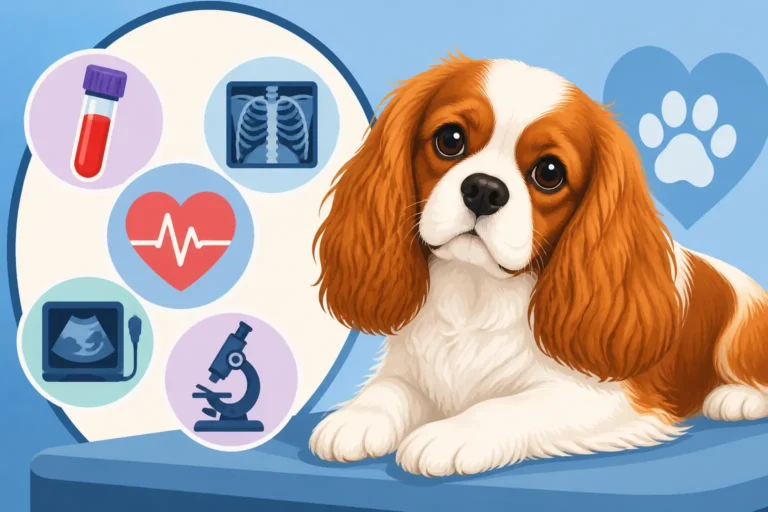
Diagnostic Procedures
When you visit a veterinary ophthalmologist, they'll employ several specialized diagnostic tools to get a clear picture of your Cavalier's eye health. It’s more than just a quick look! They'll usually start with a thorough ophthalmoscopy, which allows them to examine the retina, optic nerve, and blood vessels at the back of the eye. This can reveal signs of PRA, retinal dysplasia, or other posterior segment diseases.
Next, they might use a slit-lamp biomicroscope. This instrument provides a magnified, three-dimensional view of the anterior and posterior segments of the eye, making it invaluable for detecting subtle cataracts, corneal ulcers, inflammation, and other abnormalities in the lens, iris, and cornea. To assess retinal function, especially if PRA is suspected, an electroretinography (ERG) test might be performed. This measures the electrical responses of the retina to light, much like an EKG measures heart activity, and can confirm a diagnosis of PRA even before full clinical signs are obvious. Finally, given the genetic component of many Cavalier eye conditions, genetic testing is frequently recommended. Specific DNA tests are available for certain forms of PRA, identifying if your Cavalier is affected, a carrier, or clear of the specific gene mutations.
Interpreting Eye Health Results
Receiving a diagnosis for an eye condition can feel overwhelming, especially if it means potential vision loss for your Cavalier. Understanding the results from your veterinary ophthalmologist is key to moving forward. If your Cavalier is diagnosed with cataracts, the specialist will explain the type, size, and location of the cataract, and critically, how much it's affecting their vision. They'll also discuss whether it's a primary cataract or secondary to another condition, like diabetes, which might require managing that underlying issue first.
For retinal diseases like PRA, the prognosis is often less optimistic in terms of reversing the condition. If your Cavalier tests positive for a specific genetic form of PRA, or if an ERG confirms retinal degeneration, the ophthalmologist will typically discuss the expected progression of vision loss. Genetic test results are especially important for breeders, as they differentiate between 'affected' dogs (who have the disease), 'carriers' (who carry one copy of the gene but typically don't show symptoms themselves but can pass it on), and 'clear' dogs (who have no copies of the gene). This information is vital for responsible breeding programs and can help you understand the genetic legacy your Cavalier might carry. Pet insurance, such as a policy from Healthy Paws, can be incredibly helpful in offsetting the often significant costs associated with these advanced diagnostic tests, providing peace of mind during a stressful time.
Managing and Treating Cavalier Eye Diseases
Once your Cavalier receives a diagnosis for cataracts or a retinal disease, your focus will naturally shift to how best to manage their condition and maintain their quality of life. The approach will vary significantly depending on the specific diagnosis.
Treatment Options for Cataracts
When it comes to cataracts, the primary and most effective treatment option is surgical removal. This procedure, known as phacoemulsification, is very similar to cataract surgery in humans. A tiny incision is made, and an ultrasonic probe breaks up the cloudy lens, which is then suctioned out. An artificial intraocular lens (IOL) is usually implanted to restore vision, though sometimes this isn't possible, and the dog learns to adapt to a slightly less focused vision. Surgery is generally recommended when the cataracts significantly impair vision and are impacting the dog’s quality of life. If your Cavalier is bumping into things constantly, losing their joy in daily activities, or developing secondary problems like lens-induced uveitis (inflammation from the leaking cataract protein), then surgery becomes a strong consideration.
However, surgery isn't always an option for every Cavalier. Factors like age, general health (especially if they have significant Mitral Valve Disease in the Cavalier King Charles Spaniel or other conditions that increase anesthesia risk), severity of the cataract, and the presence of other eye issues might make surgery unfeasible or less likely to succeed. In such cases, or for very mild cataracts that don't yet impact vision significantly, non-surgical management might be recommended. This usually involves regular monitoring by an ophthalmologist and potentially anti-inflammatory eye drops if secondary inflammation is present. The goal is to keep your Cavalier comfortable and safe, even if their vision is compromised.
Living With Retinal Degeneration
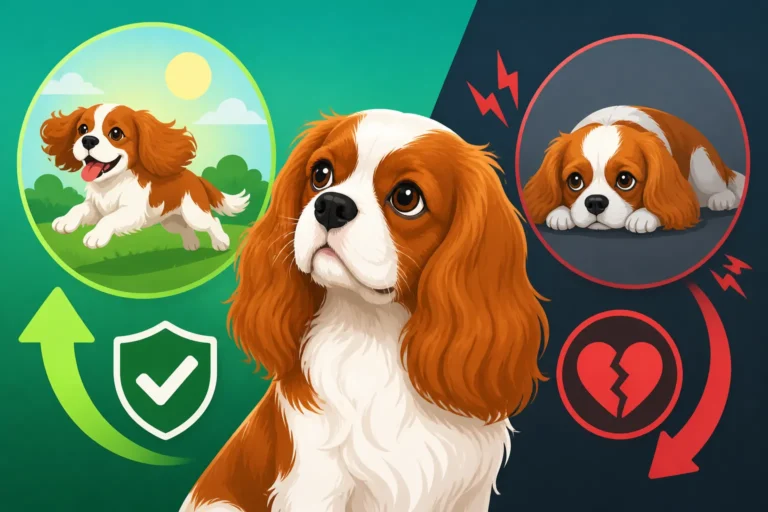
For most forms of progressive retinal atrophy (PRA) and other retinal degenerations, there is unfortunately no cure or effective medical treatment to restore lost vision. This can be a very difficult reality for owners to accept, but it’s important to shift focus to how you can best support your Cavalier as they adapt to blindness. The good news is that dogs are incredibly resilient and adapt to vision loss far better than humans often do, largely relying on their other highly developed senses of smell and hearing.
Adapting your home environment is crucial. Try to keep furniture and object placement consistent; don't rearrange things often, as your Cavalier will create a mental map of their surroundings. Block off stairs, pools, or other hazards with baby gates or fences. Use distinct textures or scents near doorways or steps to provide cues. Keep floors clear of clutter that could trip them. When interacting with them, always speak to them before touching them to avoid startling them. Establish clear verbal cues for direction ("step up," "watch out," "this way") and be consistent with them. Enrichment activities should focus on scent work, puzzle toys, and interactive play that uses sound, rather than visual cues. These changes allow your Cavalier to live a full, happy life despite their vision impairment.
Support and Quality of Life
Living with a Cavalier with progressive vision loss or blindness is a journey that requires patience, understanding, and a lot of love. It's completely normal for owners to feel a sense of grief or sadness, watching their pet's world change. It’s important to lean on your veterinary team for practical advice and emotional support. Many online communities and support groups exist for owners of blind dogs, offering a wealth of shared experiences and tips.
Maintaining a positive outlook for your Cavalier is incredibly important, as they will pick up on your emotions. Treat them normally, providing plenty of affection, playtime, and walks, just adapted to their new needs. Some Cavaliers benefit from vision aids, such as "halo" vests that act as bumpers, preventing them from bumping their head on objects. Others might enjoy rehabilitation exercises designed to strengthen their other senses. The ultimate goal is to ensure your Cavalier enjoys the highest possible quality of life, filled with love and comfort, for as long as possible. Remember that expenses related to advanced diagnostics, potential surgeries, and ongoing care for conditions like cataracts and retinal disease can quickly add up. Having a robust pet insurance plan, like one from Healthy Paws, in place before symptoms arise can be a lifesaver, helping to cover a significant portion of these costs and allowing you to focus on your Cavalier's well-being without financial stress.
Preventing and Breeding Responsibly
While some eye conditions are unavoidable, many, particularly inherited ones, can be significantly reduced through careful planning and responsible practices. For Cavalier King Charles Spaniels, where specific genetic vulnerabilities exist, this responsibility falls heavily on breeders and, by extension, on potential puppy buyers.
Genetic Testing and Ethical Breeding
For inherited conditions like Progressive Retinal Atrophy (PRA), genetic testing is an absolute game-changer. There are DNA tests available that can identify specific gene mutations known to cause certain forms of PRA in Cavaliers. These tests are straightforward, usually involving a simple cheek swab, and can tell a breeder if a dog is "clear" (meaning they don't carry the gene and won't pass it on), a "carrier" (they carry one copy of the gene and won't develop the disease themselves, but can pass it on to offspring), or "affected" (they have two copies of the gene and will develop the disease).
Ethical breeders understand the profound importance of these tests. They will only breed dogs that have been screened and are either clear or, in some controlled circumstances, carriers bred only to clear dogs to avoid producing affected puppies. This meticulous screening, combined with regular eye certifications by a board-certified veterinary ophthalmologist, forms the cornerstone of preventing these diseases from being passed down through generations. Always ask to see the parent dogs' DNA test results and their current ACVO eye certifications. This goes beyond just a regular vet check; it’s a specialized examination that truly looks for inherited eye conditions. If a breeder can't or won't provide these documents, it's a major red flag, and you might consider that a sign to walk away.
Choosing a Reputable Breeder
The choice of breeder is perhaps the single most impactful decision you'll make when bringing a Cavalier into your home, especially concerning their long-term health. A truly reputable breeder for Cavaliers will be transparent and proactive about health testing for all the breed’s known conditions, not just eyes. This includes the aforementioned eye clearances, but also heart testing for Mitral Valve Disease (MVD), MRI screening for Syringomyelia (SM), and DNA tests for conditions like Episodic Falling Syndrome and Dry Eye and Curly Coat Syndrome.
When you're looking for a puppy, don't be shy about asking questions. Ask to see the health certificates for both parent dogs, specifically focusing on their eye clearances from a veterinary ophthalmologist, which should be current and updated annually. A good breeder will be happy to show you these papers and explain what they mean. They should also be able to discuss the health history of their lines, and ideally, provide you with a puppy that comes from parents who have had generations of clear health certifications. Remember, Buying a Cavalier From a Health-Testing Breeder might seem more expensive upfront, but it is an investment in your puppy's future health and can save you thousands in vet bills and heartache down the road.
Environmental Factors and General Eye Health
While genetics play a huge role, providing optimal general care can contribute to your Cavalier's overall eye health and potentially mitigate some environmental risks. Protecting your Cavalier’s eyes from physical trauma is important, especially given their somewhat prominent eyes. Be mindful of sharp objects at their eye level, whether indoors or out. If your Cavalier loves to stick their head out the car window, consider doggy goggles to protect their eyes from debris and wind.
Good nutrition is fundamental for overall health, and while it won't prevent genetic cataracts or retinal diseases, a balanced diet rich in antioxidants can support general eye health. There are also specific eye supplements containing antioxidants like lutein and zeaxanthin that some vets recommend for general eye health or as supportive care, though they are not a cure for established disease. Regular, gentle cleaning around your Cavalier's eyes can help prevent tear staining and irritation, especially for breeds prone to Cavalier Eye Disease From Dry Eye to Cataracts. If you notice any discharge, redness, squinting, or a change in the appearance of their eyes, always have your vet check it out promptly. Early detection of issues like Corneal Ulcers on Prominent Cavalier Eyes can prevent them from becoming much more serious. Maintaining a healthy weight and ensuring regular veterinary check-ups throughout your Cavalier’s life provides the best possible foundation for long-term health, including their precious eyesight.
Disclaimer
The information provided in this article is intended for general knowledge and informational purposes only, and does not constitute medical advice. Always consult with a qualified veterinary professional for any health concerns or before making any decisions about your pet's health or treatment.