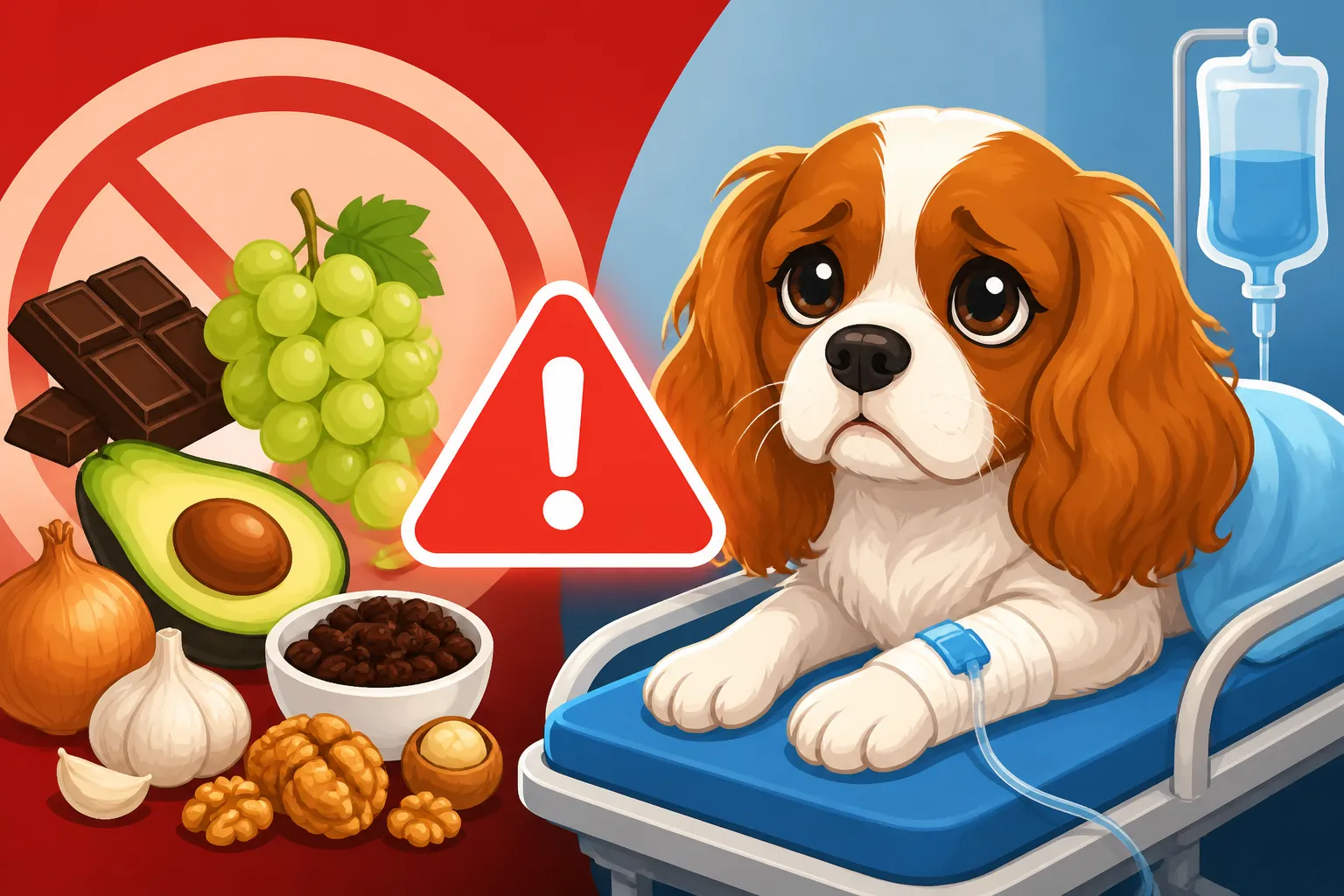
Kitchen Foods That Put a Cavalier in the ER
It’s a heart-stopping moment many Cavalier King Charles Spaniel owners dread: finding your sweet, curious little companion with evidence of having snuck into something they shouldn't have, or worse, witnessing them eat it. Cavaliers, with their charming, food-motivated personalities and sometimes surprisingly sneaky natures, can often get into trouble in our kitchens, leading to emergency visits that are both terrifying and expensive. This guide will walk you through the most common kitchen foods that can quickly land your Cavalier in the animal ER, helping you understand the risks and how to protect your beloved furry family member.
The Usual Suspects: Highly Toxic Foods for Cavaliers
When we think of dangerous human foods for dogs, a few notorious ones immediately come to mind. For a Cavalier, whose smaller size means even a modest amount can be deeply problematic, these items demand extreme vigilance. It’s not just about stopping them from getting a huge pile, but understanding that even a tiny taste can be a problem depending on the food.
Chocolate, Coffee, and Caffeine
We all love our chocolate, and a morning coffee is a ritual for many, but these are absolute no-gos for any dog, and especially a Cavalier. The toxic component here is methylxanthines, particularly theobromine and caffeine. Darker chocolate and baking chocolate contain higher concentrations, making them far more dangerous than milk chocolate, but no amount of chocolate is truly safe.
Imagine this scenario: you're baking a batch of brownies, and a small square of unsweetened baking chocolate falls to the floor. Your Cavalier, ever the vacuum cleaner, snatches it before you can react. What might seem like an innocent crumb to us could contain enough theobromine to cause serious issues for a fifteen-pound Cavalier. Symptoms can range from vomiting, diarrhea, increased thirst, panting, and hyperactivity to tremors, seizures, and even death in severe cases. These signs might not appear immediately, either; they can develop hours later, making it harder to pinpoint the cause if you didn't see them ingest it. Always keep all forms of chocolate, coffee beans, coffee grounds, and caffeinated beverages well out of reach. That includes energy drinks and diet pills, too.
Grapes and Raisins: The Mysterious Menace
This is one of those foods that baffles experts because the exact toxic agent in grapes and raisins remains unknown, but their effects are devastatingly clear. Even a small number of grapes or raisins can cause acute kidney failure in dogs. And the scary part? It's completely unpredictable. One Cavalier might eat a handful of grapes and be fine (though you should never test this theory!), while another might ingest just one or two and suffer severe kidney damage.
Picture your little Cavalier, tail wagging, as a rogue raisin rolls off the counter from your morning oatmeal. It seems so innocent, right? But for some dogs, that single raisin is enough to trigger a crisis. Symptoms of grape/raisin toxicity often start with vomiting, diarrhea, lethargy, and increased thirst within a few hours. As kidney damage progresses, dogs may stop producing urine, leading to kidney failure which can be fatal. Because of this unpredictability and the severity of the outcome, grapes and raisins are treated as an extreme emergency. If you suspect your Cavalier has eaten even one, call your vet immediately.
Xylitol: The Sweetener Secret
Xylitol is a sugar substitute found in an alarming number of human products: sugar-free gum, mints, candies, certain brands of peanut butter, toothpaste, chewable vitamins, and even some baked goods or sugar-free desserts. It's perfectly safe for humans, but for dogs, it's incredibly toxic.
When a dog ingests xylitol, it's rapidly absorbed into their bloodstream, triggering a potent release of insulin from the pancreas. This sudden insulin surge causes a rapid and severe drop in blood sugar (hypoglycemia), which can be life-threatening. The effects can be seen within 15-30 minutes, with symptoms like weakness, staggering, collapse, seizures, and liver damage developing shortly after. Think about how often we might grab a stick of gum or use a specific peanut butter brand. If that gum falls out of your pocket or you use a xylitol-containing peanut butter as a treat without checking the label, your Cavalier could be in serious danger. Always check the ingredient list of any "sugar-free" product or peanut butter before offering it to your dog. If you use certain dental chews, make sure they are dog-specific and from reputable brands like those found on Chewy.
Onions, Garlic, Chives, and Leeks: Allium Attack
These flavorful members of the Allium family are staples in human cooking, but they contain compounds called thiosulphates that are toxic to dogs. While cats are generally more sensitive, dogs, especially smaller breeds like Cavaliers, can suffer from their effects. Thiosulphates cause damage to red blood cells, leading to hemolytic anemia, a condition where red blood cells are destroyed faster than they can be produced.
The toxicity isn't just limited to raw forms; cooked, powdered, or dehydrated versions are also dangerous. This means that if your Cavalier swipes a dropped piece of onion from the floor while you're chopping, or sneaks a bite of leftover spaghetti sauce rich in garlic and onion powder, they are at risk. Symptoms might include lethargy, weakness, pale gums, rapid breathing, increased heart rate, and red or brownish urine. These signs can be delayed, sometimes appearing days after ingestion, which can make diagnosis tricky. Always be careful with kitchen scraps and ensure your pet's food isn't prepared with these ingredients.
Beyond the Obvious: Foods You Might Not Expect to Be Dangerous
While the "big four" above are widely known, there are other common kitchen items that can pose a significant threat to your Cavalier. It's often the foods we consider innocuous that catch us off guard.
Avocados: A Hidden Danger
Avocados contain a fungicidal toxin called persin. While it's generally considered less toxic to dogs than to some other animals (like birds and horses), it can still cause gastrointestinal upset in Cavaliers, including vomiting and diarrhea. The biggest risk, however, is not the fruit itself but the large pit. If a Cavalier, with their often indiscriminate chewing habits, swallows an avocado pit, it can cause a severe blockage in their digestive tract, requiring emergency surgery.
Imagine your Cavalier, enthralled by the smell, getting hold of a discarded avocado pit. Their strong jaws could potentially break it down enough to swallow, or they might try to swallow it whole. Either way, it’s a choking hazard and a serious blockage risk. Always dispose of avocado pits securely.
Nuts and Macadamia Nuts: More Than Just a Snack
Many nuts are high in fats, which can cause gastrointestinal upset or even pancreatitis in dogs. However, macadamia nuts pose a unique and specific threat. They contain an unknown toxin that can cause temporary weakness, tremors, vomiting, fever, and central nervous system depression in dogs. While rarely fatal, the symptoms are distressing and can require veterinary care.
Consider a bowl of mixed nuts left on a coffee table. Your curious Cavalier could easily jump up and snatch a few. Even a small number of macadamia nuts can cause a reaction in a small dog. Other nuts like almonds and walnuts, while not as acutely toxic as macadamias, can be choking hazards or cause digestive issues due to their high-fat content. Whether a Cavalier Can Have Bones is a good read if you're wondering about other hard items.
Alcohol: Absolutely Never
This might seem obvious, but alcohol is sometimes overlooked in terms of accidental exposure. Any product containing alcohol – alcoholic beverages, food cooked with alcohol, raw bread dough (which ferments and produces alcohol) – is extremely dangerous. Dogs are much more sensitive to the effects of alcohol than humans.
Even a small amount can cause significant intoxication, leading to vomiting, diarrhea, depression of the central nervous system, coordination problems, difficulty breathing, tremors, abnormal blood acidity, and even coma or death. Think about a leftover glass of wine on a low table, or your Cavalier managing to snatch a piece of rising bread dough from the counter. Both scenarios could lead to a rapid and severe medical emergency. Always keep alcohol-containing items completely out of reach.
Fat Trimmings and Cooked Bones: The Gastrointestinal Gauntlet
While not strictly 'toxic' in the chemical sense, these common kitchen discards are notorious for causing ER visits. Fat trimmings, whether cooked or uncooked, are incredibly rich and can lead to severe pancreatitis – inflammation of the pancreas that is extremely painful and can be life-threatening. A dog with pancreatitis may experience severe vomiting, diarrhea, abdominal pain, and lethargy.
Cooked bones, on the other hand, become brittle and can splinter easily. These sharp fragments can cause choking, lacerate the esophagus or stomach, or become lodged in the digestive tract, leading to perforations or blockages that necessitate emergency surgery. It’s natural to want to give your dog a "treat" from your dinner, but a cooked steak bone is never worth the risk. A Cavalier's delicate system is particularly vulnerable to these kinds of insults. Whether a Cavalier Eats in a Month details appropriate feeding.
| Food Item | Primary Risk | Potential Symptoms | Severity |
|---|---|---|---|
| Chocolate/Caffeine | Methylxanthine poisoning | Vomiting, diarrhea, hyperactivity, tremors, seizures, heart problems, death | High |
| Grapes/Raisins | Acute kidney failure (unknown toxin) | Vomiting, diarrhea, lethargy, increased thirst, decreased urination, kidney failure | Very High |
| Xylitol | Rapid drop in blood sugar (hypoglycemia), liver failure | Weakness, staggering, collapse, seizures, vomiting | Very High |
| Onions/Garlic/Leeks | Red blood cell damage (hemolytic anemia) | Lethargy, weakness, pale gums, rapid breathing, elevated heart rate, red/brown urine | Moderate |
| Alcohol | Alcohol poisoning, respiratory depression | Vomiting, diarrhea, loss of coordination, difficulty breathing, tremors, coma, death | Very High |
| Avocado (Pit) | Choking, gastrointestinal obstruction | Vomiting, abdominal pain, inability to pass stool (obstruction), persin causes mild GI upset | Moderate |
| Macadamia Nuts | Unknown toxin, gastrointestinal upset | Weakness (especially in hind legs), vomiting, tremors, hyperthermia | Moderate |
| Fat Trimmings | Pancreatitis | Severe vomiting, diarrhea, abdominal pain, lethargy, fever | High |
| Cooked Bones | Choking, intestinal blockage/perforation | Choking, vomiting, abdominal pain, straining to defecate, lethargy, bloody stools | High |
The Silent Threat: How Quantities and Size Matter for Cavaliers
It’s easy to think, "Oh, it was just a tiny bit," but for a Cavalier King Charles Spaniel, their small stature and sensitive systems mean that "tiny" can still be devastating. The dose truly makes the poison, and for a fifteen-pound Cavalier, that dose is significantly lower than for a much larger breed.
Small Dog, Big Impact
A half-ounce of milk chocolate might cause a mild tummy ache for a Labrador, but for your Cavalier, it could mean a trip to the emergency room with heart palpitations and severe tremors. The concentration of toxins relative to their body weight is crucial. This is why vigilance is paramount. You simply cannot afford to be complacent with even small amounts of dangerous foods. Even if you have a Cavalier with Mitral Valve Disease in the Cavalier King Charles Spaniel, the stress of food poisoning can exacerbate existing conditions, making recovery much harder.
Consider the potential for a chain reaction. A severe bout of vomiting and diarrhea from a toxic food can lead to rapid dehydration, which can then impact kidney function or other organs. The smaller the dog, the faster these secondary complications can set in. Your Cavalier relies on you to understand these dynamics.
The Delayed Reaction Dilemma
Some toxins, like those in onions and garlic, don't show immediate signs. Your Cavalier might seem perfectly fine for a day or two after ingesting them, only to suddenly become very ill. This delay makes it incredibly difficult to connect the symptoms back to the offending food, especially if you didn't witness the ingestion. This is why being meticulous about kitchen safety and being aware of what your Cavalier might have had access to is so important.
If your Cavalier exhibits sudden lethargy, refusal to eat, or changes in their breathing, even without a clear incident, it's worth considering if they might have ingested something harmful a day or two prior. Coughing at Night in a Cavalier or A Cavalier That Tires on Short Walks can also be signs of underlying issues that are worsened by toxicity.
The Lure of the Counter-Surfer
Cavaliers are clever and often highly food-motivated. While they might not be giant counter-surfers like a Great Dane, they can be surprisingly adept at finding fallen crumbs, licking plates left on low tables, or even nudging open lower cabinets. Their keen sense of smell can lead them directly to trouble. A plastic bag with a chocolate wrapper or a discarded onion skin in a easily accessible trash can is an open invitation for a curious Cavalier. You need dog-proof trash cans that truly seal, not just those with a flip-top lid that a persistent paw can master. For storage, even the best intentions can fail. Many Cavalier owners find that keeping all human food, especially snacks and ingredients, in secure, elevated cabinets or in air-tight containers is the only way to truly protect their pups. Brands like Chewy and Amazon offer a range of pet-safe storage solutions designed to keep clever pups out of trouble.
Preventing an ER Trip: Safe Kitchen Habits and Emergency Preparedness
The best way to handle kitchen food emergencies is to prevent them from happening in the first place. But even with the most diligent efforts, accidents can occur. Knowing what to do in those critical first moments can make all the difference.
Creating a Cavalier-Safe Kitchen
Prevention is truly your greatest tool. Start by performing a "Cavalier-eye-level" sweep of your kitchen. Get down on the floor and look around from your dog's perspective. What's within reach? What smells interesting?
- Secure Storage: Keep all human food, especially those known to be toxic, in high cabinets or secure, locked pantries. If you use a food delivery service like Ollie that provides fresh ingredients, ensure any raw components are stored securely, away from inquisitive noses.
- Dog-Proof Bins: Invest in a sturdy, dog-proof trash can. One with a foot pedal and a secure lid that locks into place is ideal. Even better, consider placing it inside a cabinet.
- Plate Discipline: Never leave dirty plates or serving dishes on low tables or within reach. Scrape all food scraps directly into the dog-proof trash can.
- Training & Management: While Cavaliers are generally eager to please, teaching a "leave it" command can be a lifesaver. Practice it regularly with increasingly tempting items. When cooking or eating, consider putting your Cavalier in their crate or a separate, safe room to prevent accidental ingestion. Crate Training a Cavalier That Panics can help teach this skill.
- Educate the Household: Ensure everyone in your home, including children and guests, understands what foods are dangerous for your Cavalier and the importance of not sharing human food or leaving tempting items accessible.
What to Do in an Emergency
Despite your best efforts, accidents happen. If you suspect or know your Cavalier has ingested a toxic food, here’s what you need to do immediately:
- Stay Calm (as much as possible): Panic makes it harder to think clearly.
- Identify the Toxin: Figure out exactly what your Cavalier ate, how much, and when. Save any packaging or labels if possible. This information is crucial for your vet.
- Call Your Veterinarian or Emergency Vet Clinic: Do this immediately. Do not wait for symptoms to appear. Time is critical with many toxins. Be prepared to provide the information from step 2.
- Do NOT Induce Vomiting Unless Directed: Never try to induce vomiting at home without direct instructions from a veterinarian. Some toxins can cause more harm coming back up, and improper induction methods can be dangerous.
- Be Prepared for a Vet Visit: The vet will likely want to see your Cavalier as soon as possible. They may induce vomiting safely, administer activated charcoal to absorb toxins, provide IV fluids, or start other supportive care depending on the ingested substance. This is where having an Emergency Fund a Cavalier Owner Needs can really help.
It’s a tough reality that some of the most common, beloved human foods are lethal for our furry friends. But with knowledge, careful habits, and quick action, you can ensure your precious Cavalier stays safe, healthy, and far away from the emergency room.
Disclaimer
This article is for general informational purposes only and does not constitute professional advice. Laws, prices and regulations vary by location and change over time. Consult a qualified professional for guidance on your specific situation.