Why a Cavalier Has No Traffic Sense
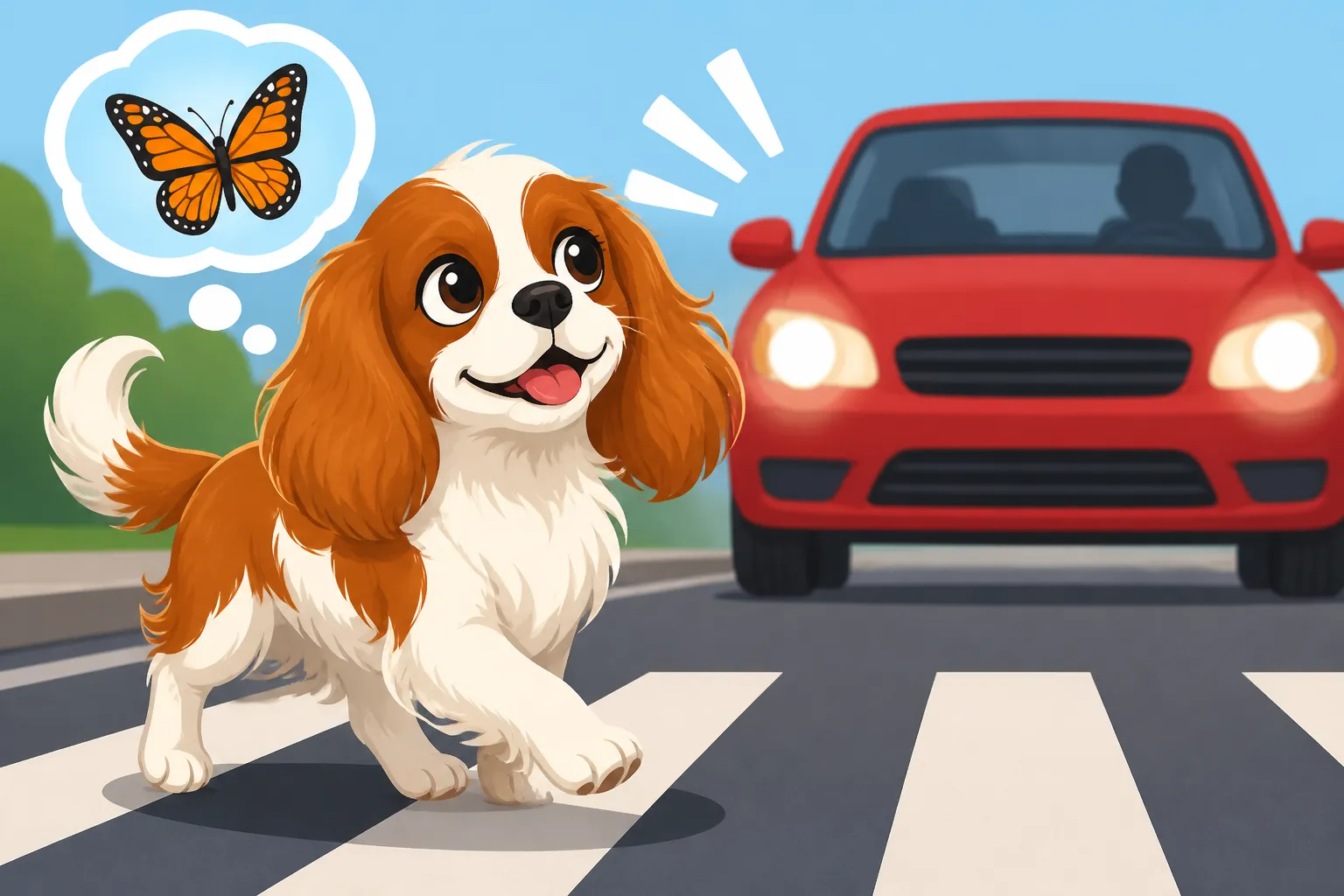
It’s a heartbreaking reality that many Cavalier King Charles Spaniel owners face: that moment of sheer terror when your beloved, seemingly oblivious little dog darts towards a busy street, completely unconcerned by the whizzing cars. It feels like they simply don’t grasp the danger, and frankly, they often don’t. This guide is here to unravel why our sweet Cavaliers seem to lack fundamental "traffic sense" and, more importantly, how we can proactively protect them from the very real and devastating risks of a world not designed for their charming innocence.
Understanding the Cavalier's Innate Instincts
Our Cavaliers are enchanting creatures, known for their affectionate nature and "velcro dog" tendencies. But beneath that gentle exterior lies a complex blend of genetics and historical purpose that shapes their understanding of the world, including their perplexing lack of road safety awareness. It's not that they're stupid; it's that their instincts simply don't align with modern dangers.
The Legacy of a Lap Dog
Historically, Cavaliers were bred for companionship. They were the pampered pets of royalty and nobility, designed to sit on laps, provide warmth, and look beautiful. Their primary "job" was to be charming, affectionate, and utterly devoted to their human companions. This isn't a breed that was developed to herd livestock, guard property, or hunt game in a self-sufficient manner in vast, open fields where quick assessment of danger from large, fast-moving objects was a survival trait.
Think about it: a dog bred primarily for the indoors, for human interaction, and for luxury living wouldn't have been selectively bred for traits like cautious awareness of approaching threats beyond perhaps a territorial rival or a wild animal in a controlled estate. The concept of a rapidly moving, dangerous metal object like a car simply didn't exist in their ancestral environment. Their genetics prioritize connection with you over an innate understanding of external hazards like traffic. This makes them wonderfully sweet, but also incredibly vulnerable in our bustling human world.
The Spaniel "Hunter" at Heart
Despite their lapdog reputation, Cavaliers are spaniels, and that means they possess a deep-seated instinct to flush and chase. While they might not be out there bringing down pheasants, that ancestral drive manifests in a strong prey drive for smaller, quicker targets like squirrels, birds, or even a rogue leaf caught in the wind. This is where their lack of "traffic sense" becomes particularly dangerous.
When a Cavalier's prey drive kicks in, it can override almost everything else. That sudden dash across a park, seemingly ignoring your frantic calls, is them acting on instinct. They lock onto the target, and the world narrows. The sound of a car, the visual of a curb, the concept of danger – all of it can fade into the background when the thrill of the chase takes over. It's a powerful, primal urge that they can struggle to control without diligent training and careful management from us. This spaniel heritage, combined with their desire to be near people, creates a volatile mix when they encounter tempting distractions near roads. You can see this impulse when they bolt after pigeons or even a blowing plastic bag. The Bird Chase a Cavalier Cannot Resist is a real and dangerous instinct.
The Challenges of a Cavalier's Sensory World
To truly understand why a Cavalier behaves the way it does around traffic, we need to consider how they perceive the world through their senses. Their sensory priorities are often very different from our own, leading to misunderstandings and dangerous situations.
Nose to the Ground, Ears to the Wind
Cavaliers, like all dogs, primarily experience the world through their nose. Their sense of smell is incredibly potent, vastly outperforming ours. A simple walk down a pavement is a complex tapestry of scents: the residual aroma of every person and dog who has passed, discarded food wrappers, blooming flowers, and the faint, intriguing scent of a squirrel that was there an hour ago. For a Cavalier, these scents are far more captivating and informative than the sight or sound of a distant car.
While they have good hearing, their ears are often attuned to specific frequencies and sounds that interest them – perhaps the rustle of leaves that might hide a rodent, or the distant jingle of another dog's collar. The general rumble of traffic might just be background noise, or worse, their focus could be so intensely drawn to an enticing smell that the sound of an approaching vehicle simply doesn't register as a threat until it's too late. It's not that they don't hear it, it's that they don't interpret it as something to be immediately wary of, especially if a fascinating scent trail has captured their entire attention. Why a Cavalier Follows a Scent explains this powerful drive.
Limited Field of Vision and Attention Span
While a Cavalier's big, expressive eyes are undeniably charming, their vision isn't necessarily optimized for spotting fast-moving threats in a complex urban environment. Dogs have a wider field of vision than humans, but their acuity (sharpness of vision) can be lower, especially for stationary objects. What they excel at is detecting movement, but even then, their attention can be incredibly fickle, particularly when faced with multiple stimuli.
A Cavalier might see a car, but if a child suddenly giggles or another dog barks, their attention can snap away in an instant. They often live very much in the present moment, easily distracted by novelty or excitement. This isn't a fault; it's part of their sweet, curious nature. However, when combined with their strong chase instincts and their desire to greet every friendly face, this short attention span means they might not maintain awareness of traffic for long enough to keep themselves safe. They might glance at a car, dismiss it as non-threatening, and then immediately fixate on a person walking by, forgetting the car entirely as they make a bee-line for a potential new friend.
Common Scenarios and Why They Happen
Understanding the underlying instincts and sensory perceptions helps us pinpoint why certain dangerous situations repeatedly occur with Cavaliers. These aren't just random acts; they're often predictable consequences of their breed traits interacting with our modern world.
The Squirrel Chase
Ah, the infamous squirrel! Every Cavalier owner knows the sheer, unadulterated joy (and terror) that a squirrel can bring. One moment, your Cavalier is calmly trotting by your side, the next, they've transformed into a tiny, furry rocket, propelling themselves forward with singular focus after that bushy-tailed menace. This isn't just about a love for squirrels; it's about that innate spaniel prey drive we discussed earlier.
When a squirrel darts, it triggers a powerful, ancient hunting instinct in your Cavalier. Their brain essentially shouts, "Prey! Chase!" and all other considerations, including your commands, the leash you might be holding (or worse, not holding), and the deadly vehicles on the road, become secondary. They don't process "car" as a threat in that moment; they only see the fleeing target. This is particularly dangerous because squirrels often lead dogs directly into traffic, darting across streets or through bushes bordering roads. It's a primal, almost involuntary response, which is why a secure leash and harness are non-negotiable for a Cavalier. This is also why Whether a Cavalier Can Ever Be Off Leash is such a critical question.
Greeting Every Stranger and Dog
Cavaliers are renowned for their friendly, outgoing temperaments. They genuinely love people and other dogs, often viewing everyone they encounter as a potential new best friend. While this makes them wonderful companions, it also contributes directly to their poor traffic sense. If they spot a friendly face or another wagging tail across the street, their instinct is often to go say hello, immediately.
They don't weigh the risks of crossing a busy road to get to that person or dog; they simply perceive an opportunity for social interaction. They are so focused on the positive outcome – a new friend, a cuddle, a sniff – that the intervening dangers are completely ignored. This is particularly true for younger Cavaliers or those who haven't had extensive socialization training to teach them polite greetings and impulse control. It’s an endearing trait that becomes incredibly risky when not managed. Their desire to be a "friend to all" is powerful, and it means they will often make a beeline for anyone or anything they perceive as friendly, regardless of the consequences.
Sudden Startles and Bolting
Even the most well-behaved Cavalier can be prone to sudden frights that send them bolting, seemingly without thought for their surroundings. A sudden loud noise – a backfiring car, a motorcycle roaring past, a dropped bin lid – can trigger an immediate flight response. Their smaller size can make them feel more vulnerable, and their sensitive nature means they can be genuinely startled by things other dogs might ignore.
When a Cavalier is startled, their adrenaline surges, and their primary instinct is to escape the perceived threat. This can mean a desperate tug on the leash, slipping out of a collar, or simply an uncontrolled dash away from the source of fear. In this state of panic, they are not assessing traffic or looking for a safe path; they are simply running. A perfectly calm walk can turn into a terrifying chase in seconds, with your Cavalier blindly running into the street in their efforts to flee. This is another reason why robust safety measures are so important, as even a minor fright can lead to a major incident.
Strategies for Safe Street Walking
Given that we can't reprogram our Cavaliers' instincts, our responsibility as owners is to implement robust strategies to keep them safe in a world that isn't naturally suited to their inherent charm and distraction-prone nature.
The Importance of Leashes and Harnesses
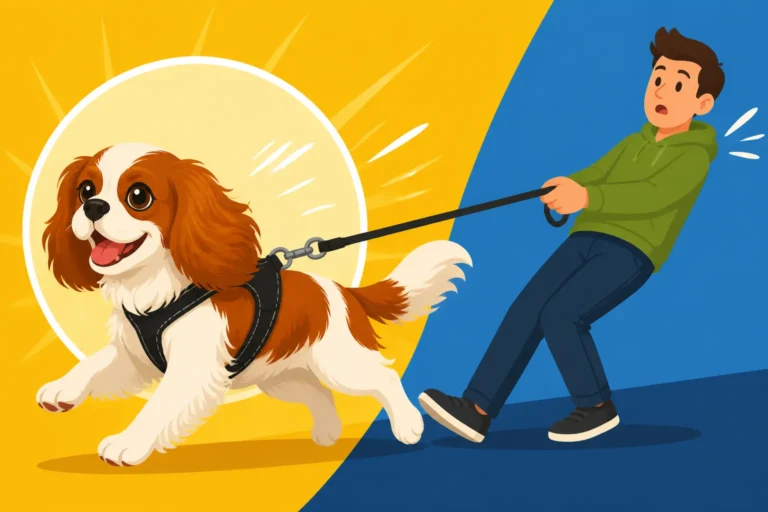
This might sound obvious, but for a Cavalier, a secure leash and a properly fitted harness are not optional accessories; they are life-saving equipment. A standard collar can put pressure on their delicate trachea and, more importantly, a panicked or determined Cavalier can easily slip out of one. Their heads are not dramatically larger than their necks, making escapes surprisingly common if they pull back with force.
A harness, particularly one that clips at the front or has a secure back clip with multiple points of adjustment, distributes pressure evenly across their chest and shoulders, making it much harder for them to back out. It also gives you better control without hurting their neck. When choosing a harness, look for one that fits snugly but comfortably, without restricting their shoulder movement. Brands like Ruffwear or Kurgo often have good options for small dogs. Always check the fit regularly, especially for puppies who are growing, or if your Cavalier gains or loses weight. Remember, a good harness is your primary connection to keeping them safe. Harnesses Suited to a Cavalier's Neck offers more specific advice.
It's also crucial to consider the leash itself. A sturdy, non-retractable leash of a reasonable length (four to six feet) allows you to maintain control while giving your Cavalier enough space to explore safely. Retractable leashes are generally discouraged for Cavaliers near roads because they can give a false sense of security, making it harder to reel your dog in quickly if they bolt. They also allow dogs to build up speed, increasing the force if they hit the end of the line, which can injure both you and your dog.
| Leash Type | Pros | Cons | Best Use for Cavaliers |
|---|---|---|---|
| Standard (Nylon/Leather) | Good control, durable, reliable | Less flexibility in length | Everyday walks, training, near traffic |
| Retractable | Allows more roaming space | Poor control, potential for injury, lead to bad habits | Not recommended near traffic or for reactive dogs |
| Long Line (Training Lead) | Excellent for recall practice in secure areas | Can tangle, require attentive handling | Long Line Practice for a Cavalier in a park or field |
| Hands-Free | Convenience for runner/hikers | Requires excellent leash manners from the dog | Only for highly trained Cavaliers in safe areas |
Training for Focus and Recall
While no training guarantees 100% foolproof behavior, especially with a strong prey drive, consistent, positive reinforcement training can significantly improve your Cavalier's focus and recall. This is where companies like BAXTER & Bella can be really helpful, offering online training programs that focus on positive reinforcement and building a strong bond – essential for breeds like Cavaliers.
Start training in a low-distraction environment, like your home or a quiet backyard. Teach a strong "watch me" cue to get their attention, using high-value treats (think tiny pieces of cooked chicken or cheese). Practice this frequently, gradually increasing distractions. For recall, make coming to you the most rewarding thing they can do. Use a happy, excited tone, and once they reach you, lavish them with praise and their absolute favorite treat. Never scold them if they take a while to come; always make it a positive experience.
Remember that Reward-Based Training With a Cavalier is the most effective approach for this sensitive breed. Once they have a solid foundation, practice in increasingly busier environments while still on a long line or a standard leash. The goal isn't to eliminate their instincts, but to teach them that listening to you is more rewarding than chasing that squirrel, or that checking in with you is paramount. For the "emergency" moments, teach a distinct, high-pitched recall word or whistle that you only use for truly urgent situations, making it stand out from everyday commands. The Recall Word a Cavalier Learns Fastest often sounds different from their normal commands.
Creating a Safe Environment Beyond the Walk
Protecting your Cavalier from traffic extends beyond the immediate walk. Their home environment, and anywhere they spend time, needs to be considered with their lack of traffic sense in mind.
Firstly, if you have a yard, ensure it is securely fenced. This means no gaps under gates, no loose boards, and fencing that is high enough to prevent jumping. Cavaliers are small enough to squeeze through surprisingly tight spaces if something on the other side catches their eye. Fencing a Yard a Cavalier Will Not Leave is crucial, as even a momentarily open gate can lead to disaster. For those living in apartments, a balcony should be secured to prevent accidental falls or jumps.
Secondly, consider your car safety. If your Cavalier rides in the car, they should always be secured in a crash-tested car seat or a travel crate. This isn't just for their safety in an accident, but also to prevent them from jumping out if a door or window is opened, or from distracting you while you're driving. Many convenient and safe car restraints can be found on Amazon, making it easy to keep your dog secure while on the road.
Finally, think about situations where your Cavalier might be left with others. Ensure that anyone caring for your Cavalier understands their lack of traffic sense and the importance of keeping them leashed and secure at all times outdoors. Whether it's a dog walker, a pet sitter, or a family friend, clearly communicate the safety protocols. Getting a Cavalier Used to a Dog Walker means ensuring the walker understands these specific needs. This might even extend to considering a Choosing a Crate a Cavalier Will Rest In for times when supervision isn't constant, or during stressful events like fireworks where bolting is a risk.
What Happens When Safety Fails
It's a difficult topic to discuss, but we must acknowledge the grave consequences when our Cavaliers' lack of traffic sense leads to an accident. Understanding these realities underscores the critical importance of vigilance and preventative measures.
The Emotional Toll of an Accident
The emotional impact of a Cavalier being hit by a car is profound and devastating, leaving a lasting scar on owners. The immediate shock, the frantic rush to the vet, the agonizing wait for news – it's a nightmare scenario no pet parent ever wants to endure. Beyond the initial trauma, there's the heartbreak of seeing your beloved companion in pain, the guilt of wondering what more you could have done, and the deep sorrow if the injuries prove fatal.
Losing a Cavalier this way is particularly tragic because it often feels preventable. It wasn't a long-term illness or an unavoidable accident, but often a split-second lapse in vigilance or an unexpected surge of instinct. The emotional recovery for an owner can be long and arduous, marked by grief, self-blame, and a profound sense of loss. The bond we share with our Cavaliers is so strong that such an event can feel like losing a child. This is why discussions around Losing a Cavalier to Traffic and How It Happens are so vital – to prevent that pain for other families.
The Financial Burden of Injury
Beyond the emotional devastation, a traffic accident can impose a significant financial burden. Emergency veterinary care is expensive, and injuries sustained from being hit by a car are often severe, requiring extensive treatment. This can include X-rays, ultrasounds, blood work, pain medication, wound care, and potentially complex surgeries for broken bones, internal injuries, or neurological damage.
The costs can quickly escalate into thousands of dollars, even for a relatively small dog like a Cavalier. And the financial commitment doesn't end with the initial treatment; there can be weeks or months of follow-up appointments, rehabilitation therapy, and specialized medications. For many families, these unexpected expenses can be overwhelming, adding immense stress to an already horrific situation. This is a stark reminder of why taking every possible precaution is not just about your Cavalier's well-being, but also about protecting your financial stability from unforeseen emergencies.
In a world full of distractions and dangers, our Cavaliers, with their endearing lack of traffic sense, depend entirely on us for their safety. By understanding their instincts, respecting their sensory world, and implementing consistent, proactive safety measures, we can give them the happy, long lives they deserve, free from the terrifying risks of the road.
Disclaimer
This article is for general informational purposes only and does not constitute professional advice. Laws, prices and regulations vary by location and change over time. Consult a qualified professional for guidance on your specific situation.