Teaching a Cavalier to Stop Barking on Cue
Oh, the sheer joy of a Cavalier King Charles Spaniel can sometimes be punctuated by the not-so-joyful sound of persistent barking. If you've ever found yourself wincing as your sweet Cavalier launches into a barking frenzy at the mail carrier, a squirrel, or even just a leaf blowing past the window, you know the frustration. It's not just annoying; it can be embarrassing, stress-inducing, and it truly tests your patience. This guide is all about giving you the tools to teach your beloved Cavalier to quiet down on command, bringing a little more peace back into your home.
Understanding Why Your Cavalier Barks in the First Place
Before we can teach our Cavaliers to hush, it's really helpful to understand why they bark. It’s rarely out of malice, I promise. For our little companions, barking is a form of communication, a way to express a whole range of emotions and needs. Getting to the root cause isn't just about stopping the noise; it's about understanding your dog better and addressing their world from their perspective.
The Cavalier's Alerting Nature and Breed Tendencies
Cavaliers, despite their gentle, lap-dog reputation, still carry a surprising amount of their spaniel heritage. They were bred as companion dogs, yes, but also as small gundogs or "comforters," meaning they were highly attentive to their surroundings and their human's moods. This attentiveness, coupled with a natural instinct to alert their family to anything new or unusual, often translates into barking. They aren't trying to be guard dogs in the fierce sense, but they certainly want you to know when something's up!
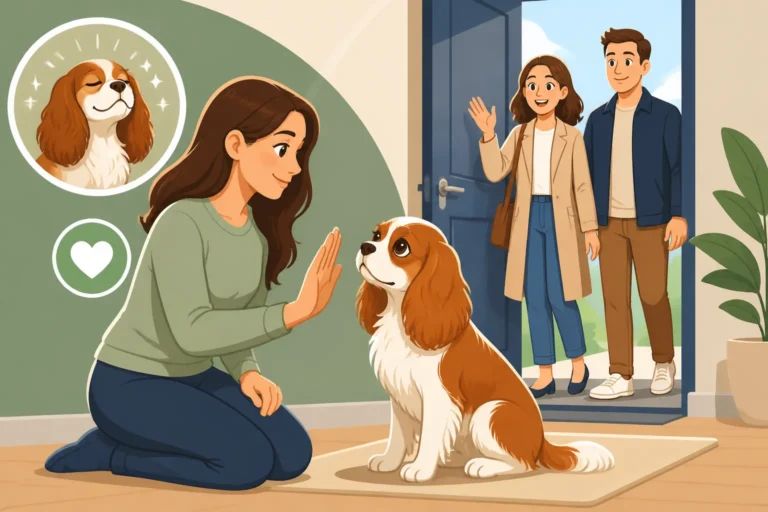
Think about it: your Cavalier is a small dog in a big world, and their way of saying "Hey, something's happening!" is often through their voice. Common triggers are incredibly varied. It could be the sound of the doorbell, the postman's footsteps, a delivery truck rumbling down the street, or another dog walking past the window. Some Cavaliers get quite agitated by wildlife they see from indoors, like squirrels darting across the lawn or birds at a feeder. They're just doing their job, as they see it, which is to keep you informed. It's a classic Cavalier trait for them to announce practically everything and everyone who walks past. Why a Cavalier Announces Everyone Who Walks Past They love being involved, and barking is their way of participating in the happenings of the household and beyond.
Addressing the Underlying Cause Before Training the "Quiet" Command
While teaching a "quiet" cue is incredibly valuable, it’s important to remember that it's a management tool, not a magic wand that makes all barking disappear. If your Cavalier's barking stems from deeper issues like anxiety, frustration, or profound boredom, the "quiet" command alone won't solve the core problem. You need to be a detective first.
For example, a Cavalier left alone for long stretches might resort to incessant barking or howling out of separation anxiety. You might find yourself saying, "My Cavalier howls the moment I leave," and in such a case, focusing solely on a "quiet" command won't be enough. This requires a more holistic approach, working on building their confidence when alone, slowly increasing their tolerance, or exploring solutions like dog walkers or doggy daycare. A Cavalier That Howls the Moment You Leave Similarly, a Cavalier who isn't getting enough mental stimulation or physical exercise might bark out of sheer boredom or pent-up energy. A busy mind and body are often quieter minds and bodies. Puzzle toys, regular walks, and interactive play can go a long way in reducing this type of barking. You might even consider filming your Cavalier while you are out to truly understand the triggers and context of their barking when you're not around. Filming a Cavalier While You Are Out Identifying and mitigating these underlying triggers will make your "quiet" training much, much more effective.
The Foundation: Teaching Your Cavalier to "Speak" on Cue (Counter-Intuitive, I Know!)
This might sound completely backward, but trust me on this one: teaching your Cavalier to bark on command, or "speak," is one of the most effective ways to then teach them to be quiet on command. It puts you in control of the behavior, allowing you to initiate it and then, crucially, to stop it.
Why "Speak" First Is Key to "Quiet"
Think of it like this: if you want to teach someone to stop doing something, you first need to be able to ask them to do it. When you have a "speak" command, you can reliably get your Cavalier to bark. This predictability is golden because it gives you the perfect opportunity to then ask for and reward the absence of barking – the silence. Without a "speak" command, you're constantly waiting for your dog to bark naturally, which is often chaotic, unpredictable, and much harder to time your "quiet" cue correctly. You need to be able to set up the scenario yourself, rather than hoping for a random doorbell ring or a squirrel sighting. This control is the true power of this method.
Step-by-Step for "Speak"
Let's break down how to teach this seemingly counter-intuitive command. Patience and positive reinforcement are your best friends here.
Method 1: Capturing a Natural Bark
- Be Ready: Have some incredibly high-value, small treats ready. These are the "jackpot" treats your Cavalier will trade anything for. Treats a Cavalier Will Trade Anything For
- Identify a Trigger: Wait for something that naturally makes your Cavalier bark. This could be a knock at the door, the sound of someone walking outside, or even you pretending to drop something loud.
- Mark the Bark: The instant your Cavalier barks, say "Speak!" (or whatever cue you choose), then immediately follow with "Yes!" or a clicker, and then pop a treat in their mouth.
- Repeat, Repeat, Repeat: Do this several times over short, five-minute training sessions. Five-Minute Training Sessions With a Cavalier The goal is for your Cavalier to associate the word "Speak" with the action of barking and getting a reward.
- Test It Out: Once you've had some success, try saying "Speak!" before the trigger. Does your Cavalier offer a bark? If so, great! Reward heavily. If not, go back to marking the natural barks.
Method 2: Provoking a Bark (Gently!)
If your Cavalier isn't a huge barker, or you're struggling to catch those natural barks:
- Use a Doorbell/Knock: Stand with your Cavalier, have a friend ring the doorbell or knock lightly. The moment your Cavalier barks, say "Speak!", "Yes!", and treat.
- Tease with a Toy: Sometimes, excitedly waving a favorite toy just out of reach can elicit an excited "woof!" Again, "Speak!", "Yes!", treat.
- Mimic Excitement: A little play-bow and an enthusiastic "What's that?!" can sometimes get a bark.
Remember to keep these sessions short and positive. We're building a foundation, not pushing them to their limits.
Introducing the "Quiet" Command – The Real Magic Happens Here
Once your Cavalier reliably barks on your "Speak" cue, you're ready for the main event: teaching them to be quiet. This is where you gain control and can truly manage those unwanted barking episodes.
From Bark to Silence: The Timing Is Everything
This step relies heavily on your ability to time your cues and rewards perfectly.
- Set Up the Scenario: Ask your Cavalier to "Speak!" When they bark, praise them excitedly and give them a small treat.
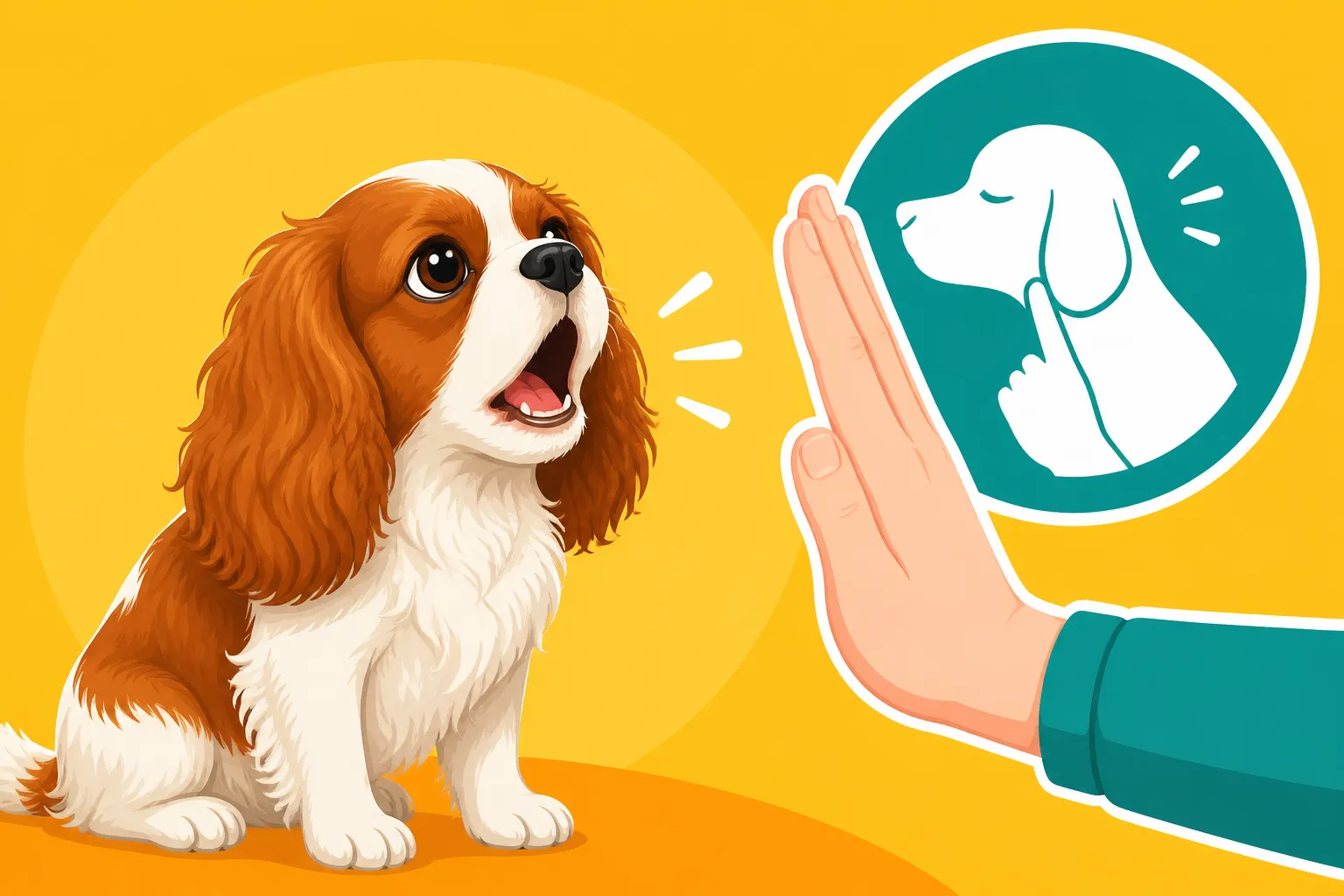
- Introduce "Quiet!": While they are still barking, immediately say "Quiet!" (or your chosen cue) in a calm, firm, but not harsh, voice.
- Wait for the Pause: The absolute instant your Cavalier stops barking – even for a split second – mark that silence with "Yes!" or a clicker, and give them a treat. The trick here is to catch the beginning of the silence, not waiting until they've been quiet for a long time.
- Increase Duration (Gradually!): Over time, you can start to slightly increase the duration of silence you expect before rewarding. Instead of rewarding the immediate pause, wait one second, then two, then three, before marking and treating. But start with that immediate silence!
- Repeat and Generalize: Practice this sequence multiple times in short sessions. The more consistently you do this, the faster your Cavalier will understand that "Quiet" means "stop barking now for a reward."
It's vital that you reward the silence immediately. If you wait too long, your Cavalier won't connect the "quiet" cue with the reward. The goal is to create a positive association with being quiet on command, just as you did with barking. Sometimes, a little body language from you can help, like turning your back for a split second when they're barking, then turning back and offering the "Quiet!" cue. This shows them that barking doesn't get your attention, but quiet does. You can even teach your Cavalier to settle on a mat nearby, which naturally encourages a calm, quiet state. Teaching a Cavalier to Lie on a Mat Nearby
Practicing in Different Scenarios and Generalization
Once your Cavalier understands "Speak" and "Quiet" in a calm, controlled training environment, it’s time to test it out in the real world. This is called generalization, and it's where the rubber meets the road.
- Low-Distraction First: Start in situations where barking is mild or infrequent. Maybe a quiet knock at the door from a family member, rather than the frantic mail carrier visit.
- Gradually Increase Distraction: Slowly introduce higher-level triggers.
- Doorbell/Knocking: Have a friend ring the bell, let your Cavalier bark once or twice, then give your "Quiet!" command. Reward heavily for success.
- Window Barking: If your Cavalier barks at passersby or squirrels through a window, set up a scenario. When they start to bark, use your "Quiet!" cue.
- Outdoor Barking: This is often the trickiest. If your Cavalier barks at other dogs on walks, Barking on Walks When a Cavalier Sees Another Dog you'll need to work on this from a distance. Start far away from triggers, where your Cavalier is less reactive. As they improve, gradually decrease the distance.
- Fade the Treats: As your Cavalier gets more reliable, start to fade the food rewards. Instead of a treat every time, offer praise and maybe a belly rub. Then, intermittent treats. You want them to perform the command because they understand it and want to please you, not just for the treat.
- Consistency is Key: Everyone in the household needs to use the same cues ("Speak" and "Quiet") and the same method. Inconsistency will only confuse your Cavalier and slow down progress. Make sure you reward every single time they get it right in the early stages, then slowly transition to more unpredictable rewards once the behavior is solid.
Common Pitfalls and Troubleshooting Your Cavalier's Barking Training
Training is rarely a straight line, and there will be moments when you feel like you're taking two steps back for every one forward. This is perfectly normal, especially with a breed as charmingly stubborn and sensitive as the Cavalier.
When Your Cavalier Just Won't Stop: Managing Excessive Barking
Sometimes, your Cavalier will just get carried away, and your "Quiet" cue will feel like it's falling on deaf ears. Here's what to do when your sweet pup is in full bark-mode and ignoring you:
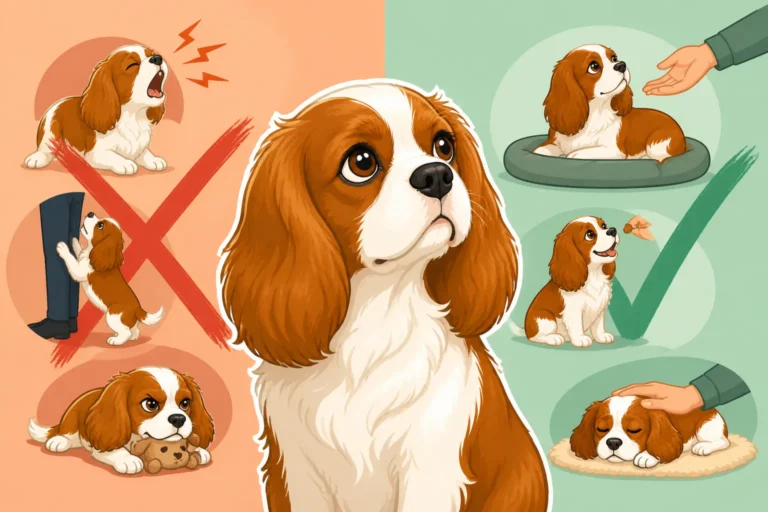
- Avoid Yelling: It's tempting to shout "Quiet!" louder and louder, but for your Cavalier, your raised voice often just sounds like you're barking too! It can actually escalate their barking because they think you're joining in the "alert." Stay calm and keep your voice steady.
- Don't Reward Unintended Barking: This is a big one. If your Cavalier barks relentlessly for attention, and you give in by looking at them, talking to them, or especially giving them what they want (like a toy or to go outside), you're inadvertently reinforcing the barking. It teaches them, "Ah, barking gets me what I want!" This can be incredibly hard to ignore, but it's crucial.
- Time-Outs: For persistent, attention-seeking barking, a brief time-out can be effective. The moment they start barking, calmly walk out of the room for 10-15 seconds. When you return, if they are quiet, praise them. If they start barking again, leave again. They quickly learn that barking makes you disappear, while quiet brings you back.
- Environmental Management: Sometimes, the best solution is to prevent the barking trigger. If the window is a major source of barking, close the blinds or put up a privacy film during peak times. If the doorbell sets them off, consider putting a note on your door asking visitors to knock or text instead. Using a snood can also help manage outdoor distractions, especially for dogs who get wound up on walks or while watching out the window.
A table can help visualize common barking types and initial responses:
| Barking Type | Common Triggers | Initial Management Strategies | When to Apply "Quiet" Command |
|---|---|---|---|
| Alert Barking (Warning you of something) | Mail carrier, doorbell, people passing | Close blinds, use white noise, manage access to windows, doorbell de-sensitization | After one or two barks, then reward silence |
| Attention-Seeking Barking | You on phone, trying to relax, ignoring them | Ignore completely (turn back, leave room), only reward quiet behavior | Rarely directly, focus on ignoring, then rewarding quiet moments |
| Boredom Barking | Lack of activity, alone for long periods | Increase exercise, mental enrichment (puzzle toys), interactive play, dog walker | After addressing the underlying boredom/frustration |
| Frustration/Anxiety Barking | Alone, confined, unable to reach something | Address underlying anxiety (separation anxiety training), enrichment | After addressing the underlying emotion |
Consistency, Patience, and When to Seek Professional Help
Teaching a Cavalier to truly understand and respond to "Quiet" takes time, patience, and unwavering consistency. This isn't a one-week fix; it's a process that builds over weeks and months, especially as you generalize the command to more challenging situations. Remember, your Cavalier isn't trying to be naughty; they're just communicating in the best way they know how.
- Be a Calm Leader: Your calm demeanor can really rub off on your Cavalier. If you're stressed or agitated by their barking, they'll pick up on that and it can escalate their own anxiety or excitement.
- Review Your Routine: Ensure your Cavalier is getting enough physical exercise and mental stimulation appropriate for their age and health. A tired Cavalier is often a quiet Cavalier.
- Consider Tools: Some owners find specific calming supplements can help anxious Cavaliers, especially if their barking is linked to general unease. Calming Supplements for an Anxious Cavalier Interactive puzzle toys, like those found on Amazon, can also keep their minds busy and reduce boredom barking.
- Don't Be Afraid to Get Help: If you're struggling, or if the barking seems excessive, destructive, or is accompanied by other worrying behaviors, please don't hesitate to reach out to a certified professional dog trainer or a veterinary behaviorist. They can provide tailored guidance and help identify any medical or behavioral issues you might be missing. For example, if you suspect separation anxiety is a major contributor, a trainer specializing in this could be invaluable. Trainer Rates for Cavalier Separation Anxiety Resources like BAXTER & Bella also offer comprehensive online courses that can guide you through various training challenges from the comfort of your home, providing structured support that can be a real game-changer. They can often spot nuances you might overlook and give you personalized strategies that make all the difference.
By understanding your Cavalier's barking, approaching training with consistency and empathy, and knowing when to ask for help, you can absolutely teach them to be a quieter, more composed companion. The peace and quiet you gain will be well worth the effort.
Disclaimer
This article is for general informational purposes only and does not constitute professional advice. Laws, prices and regulations vary by location and change over time. Consult a qualified professional for guidance on your specific situation.