The 1926 Advertisement That Revived the Cavalier
Imagine for a moment a world where the beloved Cavalier King Charles Spaniel, as we know it today, didn't exist. It sounds wild, doesn't it? But there was a time, not so long ago, when the charming, long-nosed, gentle companion we cherish was practically lost to history, replaced by a very different looking dog. This guide will walk you through the pivotal moment in 1926 when a single, determined advertisement set the wheels in motion to bring our Cavaliers back from the brink and redefine a breed.
The Vanishing Breed: What Happened to the Original Court Spaniel?
Before we dive into the revival, it's crucial to understand what was "lost." When people speak of "King Charles Spaniels" in the early 20th century, they weren't referring to the dog we recognize as a Cavalier today. The breed had undergone a dramatic transformation over centuries, driven by changing fashions and selective breeding, until its original form was largely forgotten. It's a tale of how aesthetics can sometimes override historical accuracy, leaving a breed nearly unrecognizable from its roots.
From Royal Laps to Victorian Fashions: The Shifting Ideal
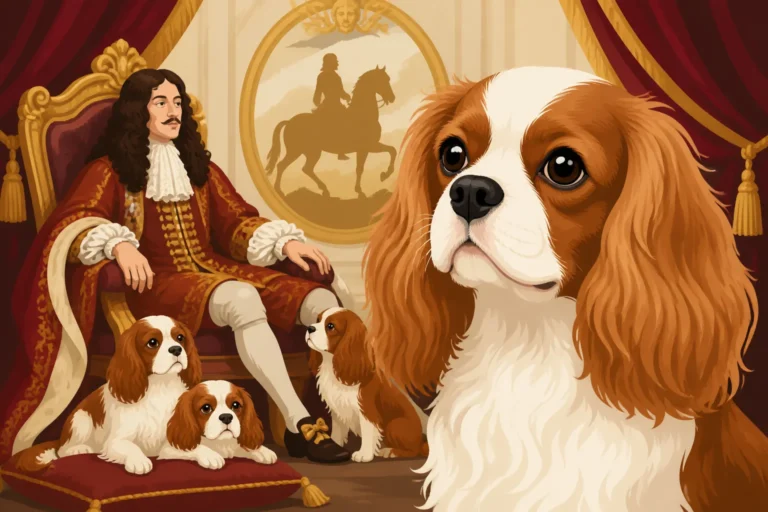
The original spaniels cherished by royalty, particularly King Charles II, were quite different from the short-nosed, dome-headed dogs that dominated the show rings centuries later. These were lively, active little dogs with flatter skulls, longer muzzles, and a more athletic build, often depicted in paintings alongside their aristocratic owners. They were true companions, running in fields and gracing laps with equal ease. They were the original "comfort dogs," adored for their sweet temperaments and manageable size, and their presence at court was a constant. For a deeper look at their regal origins, consider reading Cavalier Ancestors at the Court of Charles II.
However, as centuries passed, tastes changed. The Georgian era saw a shift, but it was the Victorian era that truly transformed the look of these beloved spaniels. There was a growing fascination with brachycephalic (short-nosed) breeds, influenced by the popularity of Pugs and other flat-faced dogs. Breeders, eager to meet these new demands and perhaps influenced by the desire for distinct, identifiable traits in the burgeoning dog show scene, began to intentionally breed for shorter muzzles, higher domed skulls, and larger, rounder eyes. The delicate, elegant features of the earlier spaniels began to recede, replaced by a more extreme, "pushed-in" facial structure that was considered fashionable at the time. This shift was profound, as you can explore further in How Cavalier Ancestors Changed Shape in the 1800s. The genetic pool for the longer-nosed variety dwindled, and soon, what was once commonplace became a rarity.
The "King Charles Spaniel" of the Early 20th Century: A Different Dog
By the turn of the 20th century, the dog officially known as the "King Charles Spaniel" (or English Toy Spaniel in the United States) bore little resemblance to its 17th-century ancestors. These dogs had extremely short, flattened faces, very domed skulls, and prominent, often bulbous eyes. Their ears were still long and feathered, and their coats beautiful, but the overall head shape was dramatically different. They were charming in their own right, and many adored them, but they had strayed far from the "old type" that historical paintings preserved. This became the accepted standard, and very few individuals remained who remembered or even bred the older, longer-nosed variety.
This created a disconnect for those who admired the historical portraits and yearned for the return of the original King Charles Spaniel. The dogs they saw in the show ring, while beautiful according to the prevailing standards, just weren't that dog. The short muzzle, while appealing to some, brought with it certain health challenges, and there was a yearning for the more robust, less exaggerated features of the past. The genetic lines had narrowed, and the distinctive head shape had become deeply entrenched. It was clear that a deliberate effort would be needed to reverse this trend, an effort that most breeders at the time saw as going backward rather than forward.
A Man with a Mission: Roswell Eldridge's Bold Vision
Into this landscape of established show standards and forgotten history stepped an American named Roswell Eldridge. He was a man with a keen eye for history and a deep appreciation for the original aesthetic of the King Charles Spaniel. He wasn't just interested in the past; he was determined to bring it back to life, to see those classic spaniel faces once more. His vision was clear, but the path to achieving it was anything but.
Eldridge's Quest: Finding the Lost Dogs of the Past
Roswell Eldridge was an avid admirer of the King Charles Spaniels depicted in the old master paintings, particularly those from the time of King Charles II. He saw the elegant, sweet-faced dogs with their moderately long noses and relatively flat skulls, and he recognized that they were a distinct type from the modern, much shorter-faced King Charles Spaniel being shown. He held a deep belief that these "old type" dogs were worth preserving and reviving. He wasn't alone in this sentiment; many enthusiasts secretly wished for a return to the classic look, but Eldridge was the one with the means and the determination to do something truly groundbreaking. You can learn more about his significant role in Who Roswell Eldridge Was to the Cavalier.
Eldridge understood that simply wishing wouldn't make it so. The breed standard, as it stood, championed the short-nosed variety, and breeders naturally adhered to it. To find the dogs he envisioned, he'd have to create a new incentive, something compelling enough to encourage people to seek out and exhibit dogs that, by the current standards, would be considered "faulty" or "incorrect." He wasn't just looking for any spaniel; he was specifically searching for those that embodied the characteristics he saw in those historic artworks. It was a quest to rediscover a living piece of history, to resurrect a form that had been carefully, and perhaps inadvertently, bred out of existence. His specific ideal of the lost dog is further detailed in The Old Type of Cavalier Eldridge Wanted Back.
The Crucial Announcement: A Challenge to Breeders
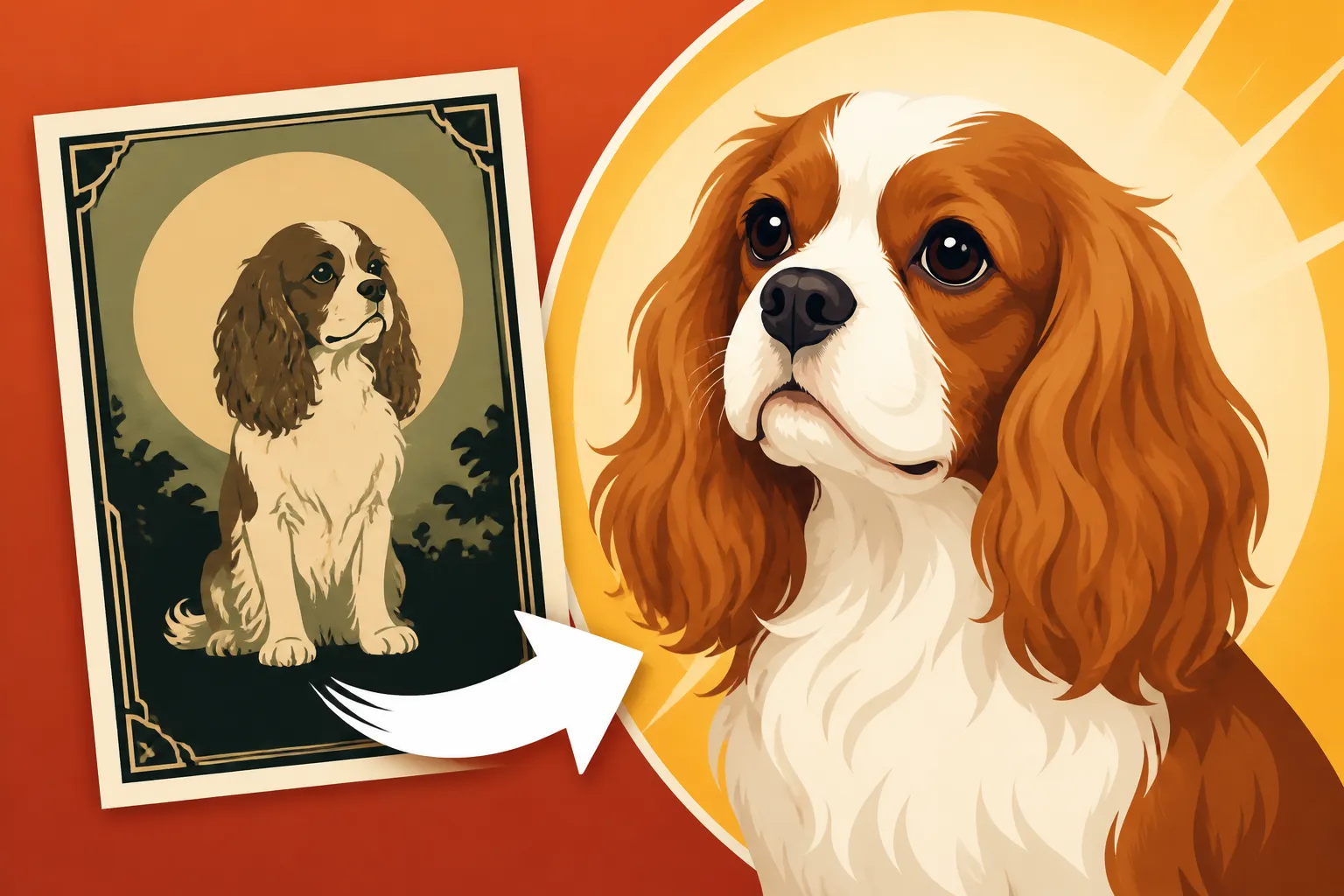
In 1926, Roswell Eldridge took a bold and unprecedented step. He sponsored a special class at Crufts, the most prestigious dog show in the United Kingdom, specifically for "King Charles Spaniels of the old type." But he didn't stop there. To ensure entries and truly shake up the establishment, he offered a substantial prize of twenty-five pounds sterling for the best male and best female of this "old type" in each of the four recognized colors (Blenheim, Tricolor, Ruby, and Black and Tan). This was a significant sum of money at the time, certainly enough to turn heads and motivate breeders to look for dogs that fit his description. This offer was truly revolutionary and a driving force in How Roswell Eldridge Brought Back the Cavalier.
The advertisement, which ran in the Crufts schedule, specifically called for dogs with a "long nose, no stop, flat skull, not inclined to be domed, and with the spot in the center of the skull" – a clear reversal of the prevailing fashion. This wasn't just a casual offering; it was a direct challenge to the established breeding practices and aesthetic preferences of the era. He essentially put his money where his mouth was, creating a financial incentive to go against the grain and seek out dogs that looked like their royal ancestors, not their modern show-ring counterparts. This generous offer is detailed in The Prize Money Eldridge Offered for Old Cavaliers. Without this audacious move, it's entirely possible that the unique features of the Cavalier King Charles Spaniel might have remained confined to dusty paintings, never to grace our homes again.
The Hunt for the "Old Type": Initial Reactions and Discoveries
Eldridge's advertisement certainly caused a stir. It was controversial, challenging the very definition of the King Charles Spaniel at the time. Yet, it also sparked immense interest among a small but dedicated group of enthusiasts who shared his vision. The prizes were significant, but for many, it was the validation of their own quiet desire to see the return of the more natural-looking spaniel that truly resonated.
The First Entries: Dogs Meeting Eldridge's Criteria
When the 1926 Crufts show finally arrived, there was palpable excitement and curiosity surrounding Eldridge's special classes. Would anyone actually enter dogs that went against the grain of the established short-nosed ideal? Indeed they did! While not a massive entry, several dogs were presented that clearly fit Eldridge's description of the "old type." These were dogs that, for various reasons, had perhaps been overlooked by the mainstream show world or kept as beloved pets, unknowingly preserving the very characteristics Eldridge sought. It was a moment of triumph for Eldridge and a clear sign that the genetics for the longer-nosed spaniel were not entirely lost.
These early entries became the foundation stock for what would eventually become the Cavalier King Charles Spaniel. They were living proof that the look could be recovered, even if it meant scouring forgotten kennels or tracing back obscure pedigrees. Each dog that stepped into that special ring carried the genetic blueprint of the past, a link to the dogs of King Charles II's court. These pioneering dogs, as described in The First Dogs Shown as Old Type Cavaliers, were celebrated not for conforming to modern trends, but for preserving a historical legacy. Their presence proved that the dream of reviving the breed was not just a pipe dream, but a tangible possibility.
Establishing a Distinction: Why This Was More Than a Fad
Initially, some in the dog world dismissed Eldridge's initiative as a mere novelty or a passing fancy, a well-funded eccentric's indulgence. They wondered if it was truly possible to roll back centuries of breeding for a specific type. However, for those who shared Eldridge's vision, it was far more profound. This wasn't about creating a new designer breed; it was about restoring an old one. It was about recognizing that two distinct types of King Charles Spaniels had evolved, and that both deserved to exist and be appreciated.
The distinction was clear: the modern King Charles Spaniel (often called English Toy Spaniel in the US) with its very flat face, and the "old type" with its more moderate muzzle and flatter skull. This recognition was crucial because it meant that breeders could pursue the old type without invalidating the existing breed. It carved out a space for the revival to flourish, allowing dedicated individuals to begin the painstaking process of breeding true to the old type, without directly competing with or devaluing the established King Charles Spaniel. This was a critical step in setting the stage for the formal recognition of two separate breeds, each with its own unique history and characteristics.
Forging a Future: The Road to a New Breed Standard
Roswell Eldridge's prize classes continued at Crufts for several years, ensuring that the "old type" dogs continued to be exhibited and, crucially, bred. The success of these classes sparked the formation of a dedicated club, which began the serious work of formalizing the breed and creating a standard that would guide future generations of breeders. This was the true birth of the Cavalier King Charles Spaniel as a distinct entity.
The Long Road to Recognition: Early Clubs and Efforts
The enthusiasm generated by Eldridge's prizes quickly led to the formation of The Cavalier King Charles Spaniel Club in 1928, just two years after the initial advertisement. This club was instrumental in gathering like-minded individuals who were committed to the revival of the longer-nosed spaniel. Their primary goal was to not only continue breeding these dogs but also to gain official recognition from the Kennel Club as a separate and distinct breed. This was no easy feat, as the Kennel Club already recognized the King Charles Spaniel, and introducing a new breed that shared so much history and nomenclature required significant effort and distinction.
The club members diligently worked to identify and register the "old type" dogs, carefully managing their breeding to strengthen the desired characteristics and ensure genetic diversity. They faced the challenge of proving that these dogs were indeed a stable, reproducible type, not just a random collection of individuals. This dedication to careful breeding and record-keeping was vital in demonstrating the viability of their mission. This period was crucial in the journey toward the eventual split of the Cavalier from its shorter-faced cousin, a story that deserves further exploration in Why the Cavalier Split From the King Charles Spaniel.
Defining the Cavalier: From "Old Type" to a Formal Breed
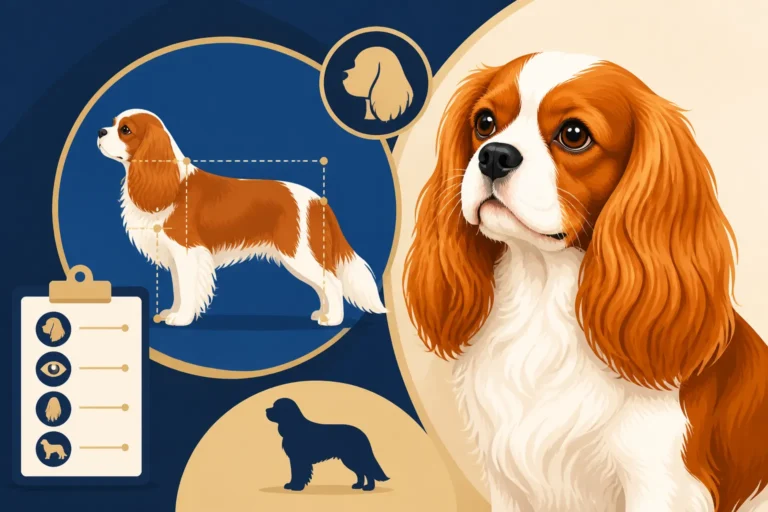
One of the most critical tasks for the newly formed Cavalier King Charles Spaniel Club was to draft a breed standard. This document would officially define the ideal characteristics of the "old type" spaniel, guiding breeders in their efforts and providing a blueprint for judges in the show ring. The standard meticulously described everything from head shape and muzzle length to ear set, coat type, and temperament. It emphasized the moderate features Eldridge had sought – a relatively flat skull, a distinctly longer muzzle than the King Charles Spaniel of the day, and a sweet, gentle expression.
This standard became the cornerstone of the new breed, setting it apart definitively. It essentially codified Eldridge's vision into an official document. A pivotal dog in the early development and formalization of the breed was Ann's Son, who became the first registered Cavalier and embodied many of the desired traits, setting an early benchmark for breeders to aspire to. You can delve into his significance in Ann's Son and the First Cavalier Standard. The standard was designed to ensure that the Cavalier would maintain its distinct identity and prevent a regression to the shorter-faced type. This careful delineation of traits, particularly the muzzle length, was paramount in establishing The Cavalier's Longer Muzzle and Flatter Skull as a defining characteristic. This methodical approach ensured that the revival was not just a temporary trend, but the foundation of a lasting breed.
The Enduring Impact: How One Ad Shaped Generations of Cavaliers
It took many years from that initial advertisement in 1926 for the Cavalier King Charles Spaniel to gain full, independent recognition, first in the UK and then internationally. But the seed had been planted, and the breed slowly, steadily grew in popularity, captivating hearts with its gentle nature and classic beauty. Today, the Cavalier is one of the most beloved companion dogs worldwide, a testament to the enduring vision of Roswell Eldridge.
The Legacy of Eldridge: What We See in Today's Cavaliers
Every Cavalier King Charles Spaniel you meet today, whether curled up on a sofa from a comfy Chewy dog bed or playfully exploring a park, is a direct descendant of those "old type" dogs brought together by Roswell Eldridge's initiative. The longer muzzle, the gentle expression, the moderately domed skull – these are all hallmarks that Eldridge championed and that were carefully preserved and developed by early breeders. His legacy is etched into the very features of the breed. Without his intervention, the dog we know and love might simply be a historical footnote.
The temperament, too, reflects the original vision: a loving, adaptable companion dog that thrives on human interaction. While modern breeders continue to strive for health and conformation to the standard, the core characteristics envisioned in 1926 remain central to the breed's identity. The initial goals of The Cavalier King Charles Spaniel Club, born from that advertisement, led directly to the official recognition of the breed by the Kennel Club in 1945, and much later, by the American Kennel Club in 1995. These formal recognitions cemented When the Cavalier Became a Separate Breed as a distinct and cherished entity, separate from its shorter-nosed relatives.
Celebrating the Revival: A Breed Reclaimed
The story of the 1926 advertisement is more than just a piece of dog breeding history; it's a powerful narrative about passion, perseverance, and the reclamation of a beloved breed. It highlights how a single individual, armed with conviction and a substantial prize, could fundamentally alter the course of canine history. The Cavalier King Charles Spaniel, with its sweet, melting eyes and endlessly wagging tail, is a living tribute to that pivotal moment. Today, The AKC Standard for the Cavalier King Charles Spaniel continues to uphold the characteristics that Eldridge sought, ensuring that the breed maintains its distinctive charm and health.
It serves as a wonderful reminder that sometimes looking back at history provides the clearest path forward. For Cavalier owners today, understanding this origin story deepens the appreciation for their furry family members. It connects them to a lineage of royal companionship and dedicated breeders who fought to preserve a classic ideal. Whether you're researching potential supplies for your Cavalier on a site like Chewy or simply enjoying their company, remember the unique journey that brought this wonderful breed into our lives.
Here's a quick comparison of the two distinct types of spaniels relevant to this historical moment:
| Feature | King Charles Spaniel (Early 20th Century) | "Old Type" King Charles Spaniel (Cavalier Ideal) |
|---|---|---|
| Muzzle Length | Very short, distinctly "pushed-in" | Moderately long, tapering |
| Skull Shape | Domed, rounded | Relatively flat |
| Stop (between eyes) | Pronounced, deep | Slight, gradual slope |
| Eye Prominence | Large, round, sometimes prominent/bulging | Large, dark, round but set to give a soft, sweet expression |
| Overall Impression | More compact, "toy-like" features | More athletic, natural spaniel appearance |
| Historical Basis | Bred for fashionable "brachycephalic" look of the era | Revival of 17th-century court spaniel aesthetic |
Disclaimer
This article is for general informational purposes only and does not constitute professional advice. Laws, prices and regulations vary by location and change over time. Consult a qualified professional for guidance on your specific situation.