The Gait a Cavalier Should Show
Have you ever watched your sweet Cavalier King Charles Spaniel trot across the park and wondered if their movement looks "right"? It's not always obvious, but how a Cavalier moves, often called their gait, is a crucial indicator of both their breed conformation and their overall health. This guide will walk you through what a Cavalier's gait should look like according to the breed standard, what to watch for, and when a change in their stride might mean it's time for a chat with your vet.
Understanding the Cavalier's Natural Movement: The Basics of Gait
When we talk about a dog's "gait," we're not just discussing a casual stroll. It’s a specific, often rhythmic, pattern of footfalls that defines how a dog moves from one place to another. For Cavaliers, with their charming, flowing coats and ever-wagging tails, their gait is a beautiful dance, reflecting their structure and well-being. Understanding it can tell you a lot about your beloved companion.
What "Gait" Actually Means for Your Dog
Think of gait as your Cavalier's personal choreography. It encompasses how they walk, trot, canter, and even run. Each pace has a distinct sequence of foot movements, and within each, there are ideal characteristics defined by the breed standard. For a Cavalier, it’s not about covering vast distances with powerful strides, but rather about elegance, efficiency, and a balanced appearance. We're looking for smooth transitions, coordination between their front and back legs, and a general air of effortless movement. It’s less about speed and more about grace and soundness. Observing their gait means paying attention to how their body carries itself, the arc of their limbs, and the coordination of their entire frame.
Why the Way Your Cavalier Moves Matters
A healthy, proper gait isn't just for show dogs; it's a window into your Cavalier's physical health and comfort. Any significant deviation from their normal movement could be an early warning sign that something is amiss, whether it’s a minor muscle strain, an evolving joint issue, or even a neurological concern. Cavaliers, unfortunately, are predisposed to certain health conditions that can manifest in their movement, such as Cavalier Knees, Hips and Joint Problems or even the less common Episodic Falling Syndrome in a Cavalier. Observing your Cavalier's gait regularly can help you catch these issues early, potentially leading to more effective and less invasive treatment. It also speaks to their quality of life – a dog that moves comfortably is a happy dog, able to enjoy walks, play, and navigate their home without pain.
The Breed Standard: What an Ideal Cavalier Gait Looks Like
The official breed standard provides a blueprint for what a Cavalier King Charles Spaniel's movement should ideally present. While not every Cavalier will be a show ring champion, understanding this ideal helps us appreciate the breed's intended structure and function, and gives us a benchmark for what "healthy" movement looks like. The standard emphasizes a free, active, and graceful gait, reflecting their heritage as a gentle companion dog.
Forequarters and Hindquarters: Harmony in Motion
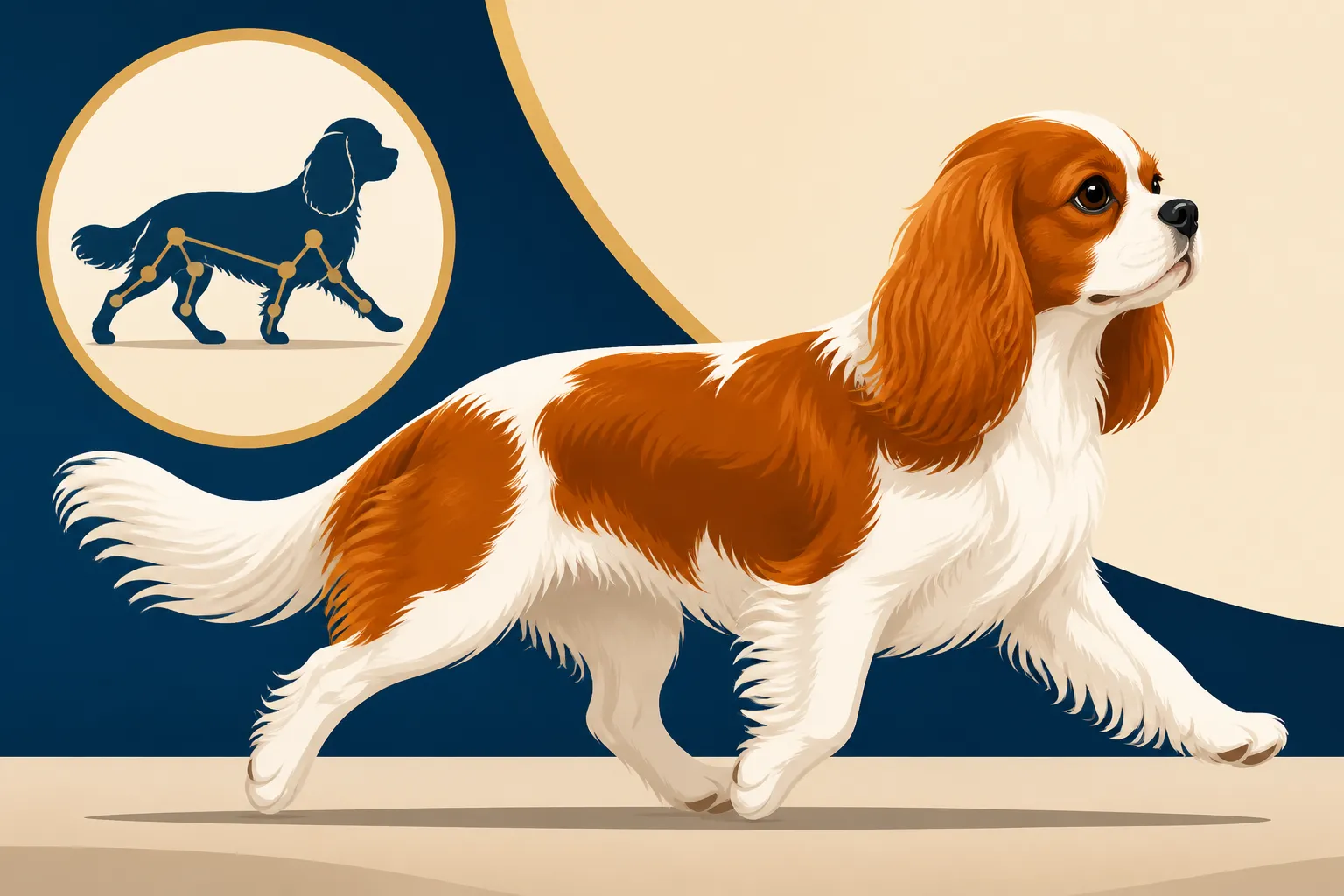
When a Cavalier is moving at a trot, which is typically the pace observed to assess gait, their front and hind legs should work in beautiful synchronicity. From the front, their legs should appear parallel, with their elbows staying close to their body, not winging out or pinching in. Their paws should land cleanly and squarely. From behind, you want to see the hind legs moving in parallel as well, with the hocks (the joint above the paw on the back leg) showing good flexion and extension. The pads of their feet should be visible as they push off the ground, indicating good propulsion. There shouldn't be any crossing over or weaving of the legs, which can indicate structural problems or weakness. It's about a fluid, straight line of travel, with no wasted motion. Their top line, from shoulders to tail, should remain level and firm, not bouncing excessively or dipping.
The Reach and Drive: Power Without Clumsiness
A truly excellent Cavalier gait is characterized by a "free-moving" stride, meaning they exhibit good "reach" in the front and adequate "drive" from the rear. "Reach" refers to how far forward the front leg extends, allowing the paw to land well in front of their body, lengthening their stride. "Drive" describes the powerful push-off from the hindquarters, propelling the dog forward. This combination creates an efficient, ground-covering trot that is both elegant and purposeful. However, it's important to remember that for a toy breed like the Cavalier, this power is relative – it's not a massive, powerful stride like a sporting dog. Instead, it's a smooth, effortless, medium-length stride that covers ground easily without appearing strained or clumsy. The standard explicitly states "no hackneyed action," which means you shouldn't see high-stepping, exaggerated movements that lift the feet too high off the ground, as this would indicate a lack of efficiency. Instead, envision a gentle, rhythmic flow, as if they are gliding. You can often see this best when they are excited on a walk, perhaps approaching their favorite store, or a friend’s house, maintaining a steady, happy trot.
Common Deviations and What They Might Indicate
While the breed standard describes the ideal, real-life Cavaliers can show a variety of movements. Some deviations are minor and harmless, perhaps just an individual quirk, but others can be significant clues to underlying health issues. Being observant of your Cavalier's normal movement is the first step in noticing when something might be changing.
Subtle Changes in Your Cavalier's Stride
Sometimes, the changes are so slight you might almost miss them. Perhaps your Cavalier, who once trotted with enthusiasm, now seems a little less springy, or takes a moment longer to get up after a nap. You might notice a slight reluctance to jump onto the sofa, or they start to favor one side when lying down. Maybe their tail carriage, usually held high and happy, drops a bit lower during walks. These subtle signs can sometimes indicate early arthritis, minor muscle soreness, or even the beginnings of conditions like Syringomyelia and Chiari Malformation in Cavaliers, where neck pain can affect their head carriage and overall coordination. They might shift their weight imperceptibly, or take shorter steps with one leg. Pay attention if your Cavalier starts to lag behind on walks that they once enjoyed easily, or if they seem less keen on games involving running. Even a change in how they shake their head could be a subtle sign if accompanied by other changes in their neck or shoulder region.
More Obvious Limps, Skips, and Stumbles
More pronounced changes in gait are usually easier to spot and certainly warrant immediate attention. A clear limp, where your Cavalier avoids putting weight on a leg, is often a sign of injury, such as a sprain, a paw pad injury, or something more serious like a fracture. Patellar luxation, or "loose kneecaps," is common in Cavaliers and often presents as a characteristic "skip" in their hind leg where they quickly pick up their leg for a step or two before putting it back down. You might see this described in more detail in articles like Loose Kneecaps in a Thirteen-Pound Cavalier. Stumbling or an uncoordinated walk can point to neurological problems, balance issues, or severe joint pain. If your Cavalier suddenly appears weak in their hindquarters, drags their feet, or collapses, this is an emergency requiring immediate veterinary care. Similarly, conditions that cause pain in their neck or spine can lead to an unnatural, stiff gait, or even a reluctance to move their head freely. Keep a close eye on their general energy levels and enthusiasm for activities they usually love.
Here’s a simple table to help you distinguish between ideal movement and potential red flags:
| Feature | Ideal Cavalier Gait | Potential Red Flag |
|---|---|---|
| Overall Movement | Free, active, graceful, balanced, level top line | Stiff, clumsy, hesitant, exaggerated high-stepping (hackneyed), excessive bouncing, uneven |
| Front Legs | Parallel, elbows close to body, good reach | Winging out, pinching in, crossing over, short choppy steps, lameness, reluctance to bear weight |
| Hind Legs | Parallel, good drive from hocks, pads visible | Weaving, dragging feet, skipping steps, collapsing, weakness, limping |
| Head/Neck | Held naturally, in line with body, moves freely | Held low or stiff, yelping when touched, turning head unusually to one side |
| Tail | Carried happily, level with top line or slightly above | Held low, tucked, or between legs when moving |
| General | Enthusiastic, smooth transitions, easy rise from rest | Reluctance to move, difficulty rising, sudden changes in willingness to play, tiring easily on walks, panting without exertion |
Supporting Your Cavalier's Healthy Movement Through Life
Maintaining a healthy gait is about more than just checking for problems; it's about proactive care and providing a supportive environment for your Cavalier's joints and muscles throughout their life. From puppyhood to their senior years, there are steps you can take to encourage sound movement.
Everyday Care for Optimal Joint and Muscle Health
Good nutrition is foundational. A high-quality dog food, like many options you can find on Chewy, provides essential nutrients for strong bones and muscles. Crucially, maintaining a healthy weight for your Cavalier is paramount. Even a few extra pounds can put significant strain on their small joints, exacerbating conditions like patellar luxation or arthritis. Regular, appropriate exercise, tailored to their age and health status, helps keep muscles strong and joints flexible. This doesn't mean marathon runs; gentle walks, supervised play, and perhaps a bit of fetch are usually perfect. Whether Exercise Is Safe for a Cavalier With MVD is a good read if your Cavalier has heart issues, as exercise needs can change. Soft bedding can provide comfort for their joints, especially as they get older. Also, consider ramps or pet stairs to help them access furniture safely, reducing impact on their joints from jumping. Routine grooming, including keeping paw fur trimmed so they have good traction, also contributes to comfortable movement.
When to Consult Your Vet About Gait Concerns
You are your Cavalier's best advocate, and if you notice any persistent changes in their gait, no matter how subtle, it's always best to consult your veterinarian. Don't wait until the problem becomes severe. Early detection can often lead to simpler and more effective treatments. During your vet visit, be prepared to describe exactly what you've observed: when it started, what activities seem to make it better or worse, and if there are any other accompanying symptoms. Your vet may recommend physical examinations, X-rays, or even specialized consultations with a veterinary orthopedist or neurologist to get to the root of the issue. They might discuss pain management options, joint supplements (many of which are available from places like Chewy), or even physical therapy exercises. If you're concerned about a potential genetic predisposition, discussing The Cavalier MVD Breeding Protocol with your breeder or vet could offer additional insights. Remember, some conditions, like certain heart issues or neurological problems, can indirectly affect how a Cavalier moves, so a comprehensive check-up is always the best course of action.
This article is for general informational purposes only and does not constitute professional advice. Laws, prices and regulations vary by location and change over time. Consult a qualified professional for guidance on your specific situation.