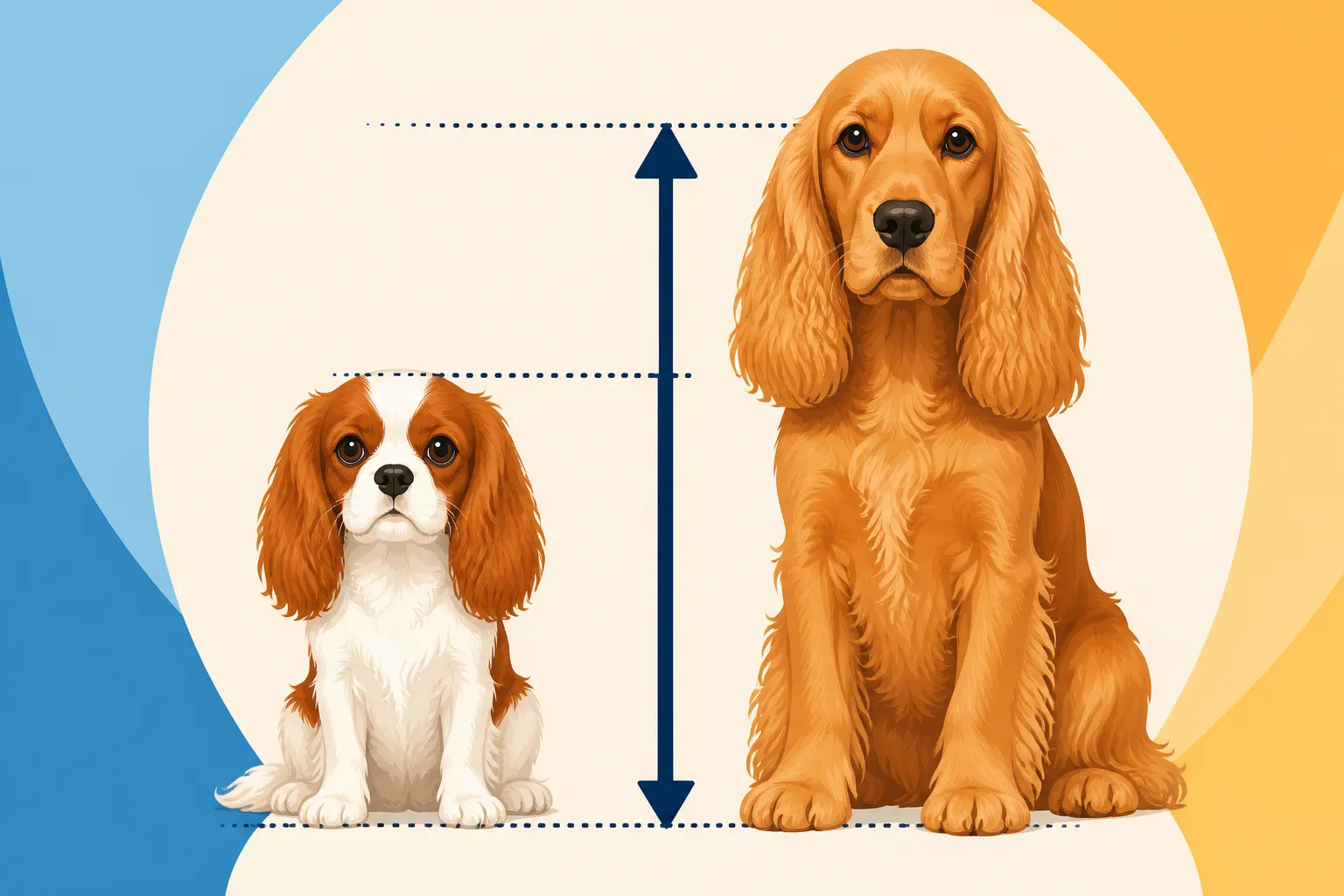
How Much Bigger a Cocker Is Than a Cavalier
A Cocker Spaniel is usually taller and noticeably heavier than a Cavalier King Charles Spaniel, but the difference depends on whether you mean an American or English Cocker. A Cavalier is a small, lightly built companion; either Cocker is sturdier, with longer legs and more body. Here’s how that size gap looks in everyday life, not just on a measuring chart.
How much bigger is a Cocker than a Cavalier
Height and weight by breed
A Cavalier typically stands about 12 to 13 inches at the shoulder and weighs around 13 to 18 pounds. Both American and English Cockers are generally taller and heavier, though their typical sizes differ from each other. The table gives a useful comparison, not a promise of the exact size of any individual dog.
| Breed | Typical height at the shoulder | Typical adult weight | General build |
|---|---|---|---|
| Cavalier King Charles Spaniel | About 12 to 13 inches | About 13 to 18 pounds | Small, fine-boned, compact |
| American Cocker Spaniel | About 13.5 to 15.5 inches | About 20 to 30 pounds | Compact but more substantial |
| English Cocker Spaniel | About 15 to 17 inches | About 26 to 34 pounds | Taller, sturdier, athletic |
So, an American Cocker may be only a few inches taller than a Cavalier, but can weigh quite a bit more. An English Cocker generally creates a more obvious size difference, especially when standing beside a Cavalier. The Cavalier Size the Standard Asks For guide covers the Cavalier’s expected proportions in more detail.
Why “Cocker Spaniel” can mean two different sizes
The American Cocker and English Cocker are separate breeds, and their size ranges are not interchangeable. American Cockers tend to be shorter than English Cockers, with a rounder, more compact outline. English Cockers are usually taller and more leggy, with a sturdy, athletic shape.
That distinction matters if you’re comparing dogs in person, choosing a carrier, or trying to decide whether one will fit your household. A small American Cocker may look closer in height to a large Cavalier than an English Cocker does, but the American Cocker will generally still be broader and heavier. Individual dogs can also fall outside the middle of a typical range.
A breed’s standard is a guide to the ideal adult dog, not a guarantee of an individual dog’s measurements. Sex, family lines, body condition, and overall build all affect what you see. For a sense of the expected Cavalier weight range, see What an Adult Cavalier Should Weigh.
What the size difference feels like at home
Lifting, carrying, and fitting into small spaces
A Cavalier is often easier to scoop up and carry, whether you’re lifting the dog into a car, helping it onto a grooming table, or carrying it a short distance when it’s tired. A Cocker is still a manageable family dog for many people, but its greater weight can make repeated lifting less comfortable. That difference may matter most for someone with sore wrists or shoulders, or in a home with stairs.
The extra inches and pounds also change how a dog fits into a lap, a small bed, or a crowded corner of the sofa. A Cavalier can curl into a compact space; a Cocker may need a roomier bed and more floor space to stretch out. If you’re shopping for a carrier or harness, measure the individual dog and check the product’s size guidance rather than choosing based on breed name alone. Chewy is one place owners may compare pet supplies, but the fit still needs to be checked against each product’s own measurements.
In apartments or smaller homes, neither breed is automatically too large. A Cocker can live comfortably in a modest space if its exercise, enrichment, and daily care needs are met. The practical question is whether you have room for a dog that takes up more space when moving around and whether you can manage its needs on stairs, in elevators, and during travel.
Exercise, handling, and play
A Cocker’s larger frame comes with a more athletic outline, particularly in an English Cocker. These dogs were developed as sporting spaniels and often enjoy active walks, sniffing, and exploring. Cavaliers also benefit from daily movement and enrichment, but they are typically smaller and more delicate in build. You can read more about the sporting traits shared by the breed in Cavalier Temperament and the Sporting Spaniel Beneath It.
Size alone does not tell you how much exercise a dog needs. Age, fitness, health, and temperament matter too. A young Cocker may be eager to keep moving long after a Cavalier has settled in for a rest, while an older or less active Cocker may have a very different routine. When choosing between them, think about the dog you can comfortably walk and engage with day after day—not just the one that seems easiest to manage as a puppy.
The size difference is also worth considering during play with children or other pets. A Cocker may be more physically robust than a Cavalier, but both dogs need gentle handling and supervision around young children. A child who is learning to play kindly can accidentally crowd, grab, or lean on a smaller dog. The article Cavaliers in Families With Young Children explores the sort of boundaries that help children and dogs feel safe together.
Choosing between a Cavalier and a Cocker
Size is only one part of the decision
If you want a smaller dog that is easier to lift and may fit more readily into a compact home or travel setup, the Cavalier’s size can be appealing. If you prefer a sturdier, more athletic spaniel and are ready for a dog that may need more room and physical activity, a Cocker could be a better match. Neither description applies perfectly to every dog, so meet adults of the breed if you can and ask about the particular dog’s temperament and routine.
Grooming is another practical consideration. Both breeds have coats that need regular attention, but coat texture, feathering, and the style of cut can affect how much brushing and professional grooming a dog needs. A bigger dog may also mean more coat to dry and more space needed during grooming at home. Before deciding, consider whether you’re comfortable keeping up with routine brushing and ear checks, or would rather arrange regular help.
It can also help to look beyond broad breed stereotypes. Cavaliers are often described as affectionate companion dogs, while Cockers may bring more of the energy and curiosity associated with a sporting spaniel. Yet an individual dog’s personality, early experiences, health, and training can matter more than the label. The guide Whether a Cavalier Is the Right Dog for You can help you think through the Cavalier’s everyday fit, while Whether a Cocker Is Just a Bigger Cavalier addresses the comparison directly.
Think through everyday tasks before you decide
Imagine a typical week with each dog. Would you be comfortable lifting a 25- to 30-pound dog into the car, or do you need a dog that is easier to carry? Do you have room for a larger bed, and are you prepared for a dog that may want longer, more active outings? If you use public transport or travel by air, check the rules and measurements for the specific carrier or service. A dog’s weight is only one part of whether it will fit comfortably and be allowed to travel.
For supplies, measure the dog’s body rather than relying on a breed label. Harnesses, coats, beds, and carriers are designed differently, and a dog’s chest girth or body length may matter as much as its weight. Chewy may be helpful for browsing options, but use the product’s measurement instructions and confirm that the dog can move, breathe, and lie down comfortably. If you are buying for a puppy, remember that the fit will change as the dog grows.
Finally, consider the dog’s health and care needs along with its size. Cavaliers and Cockers can both have breed-associated health concerns, and an individual dog’s history matters. A reputable breeder or rescue should be able to discuss what they know about the dog and its family background. If you’re looking at a Cavalier, The Health Debate Around Breeding Cavaliers offers more context for thinking through health and responsible breeding.
A simple way to make the comparison
Use measurements, not impressions
When dogs are standing together, height can be surprisingly hard to judge. Feathering, posture, and body shape can make one dog look larger or smaller than its actual measurements. If you’re comparing a particular Cavalier and Cocker, ask for their height at the shoulder and current weight, then consider their build. A lean, long-legged dog can look quite different from a compact dog at the same weight.
For an adult dog, a vet can help assess whether its weight is healthy for its frame. A dog that weighs more is not necessarily overweight; similarly, a dog within a typical breed range may still carry excess weight. The Cavalier Weight Gain and What It Costs the Heart article explains why body condition deserves attention in Cavaliers, but the same basic principle applies to any dog: body shape and veterinary guidance matter more than a number alone.
Compare the life you want, not just the dog’s outline
The simplest answer is that most Cockers are bigger than Cavaliers, and English Cockers are generally bigger than American Cockers. The everyday difference is more than a few inches: Cockers tend to be heavier, sturdier, and more athletic, while Cavaliers are smaller and easier to lift for many owners.
But the right choice comes down to the whole dog and your daily life. Meet adult dogs where possible, ask about grooming and exercise, and be realistic about travel, stairs, and handling. Chewy can help you browse supplies once you know the dog’s measurements, but choosing a breed should start with the needs and personality you can happily support for years.
Disclaimer
This article is for general informational purposes only and does not constitute professional advice. Laws, prices and regulations vary by location and change over time. Consult a qualified professional for guidance on your specific situation.