Extra Eyelashes Rubbing a Cavalier’s Eye
It's incredibly frustrating, isn't it? You look into your beloved Cavalier's sweet, trusting eyes, and instead of sparkling joy, you see redness, irritation, or persistent tearing. Often, we jump to conclusions like allergies or something simple, but a sneaky culprit many Cavalier owners encounter is extra eyelashes constantly rubbing and irritating their dog's delicate eyes. This guide will walk you through understanding this common condition, how to spot the signs, and what steps you can take to bring your furry friend comfort and clear vision.
Understanding Extra Eyelashes in Cavaliers: Distichiasis and Ectopic Cilia
Cavalier King Charles Spaniels, with their famously expressive, large, dark eyes, are sadly predisposed to several eye conditions. Among the most common and often irritating are those involving errant eyelashes: distichiasis and ectopic cilia. While both involve eyelashes growing in abnormal places and causing discomfort, there are distinct differences that impact diagnosis and treatment. It’s like having a tiny, constant splinter in your eye, and for our Cavaliers, this can range from mild annoyance to significant pain and potential vision damage.
The Genetics Behind the Fuzz
Many breeds, including our Cavaliers, have a genetic predisposition to these extra eyelashes. It's not a fault of breeding, per se, but rather a characteristic that can manifest more frequently in certain lines. These conditions are typically congenital, meaning your Cavalier is born with the potential for them to develop, though the signs might not become apparent until they are a few months old or even into adulthood. The extra lashes usually sprout from the Meibomian glands along the eyelid margin, which are normally responsible for producing the oily layer of tears. Instead of oil, they produce hair! This makes it a tricky situation because these aren't just normal lashes gone astray; they're growing from an area that isn't meant to produce hair at all, making them stiff and irritating. This isn't just a cosmetic issue; it's a structural problem that can profoundly affect your Cavalier's comfort and eye health.
Distichiasis vs. Ectopic Cilia: What's the Difference?
While both conditions result in eyelashes rubbing the eye, understanding the distinction is crucial for effective treatment.
- Distichiasis: This is the more common of the two. With distichiasis, extra eyelashes emerge from the Meibomian glands, typically along the eyelid margin, and grow outward from the eyelid. Imagine a second row of eyelashes, sometimes soft and fine, but often stiff and bristly. These lashes then rub against the cornea (the clear front surface of the eye) or the conjunctiva (the pink membrane lining the eyelids and covering the white part of the eye). The severity of irritation depends on the number, thickness, and location of these extra hairs. Some Cavaliers might have just a few, fine distichia that cause minimal issue, while others can have a whole forest of stiff hairs leading to chronic discomfort.
- Ectopic Cilia: This is less common but often far more painful and damaging. Ectopic cilia are eyelashes that grow through the conjunctiva on the inside of the eyelid, usually pointing directly inward towards the cornea. Unlike distichiasis, which often involves multiple hairs along the margin, ectopic cilia are typically solitary hairs. However, because they erupt directly from the inner lining of the eyelid and are often very stiff, they act like a sharp needle constantly poking the eye. The pain and irritation are usually acute and severe, leading to rapid onset of symptoms and a higher risk of serious corneal damage, including deep corneal ulcers.
The distinction between these two is vital because the treatment approach differs significantly. One might be managed with temporary plucking, while the other almost always requires surgical intervention to prevent long-term damage. You can read more about various Cavalier Eye Disease From Dry Eye to Cataracts to get a broader understanding of common issues.
Spotting the Signs: Is Your Cavalier's Eye Irritated?
It's heartbreaking to see our Cavaliers in discomfort, and often, they are so stoic that by the time we notice something is truly wrong, the problem might be advanced. Being vigilant about changes in your Cavalier's eyes and behavior is key, especially since their prominent, beautiful eyes are often more exposed and vulnerable. Persistent eye irritation is a sign you should never ignore, and identifying the specific symptoms associated with extra eyelashes can help you provide your vet with valuable information.
Common Symptoms You Might Notice
The symptoms of distichiasis or ectopic cilia can range from subtle to severe, depending on the individual dog, the number and stiffness of the errant lashes, and how long the irritation has been ongoing. Think about that annoying feeling when you get a tiny speck or eyelash in your own eye – it's distracting, irritating, and you just want it out! For your Cavalier, that feeling might be constant.
Here’s what to look out for:
- Excessive Tearing (Epiphora): This is often one of the first and most obvious signs. You might notice constant wetness around their eyes, or tear staining, especially on lighter-colored Cavaliers like Blenheims or Rubies. The tears are the eye's natural way of trying to flush out the irritant.
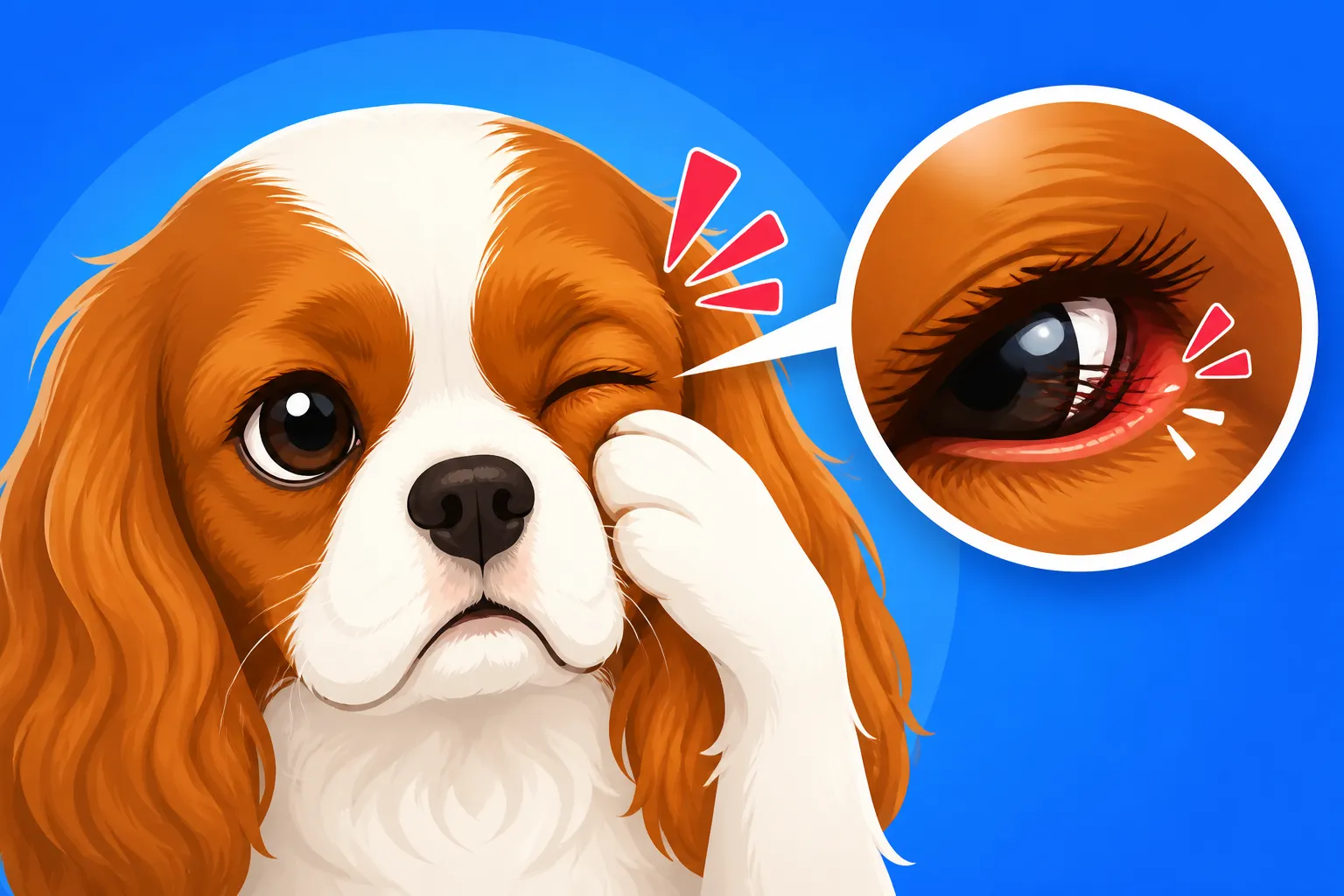
- Squinting or Holding the Eye Partially Closed (Blepharospasm): If your Cavalier is consistently squinting, or keeping one eye partially or fully closed, it's a clear indicator of pain or irritation. They're trying to protect the eye from the rubbing sensation.
- Redness of the Eye (Conjunctivitis): The conjunctiva, the pink membrane, can become inflamed and red due to constant rubbing. This can make the whites of their eyes appear bloodshot.
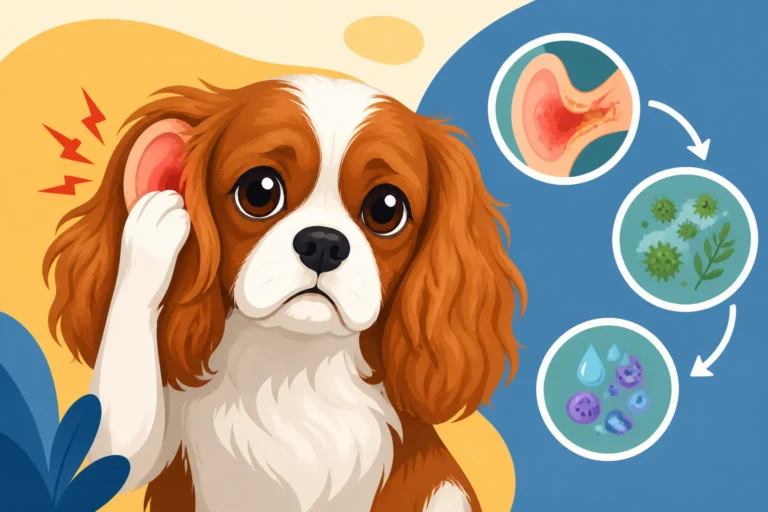
- Rubbing or Pawing at the Face/Eyes: Your Cavalier might frequently rub their face on furniture, the carpet, or paw at their eyes with their front feet. This is their attempt to relieve the itch or pain, but it can unfortunately worsen the irritation or even introduce bacteria.
- Discharge from the Eye: While not always present, irritation can sometimes lead to a clear, watery discharge, or if a secondary infection develops, a thicker, yellowish or greenish discharge.
- Sensitivity to Light (Photophobia): Dogs with eye pain might shy away from bright lights, squinting more intensely when exposed to them.
- Changes in Behavior: Any noticeable change in your Cavalier's demeanor, such as becoming more withdrawn, less playful, or showing reluctance to be touched around the head, could signal pain. They might even become a little nippy if you try to examine their eyes when they're sore.
It's important to differentiate these symptoms from other common Cavalier eye issues, such as Managing Dry Eye in a Cavalier, which can present similarly with redness and discharge, but the underlying cause is different.
When to Seek Veterinary Attention
Never wait if you suspect an eye problem. Eye issues can escalate rapidly and lead to permanent damage or vision loss. If you notice any of the symptoms listed above, especially if they are sudden or severe, contact your veterinarian immediately. A delay of even a day or two can mean the difference between a minor issue and a serious one, like a painful Corneal Ulcers on Prominent Cavalier Eyes.
Even if the symptoms seem mild, like occasional tearing, it's worth getting checked out during your Cavalier's regular vet visits. Persistent, low-grade irritation can lead to chronic discomfort and scarring over time, which you want to avoid. Early intervention is always best for these sensitive eyes.
Navigating Diagnosis and Treatment Options
Once you've noticed your Cavalier's eye irritation, the next crucial step is getting a professional diagnosis. This isn't something you can figure out at home with a flashlight; a vet's expertise is absolutely essential to determine the exact cause and the best course of action. They can pinpoint whether it's truly extra eyelashes, or another issue entirely, and guide you through the appropriate treatment, which can sometimes involve specialized care.
The Veterinary Examination: What to Expect
When you bring your Cavalier in for an eye concern, your general practitioner vet will likely start with a thorough examination. They'll use an ophthalmoscope to look closely at the structures of the eye, including the eyelids, conjunctiva, cornea, and lens.
Here's what a typical eye exam might involve:
- Visual Inspection: Looking for obvious signs like redness, swelling, discharge, or visible lashes rubbing the eye.
- Schirmer Tear Test: This measures tear production, ruling out or confirming conditions like dry eye (keratoconjunctivitis sicca), which can often present with similar symptoms.
- Fluorescein Stain Test: A special orange dye is applied to the eye. If there's a scratch or ulcer on the cornea, the dye will stick to it and glow green under a blue light, revealing corneal damage caused by rubbing lashes.
- Magnification and Illumination: Your vet will use specialized tools, often a slit lamp, to magnify the eyelid margins and the inner surface of the eyelids, which is critical for identifying distichiasis and especially ectopic cilia. Ectopic cilia can be very small and difficult to see without high magnification.
If your general vet identifies extra eyelashes as the problem, especially if they suspect ectopic cilia or if the condition is severe, they will likely recommend a referral to a board-certified veterinary ophthalmologist. These specialists have advanced training and equipment to diagnose and treat complex eye conditions. Don't be surprised or offended by a referral; it's a sign that your vet wants the very best care for your Cavalier's precious eyesight. This specialist visit, of course, will add to the overall What a Cavalier Costs a Year Before Any Heart Bills. Having pet insurance, perhaps from a provider like Healthy Paws, could be a real lifesaver here, covering a significant portion of these specialist bills.
Conservative Management vs. Surgical Solutions
Treatment for extra eyelashes depends heavily on the type, number, and severity of the lashes, as well as the impact they're having on your Cavalier's eye.
Conservative Management (Often Temporary or for Mild Cases)
- Lubricating Eye Drops/Ointments: For very mild cases of distichiasis where the lashes are soft and causing minimal irritation, your vet might suggest lubricating eye drops or artificial tears. These can help create a barrier between the lash and the cornea, reducing friction and discomfort. This is often a temporary solution, though, as the underlying problem remains.
- Plucking: For some distichia, manual plucking can offer temporary relief. This is usually done by a vet using fine forceps under magnification. However, it's crucial to understand that this is rarely a permanent solution. Eyelashes plucked this way almost always grow back, and often they come back stiffer and more irritating, leading to a cycle of repeated plucking. It's like waxing instead of laser hair removal; it's just a temporary fix. It can also cause scar tissue over time, making permanent removal harder.
Surgical Solutions (The Most Effective and Permanent Options)
For most Cavaliers with problematic distichiasis or ectopic cilia, especially those causing pain, corneal ulcers, or chronic irritation, surgical intervention is the recommended and most effective long-term solution. The goal is to destroy the hair follicle so the problematic lash cannot grow back.
- Cryoepilation (Cryosurgery): This is a common and highly effective method for distichiasis. It involves freezing the hair follicles along the eyelid margin using a specialized probe. The extreme cold destroys the cells responsible for hair growth. Your Cavalier will be under general anesthesia for this procedure. There can be some temporary swelling and pigment loss (lightening) of the eyelid skin, but the success rate for permanent removal is high.
- Electroepilation: Similar to cryoepilation, this method uses a fine needle to deliver an electrical current to the individual hair follicle, destroying it. It's often used for a smaller number of distichia. This also requires general anesthesia.
- Surgical Excision: For ectopic cilia, a small incision is made on the inside of the eyelid to directly remove the problematic hair follicle. Because ectopic cilia are typically singular and deeply embedded, direct surgical removal ensures the entire follicle is extracted, preventing recurrence. This is a delicate procedure performed by a veterinary ophthalmologist and also requires general anesthesia.
- Argon Laser Ablation: In some cases, a laser can be used to destroy the offending hair follicles. This is less commonly available than cryosurgery or electroepilation but can be very precise.
Regardless of the surgical method, your Cavalier will need to be safely put under general anesthesia. This is a serious consideration, especially if your Cavalier already has an underlying heart condition like mitral valve disease, which is unfortunately common in the breed. Discussing the Anesthesia Risk in a Cavalier With a Murmur with your vet and veterinary ophthalmologist is absolutely essential. They will conduct pre-anesthetic bloodwork and potentially chest X-rays to assess your Cavalier's health status.
It's also important to factor in the cost of these procedures. Surgical correction can range from several hundred to a couple of thousand dollars per eye, depending on the chosen method, the specialist's fees, and your geographic location. This is where What a Cavalier Policy Costs Monthly from a good provider like Healthy Paws can truly help, as pet insurance is designed to mitigate the financial shock of unexpected medical needs. It's wise to consider Choosing an Annual Limit for a Cavalier that would cover such a significant expense.
| Treatment Type | Description | Pros | Cons | Typical Use Case |
|---|---|---|---|---|
| Lubricating Drops | Artificial tears/ointments to reduce friction | Non-invasive, soothing | Temporary, doesn't address root cause, requires frequent application | Very mild, temporary irritation |
| Manual Plucking | Vet removes lashes with forceps | Quick, inexpensive (initially) | Temporary (lashes regrow, often stiffer), can cause scarring | Very few, soft distichia; temporary relief |
| Cryoepilation | Freezing of hair follicles | High success rate for permanent removal, treats multiple follicles | Requires general anesthesia, temporary swelling/pigment loss | Multiple distichia |
| Electroepilation | Electrical current destroys individual follicles | Precise, good for few lashes | Requires general anesthesia, may need multiple sessions for many lashes | Fewer distichia |
| Surgical Excision | Direct removal of follicle via incision (usually by ophthalmologist) | Highest success for ectopic cilia | Invasive, requires general anesthesia, specialist needed | Ectopic cilia |
Life After Treatment: Managing Eye Health Long-Term
Getting your Cavalier through diagnosis and treatment for extra eyelashes is a huge step, but the journey doesn't necessarily end there. Post-operative care, ongoing vigilance, and regular check-ups are essential to ensure your furry friend maintains comfortable, healthy eyes for the rest of their life. You want to make sure those eyes stay sparkling, not red and irritated.
Post-Treatment Care and Recovery
After any surgical procedure to remove extra eyelashes, your Cavalier will need careful post-operative care to ensure proper healing and prevent complications. The exact instructions will vary based on the procedure, but here are some common elements:
- E-Collar (Cone of Shame): This is almost always necessary to prevent your Cavalier from rubbing or scratching their eyes, which could dislodge sutures, introduce infection, or reopen wounds. Most Cavaliers hate them, but they are absolutely non-negotiable for successful recovery. Embrace the cone for a few weeks!
- Medicated Eye Drops/Ointments: Your vet or ophthalmologist will prescribe specific eye drops or ointments, usually containing antibiotics to prevent infection and anti-inflammatories to reduce swelling and pain. Administering these exactly as directed is critical, even if your Cavalier isn't thrilled about it.
- Oral Medications: Sometimes, oral pain relief or anti-inflammatory medications might be prescribed for a few days post-surgery.
- Restricted Activity: Limit strenuous activity, jumping, and rough play during the initial recovery period to prevent strain on the surgical site. Short, leashed potty breaks are usually fine.
- Follow-Up Appointments: You'll have follow-up appointments with your vet or the ophthalmologist to monitor healing, remove any sutures (if applicable), and ensure the procedure was successful. Missing these appointments can jeopardize the outcome.
The recovery period can be a bit challenging, but with patience and adherence to your vet's instructions, your Cavalier will be much more comfortable in the long run. If your senior Cavalier required surgery, ensuring good Pain Management for a Senior Cavalier will be paramount during this time.
Preventing Future Issues and Regular Check-ups
While surgical removal of distichiasis or ectopic cilia is often permanent for the treated follicles, it doesn't prevent new ones from developing in the future, especially with distichiasis. Therefore, ongoing vigilance is key.
- Routine Eye Checks at Home: Make it a habit to regularly examine your Cavalier's eyes. Look for any new redness, tearing, squinting, or pawing. Catching any recurring issues early can make a big difference.
- Regular Veterinary Check-ups: Ensure your Cavalier receives Whether a Cavalier Needs a Yearly Eye Exam from your general practitioner. They can monitor for any new eyelash growth or other eye health concerns.
- Specialist Follow-ups (if recommended): If your Cavalier had severe or recurrent issues, the veterinary ophthalmologist might recommend periodic check-ups with them to monitor their eye health more closely.
- Consider a Proactive Approach: If you're getting a new Cavalier puppy, ask the breeder about the eye health of the parents and their lines. While there isn't a DNA test for distichiasis or ectopic cilia, knowing the lineage can sometimes provide insights, though it's not a guarantee. Reputable breeders should have good general eye health clearances for their breeding dogs.
Living with a Cavalier often means being prepared for potential health challenges, and eye issues are certainly among them. By understanding extra eyelashes, recognizing the signs, and working closely with your veterinarian and potentially a specialist, you can ensure your Cavalier enjoys clear vision and comfort throughout their happy, loving life. And remember, investing in pet insurance like Healthy Paws early on can really help manage the costs associated with these specialized treatments.
Disclaimer
This article is intended for informational purposes only and does not constitute medical advice. Always consult with a qualified veterinarian or veterinary ophthalmologist for any health concerns or before making any decisions about your Cavalier King Charles Spaniel's medical care.