Small Breed Kibble Sizes for a Cavalier
It can feel like a genuine puzzle trying to pick out the perfect food for your precious Cavalier King Charles Spaniel, especially when you start looking at all the different kibble sizes available on the market. You want the very best for your furry family member, but navigating terms like "mini," "small breed," and just plain "regular" can leave you scratching your head. This guide is here to walk you through why kibble size is a bigger deal than you might think for your Cavalier and how to choose the ideal option to keep them healthy, happy, and well-fed.
Why Kibble Size Matters for Your Cavalier
When you picture a dog happily munching their dinner, you might not think much about the individual pieces of food. But for a Cavalier, the size and shape of their kibble can make a huge difference, impacting everything from how easily they eat to their long-term dental health and even their digestion. It’s not just about getting calories into their system; it’s about making the mealtime experience safe and beneficial.
The Cavalier's Unique Jaw and Teeth
Cavaliers, while not as severely brachycephalic as some breeds like Pugs or Bulldogs, still possess a somewhat shorter muzzle and a smaller jaw structure compared to many other dogs. This means their mouth isn't designed for grappling with massive chunks of food. Imagine trying to eat a giant cookie with a tiny mouth – it would be a struggle! Their teeth, particularly the molars, can also be quite crowded in that smaller space. This crowding can create nooks and crannies where food particles love to hide, contributing to plaque and tartar buildup.
If kibble is too large, your Cavalier might find it genuinely difficult to pick up, or they might try to swallow it whole, which isn't ideal. They could also struggle to crunch through it effectively, meaning their teeth aren't getting the benefit of the abrasive action that kibble can provide. On the flip side, if the kibble is excessively small, they might not bother chewing at all, just gulping it down. This rapid ingestion can lead to other issues we’ll discuss shortly. It's a delicate balance, and understanding your Cavalier's specific mouthfeel preferences and physical capabilities is crucial. For more on this, you might find our article on Cavalier Teeth Crowded in a Short Jaw particularly insightful, as it delves deeper into their dental anatomy.
Preventing Choking Hazards and Digestive Issues
One of the most worrying scenarios for any pet parent is the thought of their dog choking. If kibble is too large and your Cavalier tries to swallow it whole or struggles to break it down, it can present a real choking hazard. While most dogs are pretty good at managing their food, a stressed or overly enthusiastic eater could get into trouble with ill-sized kibble.
Beyond the immediate risk of choking, incorrect kibble size can also lead to digestive woes. When a Cavalier eats too quickly, especially if the kibble is very small and easy to swallow without chewing, they tend to ingest a lot of air. This air can lead to bloating, gas, and discomfort. Some Cavaliers are prone to what owners call "hunger pukes," where they vomit bile in the morning because their stomach is empty and has too much acid. Eating too fast can exacerbate digestive upset. Finding a kibble size that encourages a more measured eating pace can help mitigate these issues, making mealtime a smoother experience for their stomach. If you've ever seen your Cavalier vomit bile, you know how distressing it can be, and you can learn more about managing this in our piece, A Cavalier That Vomits Bile in the Morning.
Encouraging Proper Chewing and Dental Health
Believe it or not, the right kibble size can actually contribute positively to your Cavalier's dental hygiene, although it's certainly not a substitute for regular brushing and professional cleanings. When your Cavalier crunches down on appropriately sized kibble, the mechanical action helps to scrape away some of the plaque and tartar that builds up on their teeth. Think of it like a very mild scrub for their pearly whites.
If the kibble is too small, it might offer very little resistance or surface area to make significant contact with the teeth, meaning no real scrubbing action happens. If it's too large or too hard, your Cavalier might not be able to chew it thoroughly, or it could even be painful for teeth that are already compromised. The goal is a size and texture that invites them to crunch several times before swallowing, engaging their entire mouth. This encourages stronger jaw muscles and better oral health overall. Good dental care is paramount for Cavaliers, so understanding its nuances is key. You can read more about how essential this is in our comprehensive article, Cavalier Dental Disease in a Crowded Jaw. Regular professional cleanings are often needed, and knowing The Age a Cavalier Needs Its First Dental can help you plan.
Understanding Small Breed Kibble Categories
The pet food aisle is a wonderland of options, and when it comes to kibble size, manufacturers use a variety of labels that can sometimes feel more confusing than helpful. Knowing what these terms generally imply about the actual kibble piece can guide you toward making an informed choice for your Cavalier. It's not just about the words on the bag; it's about the physical characteristics of the food itself.
Mini, Small, and Regular Kibble Explained
Most major pet food brands offer a range of kibble sizes, often categorizing them to suit different dog breeds and sizes.
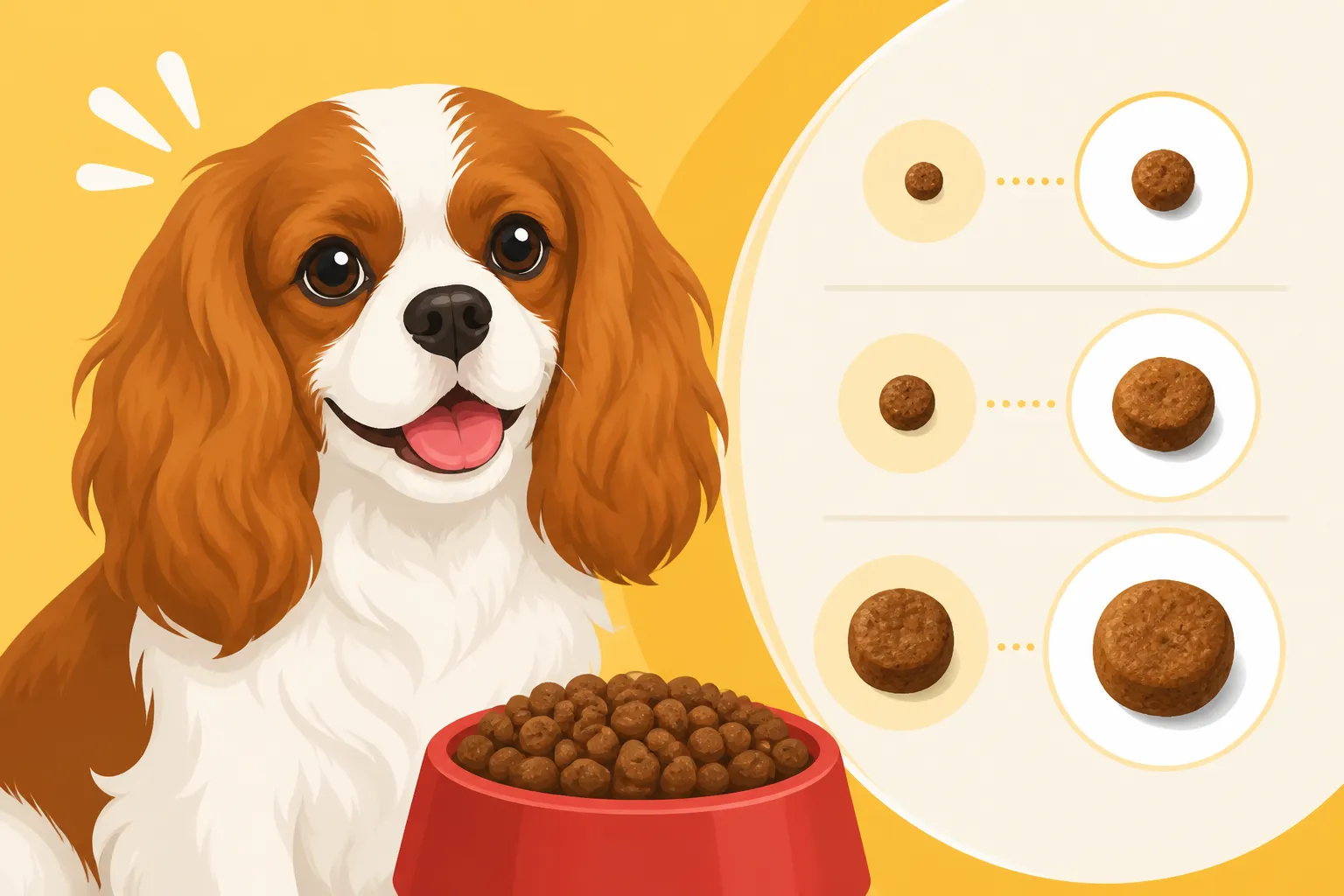
- "Mini" or "Toy Breed" Kibble: This is typically the smallest kibble available. These pieces are often pea-sized or even smaller, sometimes resembling tiny lentils. They are designed for the absolute smallest breeds, like Chihuahuas or Yorkies, who have truly minuscule mouths. For some Cavaliers, particularly puppies or very dainty adults, this size might be appropriate. However, for a Cavalier who is a fast eater, these tiny pieces can be swallowed almost whole, negating any dental benefits and potentially leading to quick consumption and air ingestion.
- "Small Breed" Kibble: This is the category most Cavaliers will fall into. "Small breed" kibble is usually slightly larger than "mini" — think more along the lines of a small blueberry or a plump lentil. It's designed to be easily picked up by smaller mouths but still requires a few chews before swallowing. This size tends to hit the sweet spot for many adult Cavaliers, providing a balance between manageability and encouraging proper mastication.
- "Regular" or "All Breed" Kibble: This kibble is designed for medium to large dogs and is usually much too big for a Cavalier. Pieces can range from the size of a kernel of corn to a small marble. While a Cavalier might attempt to eat it, they would likely struggle to pick it up, chew it properly, or even get a full mouth of it without significant effort. This size is almost always unsuitable for a Cavalier.
It's important to remember that these are general guidelines, and there can be variations between brands. What one brand calls "small breed," another might market as "mini." Always check the actual kibble size, if possible, either by looking at images online or in person at a store.
How Kibble Shape and Density Play a Role
Beyond just size, the shape and density of the kibble are also significant factors for your Cavalier. Some kibble is perfectly round, while others are flat disks, stars, triangles, or even donut-shaped.
- Shape: Irregular shapes, or those with ridges and points, can sometimes be easier for a Cavalier to grasp with their teeth and tongue. They might also offer more surfaces for cleaning teeth as the dog chews. Flat or thin kibble might be easier to break down, while perfectly round kibble could be more prone to rolling around, making it harder to catch or requiring more effort to hold still for chewing.
- Density/Hardness: Kibble can vary in how hard it is. A very hard, dense kibble might be excellent for dental abrasion if your Cavalier can comfortably crunch it. However, if your Cavalier has sensitive teeth, missing teeth, or is a senior, a softer or less dense kibble might be more appropriate and comfortable for them. On the other hand, extremely soft kibble might offer little to no dental benefit from chewing. The ideal is usually a kibble that has a satisfying crunch without being so hard that it risks tooth damage or discourages chewing altogether.
These subtle differences mean that even within the "small breed" category, you might find one brand works perfectly while another is still a struggle for your individual Cavalier.
Age-Appropriate Kibble Considerations
A Cavalier's needs change throughout their life, and their kibble should evolve with them, not just in nutritional content but also in size and texture.
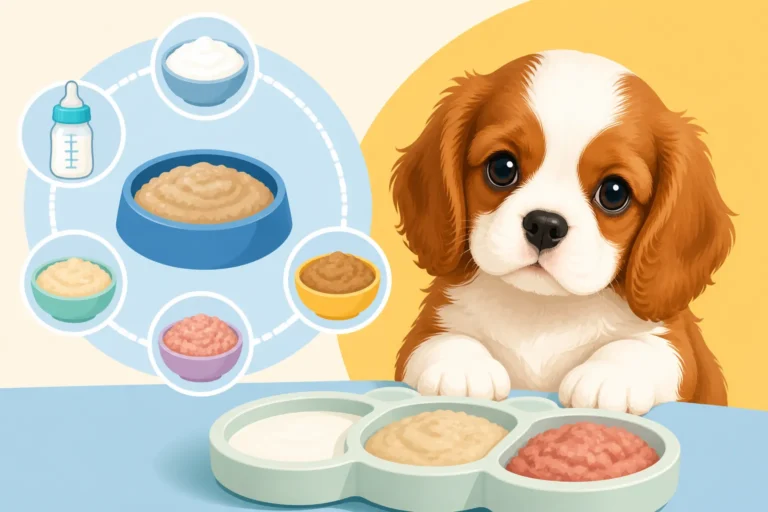
- Puppies: Young Cavalier puppies, with their tiny mouths and developing teeth, typically need very small kibble that is also often a bit softer than adult food. This makes it easier for them to eat and digest. As they grow and their adult teeth come in, they can gradually transition to slightly firmer, slightly larger small breed kibble. Many puppy formulas are specifically designed with this in mind. When considering what to feed your youngest family member, you might want to look at Whether a Cavalier Puppy Needs Small Breed Food to help you decide.
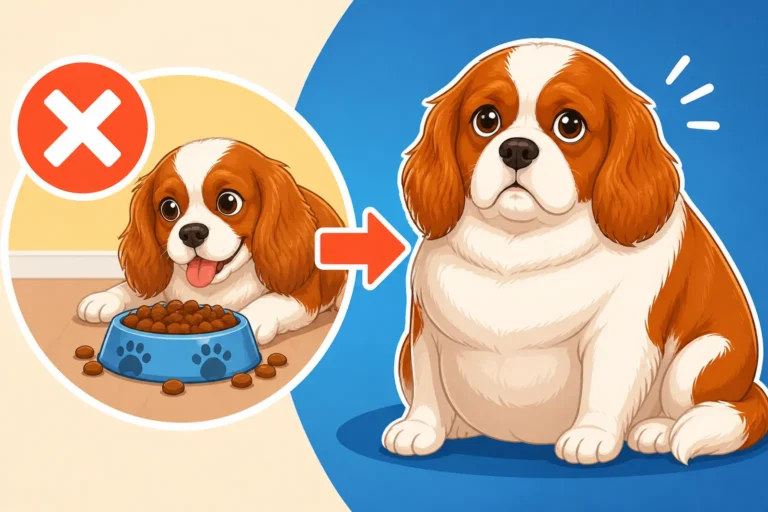
- Adults: Most adult Cavaliers will thrive on a standard "small breed" kibble. The key is to find a size that encourages them to chew rather than gulp, and one that they can easily pick up. This also ties into their overall calorie needs; an adult Cavalier needs a consistent, appropriate diet to maintain a healthy What an Adult Cavalier Should Weigh. You'll want to be mindful of How Much to Feed an Adult Cavalier Daily to prevent them from becoming overweight, a common issue for the breed.
- Seniors: As Cavaliers age, they may develop dental issues such as tooth loss, gum sensitivity, or simply weaker jaws. For these golden oldies, a slightly smaller or softer kibble might become necessary to ensure they can eat comfortably and maintain their nutrition. Some senior formulas are designed to be easier to chew while still providing essential nutrients for aging bodies. Keeping an eye on their weight is also crucial, as Why a Cavalier Gains Weight So Easily applies to all life stages, especially when activity levels might decrease.
| Kibble Size Category | Typical Appearance | Best For Cavaliers | Potential Drawbacks |
|---|---|---|---|
| Mini/Toy Breed | Pea-sized, tiny lentils | Small puppies, very dainty adults | May encourage fast eating/gulping, less dental abrasion |
| Small Breed | Small blueberry, plump lentil | Most adult Cavaliers, growing puppies | Can vary by brand; may still be too small for some fast eaters |
| Regular/All Breed | Corn kernel, small marble | Generally unsuitable for Cavaliers | Too large to pick up or chew easily, choking hazard |
Choosing the Best Kibble Size for Your Cavalier
Finding the perfect kibble size for your Cavalier isn't always a one-size-fits-all answer. It often involves a combination of careful observation, professional advice, and a bit of trial and error. Every dog is an individual, and what works beautifully for one Cavalier might not be the right fit for another, even within the same household.
Observing Your Cavalier's Eating Habits
Your Cavalier will give you the most honest feedback about their kibble. It's worth taking a few minutes to watch them closely during mealtime.
- Ease of Pickup: Do they struggle to get the kibble into their mouth? Are they nudging it around, or do pieces frequently fall out of their mouth back into the bowl? If so, the kibble might be too large or an awkward shape.
- Chewing vs. Gulping: Are they actually chewing their food, or are they swallowing pieces whole? If they're gulping, you might hear distinct swallowing sounds, and the meal disappears very quickly. This could mean the kibble is too small, or simply that they are a naturally fast eater, in which case a slightly larger kibble could slow them down.
- Dropping Food: Do they drop a lot of kibble around their bowl? This could indicate difficulty in holding onto the pieces, perhaps due to size or shape.
- Enthusiasm: While Cavaliers are generally enthusiastic eaters, if they seem hesitant or struggle, it might be the kibble itself and not just a finicky mood.
- Digestive Comfort: After eating, does your Cavalier seem comfortable? Excessive burping, gas, or signs of discomfort could be related to how they're eating, which in turn can be influenced by kibble size.
Pay attention to these cues. They are direct messages from your dog about their mealtime experience. If you're Feeding a Cavalier on Fifteen Pounds, for example, every calorie and every mouthful counts, so comfort is key.
Consulting Your Veterinarian
Your veterinarian is an invaluable resource when it comes to all aspects of your Cavalier's health, and that absolutely includes nutrition and kibble choice. If you have concerns about your dog's eating habits, dental health, or any digestive issues, your vet can provide tailored advice.
- Dental Assessment: A vet can perform a thorough dental exam to check for any existing issues like sensitive gums, loose teeth, or significant tartar buildup, all of which could influence the ideal kibble texture and size. They might recommend specific types of dental-friendly kibble or supplements.
- Overall Health: If your Cavalier has underlying health conditions, such as heart disease (which many Cavaliers are unfortunately prone to), certain dietary considerations, including sodium levels and calorie intake, might influence food choice. While kibble size isn't a direct treatment for heart conditions, ease of eating and good digestion contribute to overall well-being. Keeping an eye on your Cavalier's weight is crucial for heart health, as What an Overweight Cavalier Weighs can put extra strain on their system.
- Life Stage Needs: Your vet can also advise on appropriate kibble for your Cavalier's specific life stage, whether they're a growing puppy, a sprightly adult, or a wise senior. They can guide you on the best transition plan if you decide to change kibble.
Always discuss any dietary changes or concerns with your vet before making a switch, especially if your Cavalier has known health issues.
Trial and Error with Different Brands and Sizes
Sometimes, despite all your research and observation, the best way to find the perfect kibble size is through a bit of experimentation. This doesn't mean constantly changing your dog's food, which can lead to upset stomachs, but rather making thoughtful, gradual adjustments.
- Start Small: When trying a new kibble, buy the smallest bag possible or look for samples if available. This prevents you from being stuck with a large, expensive bag of food your Cavalier doesn't like or can't eat comfortably.
- Gradual Transition: If you decide to switch kibble, always do so gradually over 7-10 days. Start by mixing a small amount of the new food with their old food, slowly increasing the proportion of the new kibble each day. This helps their digestive system adjust.
- Observe and Adjust: After a few days on a new kibble, revisit your observations. Is your Cavalier eating more comfortably? Are they still gulping or dropping food? Is their stool normal? These are all indicators of whether the new kibble is a good fit.
It's a process of elimination, but a necessary one to ensure your Cavalier is getting the most out of their meals. This also applies to things like dental chews; you want Chews That Fit Behind a Cavalier's Crowded Bite to truly provide a benefit rather than a struggle.
Where to Find Suitable Small Breed Kibble
Once you have a better idea of what kibble size and shape might be best for your Cavalier, the next step is actually finding it. The good news is that the market is flooded with options, which also means you need to be a savvy shopper to pick the right one. Looking beyond just the kibble piece itself to the quality of the ingredients is also incredibly important for your Cavalier's overall health and longevity.
Reputable Pet Stores and Online Retailers
For the vast majority of pet parents, pet supply stores, both brick-and-mortar and online, are the primary source for dog food.
- Physical Stores: Walking into a local pet store allows you to physically see and sometimes even feel the kibble. You can ask staff for recommendations, though remember to do your own research as well. This can be helpful if you're uncertain about size descriptions on packaging.
- Online Retailers: Websites like Chewy and Amazon offer an incredibly wide selection of small breed kibble from countless brands. The advantage here is the sheer variety and the ability to read reviews from other pet owners, which can sometimes offer insights into kibble size and how different small breeds manage it. Many online retailers also provide detailed product descriptions, often with images of the kibble next to a coin or a ruler, which can be immensely helpful. Just remember that what works for a Miniature Poodle might not be perfect for your Cavalier, so keep your dog's unique needs in mind.
- Specialty Stores: Some high-end pet boutiques or independent pet food stores might offer a more curated selection of premium small-batch or niche brands that could have unique kibble sizes or textures. These can be great for finding truly specialized options.
Regardless of where you shop, always verify the product details carefully before purchasing.
Considering Fresh or Customized Food Options
While traditional kibble is a staple, the pet food industry has evolved, offering more specialized and customized meal solutions that might address kibble size indirectly.
- Fresh Food Services: Companies like Ollie deliver fresh, human-grade meals that are often pre-portioned and soft in texture, eliminating the kibble size issue entirely. While not "kibble," these options can be a wonderful alternative for Cavaliers who struggle with traditional dry food, perhaps due to dental issues, pickiness, or simply a preference for a different texture. These services can customize portions based on your dog's weight, age, and activity level.
- Customized Kibble Blends: Some newer companies offer services where you fill out a questionnaire about your dog, and they formulate a specific kibble blend. While "kibble size" might not be a primary customization option in all cases, the formulas are generally tailored for small breeds, and the density or shape might be more thoughtfully designed. These options often come with higher price tags but can offer peace of mind that your dog's specific needs are being met.
- Home-Cooked Meals: For those with the time and resources, cooking for your Cavalier under veterinary nutritionist guidance allows for complete control over food size and texture. This is a significant commitment and requires careful attention to nutritional balance, but it's an option for Cavaliers with very specific or sensitive needs.
These alternative options highlight that there are many ways to feed your Cavalier well, and kibble size is just one piece of the puzzle. Understanding What a Cavalier Eats in a Month becomes even more important when exploring these different feeding approaches.
Reading Labels and Ingredient Lists Carefully
Beyond size, the nutritional content of the kibble is paramount. A perfectly sized kibble isn't much good if it's full of filler ingredients or lacks essential nutrients.
- First Ingredients: Look for real meat (chicken, beef, lamb, fish) as the first one or two ingredients. Avoid foods where corn, wheat, or soy are listed first, as these are often fillers.
- Protein and Fat Content: Ensure the food has appropriate protein and fat levels for your Cavalier's life stage and activity level. Active adult Cavaliers need different macros than a lounging senior.
- Avoid Artificial Additives: Steer clear of artificial colors, flavors, and preservatives. Natural alternatives are always better.
- AFFE/AAFCO Statement: Look for an AAFCO (Association of American Feed Control Officials) statement on the label. This indicates that the food is formulated to meet the nutritional levels established by the AAFCO Dog Food Nutrient Profiles for a specific life stage (e.g., "for growth and reproduction," "for maintenance," or "for all life stages").
- Calorie Count: Always check the calorie count per cup or gram. This is vital for managing your Cavalier's weight, especially since Cavaliers are prone to gaining weight. Knowing the calorie density helps you accurately measure portions, crucial for Feeding a Cavalier on Fifteen Pounds.
A good quality diet, properly portioned, is the foundation of your Cavalier's health. Taking the time to research and choose wisely will pay dividends in their happiness and well-being. And remember to use the right equipment too; something as simple as Water Bowls Deep Enough for Cavalier Ears can make mealtime much more comfortable.
Disclaimer
This article is for general informational purposes only and does not constitute professional advice. Laws, prices and regulations vary by location and change over time. Consult a qualified professional for guidance on your specific situation.