Reward-Based Training With a Cavalier
You've just brought home a sweet, affectionate Cavalier, or perhaps your resident furry friend needs a little manners brush-up. It's easy to fall into the trap of thinking that training means being "the boss" or using stern commands, especially when you encounter frustrating behaviors like selective hearing on walks or enthusiastic greetings at the door. But with a Cavalier's gentle soul and eager-to-please nature, traditional, heavy-handed methods can often do more harm than good, creating a stressed dog rather than a well-behaved companion. This guide is all about embracing a kinder, more effective approach: reward-based training, which not only teaches your Cavalier good manners but also strengthens the incredible bond you share.
Why Reward-Based Training is Ideal for Cavaliers
When it comes to training a Cavalier King Charles Spaniel, understanding their unique personality is key. These aren't dogs that typically thrive under harsh corrections or constant reprimands. In fact, such methods can often backfire, leading to a shy, fearful, or even resistant dog. Reward-based training, on the other hand, aligns perfectly with the Cavalier's innate desire to please and their sensitivity.
The Cavalier's Sensitive Nature and How it Responds to Gentle Methods
Cavaliers are renowned for their sweet, affectionate, and gentle dispositions. They are literally bred to be companion dogs, thriving on human connection and a harmonious home environment. This sensitivity means they are acutely aware of their owner's mood and tone of voice. A raised voice or a sharp tug on the leash, while seemingly minor to some, can be deeply unsettling for a Cavalier. Imagine being constantly told off or corrected; it wouldn't make you eager to participate, would it?
Instead, Cavaliers flourish when they feel safe, understood, and motivated. They are often described as "soft" dogs, meaning they are easily discouraged by negative feedback. If a training session becomes a source of stress, your Cavalier might shut down, refusing to engage, or even start avoiding you when they anticipate a training cue. This isn't stubbornness; it's a natural response to feeling overwhelmed or confused.
Reward-based training focuses on making learning fun and positive. It builds on what your Cavalier does right, making them more likely to repeat those desired behaviors. This approach encourages your Cavalier to think and offer behaviors, rather than just reacting out of fear of correction. It taps into their natural intelligence and desire for interaction, turning training into a cooperative game rather than a battle of wills. This is why you'll often hear that Why Harsh Corrections Break a Cavalier is so important to avoid.
Building Trust and a Strong Bond Through Positive Reinforcement
At its core, reward-based training is about communication and trust. When you consistently reward your Cavalier for desired behaviors, you're not just teaching them a command; you're teaching them that you are a reliable source of good things. You become the provider of treats, praise, and fun, not the source of punishment or frustration. This strengthens the bond between you in profound ways.
Consider a scenario where your Cavalier comes when called. If you consistently reward them with a favorite treat and joyful praise every single time they return to you, they quickly learn that "come" equals a fantastic experience. They will associate coming to you with positive feelings, making them eager to respond. Conversely, if you only call them to do something unpleasant (like go into their crate when they'd rather play) or scold them when they're slow, that positive association erodes.
This bond built on trust is invaluable, especially as your Cavalier ages or if they face health challenges. A dog that trusts you implicitly will be more cooperative during vet visits, grooming sessions, or when needing medication. Reward-based training isn't just about obedience; it's about nurturing a confident, happy, and well-adjusted companion who views the world, and especially you, with joy and anticipation.
Understanding the Principles of Reward-Based Training
Stepping into reward-based training might feel a little different from what you traditionally imagine as "dog training." It’s not about asserting dominance or showing your dog who's boss. Instead, it’s a scientific, humane, and incredibly effective approach that capitalizes on how dogs naturally learn. It's about shaping behavior by clearly communicating what you want your Cavalier to do, rather than constantly pointing out what they shouldn't do.
Positive Reinforcement: Adding What Your Cavalier Loves
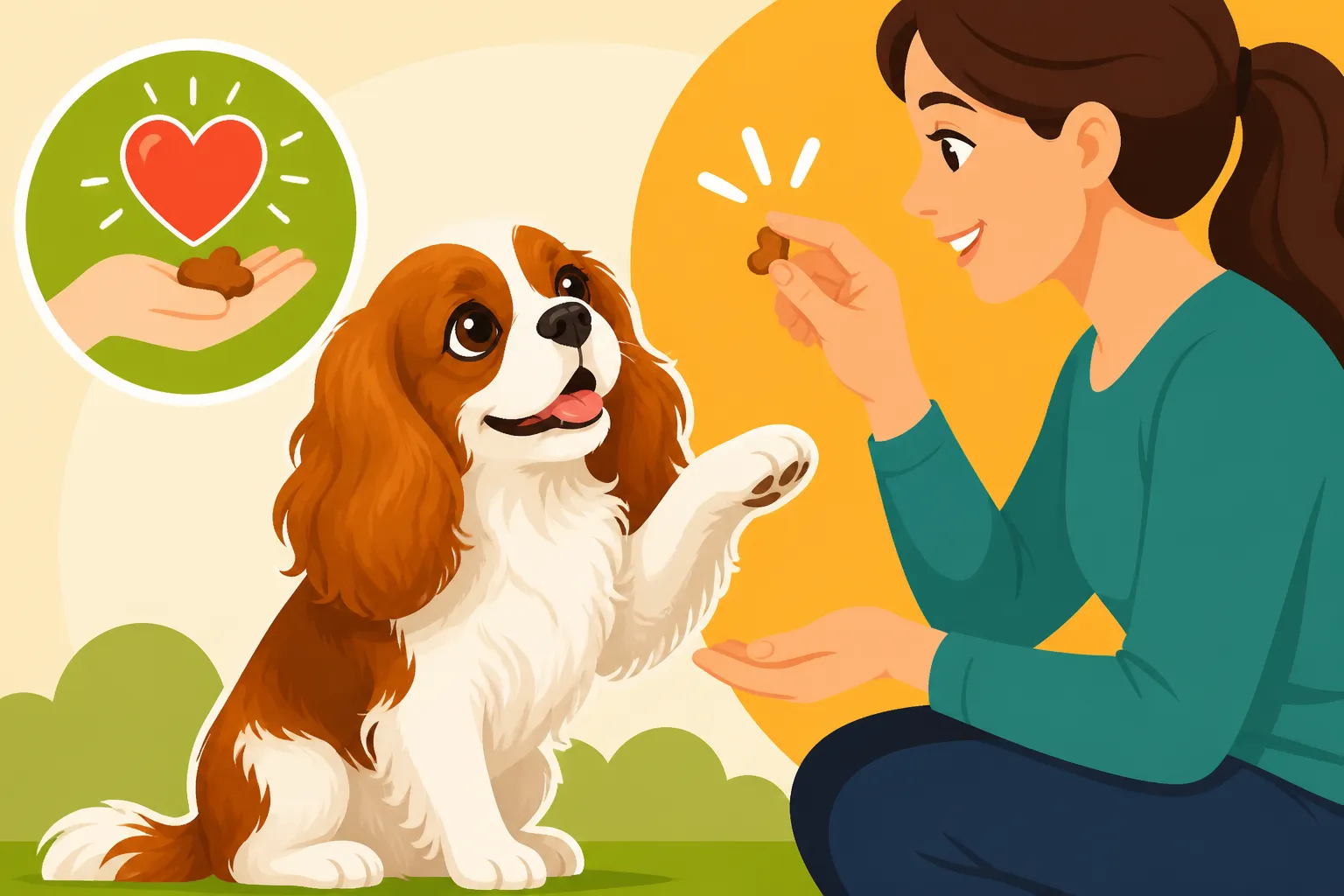
The bedrock of reward-based training is positive reinforcement. In simple terms, this means adding something desirable to your Cavalier's environment immediately after they perform a behavior you like, thereby increasing the likelihood that they will repeat that behavior. It's not bribery; it's a powerful learning tool.
Think of it this way: if your Cavalier sits when you ask, and you immediately give them a delicious treat, they connect the action (sitting) with the positive consequence (treat). Over time, they understand that "sit" leads to good things, so they're more inclined to sit when prompted. This principle works for everything from basic commands like "stay" and "down" to more complex behaviors like walking politely on a leash or settling calmly when guests arrive. The key is immediacy and consistency. The reward needs to happen within a few seconds of the desired behavior so your Cavalier clearly understands what they are being rewarded for.
This approach means you're actively looking for opportunities to reward your Cavalier, rather than waiting for them to make a mistake. Did they lie down calmly instead of jumping on the sofa? Reward! Did they walk past a tempting squirrel without pulling? Reward! By making desired behaviors highly rewarding, you motivate your Cavalier to choose those actions more often, making training a joyful and productive experience for both of you.
Avoiding Punishment: Why "No" Isn't as Effective
In reward-based training, we generally steer clear of punishment, especially physical corrections or harsh verbal reprimands. And no, that doesn't mean your Cavalier will run wild or become "spoiled." It means you're using more effective methods. The problem with punishment is multifaceted, especially for a sensitive breed like the Cavalier.
Firstly, punishment often only tells a dog what not to do, but it doesn't teach them what they should do instead. If your Cavalier jumps on guests and you scold them, they know jumping is bad, but they still don't know the polite alternative, like sitting calmly. This can lead to frustration and anxiety, as they try to guess what behavior will avoid punishment, sometimes leading to unexpected and undesirable actions.
Secondly, punishment can damage your relationship. If your Cavalier associates you with unpleasant experiences, they may become less trusting, more fearful, or even aggressive in an attempt to protect themselves. This is particularly true for a Cavalier who relies heavily on their human companions for comfort and security. It can also suppress behavior without truly solving the underlying issue. A dog might stop jumping on guests when you're around, but only out of fear of your reaction, not because they've learned to be calm. They might still jump when you're not present, or develop new, equally undesirable coping behaviors.
Instead of punishment, reward-based training utilizes management and redirection. If your Cavalier is jumping on guests, you might manage the situation by keeping them on a leash initially and rewarding them for keeping "four on the floor," or redirect their attention to an appropriate chew toy. This teaches them acceptable alternatives and builds positive habits, rather than just suppressing a symptom of an untrained behavior. It's about teaching them boundaries in a way that respects their emotional well-being and strengthens your connection.
Common Rewards Your Cavalier Will Work For
One of the beautiful things about reward-based training is that it's highly adaptable to your individual Cavalier. While most Cavaliers are food-motivated (who isn't?!), there are many other things they find rewarding. Understanding your dog's personal preferences is crucial for maximizing the effectiveness of your training sessions. You want to use rewards that are truly motivating, making your Cavalier eager to learn and cooperate.
High-Value Treats: What Motivates a Food-Loving Cavalier
For many Cavaliers, food is king. But not all food is created equal in their eyes! When we talk about high-value treats, we're referring to those special, super-tasty morsels that your Cavalier absolutely adores and would work hard to earn. These are often different from their regular kibble or everyday biscuits. Imagine going to work: you wouldn't be as motivated by a single penny as you would by a decent paycheck, right? It's the same for your dog.
High-value treats often include small pieces of cooked chicken, cheese, hot dogs, liverwurst, or commercially prepared soft, chewy training treats. The key is "small" – we're talking pea-sized or smaller, especially for a smaller breed like a Cavalier, so you can give many rewards without overfeeding or distracting them for too long. For general training, a small bag of these delicious treasures from a popular online retailer like Amazon can be a game-changer. These treats are particularly useful for new, difficult, or distracting situations, such as teaching recall at the park or working on leash manners in a busy environment.
When selecting treats, always consider your Cavalier's dietary needs and any sensitivities they might have. Some dogs do better with single-ingredient treats. Keep a variety on hand to discover what truly makes your Cavalier's eyes light up. The more they value the reward, the harder they'll try to earn it, which is the whole point of using positive reinforcement. This concept of finding their top motivators is crucial, and it’s why understanding Treats a Cavalier Will Trade Anything For is so important.
Praise, Play, and Affection: Non-Food Rewards for a Cavalier
While food is often a powerful initial motivator, it's not the only reward you have in your arsenal. Many Cavaliers are incredibly people-oriented and respond beautifully to praise, play, and affection. These non-food rewards are excellent for reinforcing behaviors once your Cavalier has a good grasp on them, or for dogs who might be less food-motivated in certain situations.
A happy, enthusiastic "Good dog!" delivered in a high-pitched, joyful tone can be incredibly rewarding for your Cavalier. Coupled with a gentle scratch behind the ears or a belly rub, it reinforces their desire for your attention and approval. For play-driven Cavaliers, a quick game of tug with a favorite toy, a toss of a soft ball, or even just a brief chase in the yard can be a fantastic reward for a job well done. This is especially useful for high-energy commands, like a speedy recall.
The trick is to identify what your Cavalier finds genuinely rewarding beyond food. Some Cavaliers live for a quick snuggle, while others prefer a burst of play. Observing their reactions will tell you a lot. Once you know their preferred non-food rewards, you can integrate them into your training, helping to fade out reliance on treats over time, or simply to add variety to your reward system. Remember, the goal is to make training a positive and enriching experience, and using a mix of rewards helps keep things fresh and exciting for your clever little companion.
Training Around Food Distraction
One common frustration for owners, especially with food-loving Cavaliers, is when their dog suddenly becomes "deaf" to commands in the presence of tempting distractions. Whether it’s another dog, a new smell, or a dropped crumb, it can feel like all your training goes out the window. But this isn't a failure of your Cavalier; it's a normal part of the learning process that requires a strategic approach. Training a Cavalier Around Food Distraction is a skill you'll absolutely want to master.
The key to overcoming distraction is to gradually introduce it into your training. Start in a quiet, familiar environment where your Cavalier can easily focus on you and the task at hand. Once they consistently perform a behavior there, slowly introduce minor distractions. For example, have a family member walk across the room while you ask for a "sit," rewarding heavily when your Cavalier maintains focus. As they succeed, increase the level of distraction – perhaps a favorite toy on the floor, or another dog calmly in the same room.
It’s crucial to use your absolute highest-value treats when training around distractions. That little piece of chicken might be far more interesting than a piece of kibble when a squirrel just ran by. If your Cavalier fails to respond, the distraction is probably too high for their current skill level. Simply reduce the distraction, succeed, and then try a slightly higher level again. This systematic approach ensures your Cavalier learns to generalize their behaviors to different environments and distractions, building confidence and reliability.
Implementing Reward-Based Training in Everyday Life
Once you understand the 'why' and 'what' of reward-based training, the next step is integrating it seamlessly into your daily routine. Training isn't just for dedicated sessions; it's an ongoing conversation with your Cavalier, happening every time you interact. Making it a natural part of your day will solidify behaviors much faster than sporadic, intense sessions.
Marker Training: Using a Clicker or Verbal Cue
Marker training is a powerful tool in reward-based training because it precisely communicates to your Cavalier the exact moment they performed the desired behavior. This is done with a distinct sound – either a clicker or a consistent verbal marker like "Yes!" or "Good!"
Here’s how it works: you pair the marker with a high-value reward. Click (or say your marker word), then immediately give a treat. Repeat this about 10-20 times in a quiet environment. Your Cavalier will quickly learn that the click predicts a treat. Once they understand this, the clicker becomes a powerful communication tool. When your Cavalier does something you like (e.g., their rear touches the ground for a sit), you click at that precise moment, then immediately follow with a treat. The click marks the behavior, and the treat reinforces it.
For a sensitive Cavalier, a clicker can sometimes be too startling initially. If your Cavalier seems hesitant or reactive to the sound, you can "charge" the clicker by muffling it with your hand or starting with a softer clicker. Alternatively, a clear, consistent verbal marker like "Yes!" works just as well. The consistency of the marker is key, as it eliminates ambiguity and helps your Cavalier understand exactly what behavior earned them that fantastic reward. You might wonder Whether a Clicker Suits a Sound-Sensitive Cavalier, so it's worth trying both options to see what your dog prefers.
Shaping Behavior: Breaking Down Complex Actions
Some behaviors, like "stay" for an extended period or walking perfectly on a loose leash, are too complex to teach all at once. This is where "shaping" comes in. Shaping involves rewarding successive approximations of a desired behavior. You break the behavior down into tiny, achievable steps, and reward each step that moves your Cavalier closer to the final goal.
Let's take "stay" as an example. You wouldn't expect your Cavalier to stay for five minutes on the first try. Instead, you'd start by rewarding them for staying for just one second. Then two seconds. Then three. You gradually increase the duration, then the distance, then introduce distractions, rewarding each small success. This incremental approach prevents frustration for both you and your Cavalier and builds their confidence. Shaping a New Behavior With a Cavalier is a skill that takes practice, but it's incredibly rewarding to see your dog learn complex tasks this way.
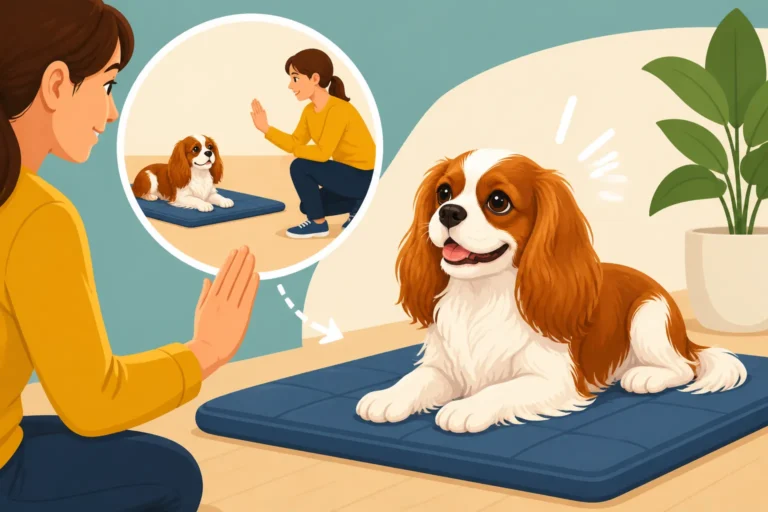
Another example is teaching your Cavalier to settle on a mat when guests arrive. You might start by rewarding them just for looking at the mat, then for putting one paw on it, then two paws, then all four, then lying down. Each step is marked and rewarded, building up to the full behavior. This positive, step-by-step process makes learning achievable and enjoyable, transforming what might seem like an overwhelming task into a series of small, fun victories.
Five-Minute Training Sessions With a Cavalier
You might think that effective training requires long, dedicated blocks of time, but for a Cavalier, shorter, more frequent sessions are often far more productive. Their attention spans can be quite brief, and they learn best when they are fresh and engaged, not when they're bored or tired. This is why Five-Minute Training Sessions With a Cavalier are often recommended.
Aim for two to three short training sessions a day, each lasting no more than five minutes. During these sessions, focus on just one or two behaviors. For instance, spend five minutes working on "sit" and "down," or five minutes practicing walking politely on the leash in a quiet area. Keep the energy positive, fun, and end the session on a high note, even if it means asking for an easy command your Cavalier always gets right. This leaves them wanting more and eager for the next session.
These short bursts prevent your Cavalier from becoming overwhelmed or losing interest, which is especially important for a breed that thrives on connection. It also fits easily into even the busiest schedules. You can incorporate these mini-sessions throughout your day: before breakfast, after a potty break, or before an evening cuddle. Consistent, short training builds habits much more effectively than infrequent, lengthy sessions that might just lead to frustration. Think of it as bite-sized learning that keeps your Cavalier mentally stimulated and engaged without burning them out.
Addressing Common Cavalier Training Challenges with Positive Methods
Cavaliers, for all their charming qualities, can present a few common training challenges. Whether it’s their tendency to become "Velcro dogs," their enthusiasm on walks, or their greetings at the door, these behaviors are often rooted in their inherent breed traits. The good news is that reward-based training is perfectly suited to gently guide them towards more desirable actions.
Managing Leash Manners Without Force
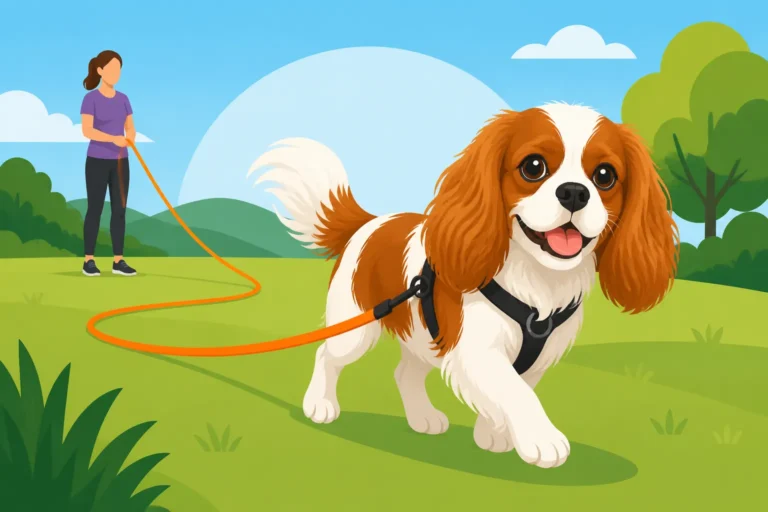
One common sight is a Cavalier excitedly pulling on the leash, eager to greet every dog and sniff every blade of grass. While it's cute, a pulling dog can be a safety hazard and certainly isn't enjoyable for either of you. Traditional methods might involve harsh leash corrections, but for a Cavalier, this can lead to neck strain, fear of the leash, or even increased pulling due to frustration. Instead, reward-based methods focus on teaching your Cavalier that a loose leash earns them good things. This is where excellent Leash Manners for a Cavalier That Pulls comes in.
Start in a quiet area with minimal distractions. Hold your leash comfortably, not taut. The moment your Cavalier walks beside you with a loose leash, mark the behavior (with a click or "Yes!") and immediately give a high-value treat. If they start to pull, simply stop moving. Stand still, like a tree, until the leash goes slack. The moment the tension releases, even for a second, mark it and reward, then start walking again. Your Cavalier quickly learns that pulling stops the fun, while a loose leash keeps them moving and earning rewards.
Consistency is absolutely vital here. Every walk, every time. You might feel a little silly stopping and starting at first, but your Cavalier will quickly catch on. Consider using a front-clip harness, available from places like Amazon, which gently redirects their forward momentum when they pull, making it physically harder for them to drag you without causing pain or discomfort. With patience and consistent rewards, your Cavalier will learn that polite walking is the most rewarding way to experience the world.
Nurturing a Confident Recall
A reliable recall – your Cavalier coming back to you when called – is perhaps one of the most important behaviors to teach, especially given their curious nature and tendency to follow scents. Many Cavaliers love exploring, and in an open space, that can lead them into trouble. A strong recall can literally be a lifesaver. Again, reward-based training makes this a positive, high-stakes game they'll want to win. You want The Recall Word a Cavalier Learns Fastest to be the most exciting word they know!
Start recall training in a secure, enclosed space with zero distractions. Use an enthusiastic tone of voice and a distinct recall word (e.g., "Come!"). As soon as your Cavalier takes a step towards you, mark it and reward them with their absolute favorite high-value treat, making a huge fuss. Make coming back to you the most exciting thing ever. Don't just call them when it's time to go home; call them, reward them, and then immediately release them to go back to playing. This ensures they don't associate "come" with the end of fun.
Gradually introduce more distractions and space, always setting your Cavalier up for success. You can use a long line (a very long leash, also found on Amazon) in an open field to practice, allowing them freedom while still giving you control. If they ignore your call, gently reel them in, rather than chasing them, which can turn into a game of "catch me if you can." The goal is for your Cavalier to associate returning to you with immense joy and the best rewards, making them choose you over any other tempting distraction. For a deeper dive into early puppy training, resources like BAXTER & Bella offer comprehensive online programs that utilize these same positive principles, building a strong recall from day one.
Teaching a Cavalier to Greet Guests Calmly
The sight of a new person entering the home often turns a sweet Cavalier into an excitable, jumping, attention-seeking missile. While their enthusiasm is endearing, jumping on guests can be annoying, startling, and even dangerous, especially for children or elderly visitors. The good news is that you can teach your Cavalier to greet calmly using positive reinforcement. This requires consistency and setting clear expectations for Teaching a Cavalier to Greet Guests Calmly.
The core principle here is to reward "four on the floor." When a guest arrives, keep your Cavalier on a leash initially, or behind a baby gate. As the guest comes in, instruct them to ignore your Cavalier if they jump or get overly excited – no eye contact, no petting, no talking. The moment your Cavalier has all four paws on the ground, even for a split second, have the guest (or you, if the guest is less dog-savvy) mark the behavior and give a treat. The guest can then offer a calm pet or greeting.
The moment your Cavalier jumps again, the attention stops, and the treats disappear. Repeat this process for every single guest. It teaches your Cavalier that calm behavior earns attention and rewards, while jumping makes the good stuff go away. You can also teach an alternative behavior, like "go to your mat" or "sit," and reward them heavily for performing that action when guests arrive. Over time, your Cavalier will learn that a polite greeting is the fastest way to get what they want – love and attention from new friends.
Cavalier Training Success: Consistency and Patience
No matter what behavior you're trying to teach your Cavalier, the two most important ingredients for success are consistency and patience. Training isn't a one-time event; it's an ongoing journey of communication and growth between you and your dog. Cavaliers are smart and eager to please, but they also respond best to clear, consistent rules and a loving, encouraging environment.
Setting Realistic Expectations for Your Cavalier
It's easy to see perfectly behaved dogs on TV or social media and feel like your Cavalier should immediately master every command. However, setting realistic expectations is crucial for maintaining your sanity and your Cavalier's confidence. Your Cavalier is a dog with natural instincts, not a robot. They will have off days, they will regress occasionally, and they will need reminders.
Understand that learning takes time. A behavior that seems simple to you might be complex for your Cavalier to grasp. Celebrate small victories: if they only pulled half as much on today's walk, that's progress! If they held a "sit" for an extra second, that's a win! Avoid comparing your Cavalier to other dogs, as every dog learns at their own pace. Focus on your dog's individual journey and their unique personality. Remember that even Whether an Adult Cavalier Can Learn Recall Late is possible with patience.
Also, be realistic about your own time and energy. If you're having a stressful day, a complicated training session might not be the best idea. Keep it simple, maintain a positive attitude, and know that some days will be better than others. The goal is progress, not perfection.
The Power of Management and Prevention
While reward-based training is about teaching your Cavalier what to do, effective training also involves managing their environment to prevent them from practicing undesirable behaviors. Think of it as setting your Cavalier up for success. If your Cavalier jumps on the counter, don't leave tempting food within reach. If they chew on furniture, provide appropriate chew toys and supervise them closely.
Management tools like baby gates can be incredibly helpful for a Cavalier who follows you room to room. A simple gate can allow you to move freely without your Cavalier getting underfoot, while still allowing them to see and hear you, reducing anxiety. Crates, when introduced positively, can provide a safe haven and prevent destructive chewing when you can't supervise directly. When considering getting a puppy, a complete online program like the one offered by BAXTER & Bella can guide you through every step of positive training and management, ensuring a well-adjusted companion.
By managing the environment, you prevent your Cavalier from reinforcing bad habits, which makes training new, desirable behaviors much easier. It's not about restricting them unnecessarily, but about creating an environment where they are less likely to make mistakes and more likely to succeed at behaving in ways you appreciate. This combination of proactive management and consistent positive reinforcement is the recipe for a well-behaved, happy Cavalier.
| Challenge | Old School Approach | Reward-Based Approach | Key Takeaway |
|---|---|---|---|
| Pulling on Leash | Leash jerks, harsh corrections | Stop-and-go method, reward loose leash, front-clip harness | Teach that loose leash equals forward movement and rewards |
| Jumping on Guests | Pushing dog down, yelling "No!" | Ignore jumping, reward "four on the floor," teach "sit" | Calm greetings earn attention, jumping makes it disappear |
| Ignoring Recall | Chasing dog, scolding | Make coming back incredibly rewarding, practice in low-distraction areas | Coming to you is the most exciting thing in the world |
| Excessive Barking | "Quiet!" command, spray bottles | Identify trigger, teach "speak" then "quiet," reward silence | Teach an alternative, reward quiet moments |
| Nipping/Mouthiness | Yelping, alpha rolls | Redirect to appropriate chew toy, "ouch" game | Teach bite inhibition, provide outlets for chewing |
Disclaimer
This article is for general informational purposes only and does not constitute professional advice. Laws, prices and regulations vary by location and change over time. Consult a qualified professional for guidance on your specific situation.