Trick Training an Older Cavalier
It’s a common misconception that once a Cavalier gets a bit older, their learning days are behind them. Perhaps they seem a little slower, a touch less enthusiastic, or you’ve heard the old adage, "you can't teach an old dog new tricks." But trust me, that couldn't be further from the truth! This guide will walk you through the incredible benefits and practical steps for teaching your senior Cavalier some fun new tricks, enriching their life and strengthening your unique bond.
The Undeniable Joy and Benefits of Trick Training Your Senior Cavalier
Watching your beloved Cavalier gracefully navigate their senior years is a gift, but it also comes with acknowledging that things change. Their step might be a little less spry, their naps a little longer. This is why introducing gentle, engaging activities like trick training is so profoundly beneficial. It’s not just about showing off a cute trick; it’s about nurturing their mental, emotional, and even physical well-being.
Keeping Minds Sharp: Cognitive Stimulation for Aging Pups
Just like humans, dogs need to keep their brains active as they age to maintain cognitive function. If you've noticed your older Cavalier seems a little less engaged with their toys or daily routines, or perhaps they're a bit more easily confused, it's not necessarily a sign of decline you can't influence. Mental exercise is just as vital as physical exercise, especially for an aging brain.
Trick training provides a wonderful avenue for this mental workout. Each new command, each sequence of actions, requires focus, problem-solving, and memory recall. When your Cavalier successfully learns to "touch" your hand or "spin in a circle," they're not just performing a rote action; they're actively thinking, processing information, and making choices. This engagement can help slow cognitive decline, keeping their minds more agile and responsive. It offers a sense of purpose and accomplishment that can genuinely boost their overall happiness.
Imagine your older Cavalier, perhaps one you've noticed becoming a bit more withdrawn or restless in the evenings, suddenly sparkling with recognition and excitement when you pull out their training treats. That spark is priceless. It shows their brain is firing, making new connections, and enjoying the challenge. It can also help if you're managing a Caring for a Cavalier Past Nine situation, as mental stimulation is key to quality of life.
Strengthening Your Bond: Deeper Connection Through Shared Learning
One of the most beautiful aspects of trick training, especially with an older dog, is the profound strengthening of your relationship. When you engage in positive, reward-based training, you're building a foundation of trust, communication, and mutual respect. Your Cavalier looks to you for guidance, and you become a source of fun, praise, and delicious rewards.
This shared activity creates positive associations between you and your dog, deepening the emotional connection you already cherish. It's a special time set aside where you're fully present, focused solely on them, and celebrating their efforts. For many Cavaliers, who are inherently "Velcro dogs" and thrive on interaction, this dedicated one-on-one time is incredibly valuable. It reaffirms their place in your life and makes them feel seen and understood.
Think about those moments when your Cavalier looks up at you with those soulful eyes, waiting for your next cue. That's not just obedience; it's a conversation. It's a dance of understanding that builds a unique language between you both. This connection can become even more important as What Changes in a Cavalier After Eight, and they may rely on you more for comfort and reassurance.
Gentle Exercise and Mood Boost: Physical and Emotional Perks
While trick training isn't typically high-impact cardio, it absolutely offers gentle physical activity that is perfect for older Cavaliers. Many tricks involve subtle movements – shifting weight, extending a paw, a gentle bow, or a careful spin. These actions help keep their joints limber, muscles engaged, and can improve balance and coordination without putting undue strain on aging bodies.
This type of low-impact movement is crucial for senior dogs who might not be able to handle long walks or strenuous play anymore, especially if they are managing conditions like Loose Kneecaps in a Thirteen-Pound Cavalier or early arthritis. It’s a way to keep them active and prevent stiffness without exacerbating existing health issues. Always consult your vet about appropriate exercises if your Cavalier has specific health concerns.
Beyond the physical, the emotional boost is immense. The success, the praise, the tasty treats – it all contributes to a sense of accomplishment and happiness. Learning new things can genuinely lift a dog's spirits, reducing boredom and potential anxiety. A happy, engaged Cavalier is often a more relaxed and contented Cavalier, and that mood boost radiates throughout the household.
Crafting Your Approach: Tailoring Training Methods for Older Cavaliers
Training an older Cavalier isn't necessarily harder than training a puppy, but it does require a slightly different mindset and approach. Patience, adaptability, and an understanding of your dog's changing needs are paramount. Forget old-school, harsh methods; positive reinforcement is the golden rule, especially with the sensitive Cavalier temperament.
Understanding Your Senior Cavalier's Needs and Limitations
Before you dive into teaching new tricks, take a moment to truly observe your senior Cavalier. What are their current energy levels? Do they have any mobility issues, like A Cavalier That Refuses Stairs or struggles getting up from a nap? Are their senses as sharp as they once were? An older dog might have diminished hearing or sight, which means you'll need to adapt your cues and approach.
For instance, if your Cavalier’s hearing isn't what it used to be, relying more on hand signals than verbal commands will be essential. If their eyesight is fading, ensure you train in well-lit areas and use clear, exaggerated body language. If they have joint pain, avoid tricks that require jumping, prolonged standing, or awkward twists. Pain Management for a Senior Cavalier is a serious consideration, and training should never exacerbate discomfort.
It’s also important to acknowledge their attention span might be shorter, and they might tire more quickly. This isn’t a sign of stubbornness; it’s just part of aging. Respect their limits and keep sessions brief and frequent, rather than long and exhausting. This ensures training remains a positive and enjoyable experience for them, rather than a chore.
The Power of Positive Reinforcement: High-Value Rewards and Patience
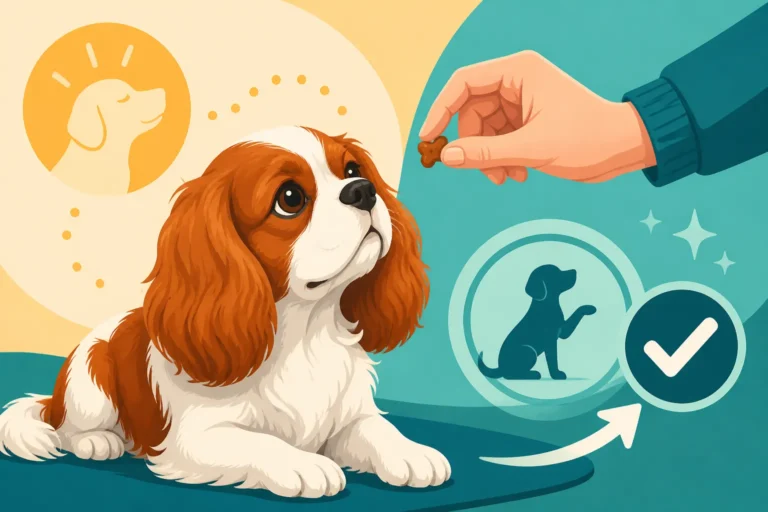
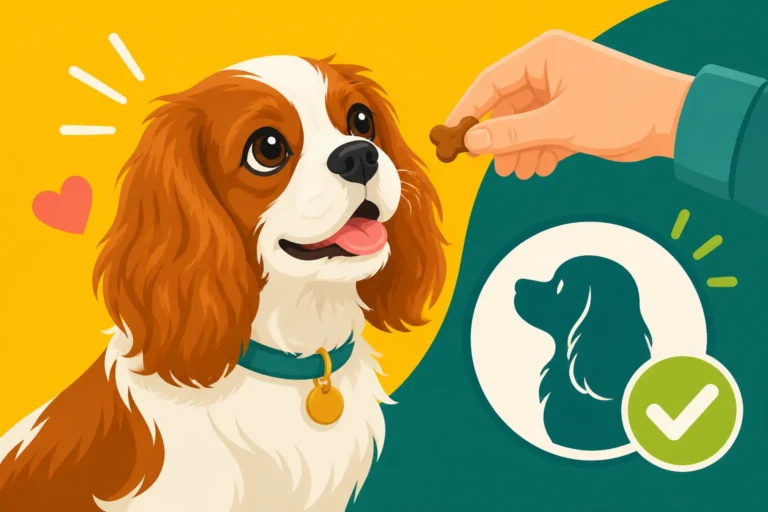
Positive reinforcement is the absolute cornerstone of successful trick training, particularly for older, sensitive breeds like Cavaliers. This means rewarding desired behaviors with something your dog loves – whether it's a special treat, enthusiastic praise, or a favorite toy. The goal is to make learning a joyful game, not a stressful ordeal.
For an older Cavalier, "high-value" treats are often the secret weapon. These are the treats they really go crazy for, the ones they don't get every day. Think small pieces of cooked chicken, cheese, hot dogs, or specially formulated soft training treats you can easily find on Amazon. You might even use a bit of their regular meal portion if they're motivated by it. Be mindful of their calorie intake, especially if you have a Why an Overweight Cavalier Fails Faster; use tiny pieces!
| Treat Type | Examples | Value to Dog | Best Use | Considerations |
|---|---|---|---|---|
| High-Value | Cooked chicken, cheese, liverwurst, specific soft training treats | Very High | New or difficult tricks, overcoming distraction | Use sparingly, watch calorie intake, check ingredients for sodium |
| Medium-Value | Crunchy dog biscuits, dried jerky, vegetable pieces (carrots, peas) | Medium | Reinforcing known tricks, maintenance | Good for general training, variety is key |
| Low-Value | Plain kibble, small pieces of fruit (apple, banana) | Low | Everyday rewards, meal enrichment | Great for dogs on strict diets or easy behaviors |
Patience is your other best friend. Your older Cavalier might take a little longer to grasp a new concept, or they might forget something they learned yesterday. That's perfectly normal! Never get frustrated or punish them for not understanding. Simply go back a step, simplify the request, and celebrate every tiny approximation of the desired behavior. The journey is just as important as the destination. If you're struggling to implement positive reinforcement effectively, online training platforms like BAXTER & Bella offer structured lessons and support that can guide you through the process, building both your skills and your dog's confidence.
Essential Gear and Setting the Scene for Success
While you don't need a lot of fancy equipment to start trick training, a few items can make a big difference.
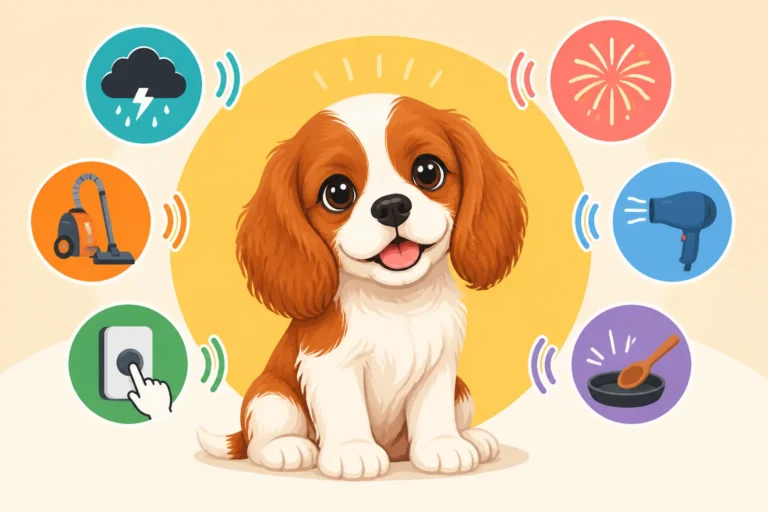
- A Clicker: A clicker is a small device that makes a distinct sound. When paired with a reward, it becomes a powerful communication tool. The click marks the exact moment your dog performs the desired action, making it clear to them what they're being rewarded for. Even if your Cavalier is a Whether a Clicker Suits a Sound-Sensitive Cavalier, many dogs adapt well to its clear, consistent signal. You can find simple clickers easily on Amazon.
- High-Value Treats: As discussed, these are crucial motivators. Keep them small, soft, and easy for your Cavalier to chew and swallow quickly, especially if they have Cavalier Dental Disease in a Crowded Jaw.
- A Quiet Training Space: For an older dog, minimizing distractions is key. Start in a calm, familiar environment, like your living room, away from other pets, loud noises, or busy windows. As they get more confident, you can gradually introduce more challenging environments.
- Comfortable Harness: If you plan on any tricks that involve movement or gentle guidance, a comfortable, well-fitting harness is always preferable to a collar, especially for a Cavalier. It protects their neck and throat, which is particularly important if they have any underlying conditions like Syringomyelia Against Ear Pain in a Cavalier. There are many ergonomic options available on Amazon.
- Short, Frequent Sessions: Instead of one long session, aim for multiple Five-Minute Training Sessions With a Cavalier throughout the day. This keeps your Cavalier engaged, prevents boredom, and respects their energy levels.
Setting the scene also means adopting the right attitude. Approach each session with enthusiasm, patience, and a sense of fun. Your Cavalier will pick up on your mood, so keep it light and positive!
Simple and Engaging Tricks for Your Wise Companion
The beauty of trick training is that there's no right or wrong trick, as long as it's safe and enjoyable for your dog. For older Cavaliers, focusing on tricks that are low-impact, reinforce basic manners, or encourage gentle movement is ideal. Here are some fantastic starting points.
Foundation Tricks: Sit, Stay, and Their Variations
Even if your Cavalier knows "sit" and "stay," you can still turn these into "tricks" by adding duration, distance, or new variations. These foundational behaviors are also excellent for mental reinforcement and polite manners.
- "Sit" and "Stay" with Distraction: Can your Cavalier "stay" when you walk to the other side of the room, or if a treat is placed on the floor a few feet away? This builds focus and impulse control. Start with very short durations and minimal distance, always setting them up for success. Reward them for holding the position for just a few seconds, then gradually increase the challenge. This is a brilliant way to keep their minds engaged, requiring them to think and exert self-control.
- "Sit Pretty": This is a cute trick where your Cavalier sits up on their hind legs, balancing with their front paws off the ground. It requires core strength, so only attempt it if your Cavalier has no back or joint issues. You can teach this by luring them with a treat held above their nose and slightly back, encouraging them to lift their front paws. Praise and reward instantly as soon as their paws leave the ground, even if it's just for a second. This gentle stretch can also be good for their back muscles if done carefully.
- "Chin Rest": A lovely, gentle trick where your Cavalier rests their chin on your hand or an object. Lure them with a treat, bringing it down towards your open palm or a designated object. As their chin touches, say "chin" and reward. This is fantastic for building focus and is very low-impact, making it perfect for even the most senior or mobility-challenged Cavaliers. It can be a very calming trick, encouraging them to settle and be still.
Charming Gestures: "Shake a Paw" and "Bow"
These are classic tricks that are relatively easy to teach and delightful to watch. They also involve gentle range of motion, which is great for keeping joints mobile.
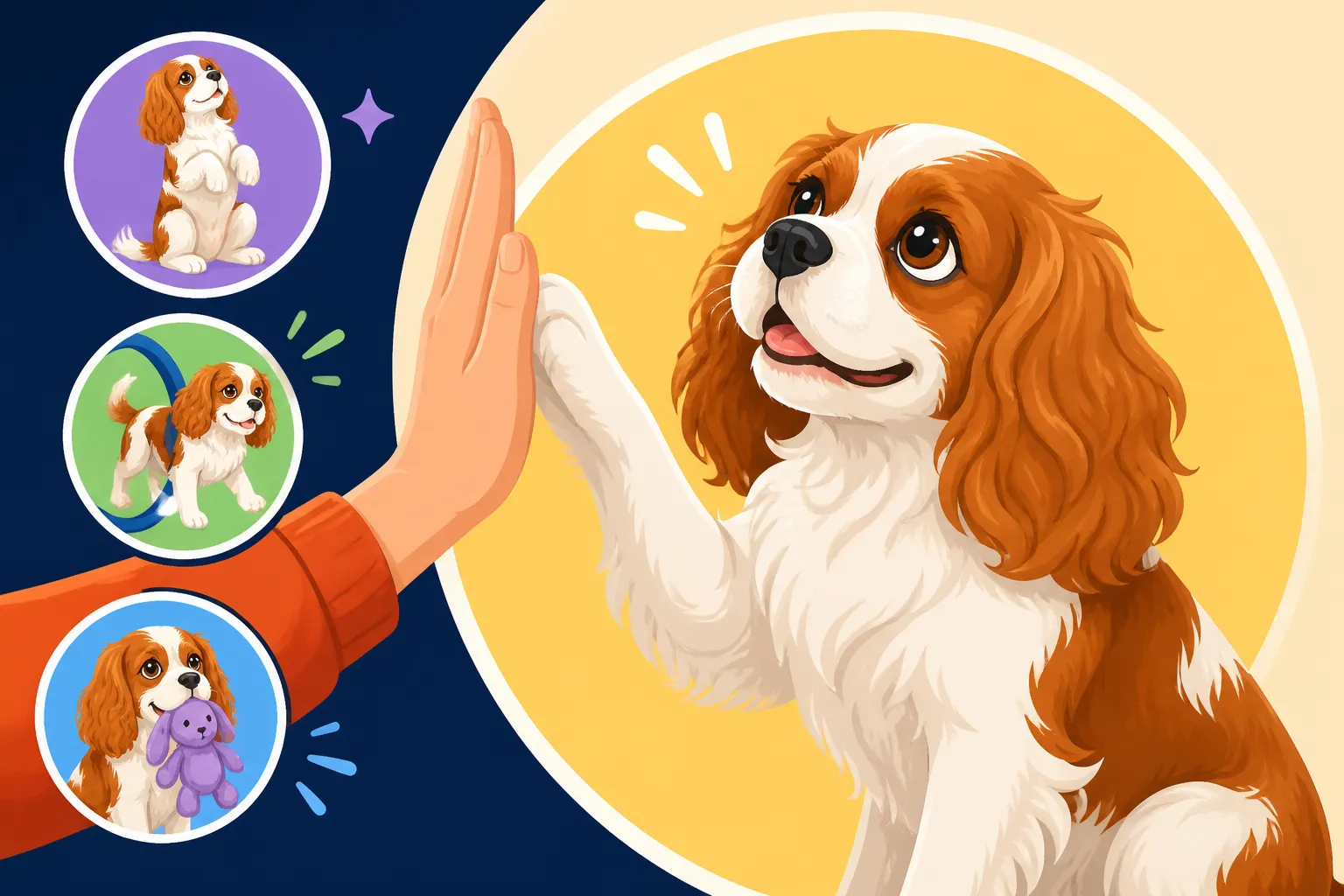
- "Shake a Paw": Start with your Cavalier in a "sit." Hold a treat in your closed fist and present it to them. They will likely try to paw at your hand to get the treat. The moment their paw touches your hand, open your hand, say "shake," and give them the treat. Repeat this, and once they're consistently pawing, start to open your hand before they paw, holding it out and saying "shake." This is an engaging interaction that builds coordination.
- "Bow": This trick involves your Cavalier lowering their front end while keeping their rear end up, as if in a play bow. Lure them from a standing position with a treat, slowly moving it down between their front paws and slightly back, encouraging their front end to go down. The moment their elbows touch the floor, say "bow" and reward. Be careful not to make them lie down completely. This gentle stretch can be wonderful for their spine and shoulders, promoting flexibility in a controlled way. If your Cavalier loves to do a natural play bow, you're halfway there already!
Problem-Solving Fun: Target Training and "Find It" Games
These tricks tap into your Cavalier's natural curiosity and hunting instincts in a very safe and enriching way. They are great for building confidence and mental agility.
- Target Training (Nose or Paw): Teaching your Cavalier to touch a specific target (like your hand, a sticky note, or a target stick) with their nose or paw is incredibly versatile. For nose targeting, hold your open palm out and, when your Cavalier sniffs it, say "touch" and reward. For paw targeting, you can put a small, flat object (like a coaster) on the floor and reward them for stepping on it. Once they understand the concept, you can use these targets to guide them to "go to bed," "spin," or even close a cupboard door. This is a fundamental skill that can open up a world of more complex tricks.
- "Find It" Games: This is an easy and highly rewarding game for almost any dog. Start by showing your Cavalier a treat, then toss it a short distance away on the floor and say "find it!" Encourage them to go get it. As they understand, you can make it harder by hiding treats in different spots around the room (under a towel, behind a chair, in a Snoods and Feeding Bibs for a Cavalier on the floor). This uses their excellent sense of smell and provides fantastic mental enrichment. For older dogs, it's a low-impact way to keep them active and engaged, and a great way to use Low-Calorie Treats for a Cavalier That Gains Easily as rewards.
Navigating Challenges and Keeping the Spark Alive
Training an older Cavalier is immensely rewarding, but it’s not always a straight line. There might be days when they're less enthusiastic, or they struggle with a concept. Understanding how to adapt and keep the experience positive is crucial for long-term success and enjoyment.
Adapting to Health Considerations and Slower Paces
The most important aspect of training an older Cavalier is always putting their health and comfort first. As mentioned, if your Cavalier has known conditions such as Cavalier Knees, Hips and Joint Problems, Mitral Valve Disease in the Cavalier King Charles Spaniel, or Syringomyelia and Chiari Malformation in Cavaliers, certain movements or levels of excitement might not be appropriate. Always consult with your veterinarian before starting any new exercise or training regimen, especially if you have an older dog.
You might find that your older Cavalier simply moves at a slower pace than a puppy. That’s perfectly fine! Don’t try to rush them or get frustrated if they need more time to process a cue or execute a movement. Their bodies might be stiffer, their reaction times a little slower. Celebrate their effort and their willingness to participate, no matter how long it takes. For example, if you're teaching "spin," they might perform a slower, more deliberate turn instead of a quick whirl, and that's exactly what you should reward.
Sometimes, a change in behavior or reluctance to train can be a subtle sign of pain or discomfort. If your once-enthusiastic Cavalier suddenly seems uninterested in treats or training, or if they yelp or stiffen during certain movements, it's time for a vet check-up. A Cavalier That Yelps When Picked Up or shows reluctance to move might be experiencing pain from an underlying condition. Never push them through discomfort.
Maintaining Motivation: Short Sessions and Varied Rewards
Keeping an older Cavalier motivated involves a few key strategies. First and foremost, stick to those short, frequent training sessions. Three to five minutes, two to three times a day, is often much more effective than one long, exhausting session. This prevents boredom and fatigue, ensuring that each session ends on a high note, leaving them wanting more. Remember, quality over quantity is key.
Varying your rewards can also be incredibly helpful. While high-value treats are fantastic, constantly using the same thing can sometimes lose its luster. Alternate between different types of treats, incorporating favorite toys (if they're still interested in them), or even using mealtime portions. Sometimes, the highest reward isn't food at all, but a favorite scratch behind the ears, a gentle belly rub, or a brief game of tug. Observe your Cavalier and find out what truly motivates them in that moment.
Another great motivator is novelty. Don't always train the same tricks in the same order. Mix it up! Introduce a new, very simple trick for a quick win, then practice an older, more challenging one. Keep them guessing and engaged. Some online platforms, like BAXTER & Bella, are brilliant for offering a wide variety of trick ideas and progressive steps, ensuring you always have something new and exciting to try, keeping both you and your Cavalier inspired.
Celebrating Every Tiny Victory Along the Way
This might be the most crucial tip for trick training any dog, but especially an older Cavalier. Don't wait for perfection. Reward every little step in the right direction, every approximation of the desired behavior. If your Cavalier just looks at your hand when you ask for "touch," reward that! If their paw just lifts slightly when you ask for "shake," reward that!
By breaking down tricks into tiny, achievable steps and celebrating each one, you build your Cavalier's confidence and reinforce their understanding. This positive feedback loop makes them more willing to try again and again. Use enthusiastic verbal praise ("Good dog!"), a happy tone of voice, and gentle petting alongside their treat. Your joy in their success will be infectious.
Remember, the goal isn't necessarily to have a Cavalier who can perform a complex routine on command. The true success lies in the shared experience, the mental engagement, the physical well-being, and the deepened bond. Every moment you spend teaching your older Cavalier a new trick is a gift to them, showing them they are still valued, still capable, and still very much a beloved member of your family. It's about enjoying these precious years together, one fun trick at a time.
Disclaimer
This article is for general informational purposes only and does not constitute professional advice. Laws, prices and regulations vary by location and change over time. Consult a qualified professional for guidance on your specific situation.