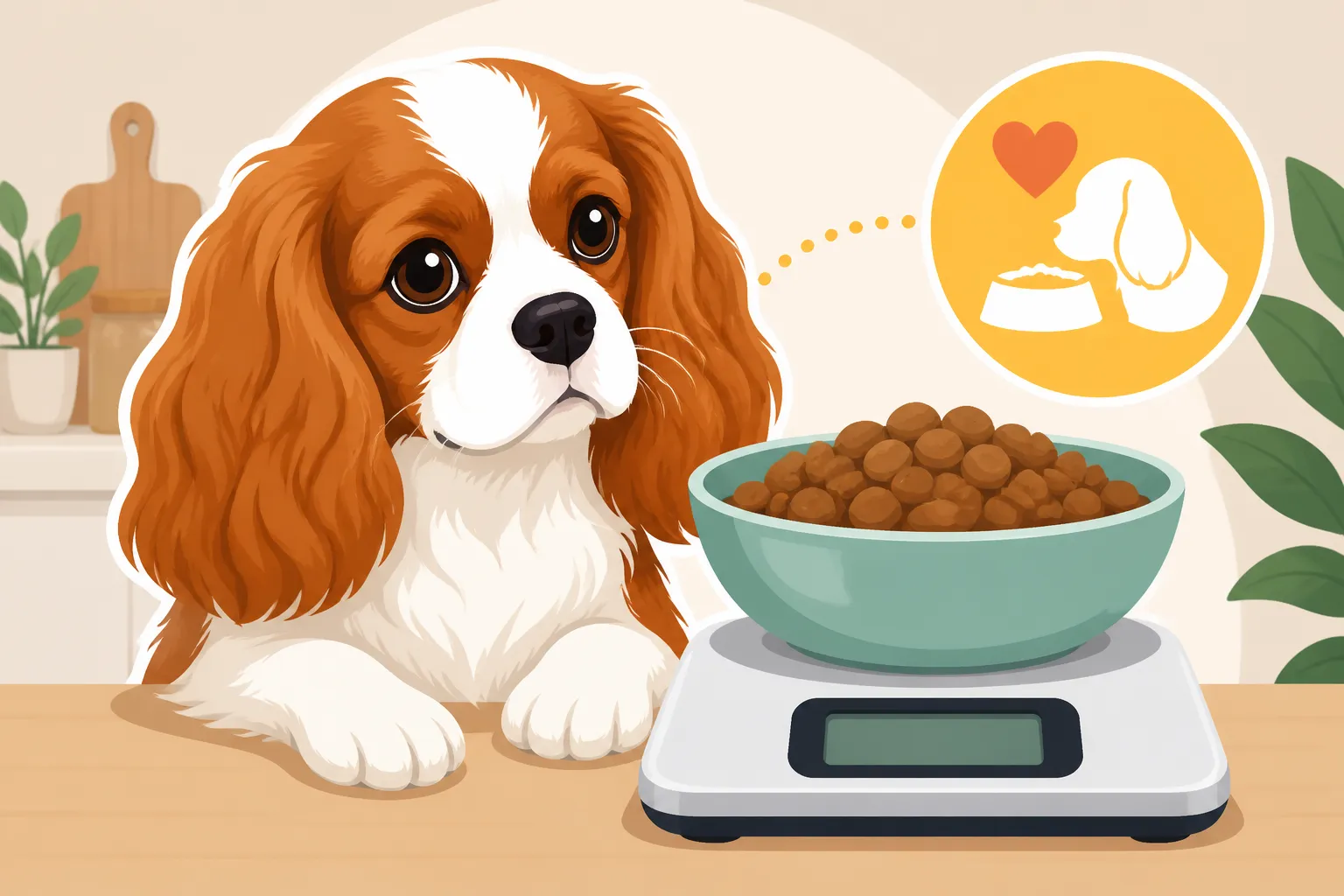
Weighing a Cavalier’s Ration on a Kitchen Scale
One of the most common frustrations Cavalier King Charles Spaniel owners face is managing their beloved dog's weight. These sweet, food-motivated companions can pack on pounds quickly, often without their humans realizing how easily a little extra kibble here and there can lead to significant health problems. This comprehensive guide will explain precisely why weighing your Cavalier's food on a kitchen scale is not just a "nice to have," but an essential practice for ensuring their long-term health and well-being.
Why Accurate Food Portions Are Critical for Your Cavalier
It's tempting to think that a small dog like a Cavalier can't really be overfed by much, but even a slight excess in calories for their tiny frame can have profound consequences. Unlike larger breeds where a few extra kibbles might go unnoticed, every gram matters when you're talking about a dog that ideally weighs between 13 to 18 pounds. Understanding this critical balance is the first step in responsible feeding.
The Cavalier's Predisposition to Weight Gain
Cavaliers, with their endearing personalities and soulful eyes, are masters of convincing us they're perpetually starving. They often have a strong drive for food, a trait that makes them excellent training partners but also prone to becoming overweight if their intake isn't strictly managed. Their relatively small size means their metabolic needs are lower than many owners expect, and their generally calm indoor demeanor often doesn't burn off calories as quickly as a more active breed might.
Even a modest gain of one or two pounds on a Cavalier can represent a significant percentage of their ideal body weight. Think about it: for a 15-pound dog, an extra two pounds is over a 13% increase in weight. For a human, that might be equivalent to gaining 20-30 pounds. This seemingly small increase places undue stress on their delicate systems and can accelerate the onset or worsening of several common Cavalier health issues.
The Link Between Weight and Cavalier Health Issues
The consequences of excess weight in a Cavalier extend far beyond just looking a bit chunky. One of the most heartbreaking realities for Cavalier owners is their predisposition to Mitral Valve Disease (MVD), a progressive heart condition. Extra weight forces the heart to work harder, putting additional strain on an already vulnerable organ. This can dramatically Cavalier Weight Gain and What It Costs the Heart, making a condition that might have been manageable for years progress much faster.
Beyond heart health, Cavaliers can also suffer from orthopedic issues like luxating patellas (slipping kneecaps) and hip dysplasia. Carrying excess weight exacerbates these joint problems, leading to increased pain, reduced mobility, and potentially requiring expensive surgeries or lifelong pain management. Overweight dogs are also at higher risk for conditions such as diabetes, certain cancers, and even a decreased tolerance for heat, which can be particularly dangerous for a brachycephalic-leaning breed.
The Inaccuracy of Scoop Feeding
Many dog food bags come with a handy little scoop, or we simply use a kitchen measuring cup. The problem is, these methods are notoriously inaccurate. A "cup" of kibble can vary wildly depending on how densely packed it is, the shape of the kibble itself, and whether you're meticulously leveling it off or giving a generous "heaping" scoop. Most people, even with the best intentions, tend to overfill.
Think about it this way: one study showed that using a standard 1-cup measuring scoop, dog owners consistently overfed by up to 20% on average. For a Cavalier whose daily calorie needs might only be around 300-400 calories, an extra 20% every single day adds up to a staggering amount of unnecessary calories over weeks and months. This continuous slight overfeeding is the silent culprit behind many Cavaliers slowly, imperceptibly, gaining weight year after year until it becomes a serious health concern.
Understanding Your Cavalier's Calorie Needs
Before you can weigh your Cavalier's food, you need to know how much to weigh. This isn't a one-size-fits-all number, and it certainly isn't a static figure that remains the same throughout their entire life. Taking the time to understand the nuances of their caloric requirements is an investment in their health.
Factors Influencing a Cavalier's Daily Calories
A Cavalier's daily caloric needs are influenced by a cocktail of individual factors. Their age is a primary one: a rapidly growing The Weight a Cavalier Reaches at Six Months needs more calories per pound of body weight than a sedentary adult. Similarly, a Feeding a Senior Cavalier Less Food will have reduced metabolic needs as their activity naturally slows down.
Activity level plays a huge role. Is your Cavalier a couch potato who enjoys short, leisurely strolls around the block, or are they an active companion who enjoys longer walks and playful romps in the park? An active dog will naturally burn more calories. Their spay/neuter status also affects their metabolism; typically, spayed or neutered dogs have lower caloric needs and are more prone to weight gain, making Cutting a Cavalier's Calories After the Spay a common necessity. Beyond these, every dog has an individual metabolism, much like people, meaning two Cavaliers of the same age and activity level might still have slightly different needs.
Finding the Right Starting Point on Food Labels
Dog food labels are a starting point, but they should never be taken as gospel, especially for small breeds like Cavaliers. The feeding guidelines are usually broad recommendations based on weight ranges and can lead to significant overfeeding or underfeeding if not carefully interpreted. While they often suggest "cups per day," as we've discussed, this can be wildly inaccurate.
What you really want to look for on a food label is the "kcal/cup" or "kcal/gram" information, usually found in a small print section, often within the nutritional analysis or feeding guide. This number tells you the actual caloric density of the food. Once you have this, and your vet has given you an ideal daily calorie target, you can calculate the exact amount in grams or cups (though grams are preferred for precision). If you're using a fresh food delivery service like Ollie, they often provide pre-portioned meals based on your dog's specific profile, which simplifies this process immensely, but even then, understanding the underlying caloric value is beneficial.
Consulting Your Vet for Personalized Guidance
The absolute best resource for determining your Cavalier's ideal weight and caloric intake is your veterinarian. During annual check-ups, your vet will perform a thorough physical examination, assess your Cavalier's body condition score (BCS), and discuss their lifestyle. They can provide a personalized calorie target based on your dog's unique needs, taking into account factors like age, activity, and any underlying health conditions.
It's especially crucial to consult your vet if your Cavalier has specific health concerns, such as heart disease. Managing the weight of a Cavalier with MVD is paramount, and your vet or a veterinary cardiologist can provide precise dietary recommendations. They can help you understand What an Overweight Cavalier Weighs and set realistic goals for achieving and maintaining their optimal body condition. Don't hesitate to ask them to calculate your dog's specific daily caloric needs in grams for the food you're currently feeding – it takes the guesswork out entirely!
The Benefits of Using a Kitchen Scale for Feeding
Once you commit to weighing your Cavalier's food, you'll wonder how you ever managed without it. This simple habit brings a wealth of advantages, from unparalleled accuracy to significant long-term health and financial benefits. It's a small change that yields enormous returns for your beloved companion.
Precision and Consistency in Every Meal
The primary benefit of using a kitchen scale is the sheer precision and consistency it brings to your Cavalier's diet. Every meal becomes an exact, measured portion, eliminating the guesswork that often leads to accidental overfeeding. Whether it's morning or evening, Monday or Friday, your Cavalier receives precisely the same amount of food, ensuring their caloric intake aligns perfectly with their needs.
This precision is particularly crucial if your Cavalier is on a weight management plan. If you're trying to help them shed a few pounds, a scale ensures you're consistently feeding the correct reduced portion. Conversely, if your vet recommends a slight increase for a lean, active dog, the scale guarantees that increase is exact, rather than an estimation that could quickly become too much. This unwavering consistency removes a major variable in their diet, making it easier to track their progress and adjust as needed.
Better Health Outcomes and Longevity
By providing consistent, accurate portions, you're directly contributing to better health outcomes and potentially a longer, more comfortable life for your Cavalier. Preventing obesity means reducing the strain on their heart, joints, and other organ systems. This proactive approach can significantly delay or mitigate the impact of breed-specific health issues. For example, maintaining an ideal weight can help Whether Diet Slows a Cavalier's Heart Disease by keeping unnecessary stress off their cardiovascular system.
A properly portioned diet helps support optimal body condition, which means healthier joints, better mobility, and more energy for play and daily activities. It can also help manage conditions like pancreatitis or diabetes by stabilizing their caloric intake and preventing sudden spikes from inconsistent feeding. A well-nourished Cavalier, neither over nor underfed, is a resilient Cavalier.
Cost Savings and Reduced Waste
While a kitchen scale itself is a small investment, the long-term cost savings can be surprisingly significant. When you're feeding precisely, you're not accidentally overfilling the bowl, which means your bag of dog food lasts exactly as long as it's supposed to. This prevents you from running out prematurely and needing to buy new food more often than necessary.
Beyond food costs, consider the potential savings on veterinary bills. Many health issues that Cavaliers face, particularly joint problems and heart disease, are exacerbated by obesity. By preventing or managing excess weight through accurate feeding, you can potentially reduce the frequency or severity of vet visits, prescription medications, or even costly surgeries down the line. It's a smart, economical approach to pet care that pays dividends in both health and finances.
How to Weigh Your Cavalier's Food Ration
Weighing your Cavalier's food doesn't require any advanced culinary skills or complicated equipment. It's a straightforward process that quickly becomes second nature. With the right tools and a few simple steps, you'll be a pro at precision feeding in no time.
Choosing the Right Kitchen Scale
The most important tool for this job is a reliable digital kitchen scale. While analog scales exist, their accuracy for small measurements, like a Cavalier's kibble portion, is often lacking. A digital scale provides precise readouts, usually to the gram, which is exactly what you need. Look for one that can easily switch between grams and ounces, though grams are generally preferred for measuring kibble due to their finer increment.
Consider the scale's capacity; most kitchen scales handle several pounds, which is more than enough. Ease of cleaning is also a plus – a flat, wipeable surface is ideal for quick cleanup in case of spills. You don't need a fancy chef's model; a basic, affordable digital scale from a retailer like Amazon or one of their house brands will do the trick perfectly. I personally use one that cost less than twenty dollars and it's been going strong for years!
Step-by-Step Guide to Weighing Kibble
Once you have your scale, the process is incredibly simple.
-
Determine the Target Weight: This is the crucial first step. Based on your vet's recommendation and the caloric density of your dog's food, you should have a target weight for their daily ration in grams. If your food label only provides "cups per day," you'll need to do a one-time conversion. Weigh an actual "cup" of your specific kibble multiple times to get an average weight in grams, then adjust that figure to match your Cavalier's total daily calorie needs. For instance, if your vet says your Cavalier needs 350 kcal/day and your kibble is 350 kcal/cup, and one cup of your kibble weighs 100 grams, then your daily target is 100 grams. If you feed twice a day, each meal would be 50 grams.
-
Place the Bowl on the Scale and Tare: Put your Cavalier's empty food bowl directly on the digital kitchen scale. Turn the scale on, and then press the "tare" or "zero" button. This will reset the scale to zero, effectively subtracting the weight of the bowl so you're only measuring the food.
-
Add Kibble Slowly: Begin adding your Cavalier's kibble to the bowl. It's easiest to do this with a small scoop or by pouring slowly from the bag. Watch the digital display carefully as you add the food. Stop when the number on the scale matches your target weight in grams. It might take a little practice to get the hang of adding just the right amount without going over, but you'll become a pro quickly.
For example, if your Cavalier needs 85 grams of food per day and you feed two meals, you'd weigh out 42.5 grams for breakfast and 42.5 grams for dinner. Don't stress about being exact to the decimal point; rounding to the nearest half gram is usually sufficient.
Incorporating Treats and Supplements into the Daily Calorie Count
It's easy to forget that treats, even small ones, contribute to your Cavalier's overall caloric intake. For a small dog, even a few extra treats can represent a significant percentage of their daily calories, completely undermining your carefully weighed meals. It's vital to remember that treats are not "free calories."
Always read the labels on your treats for their caloric information. Many treat packages will list "kcals per treat" or "kcals per gram." If you're giving training treats throughout the day, like those you might find on Chewy, make sure you know their caloric value. Then, adjust your Cavalier's main meal portion downward to account for those treat calories. For example, if your Cavalier's daily target is 350 kcals and they've had 50 kcals worth of treats, their meals for the day should total 300 kcals. This mindful approach ensures that even with treat rewards, your Cavalier remains within their healthy caloric budget. Treats That Fit a Cavalier's Small Ration are essential here.
| Feature | Scoop Feeding | Kitchen Scale Feeding |
|---|---|---|
| Accuracy | Low, highly variable | High, precise to the gram |
| Consistency | Inconsistent, depends on user technique | Excellent, repeatable every time |
| Weight Management | Difficult, prone to accidental over/underfeeding | Easy, supports precise weight goals |
| Impact on Health | Higher risk of obesity-related issues | Lower risk of obesity, better long-term health |
| Food Waste | Potential for significant food waste due to overfilling | Efficient, minimizes food waste |
| Time/Effort Involved | Quick, but requires constant estimation | Adds a few seconds for exact measurement |
| Cost Implications | Potentially higher long-term vet bills, more frequent food purchases | Lower long-term vet bills, efficient food usage |
Maintaining Ideal Weight and Adapting the Ration Over Time
Achieving your Cavalier's ideal weight through precise feeding is a fantastic accomplishment, but it's not a set-it-and-forget-it task. A dog's needs change over time, and regular monitoring and adjustments are key to ensuring they remain in peak condition throughout their lives.
Regular Weight Checks and Body Condition Scoring
Even with precise weighing, it's essential to regularly check your Cavalier's actual body weight and condition. Weekly or bi-weekly weigh-ins at home can help you spot any trends before they become significant. A small digital pet scale is ideal, but you can also weigh yourself, then weigh yourself holding your Cavalier, and subtract the difference.
Beyond the number on the scale, mastering Body Condition Scoring (BCS) is invaluable. This involves visually assessing your Cavalier and gently feeling their ribs, spine, and waist. You should be able to Feeling a Cavalier's Ribs Under Feathering with gentle pressure, and they should have a discernible waist when viewed from above and a tuck-up when viewed from the side. Your vet can show you how to accurately score your dog, usually on a scale of 1-9, aiming for a 4 or 5. Learning this skill allows you to make subtle adjustments to their food ration even without a vet visit.
Adjusting the Ration for Life Stages and Activity Changes
Your Cavalier's caloric needs are a dynamic target. A growing puppy transitioning from Whether a Cavalier Needs Puppy Food Past Ten Months to adult food will require careful monitoring as their rapid growth phases slow down. Similarly, an older Cavalier will likely become less active, necessitating a reduction in their daily calories to prevent weight gain. How Much to Feed an Adult Cavalier Daily will be different for different ages.
Always be prepared to adjust. If you notice your Cavalier becoming more sedentary during winter months, a slight reduction in their weighed ration might be appropriate. Conversely, if they're particularly active during summer hikes, a small, temporary increase could be needed. Illness or recovery from surgery can also temporarily alter their needs, making veterinary consultation essential for precise adjustments. The beauty of weighing their food is that these adjustments can be incredibly precise.
Troubleshooting Common Feeding Challenges
Despite your best efforts, you might encounter some common feeding challenges. One frequent complaint is a Cavalier who seems constantly hungry, always begging for more. First, ensure your current ration is truly appropriate for their ideal weight and activity. If it is, consider increasing the frequency of meals (e.g., three smaller meals instead of two larger ones) or using puzzle toys and slow feeders to make mealtime last longer and feel more satisfying. Often, they're not truly hungry, just looking for mental stimulation or attention. Remember, Why a Bowl Left Down Makes a Cavalier Fat quickly.
If your Cavalier refuses food, especially after being a good eater, this is always a red flag that warrants a vet visit to rule out underlying health issues. Sometimes, a change in food texture or flavor can help, but avoid constantly switching foods, which can lead to digestive upset. Adding a small amount of low-sodium broth or a vet-approved topper can sometimes entice a reluctant eater, but always account for the added calories. For multi-pet households, managing food guarding or ensuring each dog gets their specific weighed portion might require feeding in separate rooms or using crates.
Disclaimer
This article is for general informational purposes only and does not constitute professional advice. Laws, prices and regulations vary by location and change over time. Consult a qualified professional for guidance on your specific situation.