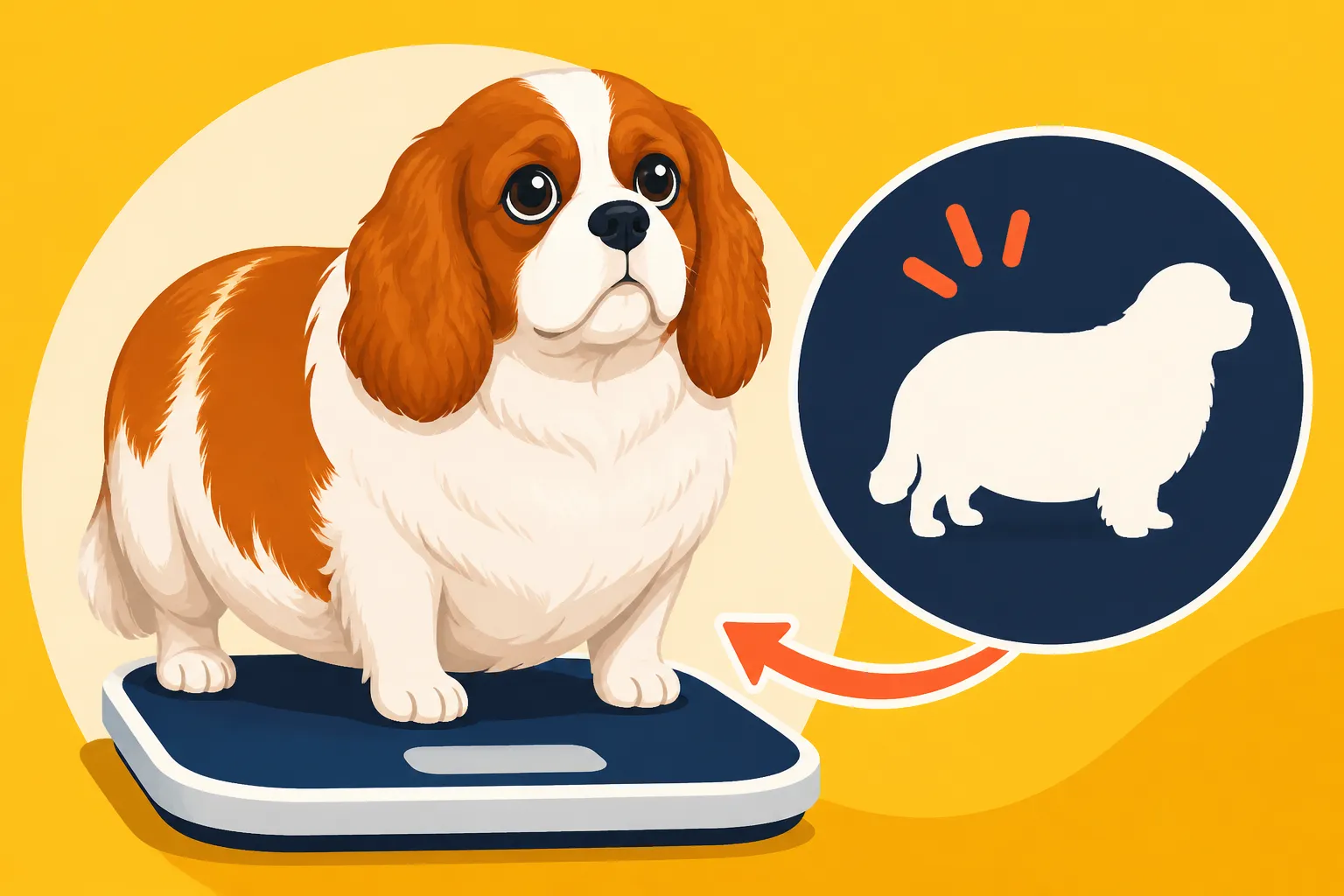
What an Overweight Cavalier Weighs
It's incredibly easy for our beloved Cavalier King Charles Spaniels to put on a few extra pounds, often without us even noticing until it's become a real problem. Their sweet, pleading eyes are masters of persuasion, and their luxurious coats can cleverly hide a widening waistline. This guide will help you understand precisely what constitutes an overweight Cavalier, how to spot the subtle (and not-so-subtle) signs, and why keeping them at a healthy weight is absolutely crucial for their long-term well-being.
Understanding Your Cavalier's Ideal Weight Range
When you think about your Cavalier's weight, it’s natural to immediately jump to the numbers on the scale. However, relying solely on a specific weight range can be misleading because every dog is an individual, even within the same breed. What's "ideal" for one Cavalier might be too heavy or too light for another.
The AKC Standard and Reality
The breed standard for the Cavalier King Charles Spaniel typically suggests a weight range of around 13 to 18 pounds (approximately 5.9 to 8.2 kg). This range serves as a general guideline, but it’s important to remember that it encompasses a variety of bone structures and individual builds. You might have a Cavalier who is naturally dainty and fine-boned, for whom 15 pounds is already pushing the upper limit of their healthy weight. On the other hand, a more substantial, heavier-boned Cavalier might comfortably carry 18 pounds without being overweight.
The issue often arises when owners use the upper end of the standard as a target for every dog. If your Cavalier is meant to be on the smaller side, perhaps their parents were both closer to the 13-pound mark, pushing them up to 17 or 18 pounds represents a significant amount of excess weight for their frame. It’s not just about fitting into a range; it’s about what looks and feels healthy for your specific dog. This is where a more personalized approach comes into play, one that looks beyond just the number.
Think of it like people: two individuals can both be 5'8", but one might be slender with a small frame, while the other is more muscular and broad-shouldered. Their ideal healthy weights would naturally differ. The same principle applies to our Cavaliers. A healthy Cavalier should look agile and have a distinct shape, not a continuous barrel from neck to tail.
The Body Condition Score BCS
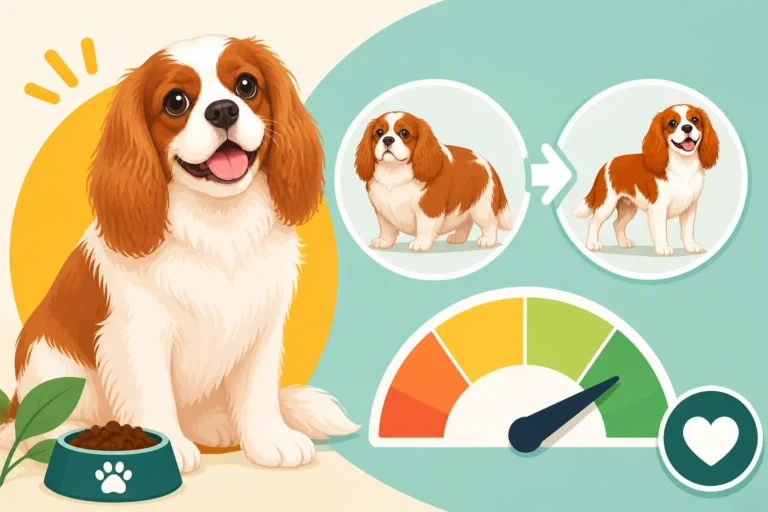
Because a static number on the scale doesn't tell the whole story, veterinarians and seasoned dog owners often rely on something called the Body Condition Score, or BCS. This is a far more accurate way to assess whether your Cavalier is at a healthy weight, underweight, or overweight. The BCS involves both looking at your dog and feeling their body. It helps you understand the amount of fat cover over their bones.
A BCS typically uses a 9-point scale, where 1 is emaciated and 9 is morbidly obese, with 4-5 being the ideal. You’ll be looking for three key areas:
- Ribs: You should be able to easily feel your Cavalier’s ribs with just light pressure from your fingertips, almost like feeling the back of your hand. You shouldn't necessarily see them prominently, but they shouldn't be hidden under a thick layer of fat either. If you have to press hard to feel them, or can't feel them at all, your Cavalier is likely carrying too much weight. This is a critical indicator, especially since their long fur can make Feeling a Cavalier's Ribs Under Feathering a bit tricky.
- Waist: When looking down at your Cavalier from above, you should see a distinct "waist" — an indentation behind their rib cage, before their hips. If their body forms a straight line from ribs to hips, or bulges out, that’s a clear sign of excess weight.
- Abdominal Tuck: When looking at your Cavalier from the side, their abdomen should tuck up slightly from their chest, not hang down or be parallel to the ground. A sagging or rounded belly is a common sign of being overweight.
Here's a simplified breakdown of the BCS:
| BCS Score | Description | What to Feel/See | Implication |
|---|---|---|---|
| 1-2 | Underweight/Emaciated | Ribs, spine, pelvic bones easily visible from a distance; no discernible fat; obvious muscle loss. | Seek veterinary advice for weight gain. |
| 3 | Thin | Ribs easily palpable and perhaps visible; prominent waist; minimal abdominal fat. | Slightly lean, often acceptable for very active dogs. |
| 4-5 | Ideal | Ribs easily palpable without excess fat; visible waist when viewed from above; abdominal tuck from the side. | Perfect! Maintain this condition. |
| 6-7 | Overweight | Ribs palpable with slight difficulty due to fat cover; less prominent or absent waist; slight abdominal sag. | Weight loss recommended. |
| 8-9 | Obese | Ribs difficult to feel under thick fat; no waist; obvious abdominal distention; heavy fat deposits over the back and tail base. | Urgent weight loss and vet intervention needed. |
Regularly checking your Cavalier's BCS is far more valuable than simply weighing them. It helps you to catch weight creep early and ensures you're aiming for a healthy body composition rather than just a number. Maintaining an ideal BCS is vital for preventing serious health issues, particularly for a breed prone to cardiac problems, as Cavalier Weight Gain and What It Costs the Heart can escalate rapidly when extra pounds are involved.
Recognizing the Signs of an Overweight Cavalier
Sometimes, the changes in a Cavalier's weight can be so gradual that we hardly notice them day-to-day. After all, they’re masters of looking adorable regardless of their shape! However, there are both visual and behavioral cues that can signal your beloved companion is carrying too much weight. Learning to spot these early can make a big difference in their long-term health.
Visual Cues and Physical Changes
The most obvious signs of an overweight Cavalier are visual, though their beautiful, long coats can be incredibly deceptive. Many owners are genuinely surprised when a groomer or vet points out their dog’s weight, simply because the feathering creates an illusion of a more slender physique.
- Loss of Waistline: As discussed with the BCS, an overweight Cavalier will lose that distinct indentation behind their ribs when viewed from above. Their body will start to look more like a straight cylinder, or even bulge outward in the middle.
- Rounded or Broadened Appearance: Instead of an elegant, proportionate frame, an overweight Cavalier might appear more "stocky" or "broad." Their back might seem wider, and their overall silhouette less refined.
- Heavier Face and Neck: Fat isn’t just stored around the body. You might notice your Cavalier’s face appears fuller, their jowls more pronounced, or they develop a thicker neck. This can even impact breeds that are already predisposed to breathing issues. For a Cavalier, while not typically a severely brachycephalic breed, extra weight can exacerbate any tendencies towards labored breathing, especially if they are also Whether a Cavalier Is a Brachycephalic Breed.
- Difficulty Feeling Ribs and Spine: This is a key tactile cue. If you can’t easily feel their ribs or the bumps of their spine without digging your fingers in, there’s too much fat covering them. Don't let their silky fur fool you into thinking they are just "fluffy." Gently run your hands over their sides and back. If it feels like a soft, squishy cushion, rather than distinct bones, it's time to assess their diet.
- Fat Deposits: Look for extra padding around the base of their tail, over their hips, and in their groin area. These are common places for fat to accumulate.
Remember, a Cavalier's charming feathering can easily obscure these changes. What looks like a full, healthy coat might actually be hiding significant weight gain.
Behavioral Shifts
Beyond the physical changes, an overweight Cavalier often displays behavioral changes that impact their quality of life. These shifts are just as important to observe, as they indicate a decrease in vitality and comfort.
- Lethargy and Reduced Playfulness: Perhaps your Cavalier used to greet you at the door with exuberant wiggles and zoomies, but now they offer a more subdued tail wag and prefer to stay on the sofa. Overweight dogs simply have less energy. Carrying extra pounds is physically demanding, making them less inclined to run, jump, or engage in active play.
- Getting Tired Easily: Even on short walks, an overweight Cavalier might pant more heavily, lag behind, or seem to tire out much quicker than before. They might even lie down during a walk, indicating their body is struggling with the exertion. This reduced stamina is a red flag.
- Reluctance to Jump or Use Stairs: Jumping onto the sofa, getting into the car, or navigating stairs might become noticeably harder or even painful. The added weight puts immense strain on their joints, especially their knees and hips, which are already vulnerable in Cavaliers. This can quickly lead to conditions like Early Arthritis in a Cavalier's Elbows or exacerbate existing joint issues. You might notice them hesitating before attempting a jump or looking for alternative routes.
- Increased Panting or Difficulty Breathing: Extra fat around the chest and neck can restrict lung function, making it harder for your Cavalier to breathe, especially after even mild exertion or in warmer weather. You might notice them panting more frequently or heavily, even when at rest.
- Changes in Grooming Habits: Overweight Cavaliers may struggle to reach certain areas of their body for self-grooming, leading to matted fur or skin issues in hard-to-reach places.
If you notice any combination of these visual and behavioral signs, it's a strong indication that your Cavalier might be carrying too much weight.
Health Implications of Excess Weight
This isn't just about aesthetics; excess weight in a Cavalier can lead to a cascade of serious health problems, significantly impacting their quality of life and potentially shortening their lifespan. It's a cruel irony that our desire to spoil them with treats can actually cause them harm.
- Exacerbation of Mitral Valve Disease (MVD): This is perhaps the most critical concern for Cavaliers. MVD is almost ubiquitous in the breed, and extra weight puts an immense strain on the heart, forcing it to work harder. This accelerates the progression of heart disease. Why an Overweight Cavalier Fails Faster is a stark reality. An already compromised heart struggles even more to pump blood through a larger body, leading to earlier onset of symptoms like coughing, fatigue, and even heart failure.
- Joint Problems and Arthritis: Cavaliers can be prone to patellar luxation (slipping kneecaps) and hip dysplasia. Excess weight adds significant stress to these joints, increasing pain, inflammation, and the progression of arthritis. What might have been a manageable mild condition can become debilitating with extra pounds. Diets Aimed at an Old Cavalier's Knees can become a necessity rather than an option.
- Diabetes: Just like in humans, obesity is a major risk factor for developing diabetes in dogs.
- Pancreatitis: This painful and potentially life-threatening inflammation of the pancreas is often triggered or worsened by high-fat diets and obesity. An overweight Cavalier is at a higher risk of experiencing Pancreatitis in a Cavalier, which can lead to chronic digestive issues.
- Respiratory Issues: While not as pronounced as in true brachycephalic breeds, even a slightly overweight Cavalier can experience more difficulty breathing due to fat compressing the airways.
- Reduced Heat Tolerance: Overweight dogs struggle more in warm weather as their body's ability to regulate temperature is compromised.
- Increased Anesthesia Risk: If your Cavalier needs surgery for any reason, being overweight significantly increases the risks associated with anesthesia.
- Decreased Quality of Life: Beyond specific diseases, an overweight Cavalier simply experiences a lower quality of life. They can't play as much, they're often in discomfort, and their overall joy is diminished.
Understanding these profound implications underscores why addressing weight concerns promptly and proactively is one of the kindest things you can do for your Cavalier. It’s an act of love to help them maintain a healthy weight and enjoy as many comfortable, active years as possible.
What Constitutes "Overweight" on the Scale for a Cavalier
Many Cavalier owners find themselves in a bit of a quandary when it comes to the numbers on the scale. The breed standard typically gives a range, say 13 to 18 pounds. So, if your Cavalier weighs 17.5 pounds, and the standard says up to 18 pounds, surely they're fine, right? Not necessarily. This is where understanding individual ideal weight versus a broad breed average becomes crucial.
Beyond the Standard: When 18 Pounds Becomes Too Much
The general breed standard of 13-18 pounds is meant to cover a wide array of individual builds within the Cavalier King Charles Spaniel breed. However, it's not a blanket recommendation that every Cavalier should aim for the higher end of that scale. For many Cavaliers, especially those with a daintier frame, anything over 15 or 16 pounds might already put them into the overweight category for their specific body.
Let's consider a common scenario: you have two Cavaliers. Luna is very fine-boned, always been slender, and at her prime healthy weight, she was about 13.5 pounds. Jasper, on the other hand, is a sturdier boy, broader in the chest, and his ideal weight was always closer to 16 pounds.
If Luna starts to creep up to 17 pounds, she is now 3.5 pounds heavier than her ideal. For a small dog like a Cavalier, 3.5 pounds is a substantial amount of extra weight – it could be an increase of over 25% of her body mass! Even though 17 pounds is technically within the breed standard, for Luna, it's a significant burden. Her ribs are harder to feel, her waist is disappearing, and she's panting more on walks.
Now, if Jasper also gains 3.5 pounds, bringing him to 19.5 pounds, he's now over the breed standard's upper limit. For him, the weight gain might be less visually dramatic because of his larger frame, but the health implications are the same, if not worse, as he's carrying even more excess.
The takeaway here is that you must look at your individual Cavalier and their ideal weight, which is often established when they are a healthy adult. Don't simply consider them "fine" because their weight falls somewhere within the general breed range. A Cavalier who should be 14 pounds but is now 17 pounds is indeed overweight, even if 17 pounds is acceptable for a different, larger-framed Cavalier. It's all about the percentage increase relative to their optimal weight.
Calculating the "Overweight" Threshold
So, how do you determine if your Cavalier is "overweight" in a more quantifiable way, beyond just feeling their ribs? A common guideline used by veterinarians is that a dog is considered:
- Overweight if they are 15-20% above their ideal healthy body weight.
- Obese if they are more than 20% above their ideal healthy body weight.
Let’s apply this. Suppose your veterinarian has determined, based on your Cavalier's build and bone structure, that their ideal healthy weight is 15 pounds.
- To find 15% of 15 pounds: 0.15 * 15 = 2.25 pounds.
- So, if your Cavalier weighs 15 + 2.25 = 17.25 pounds, they would be considered overweight.
- To find 20% of 15 pounds: 0.20 * 15 = 3 pounds.
- If your Cavalier weighs 15 + 3 = 18 pounds or more, they would be classified as obese.
As you can see, even a few pounds on a small dog like a Cavalier can quickly push them from ideal to overweight or even obese. This is why regular veterinary check-ups are so important, as your vet can accurately assess their ideal weight and help you set realistic goals.
It's also why understanding How Much to Feed an Adult Cavalier Daily is paramount. Many owners unwittingly overfeed, often by simply eyeballing portions or not realizing how calorie-dense some kibbles can be. Even leaving a bowl of food down all day can contribute to weight gain, as discussed in Why a Bowl Left Down Makes a Cavalier Fat, because it encourages grazing and often leads to consuming more calories than needed. Each tiny bit extra adds up.
Taking Action: Helping Your Cavalier Achieve a Healthy Weight
Discovering your Cavalier is overweight can be a bit disheartening, but it's also a powerful call to action. The good news is that with a thoughtful approach and commitment, you can absolutely help your sweet companion get back to a healthy weight, improving their comfort, energy levels, and extending their lifespan.
Veterinary Consultation and Diet Planning
The very first and most crucial step in any weight loss journey for your Cavalier is a visit to your veterinarian. Do not try to embark on a significant diet plan without professional guidance. Here’s why:
- Rule Out Medical Conditions: Weight gain can sometimes be a symptom of an underlying medical condition, such as hypothyroidism or Cushing's disease. Your vet will perform a thorough examination and potentially blood tests to ensure there isn't a medical reason for the weight gain that needs to be addressed before or alongside dietary changes.
- Determine Ideal Weight and Calorie Needs: Your vet will assess your Cavalier's current weight, body condition score, and overall build to determine their ideal healthy weight. From there, they can calculate a safe and effective daily calorie target for weight loss. This isn't just about feeding less; it's about feeding smartly.
- Prescription Diets vs. Over-the-Counter Options: For many overweight dogs, a prescription weight-loss diet is the most effective solution. These foods are specifically formulated to be lower in calories but still provide all the necessary nutrients, often with higher fiber to help your dog feel full. They are usually only available through your vet. However, your vet might also recommend specific high-quality, over-the-counter diets that are lower in fat and calories. They can guide you on portion sizes for these as well. Many of these specialized diets can be conveniently ordered through online retailers like Chewy or Amazon, allowing you to have them delivered right to your door once your vet has made a recommendation.
- Creating a Tailored Plan: Your vet will help you create a realistic and gradual weight loss plan. Rapid weight loss can be unhealthy and difficult to sustain. They'll advise on how much weight your Cavalier should lose per week or month, and schedule follow-up appointments to monitor progress and make adjustments. This comprehensive approach is much more effective than simply guessing, helping you avoid pitfalls described in Slimming a Cavalier Without Cutting Meals without proper guidance.
Exercise and Activity Adjustments
Exercise is a vital component of weight loss, but it needs to be introduced carefully, especially if your Cavalier has been inactive for a while or has existing health concerns.
- Start Slowly and Gradually Increase: If your Cavalier is significantly overweight, intense exercise from day one can be dangerous and put excessive strain on their joints and heart. Begin with short, gentle walks. A typical starting point might be two 10-15 minute walks per day.
- Monitor for Fatigue and Breathing: Watch your Cavalier closely during and after exercise. If they are panting heavily, lagging, or seem in distress, shorten the duration or intensity. This is especially important for Cavaliers, who are prone to heart conditions. Understanding Walk Length for a Cavalier With a Murmur is key; for a Cavalier with a known heart murmur, exercise needs to be even more carefully managed under veterinary guidance to avoid overexertion.
- Incorporate Play: Beyond leash walks, engage your Cavalier in gentle play sessions indoors or in a securely fenced yard. Soft toy fetches, short games of tug (if appropriate for their mouth and neck), or even hide-and-seek with their favorite toy can burn calories and mental energy without over-stressing their body.
- Consider Low-Impact Activities: Swimming can be an excellent low-impact exercise for dogs, putting minimal stress on joints while providing a good workout, if your Cavalier enjoys it and it's safe for them.
- Consistency is Key: Regular, consistent exercise is far more beneficial than sporadic bursts of activity. Aim for daily activity, even if it's just a couple of short strolls around the block.
Smart Snacking and Treats
Treats are often the silent culprits behind Cavalier weight gain. Those irresistible puppy-dog eyes make it so hard to say no! But controlling treats doesn't mean eliminating joy; it means making smarter choices.
- Reduce Quantity, Not Love: You don't have to stop giving treats altogether. Just drastically reduce the number and size of treats. Break one small biscuit into several tiny pieces. Your Cavalier likely cares more about the act of receiving a treat than the size of it.
- Choose Low-Calorie Options: Swap out high-calorie, sugary, or fatty treats for healthier alternatives. Many pet stores and online platforms like Chewy or Amazon offer Low-Calorie Treats for a Cavalier That Gains Easily specifically designed for weight management. Look for treats that are grain-free, low in fat, and made with natural ingredients.
- Vegetables and Fruits as Treats: Many Cavaliers love small pieces of raw carrots, green beans, apple slices (without seeds), or cucumber. These are low in calories and packed with nutrients. Always check with your vet about which human foods are safe for dogs.
- Use Mealtime Kibble: If you're using treats for training, consider using a portion of their daily kibble allowance. This way, you're rewarding them without adding extra calories.
- Avoid Table Scraps: This is perhaps the most important rule. Human food, even in small amounts, can be incredibly calorie-dense for a small dog. A single bite of cheese or a piece of chicken skin is equivalent to a significant portion of their daily calorie intake. These also often contain high sodium or fat, which is particularly bad for a Cavalier with potential heart issues.
- Consider Fresh Dog Food Options: Some fresh dog food brands, like Ollie, offer pre-portioned meals based on your dog's specific calorie needs and weight goals. This can take the guesswork out of feeding and ensure consistent portion control, aiding in weight loss.
Helping your Cavalier lose weight is a marathon, not a sprint. It requires patience, consistency, and a partnership with your veterinarian. But the reward – a healthier, happier, more active Cavalier – is priceless.
Disclaimer
This article is for general informational purposes only and does not constitute professional advice. Laws, prices and regulations vary by location and change over time. Consult a qualified professional for guidance on your specific situation.