The Safe Rate for a Cavalier to Lose Weight
Many Cavalier owners find themselves facing a common, frustrating challenge: their sweet, food-motivated companions seem to pack on the pounds far too easily. It's a worry, knowing that extra weight can silently undermine their health. This guide is here to help you navigate the process of helping your Cavalier lose weight at a safe, sustainable pace, ensuring their well-being without risking their health further.
Understanding Why Weight Loss Matters for Your Cavalier
It's tempting to think a few extra pounds on a small dog like a Cavalier isn't a big deal, but nothing could be further from the truth. These charming little dogs, with their naturally loving and often sedentary indoor lifestyles, are particularly susceptible to weight gain. This isn't just about aesthetics; it has serious implications for their overall health and lifespan.
The Hidden Dangers of Excess Weight
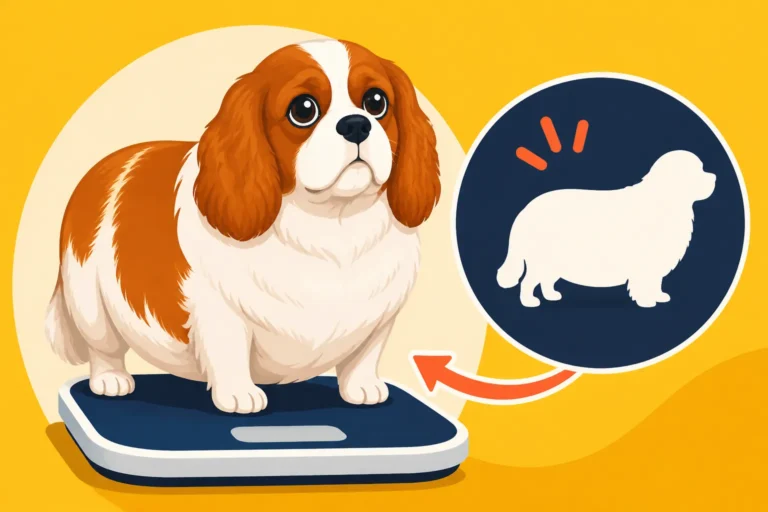
While a little fluff might seem cute, excess weight puts a significant strain on a Cavalier's delicate system. Their predisposition to certain health conditions, especially heart issues, means every extra pound matters. An overweight Cavalier's heart has to work harder, accelerating the progression of conditions like Mitral Valve Disease in the Cavalier King Charles Spaniel. Imagine carrying a heavy backpack all day, every day – that's what even a few extra pounds can feel like for your dog. This added stress can lead to earlier onset or more rapid progression of heart disease, making it a critical concern for Cavalier owners. We often hear about how crucial it is to keep them lean for their joints, but for Cavaliers, the cardiac impact is perhaps even more pressing. Beyond the heart, those extra pounds also put undue pressure on their small joints, which can exacerbate issues like patellar luxation or early arthritis. They might also struggle with respiratory issues, especially if they have any degree of brachycephalic tendencies, making breathing harder.
Why Cavaliers Are Prone to Weight Gain
It feels like Cavaliers just look at a treat and gain weight, doesn't it? There are several reasons why this breed seems to battle the bulge more than others. Firstly, they are often quite food-motivated, which means they're very good at convincing us to share our snacks or give them an extra bite of kibble. Their pleading eyes are hard to resist! Secondly, their energy levels, while present for a good romp, are generally lower than, say, a terrier or a spaniel bred for more active field work. Many Cavaliers are content with shorter walks and plenty of couch time, which means they don't burn off calories as quickly. Combine that with a small body size, meaning their caloric needs are already quite low, and it becomes a perfect storm for weight gain. It's a delicate balance, and it’s easy to misjudge how much food they truly need versus how much they want. This is particularly true once they're spayed or neutered, as their metabolism can slow even further. For more on this, you might find Why a Cavalier Gains Weight So Easily helpful.
Setting a Healthy Pace for Cavalier Weight Loss
When you realize your Cavalier needs to shed some weight, it's natural to want to see results quickly. However, just like with people, rapid weight loss can be detrimental to a dog's health. The goal is steady, sustainable progress.
The Gold Standard: One to Two Percent Body Weight Per Week
For most dogs, including our precious Cavaliers, the safest and most effective rate for weight loss is typically 1% to 2% of their current body weight per week. This might not sound like a lot, especially if your Cavalier is significantly overweight, but it's crucial for their metabolic health and to ensure they don't lose muscle mass too quickly.
Let's put this into perspective:
If your Cavalier weighs 20 pounds, a healthy weekly loss would be between 0.2 and 0.4 pounds.
If your Cavalier weighs 25 pounds, a healthy weekly loss would be between 0.25 and 0.5 pounds.
This slow and steady approach minimizes metabolic stress on their body and allows their system to adjust gradually. Trying to lose weight faster can lead to serious health complications, including liver issues, especially in smaller breeds. It also helps to prevent your dog from feeling constantly deprived, which can lead to increased begging behaviors or even scavenging. It's a marathon, not a sprint, and patience is truly a virtue here. Remember, even seemingly small amounts add up over weeks and months to significant, life-changing weight loss.
Here's a quick reference table for safe weekly and monthly weight loss targets for Cavaliers:
| Current Body Weight (lbs) | Target Weekly Loss (lbs) (1-2%) | Target Monthly Loss (lbs) (approx.) |
|---|---|---|
| 14 | 0.14 – 0.28 | 0.56 – 1.12 |
| 16 | 0.16 – 0.32 | 0.64 – 1.28 |
| 18 | 0.18 – 0.36 | 0.72 – 1.44 |
| 20 | 0.20 – 0.40 | 0.80 – 1.60 |
| 22 | 0.22 – 0.44 | 0.88 – 1.76 |
| 24 | 0.24 – 0.48 | 0.96 – 1.92 |
Recognizing When Weight Loss Is Too Rapid
How can you tell if your Cavalier is losing weight too fast? Beyond the numbers on the scale, there are visual and behavioral cues. If your Cavalier appears lethargic, has a dull coat, or seems to be losing muscle mass significantly rather than just fat (you'll notice this especially around their hips and spine, where muscle can waste away), the rate might be too aggressive. They might also seem unusually hungry or irritable.
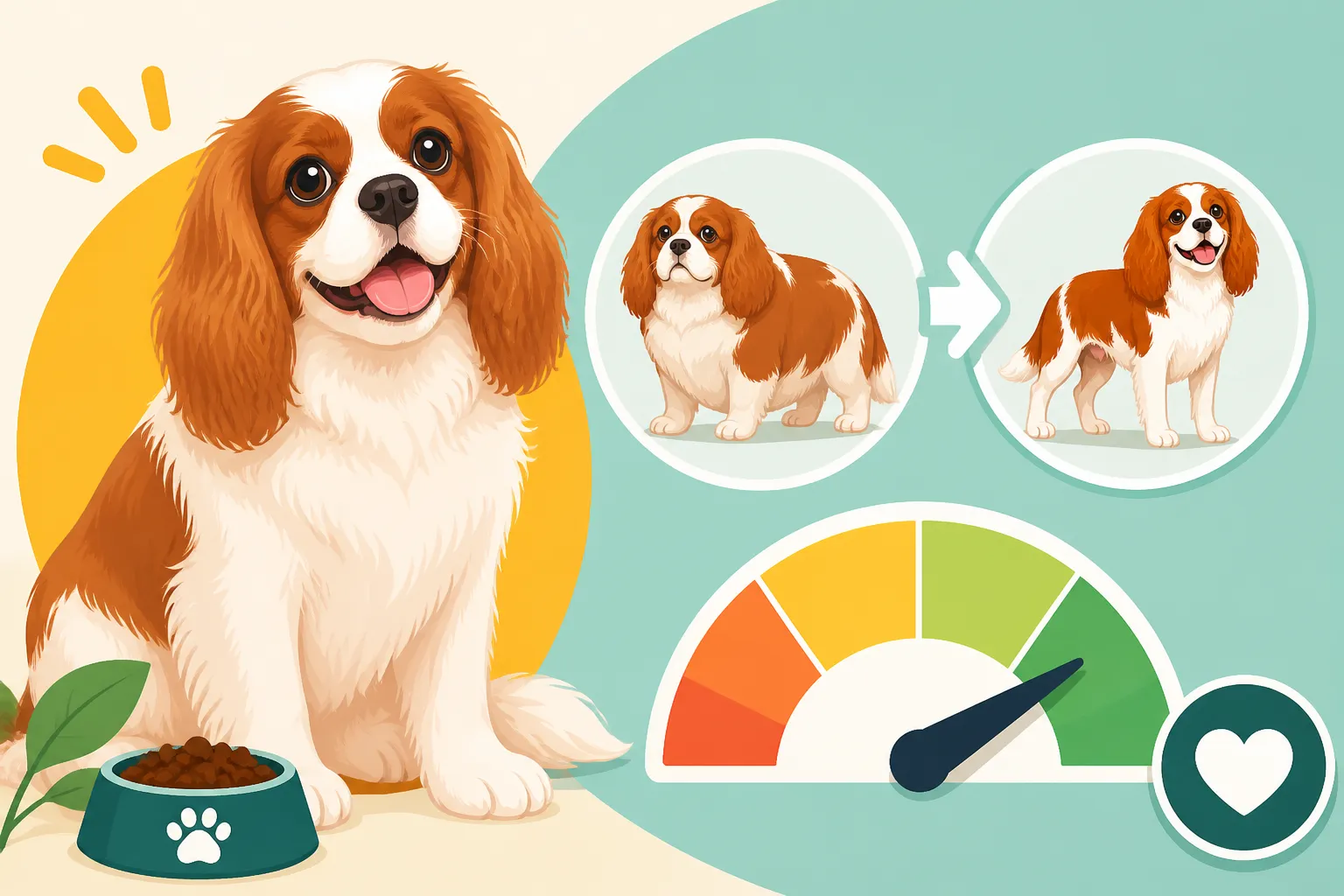
It's crucial to feel their body condition. While their lovely feathering can hide a lot, you should be able to easily feel their ribs with a thin layer of fat over them, rather than seeing them or having to press hard to find them. Their waist should be evident when viewed from above, and they should have a slight tuck-up from the side. If you're seeing ribs prominently or their spine and hip bones are sticking out, slow down the weight loss efforts immediately and consult your veterinarian. This might indicate that they are not getting adequate nutrition or that the calorie deficit is too severe.
Practical Steps to Help Your Cavalier Shed Pounds
Achieving healthy weight loss for your Cavalier isn't about drastic changes, but rather consistent, sensible adjustments to their diet and activity levels. This is where the real work, and the real love, comes in.
Rethinking Their Diet and Portion Control
The foundation of any successful weight loss plan for a Cavalier is a careful look at what they're eating. This means going beyond just the type of food and focusing intensely on the quantity.
First, talk to your vet. They are your best resource for determining your Cavalier's ideal target weight and calculating a safe, appropriate daily caloric intake for weight loss. They might recommend a specific prescription weight-management diet, which are formulated to be lower in calories but still provide all essential nutrients, helping your dog feel full longer. Many excellent prescription weight-management diets are available, often easily ordered through online retailers like Chewy. These specialized foods can make a huge difference, as they're designed to support satiety while still promoting fat loss.
Once you have a target calorie count, measure everything. And I mean everything. It's incredibly easy to overestimate portion sizes when scooping kibble. A reliable kitchen scale, easily found on Amazon, is invaluable for precise measurement. Don't rely on measuring cups, which can be inaccurate for density differences in different kibbles. Weighing the food ensures your Cavalier gets exactly the number of calories prescribed. Remember, even a small handful of extra kibble can add hundreds of calories over a week for a little dog. If you're curious about daily needs, our post on How Much to Feed an Adult Cavalier Daily can offer further insights.
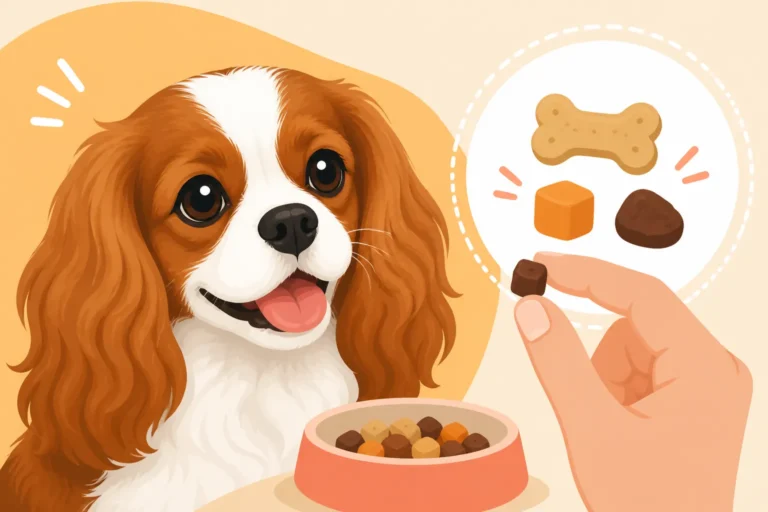
Consider breaking their daily ration into two smaller meals. This can help manage hunger and keep their metabolism ticking over. Also, rethink treats. Those high-calorie dog biscuits or scraps from your plate are often the biggest culprits in weight gain. Opt for low-calorie, healthy alternatives like plain green beans, carrot sticks, or small pieces of apple (without seeds). These can be just as rewarding without sabotaging their diet. For those who prefer fresh food options, services like Ollie can provide pre-portioned, veterinarian-formulated meals that align with calorie reduction goals, taking some of the guesswork out of measuring. And remember, Why a Bowl Left Down Makes a Cavalier Fat is a real phenomenon; free-feeding is rarely suitable for weight loss.
Incorporating Safe Exercise and Activity
Exercise is the other half of the weight loss equation. For Cavaliers, this doesn't mean marathon runs, but rather consistent, moderate activity that suits their breed and any underlying health conditions.
Start slow, especially if your Cavalier is significantly overweight or has known issues like Cavalier Knees, Hips and Joint Problems or Mitral Valve Disease in the Cavalier King Charles Spaniel. Consult your vet before significantly increasing their exercise, especially if they have a heart murmur. Gentle, regular walks are perfect. Aim for two to three short walks a day, gradually increasing the duration and pace as your Cavalier's stamina improves. A good starting point might be 15-20 minutes, gradually extending to 30 minutes.
Engage them with playtime indoors too. Fetch, gentle tug-of-war, or even hiding their kibble in puzzle toys can provide mental and physical stimulation without overexertion. These activities encourage movement and also help to combat boredom, which can sometimes lead to increased food-seeking behaviors. If your Cavalier tends to get A Cavalier That Tires on Short Walks, build up their endurance very gradually. Short, frequent bursts of activity are often better than one long, strenuous session when they are starting out. Remember that consistency is key; a little bit every day is far more effective than sporadic bursts of intense activity.
The Role of Regular Monitoring and Vet Support
Weight loss is a journey, and regular check-ins are essential to ensure your Cavalier is progressing safely and effectively.
Weekly weigh-ins: Invest in a good quality pet scale or use your home scale (weigh yourself, then weigh yourself holding your Cavalier, and subtract the difference). Track their weight diligently. This helps you monitor their progress against that 1-2% weekly target and allows you to make adjustments to their food intake or exercise plan as needed. If they hit a plateau, don't despair; it's normal. Discuss it with your vet, who might suggest a slight further reduction in calories or an increase in activity.
Body condition scoring: Beyond the numbers, regularly assess your Cavalier's body condition. Finding a Cavalier's Waist Under the Feathering can be tricky, but you should be able to feel their ribs easily without seeing them, and they should have a noticeable waist when viewed from above. Your vet can teach you how to properly assess their body condition score (BCS), which is a more accurate indicator of fat levels than weight alone, especially for a breed with varying ideal weights.
Consistent vet visits: Your veterinarian is your partner in this process. Regular follow-up appointments, beyond just The Yearly Checkup That Listens to a Cavalier's Heart, are vital to ensure their health is not being compromised by the weight loss. They can provide guidance, adjust plans, and address any concerns that arise. If you have an older Cavalier or one with existing health conditions, vet oversight is even more critical. They can also help you understand if specific health issues, like hypothyroidism, might be contributing to the weight gain and need to be addressed. It's an investment in your Cavalier's quality of life.
Common Pitfalls and How to Avoid Them
Even with the best intentions, weight loss journeys for our Cavaliers can be fraught with challenges. Understanding these common pitfalls ahead of time can help you sidestep them.
The Temptation of "Just a Little Bit"
This is perhaps the biggest saboteur of any Cavalier weight loss plan. It starts innocently enough: a small bite of cheese, a tiny piece of toast, a sliver of deli meat. "It's just a little bit," we tell ourselves, "it won't hurt." But for a small dog like a Cavalier, those "little bits" add up incredibly quickly. A single potato chip might be negligible for a human, but for a 15-pound Cavalier, it's a significant caloric intake. Many human foods are also high in sodium or fats, which are especially detrimental to a Cavalier, particularly those with or prone to heart disease. Low-Sodium Feeding for a Cavalier Heart Patient is a serious consideration.
To overcome this, cultivate a habit of awareness. Keep a mental (or even a written) log of every single thing that goes into your Cavalier's mouth, beyond their measured meals. Get the whole family on board and make sure everyone understands the importance of sticking to the plan. If you simply must give a treat, ensure it's a pre-approved, low-calorie option and factor it into their daily caloric allowance. Remember, your Cavalier doesn't understand the long-term health implications; they just know they love treats. It's up to us, as their guardians, to make the healthy choices for them, even if it feels like we're saying "no" to those adorable, pleading eyes.
Dealing with Begging and Food-Seeking Behavior
Cavaliers are masters of persuasion, especially when it comes to food. Their soulful eyes and gentle nudges can make even the strongest resolve crumble. Dealing with constant begging and food-seeking behaviors is a real challenge for many owners, but it's vital not to give in.
Firstly, ensure your Cavalier is genuinely satiated after their meals. If they're on a weight-loss diet, they might be getting a lower-calorie, higher-fiber food that helps them feel full. Splitting their daily ration into two or even three smaller meals can also help, as it reduces the time between meals and keeps their hunger at bay. For more on feeding frequency, check out Feeding a Cavalier Two Meals a Day.
Secondly, manage their environment. Don't leave human food accessible on countertops or coffee tables. Confine your Cavalier to another room or a crate during meal preparation and family mealtimes to prevent them from "hovering" and making you feel guilty. This breaks the association that begging at the table yields results.
Thirdly, redirect their attention. If they start begging, don't reward it with food. Instead, offer a brief play session, a training session where they earn a healthy treat (like a small piece of carrot), or a favorite chew toy. Sometimes, what looks like begging is actually just boredom. Ensuring they have adequate mental stimulation and exercise can reduce their desire to seek out food as entertainment. Consistency from everyone in the household is paramount here. It might be tough initially, but over time, your Cavalier will learn that begging no longer works, and healthier habits will form.
Disclaimer
This article is for general informational purposes only and does not constitute professional advice. Laws, prices and regulations vary by location and change over time. Consult a qualified professional for guidance on your specific situation.