Walk Length for a Cavalier With a Murmur
It's incredibly worrying when your beloved Cavalier King Charles Spaniel is diagnosed with a heart murmur, especially when you start wondering how it will impact something as fundamental as their daily walks. Many of us fret about whether we're doing too much, or even too little, and the conflicting advice can be overwhelming. This guide is here to walk you through understanding your Cavalier's heart condition and tailoring their exercise routine to keep them happy, active, and safe for as long as possible.
Understanding Your Cavalier's Heart Murmur and Its Impact on Exercise
When a vet first tells you your Cavalier has a heart murmur, it's natural for your mind to jump to the worst-case scenario. After all, Cavaliers are famously predisposed to Mitral Valve Disease (MVD), a progressive heart condition. But here’s the thing: a murmur isn't the disease itself; it's a sound your vet hears, indicating turbulent blood flow. That turbulence is usually caused by the mitral valve not closing properly, allowing a small amount of blood to leak backward.
What a Heart Murmur Really Means for a Cavalier
For a Cavalier, a heart murmur almost always points towards Mitral Valve Disease (MVD), which is incredibly common in the breed. It means the mitral valve, located on the left side of the heart, is degenerating and isn't closing as tightly as it should. This causes a "whooshing" sound as blood squirts backward into the atrium during contraction. The severity of this leak, and how it affects the heart's function over time, is what truly dictates your dog's prognosis and activity levels. It's a progressive disease, meaning it tends to worsen over time, but the pace of progression can vary wildly between individuals. To truly understand what's happening inside, a simple stethoscope listen, while a crucial first step, isn't enough to assess the extent of the disease or its impact. You might also want to read How Cavalier Heart Disease Progresses Stage by Stage to get a clearer picture of what to expect.
A murmur is typically graded on a scale of I to VI, with VI being the loudest. However, a loud murmur doesn't always equate to severe disease, just as a quieter murmur doesn't necessarily mean it's mild. The clinical significance is what matters. A grade II murmur could be more impactful on one Cavalier's heart than a grade IV on another's, depending on how the heart is compensating. This is why further diagnostic tests are so vital. It’s important to remember that not every Cavalier murmur immediately indicates an emergency or a need for drastic lifestyle changes; sometimes, it’s just an early warning sign that needs careful monitoring. Still, understanding Whether a Cavalier Murmur Always Means Disease can help ease some initial anxieties.
The Importance of a Proper Diagnosis
If your regular vet detects a murmur, the very next step should be a referral to a board-certified veterinary cardiologist. This specialist has the advanced training and equipment to accurately diagnose the extent of MVD. They won't just listen to the murmur; they'll perform crucial diagnostic tests that give a real picture of your Cavalier's heart health. These tests are the foundation for any exercise recommendations.
The gold standard for diagnosing MVD and staging its progression is an echocardiogram. This is an ultrasound of the heart, allowing the cardiologist to visualize the heart's chambers, valves, and blood flow in real-time. They can measure chamber sizes, assess valve leakage, and determine if the heart has started to enlarge or if fluid is backing up. An echocardiogram provides the definitive information needed to determine which stage of MVD your Cavalier is in, and this staging is critical for guiding treatment and lifestyle adjustments. Understanding What a Cavalier Echocardiogram Shows can prepare you for this important appointment. Alongside an echo, the cardiologist will often recommend chest X-rays to assess lung fields for fluid accumulation (a sign of congestive heart failure) and to get a different view of heart size and shape. These X-rays are particularly important in later stages of the disease. Sometimes, blood tests like an NT-proBNP might also be used as a screening tool or to monitor disease progression. These comprehensive diagnostics provide a complete picture, allowing for truly personalized advice regarding exercise and medication. You can find more details on Chest X-Rays in a Cavalier Heart Workup.
Why Exercise Needs Adjustment with MVD
As MVD progresses, the heart works harder to compensate for the leaky valve. Initially, it might enlarge to try and pump more blood, but eventually, this compensation can become a burden. An enlarged heart has less efficient pumping action and can lead to fluid accumulation in the lungs (congestive heart failure). When the heart isn't working optimally, your Cavalier's ability to tolerate physical exertion decreases significantly.
During exercise, the heart rate and blood pressure increase, requiring the heart to work even harder. For a healthy heart, this is no problem. For a heart compromised by MVD, this increased demand can put undue strain on an already struggling organ. It can lead to fatigue, shortness of breath, coughing, or even fainting spells. Imagine trying to run a marathon with a leaky pump – it just won't work as well, and you'll tire out much faster. The goal isn't to stop exercise entirely in most cases, but to modify it to prevent overexertion and unnecessary stress on the cardiovascular system, thereby preserving the quality of life and potentially extending it. The specific adjustments depend heavily on the stage of heart disease, as determined by a cardiologist.
Tailoring Walk Length to Your Cavalier's Heart Stage
The stage of your Cavalier's Mitral Valve Disease (MVD) is the single most important factor in determining appropriate walk lengths and exercise intensity. A diagnosis isn't a blanket sentence for inactivity; rather, it's a call for informed and thoughtful adjustment.
Early Stages (A and B1) – When a Murmur is Just a Murmur
At Stage A, there's no detectable heart disease, but the Cavalier is considered "at risk" due to breed predisposition. Exercise at this stage should be completely normal. Stage B1 means a murmur is present, but the heart has not yet begun to enlarge, and there are no clinical signs of heart failure. For many Cavaliers, this is the stage they enter around The Age a Cavalier Murmur Usually Appears. At these early stages, generally, no exercise restrictions are necessary. Your Cavalier should continue to enjoy their regular walks and play sessions.
The key here is monitoring. Even if your Cavalier is in B1, you should be observant for any changes in their energy levels, breathing, or willingness to play. Regular check-ups with your primary vet, and annual or bi-annual visits to a cardiologist, are crucial to ensure the disease isn't progressing without you knowing. At this point, the goal is to maintain a healthy weight and an active lifestyle, which actually supports overall heart health by keeping muscles strong and preventing obesity. Long walks, hikes, and playful romps in the park are usually perfectly fine. Just don't let them become completely winded, as you shouldn't with any dog.
Stage B2 – Enlarged Heart, No Clinical Signs
This is where things start to shift. In Stage B2, the heart has started to enlarge due to the increased workload from the leaky valve, but your Cavalier isn't yet showing any outward signs of congestive heart failure (like coughing, breathlessness, or fluid in the lungs). This is often the stage where medication, such as Pimobendan, is started to help the heart pump more efficiently and slow progression. You can learn more about Pimobendan for a Cavalier With an Enlarged Heart.
For Cavaliers in Stage B2, the focus moves to moderation. Strenuous, prolonged exercise should be avoided. Instead of a long, fast walk, consider shorter, more frequent strolls. The aim is to provide activity without pushing the heart too hard. A good rule of thumb is to allow your Cavalier to set the pace. If they start to lag, pant excessively, or want to stop, that's their signal. Two or three shorter, leisurely walks a day (15-20 minutes each) might be better than one long, tiring trek. Avoid activities that lead to extreme excitement or sustained high-intensity efforts, such as chasing a ball endlessly or running full-speed with other dogs for extended periods. The goal is to keep them active and engaged but within their cardiac limits.
Stages C and D – Active Heart Failure
When a Cavalier reaches Stage C or D, they are experiencing active congestive heart failure, meaning fluid is accumulating in their lungs or abdomen due to the heart's inability to pump effectively. This is a critical stage, and rigorous exercise must be severely restricted. Your Cavalier will likely be on a cocktail of medications, including diuretics, to manage the fluid.
At these advanced stages, walks are typically limited to very short, frequent potty breaks. We're talking 5-10 minutes, just enough time to do their business, maybe sniff a few interesting spots right outside the door, and then come back inside to rest. Any strenuous activity, high-stress situations, or excessive excitement can rapidly worsen their condition. The focus is entirely on comfort, minimizing stress, and adhering strictly to medication protocols. Even a quick burst of excitement, like a visitor arriving, can put a strain on their fragile heart. Owners need to be incredibly vigilant about observing their Cavalier for any signs of respiratory distress or discomfort, as this can indicate a worsening of fluid retention. It's a difficult time, and understanding How Long a Cavalier Lives in Heart Failure becomes a very real concern for many families. During this time, enrichment through calm, indoor activities is paramount, keeping their minds engaged without taxing their body. These stages often involve round-the-clock care, similar to End-Stage Heart Failure in a Cavalier.
Practical Tips for Managing Cavalier Walks with MVD
Managing exercise for a Cavalier with a heart murmur is less about hard-and-fast rules and more about careful observation and proactive care. It’s a partnership between you, your vet, and your dog.
Recognizing Signs of Overexertion
Being able to read your Cavalier's body language and recognize the subtle (and not-so-subtle) signs of overexertion is paramount, especially as their heart disease progresses. What might seem like normal panting for a healthy dog could be a warning sign for a Cavalier with MVD.
- Excessive Panting or Labored Breathing: While some panting is normal during exercise, look for panting that is heavier, more rapid, or prolonged than usual, even after stopping activity. Any sign of breathlessness, where they seem to be struggling for air, is a red flag. Pay attention to Coughing at Night in a Cavalier, as this is a classic sign of fluid build-up.
- Persistent Coughing: A soft, moist cough, especially after exertion, excitement, or when lying down, can indicate fluid in the lungs. This is a serious symptom requiring immediate veterinary attention.
- Lethargy or Reluctance to Move: If your Cavalier normally loves their walk but starts lagging behind, slowing down significantly, or even stopping and refusing to go further, they might be telling you they're struggling. You might notice they are A Cavalier That Tires on Short Walks.
- Weakness or Collapse: This is an emergency. If your Cavalier becomes weak, wobbly, or collapses during or after exercise, it means their heart is simply unable to meet the body's demands for oxygen. Seek immediate veterinary care.
- Blue-tinged Gums or Tongue: This is a sign of cyanosis, indicating a severe lack of oxygen in the blood. It’s a medical emergency. Healthy gums should be pink.
- Changes in Behavior: Some Cavaliers might become anxious, restless, or disoriented when their heart isn't getting enough oxygen. They might cling to you or seem unusually withdrawn.
If you notice any of these signs, stop the activity immediately, get your Cavalier to a cool, quiet place, and contact your vet or cardiologist right away. It's always better to be overly cautious when it comes to heart health.
Measuring and Monitoring Activity Levels
Beyond observing outward signs, you can be proactive in monitoring your Cavalier's activity and recovery. This helps you establish a baseline and notice subtle changes sooner.
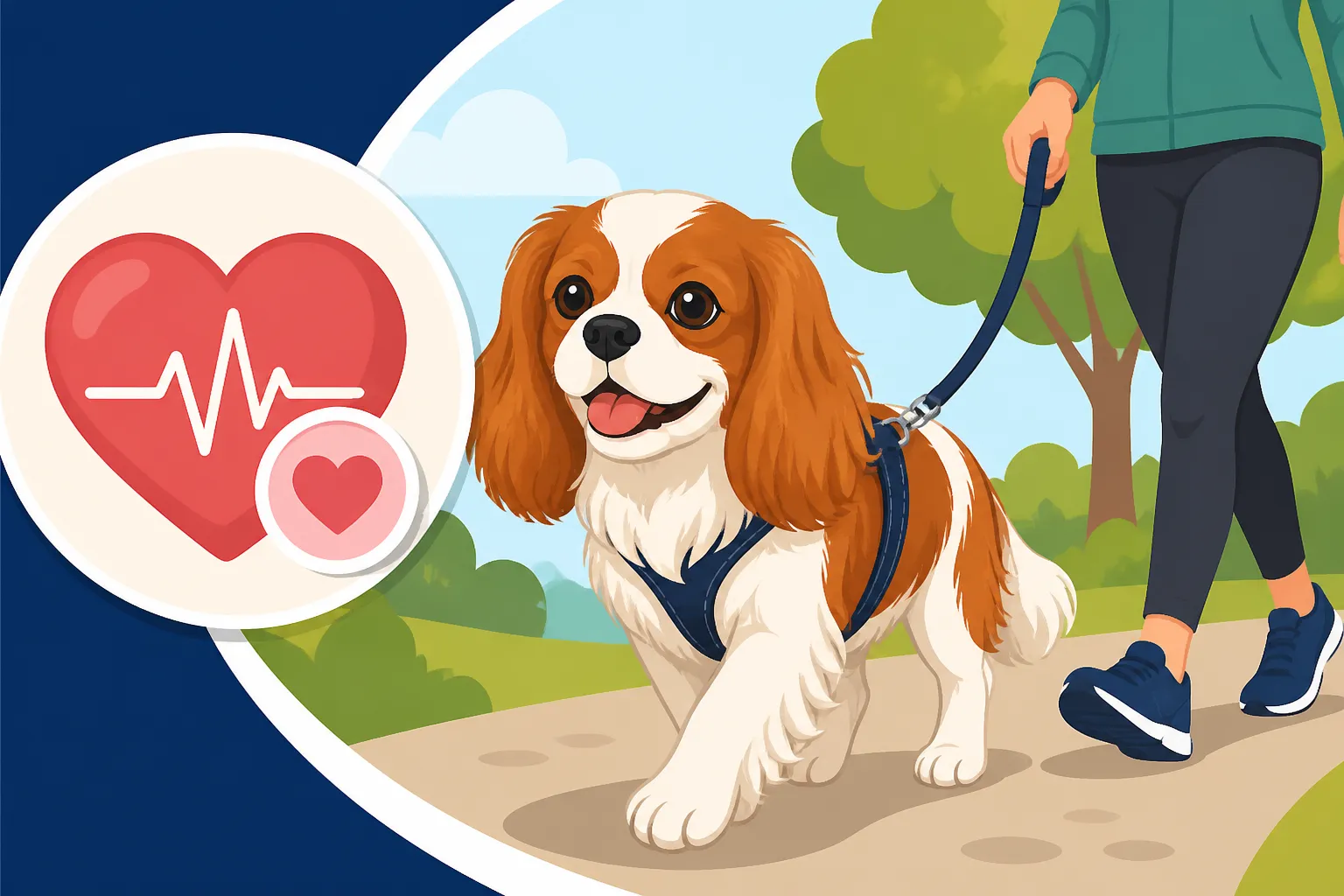
One of the simplest yet most effective ways to monitor your Cavalier's heart health at home is by regularly counting their resting respiratory rate (RRR). This is the number of breaths they take per minute while completely at rest, ideally asleep. A normal RRR for a dog is typically between 15-30 breaths per minute. A consistent increase above their normal baseline, or above 30 breaths per minute, can be an early indicator of fluid accumulation in the lungs, even before other symptoms appear. Track this daily and report any significant changes to your vet. You can learn more about Counting a Cavalier's Resting Breaths. For walks, think "quality over quantity." Short, frequent outings are almost always better than one long, exhausting one. If your Cavalier is in Stage B2 or beyond, several 10-15 minute sniff-walks around the block are preferable to a single 45-minute trek. Also, ensure your Cavalier wears a comfortable, well-fitting harness instead of a collar, especially if they tend to pull. A harness distributes pressure across their chest, preventing any strain on their neck or trachea that could exacerbate breathing difficulties or a cough. You can find a wide range of suitable harnesses for small breeds on platforms like Chewy or Amazon.
Environmental Considerations
The environment your Cavalier walks in can significantly impact their comfort and safety, particularly for those with MVD. You'll need to think about more than just the length of the walk.
- Temperature and Humidity: Cavaliers, especially those with heart conditions, struggle in heat and humidity. These conditions make it harder for their bodies to regulate temperature and increase the demand on their cardiovascular system. Avoid walking during the hottest parts of the day in summer. Early mornings or late evenings are best. In cooler climates, be mindful of extreme cold, which can also be a stressor.
- Terrain: Stick to flat, even ground. Steep hills, stairs, or rough terrain require more effort and can quickly exhaust a compromised heart. A leisurely stroll through a park or around your neighborhood on paved paths is ideal.
- Excitement and Stress: Try to keep walks calm and predictable. Busy parks, dog runs with boisterous dogs, or areas with a lot of loud noises can increase your Cavalier's heart rate and stress levels unnecessarily. Aim for quiet, familiar routes where they can sniff and explore without feeling overwhelmed. If your Cavalier reacts strongly to other dogs or people, consider walking at off-peak hours or choosing less populated areas.
Beyond the Walk – Holistic Support for Your Cavalier's Heart Health
Managing walk length is just one piece of the puzzle when caring for a Cavalier with Mitral Valve Disease. A holistic approach focusing on their overall well-being is crucial for supporting their heart health and ensuring a good quality of life.
Importance of Weight Management
Maintaining an ideal body weight is arguably one of the most impactful things you can do for your Cavalier with MVD. Extra pounds put an immense strain on the heart, forcing it to work harder to pump blood to a larger body mass. For a Cavalier whose heart is already compromised, this additional burden can accelerate disease progression and worsen symptoms. It's a harsh reality that Cavalier Weight Gain and What It Costs the Heart is considerable.
Cavaliers are notorious for gaining weight easily; they love their food, and those soulful eyes can make it hard to resist giving extra treats. However, keeping them lean is vital. Work with your vet to determine an ideal weight and calculate the appropriate daily calorie intake. This might involve carefully measuring their food, opting for low-calorie treats, and adjusting portions as needed. You can explore prescription cardiac diets or fresh-food services like Ollie that offer carefully portioned meals. Even for regular kibble, checking ingredient labels on brands available at Chewy or your local pet store for appropriate fat and protein content is important. It's a continuous effort, but one that directly benefits their heart. You want to be able to feel their ribs easily, even with their beautiful feathering.
Regular Veterinary Check-ups and Medications
Strict adherence to your veterinarian's and cardiologist's recommendations for check-ups and medications is non-negotiable. MVD is a progressive disease, and consistent monitoring allows your veterinary team to track its progression, adjust medications, and intervene promptly if complications arise.
Regular cardiologist visits, typically every 6-12 months depending on the stage, will involve repeat echocardiograms and chest X-rays. These tests help determine if the heart is stable, if it's enlarged further, or if fluid is starting to build up. Missing these appointments means missing critical opportunities to optimize your Cavalier's treatment. Medication, once prescribed, must be given exactly as directed, without skipping doses. These drugs, whether it's Pimobendan, diuretics, or others, are working together to support heart function, reduce fluid, and improve your Cavalier's quality of life. If you have concerns about the cost or logistics of medication, discuss them openly with your vet; there might be generic options or assistance programs available. Learning What a Cavalier Cardiologist Visit Involves can help you prepare for these crucial appointments.
Mental Stimulation
When physical exercise needs to be limited, especially in later stages of MVD, mental stimulation becomes incredibly important for your Cavalier's overall well-being. A bored dog can become anxious or destructive, which only adds stress to their system.
Engage their minds with puzzle toys, snuffle mats, or slow feeders, which can make meal times last longer and provide a mental challenge. Teaching new, low-impact tricks that can be done while lying down, or practicing existing ones, keeps their brains active. Scent games, where you hide treats around the house for them to find, are also excellent for mental enrichment and don't require much physical exertion. Even simply spending quiet time together, gentle petting, or a short grooming session can be mentally soothing and reinforce your bond. Rotating toys, providing new chew items, and offering different textures to explore can also help prevent boredom. The goal is to keep them engaged and happy without putting any extra strain on their precious heart.
| Heart Disease Stage | Walk Length Recommendation | Intensity | Key Considerations |
|---|---|---|---|
| Stage A | Normal activity, long walks, vigorous play. | High | No disease present, but monitor. Maintain healthy weight. |
| Stage B1 | Normal activity, long walks, vigorous play. | High | Murmur present, no heart enlargement. Monitor for changes. |
| Stage B2 | Moderate, shorter, more frequent walks (15-20 mins, 2-3x/day). Avoid strenuous activity. | Moderate | Heart enlargement present. Likely on medication. Observe for fatigue. |
| Stage C | Very short, frequent potty breaks (5-10 mins, 3-4x/day). No strenuous activity. | Low | Active heart failure. Strictly adhere to medication. Avoid excitement. |
| Stage D | Minimal activity, very short potty breaks. Focus on comfort. | Very Low | End-stage heart failure. Prioritize comfort and rest. |
Disclaimer
This article is for general informational purposes only and does not constitute professional advice. Laws, prices and regulations vary by location and change over time. Consult a qualified professional for guidance on your specific situation.