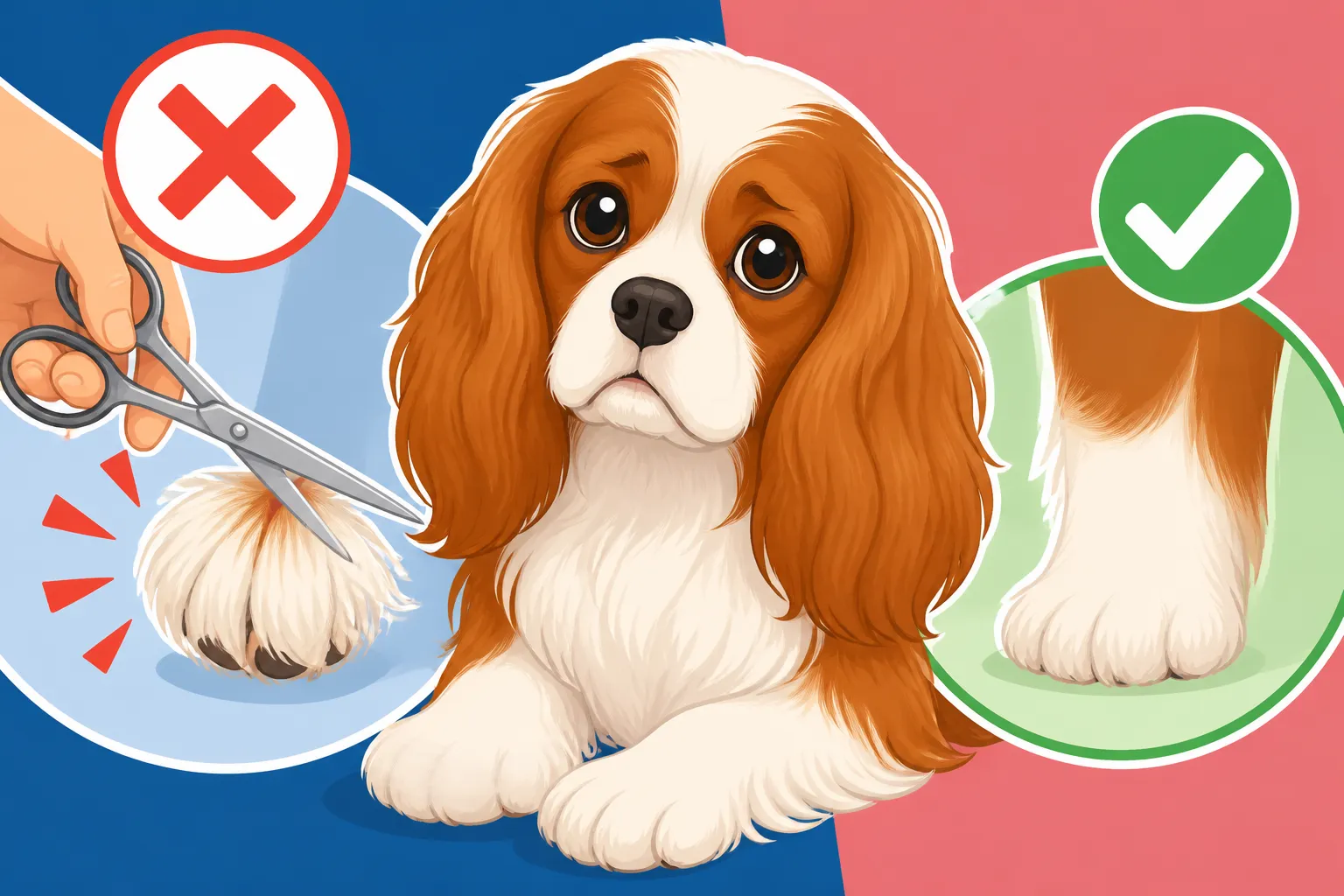
Why a Groomer Should Not Scissor a Cavalier’s Feet
It's a common scenario: you pick up your beloved Cavalier King Charles Spaniel from the groomer, and while their coat looks magnificent, you notice something a little… off about their feet. Perhaps they look neatly rounded, almost like a little pom-pom. While the groomer likely had the best intentions, tidying up a Cavalier's feet with scissors often goes against the breed's natural structure and can actually remove important protection. This guide will delve into why that beautiful, natural "hare foot" is best left untouched by the shears and how to communicate your preferences effectively.
The Cavalier's Natural Foot: Designed for Function, Not Trimming
When we talk about a Cavalier King Charles Spaniel's feet, we're not just discussing a cute paw; we're talking about a specific anatomical structure designed for the breed's historical purpose and comfort. Understanding this natural design is the first step in appreciating why scissoring them down isn't ideal.
The Natural "Hare Foot" and Its Purpose
Cavaliers possess what is known as a "hare foot." Unlike the compact, rounded "cat foot" seen in some breeds, a hare foot is characterized by its longer middle toes, giving the paw an overall elongated, oval shape. Think of it like a rabbit's foot – built for springing and agility. This isn't a fault; it's a feature. The natural spread of these longer toes provides better balance and traction, especially when navigating uneven terrain, whether that's a grassy park or a slightly slippery kitchen floor.
This foot structure also plays a role in distributing weight more evenly across the paw, which can be beneficial over a lifetime of walks and playful dashes. When a groomer attempts to "neaten" this natural shape by scissoring the hair too short around the toes or between the pads, they can inadvertently alter the foot's natural contours. This can make the foot appear less substantial and can expose the delicate skin of the paw to more direct impact and environmental stressors. It’s about preserving the natural design that helps your Cavalier move gracefully and comfortably through their world.
The Role of Feathering on Cavalier Feet
Beyond the bone structure, the Cavalier's signature long, silky feathering extends to their feet, creating a natural fringe around and often between their paw pads. Many well-meaning owners (and some groomers) see this as "messy" and feel compelled to trim it. However, this feathering serves several important functions. It acts as a natural cushion, protecting the paw pads and toes from rough surfaces, hot pavements, or cold ground. Think of it as built-in insulation and shock absorption for those delicate joints and pads.
Furthermore, this hair contributes to grip, especially on natural surfaces. While excessively long hair between the pads might collect debris or create traction issues on very smooth floors, the general rule for Cavaliers is to maintain the natural feathering on the top and sides of the foot. Only the hair directly protruding from between the pads and touching the ground should be considered for careful, minimal trimming for hygiene and to prevent matting, and even then, with great care. Removing too much of this feathering leaves the foot exposed and can ironically lead to more problems than it solves, like dryness, cracking, or irritation from allergens or chemicals on the ground. Cavalier Nail, Paw and Foot Feathering Care goes into even more detail about keeping these areas healthy.
Why the Scissor Can Harm More Than Help Your Cavalier's Feet
While the intent behind scissoring a Cavalier's feet is usually to make them look tidier or more aesthetically pleasing, this practice often runs counter to the breed standard and can introduce potential health and comfort issues. It’s a classic case of sometimes less really is more.
Aesthetic Versus Breed Standard
The Cavalier King Charles Spaniel breed standard, set by kennel clubs around the world, specifically calls for feet that are "compact, well-padded and feathered." This describes a natural, almost untouched appearance, where the feathering is an integral part of the foot's presentation. It doesn't ask for a neatly clipped, sculpted foot that might be desirable in breeds like Poodles or some Terriers. Scissoring the top and sides of a Cavalier's foot often results in a look sometimes disparagingly called "poodle feet" or "cat feet" by Cavalier enthusiasts. This doesn't just clash with the breed's intended aesthetic; it removes a characteristic that contributes to the Cavalier's soft, natural charm.
When you see a beautifully presented Cavalier in a show ring, their feet will appear full and feathered, in harmony with the rest of their flowing coat. This isn't about laziness; it's about adhering to what makes a Cavalier, well, a Cavalier. Trimming these essential tufts of hair changes their silhouette and can make their dainty paws look unnaturally small or even club-footed. It's a subtle but significant detail that truly knowledgeable groomers and Cavalier owners understand and respect.
Potential Health and Comfort Implications
Beyond aesthetics, there are practical reasons to avoid scissoring your Cavalier's feet heavily. The feathering and natural length of the hair on and around the paws offer protection. Imagine walking barefoot on hot asphalt or through sharp gravel; those longer hairs provide a buffer. When this natural cushioning is scissored away, your Cavalier's paw pads and the sensitive skin between their toes become far more vulnerable to injury, irritation from chemicals, or extreme temperatures. Care & Nutrition: Cavalier Eye and Face Cleaning and other grooming sections often touch on the importance of natural protection.
Furthermore, improper or overly aggressive scissoring can lead to skin irritation or ingrown hairs. If the hair is cut too short, especially between the pads, it can cause itching and excessive licking, potentially leading to hot spots or infections. For Cavaliers, whose joints, particularly their knees, need all the support they can get (you can read more about Cavalier Knees, Hips and Joint Problems and Loose Kneecaps in a Thirteen-Pound Cavalier), maintaining natural foot structure and cushioning can be surprisingly important. The foot's natural spread also aids in grip on various surfaces. If the feathering is completely shorn, especially on older dogs, they might find themselves slipping more on hardwood or tile floors, potentially straining their joints or leading to falls. It's a risk that's simply not worth taking for a cosmetic trim.
Communicating Your Preferences to Your Groomer
The key to ensuring your Cavalier's feet are cared for correctly is clear communication with your groomer. Not every groomer is intimately familiar with the nuances of every single breed's standard and functional grooming needs. Many operate on a general "tidy up" principle, which works well for some breeds, but not always for our Cavaliers.
Finding a Cavalier-Knowledgeable Groomer
The ideal scenario is to find a groomer who has specific experience with Cavalier King Charles Spaniels, or at least with toy spaniel breeds that have similar coat and foot characteristics. These groomers will understand the "hare foot" and the importance of leaving the feathering natural. Don't be afraid to ask direct questions before your appointment. Ask if they are familiar with the Cavalier breed standard for feet, or if they commonly groom Cavaliers. You might also ask to see pictures of their previous Cavalier grooms, specifically looking at how the feet are handled.
Word-of-mouth referrals from other Cavalier owners in your local community or breed clubs can be invaluable. A groomer recommended by a reputable Cavalier breeder or enthusiast is often a safe bet. Sometimes, you might pay a little more for a specialist, but the peace of mind knowing your dog is in knowledgeable hands is worth it. For general grooming advice, including what brushes and combs your Cavalier needs, check out The Brush and Comb a Cavalier Coat Needs. You can find many of these essential tools on platforms like Chewy or Amazon, helping you maintain your Cavalier's coat properly between professional grooms.
Clear Instructions for Foot Care
Once you've found a groomer, or even if you're sticking with your current one, be explicit about your preferences for your Cavalier's feet. Don't assume they know. A simple phrase like, "Please do not scissor or trim the hair on top of or around my Cavalier's feet. I'd like to keep the natural feathering according to the breed standard," can go a long way.
If there's any concern about hair between the pads for hygiene, you can specify: "You can carefully trim the hair that protrudes between the paw pads to be level with the pads themselves, but please leave the top and side feathering untouched." Bringing a photo of a Cavalier with well-maintained, natural feet can also be incredibly helpful as a visual guide. This level of detail ensures there's no misunderstanding. For instance, sometimes a Cavalier might get matted between the pads, which needs careful attention, but this is different from a general scissor trim of the entire foot. Mats in a Cavalier's Armpits and Groin and Mats Behind a Cavalier's Ear Leather also cover how to handle matting in other sensitive areas. A high-quality diet, perhaps from a brand like Ollie, can also contribute to overall coat health, which includes healthy feathering that is less prone to matting.
Here’s a quick comparison of what to aim for:
| Feature | Scissored Cavalier Foot (Often Undesirable) | Natural Cavalier Foot (Breed Standard & Functional) |
|---|---|---|
| Shape | Rounded, small, sometimes "cat-like" | Elongated, oval, "hare-like" |
| Feathering on Top | Clipped short, sculpted | Long, flowing, integral with leg feathering |
| Hair Between Pads | Often completely shorn, exposing skin | Trimmed only if excessively long for hygiene |
| Protection | Reduced against elements and rough surfaces | Maximum cushioning and insulation |
| Traction | Potentially diminished on smooth floors | Enhanced on varied terrains |
| Aesthetic | Can look unnatural, out of breed type | Elegant, harmonious with overall Cavalier look |
By being specific and advocating for your Cavalier's natural beauty and functional needs, you're ensuring they remain comfortable, healthy, and true to their wonderful breed characteristics. After all, their natural design is part of what makes them so special.
Disclaimer
This article is for general informational purposes only and does not constitute professional advice. Laws, prices and regulations vary by location and change over time. Consult a qualified professional for guidance on your specific situation.