Cavalier Nail, Paw and Foot Feathering Care
Cavaliers have the sweetest faces and the most luxurious coats, but let's be real: those adorable, feathered paws can be a magnet for trouble. From overgrown nails clicking on your hardwood floors to muddy clumps between their toes after a rainy walk, keeping those little feet pristine can feel like a never-ending battle. This guide is here to walk you through everything you need to know about keeping your Cavalier's nails, paw pads, and beautiful foot feathering healthy, comfortable, and problem-free, saving you from constant cleaning and potential vet visits.
Understanding the Cavalier Paw
Before we dive into the nitty-gritty of care, let's take a moment to truly appreciate and understand the unique structure of your Cavalier's paw. It's not just a cute little foot; it's a complex system designed for movement, balance, and interaction with their world, all while being adorned with that signature Cavalier feathering.
The Anatomy of a Cavalier's Foot
A Cavalier King Charles Spaniel's foot is a marvel of small-dog engineering. At the very core, you have a bone structure remarkably similar to our own hands and feet, adapted for canine locomotion. Each toe has its own set of bones, leading up to the strong, yet delicate, metacarpal bones within the paw itself.
Then there are the nails. Unlike human nails, which grow flat, dog nails are cylindrical and designed for gripping and digging. Inside each nail is a delicate area called the "quick." This quick contains blood vessels and nerves, and it grows along with the nail. If you cut into the quick, it’s painful and will bleed, which is why many owners dread nail trims. Cavaliers typically have four main nails on each foot, plus a dewclaw on the inside of each front leg, which is essentially a thumb. Some Cavaliers might even have dewclaws on their back legs, though this is less common. These dewclaws, often overlooked, never wear down naturally and can easily snag and tear if not kept short, leading to painful injuries.
The paw pads are another critical component. Your Cavalier has one large carpal pad higher up on their front legs (though it doesn't always contact the ground), a large metacarpal pad in the center of their main paw, and digital pads on each of their four toes. These pads are tough, thickened skin, acting as shock absorbers and providing traction. They protect the delicate bones and joints inside, but they are far from invincible. They can still be burned by hot pavement, cut by sharp objects, or dried out by harsh weather.
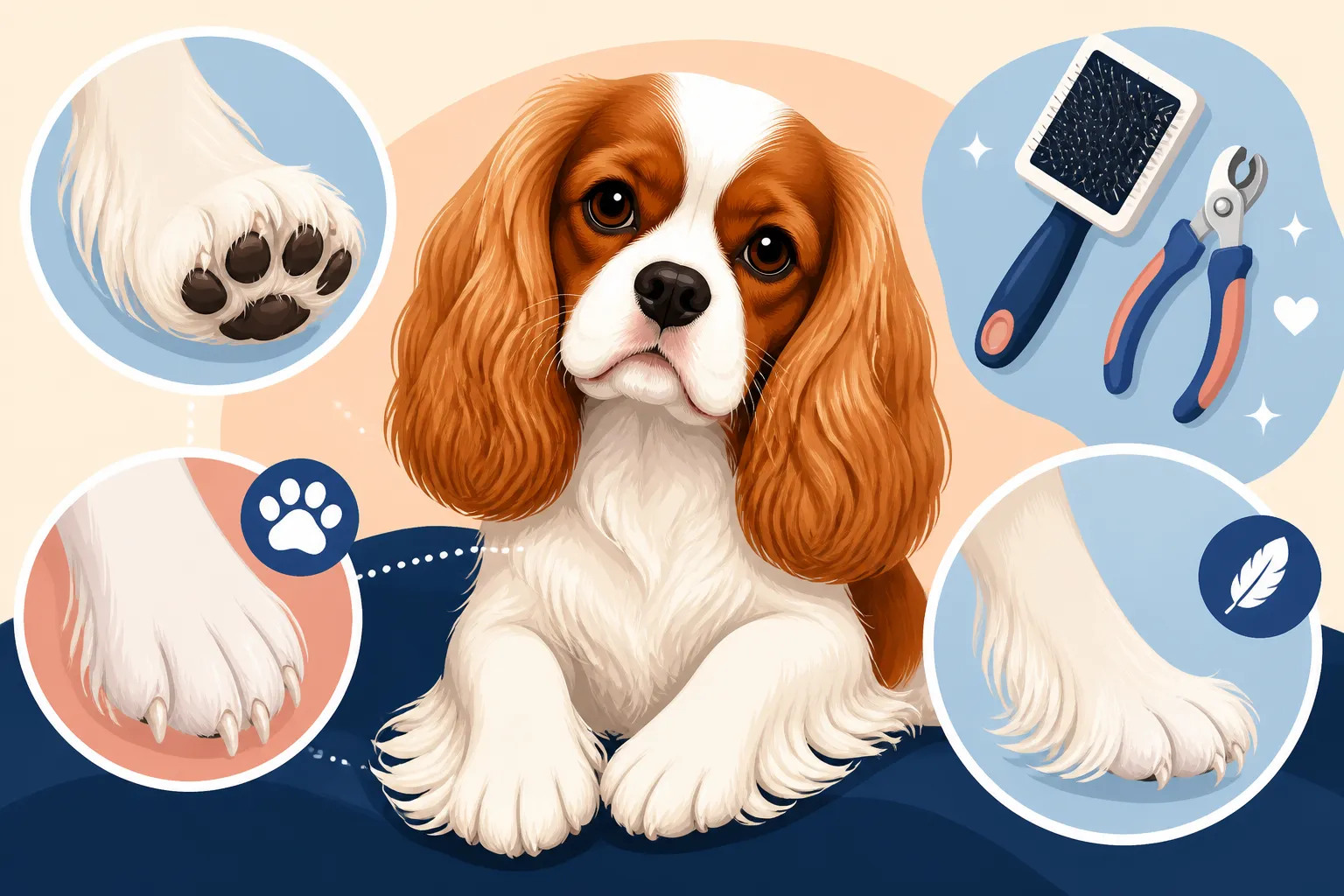
Finally, we have the crowning glory: the feathering. Cavaliers have a beautiful, silky single coat, and this extends to their feet. Long, soft hair grows around their toes, between their paw pads, and up their legs. While stunning, this feathering requires consistent attention. It can easily collect dirt, burrs, grass seeds, and even ice balls in winter. More problematically, the hair between their paw pads can grow long enough to create a dense mat, almost like a separate mini-paw, which hinders traction and can cause discomfort or pain as it pulls on the skin.
Why Cavalier Paws Need Specific Care
Given their anatomy and their lifestyle, Cavalier paws aren't just pretty – they demand specific, dedicated care to ensure your dog's long-term health and comfort. Ignoring these needs can lead to a cascade of problems that impact their overall well-being.
One of the biggest reasons for specific care is their indoor/outdoor lifestyle. While Cavaliers love to snuggle on the sofa, they also adore their walks, playtime in the yard, and adventures outdoors. This means their paws are constantly exposed to various surfaces and elements – from your clean floors to muddy trails, hot sidewalks, or icy paths. Each environment poses a different challenge to their paw pads and feathering.
The length of their feathering is another critical factor. That lovely, flowing hair can become a nuisance if not managed. When the hair between the paw pads grows too long, it pushes the toes apart, which can affect their natural gait and put undue stress on the small bones and joints in their feet. Imagine trying to walk with marbles stuck between your toes all day; it's uncomfortable and can eventually lead to more serious orthopedic issues. Long feathering also reduces traction, making them more prone to slipping on smooth surfaces, which can be particularly dangerous for a breed already susceptible to conditions like Loose Kneecaps in a Thirteen-Pound Cavalier.
Perhaps most importantly, neglecting nail care can have profound negative impacts. Overgrown nails don't just click annoyingly on your floors; they actually change the mechanics of your Cavalier's foot. When nails are too long, they push the toes upwards, forcing the foot to splay and shift the dog's weight onto the back of the paw, rather than the pads. Over time, this can lead to painful joint issues, deformities in the toes, and even affect the alignment of their legs, potentially exacerbating or contributing to conditions like Cavalier Hip Dysplasia and Early Arthritis. It’s a subtle but persistent stress that adds up, often resulting in unnecessary pain and reduced mobility as they age.
The Importance of Regular Nail Trims
I know, I know. Nail trims can be a source of stress for both you and your Cavalier. Many owners dread it, and many dogs aren't exactly lining up for the experience. But truly, understanding why regular nail trims are so vital might just give you the motivation to make it a consistent, positive part of your dog's routine. It's not just about aesthetics; it's fundamental to their health and comfort.
Health Implications of Overgrown Nails
Let's not sugarcoat it: overgrown nails are a major health hazard for your Cavalier. When those nails get too long, they curl under, pressing into the paw pad. This isn't just uncomfortable; it can be incredibly painful, feeling like walking with a sharp pebble constantly digging into your foot. The nails can even grow so long that they eventually pierce the paw pad, leading to deep infections that are difficult to treat and excruciating for your dog.
Beyond the immediate pain, long nails have a detrimental effect on your Cavalier's entire skeletal structure and gait. As mentioned, they push the toes up and splay the foot, forcing the dog to walk differently. This unnatural posture puts excessive strain on the toe joints, ankle joints, and even higher up into the hocks, hips, and spine. Over time, this constant stress can lead to chronic pain, arthritis, and exacerbate pre-existing joint conditions. It can also cause the tendons and ligaments in their paws to become stretched and weakened, making them more susceptible to injuries. Imagine trying to run a marathon in shoes that are too small and push your toes back; it compromises your entire posture and stride. For a little Cavalier, this effect is amplified.
Furthermore, long nails can make your Cavalier less stable on their feet. They might slip and slide more on smooth surfaces because their pads can't get proper traction. This increases the risk of falls, twists, and sprains, which can be particularly concerning for older Cavaliers or those with developing joint issues. The constant pressure on their toes can also lead to corns or calluses, adding another layer of discomfort.
The Comfort and Safety Aspect
Beyond the serious health implications, keeping your Cavalier's nails trimmed is about their everyday comfort and safety, both for them and for you. Think about it: a Cavalier with overgrown nails can't walk, run, or play as comfortably as one with properly maintained paws. Their toes feel constantly jammed, and every step can be a source of irritation. This discomfort can manifest in various ways, from a subtle reluctance to walk or play, to noticeable limping, or even changes in temperament due to chronic pain.
When nails are too long, they are also much more prone to breaking or tearing. This can happen if they snag on carpet, rough terrain, or even during normal play. A torn nail is incredibly painful, often bleeds profusely, and usually requires a trip to the vet for cleaning, pain relief, and sometimes even sedation and removal of the damaged portion. This is not only distressing for your dog but also costly and inconvenient for you. Investing in regular, gentle trims is a small price to pay to avoid such an emergency.
From your perspective, shorter nails mean less accidental scratching. No one wants to get scratched by their beloved dog, whether it's during a cuddle session, playtime, or when they jump up excitedly. Shorter nails protect your skin, your furniture, and your floors from unsightly marks. It allows your Cavalier to live more harmoniously in your home, preventing damage and making close interactions more pleasant for everyone. Ultimately, a comfortable dog is a happy dog, and short, tidy nails are a fundamental part of that comfort and safety equation.
Mastering the Art of Nail Trimming
Okay, so we’ve established why it's important. Now, let’s tackle the how. Nail trimming can seem daunting, especially if you've had a bad experience, but with the right tools, technique, and a sprinkle of patience, you can absolutely master it. It's a skill worth developing for your Cavalier's sake!
Essential Tools for Cavalier Nail Care
Having the right equipment makes a world of difference. Trying to trim nails with dull, rusty clippers is like trying to cut steak with a butter knife – frustrating and ineffective.
First up, nail clippers. You generally have two main types: the scissor-style (often called "rescoe" clippers) and the guillotine-style. For a Cavalier's smaller nails, many owners find the scissor-style clippers, which resemble a heavy-duty pair of pliers, easier to maneuver. They allow you to see the nail more clearly as you cut. Whichever style you choose, ensure they are sharp. Dull clippers crush the nail rather than cutting it cleanly, which can be painful and cause splitting. You can find excellent quality clippers from brands available on Chewy or Amazon, often with ergonomic handles to make your job easier.
Next, consider a nail grinder. This is an electric tool with a rotating abrasive head that files the nail down. Grinders are fantastic for dogs (and owners!) who are fearful of clippers or who have dark nails where the quick is hard to see. They allow you to remove very small layers of nail at a time, gradually receding the quick, and can leave a much smoother finish, preventing sharp edges. However, they do make noise and vibrate, which some dogs might find alarming initially. You'll need to introduce it slowly with lots of treats.
Crucially, always have styptic powder on hand. This is a magical powder that stops bleeding if you accidentally nick the quick. Don't skip this! It's an absolute necessity for peace of mind, even if you never use it. A small container lasts a long time and is available at any pet supply store, including through Amazon.
Finally, don't forget the comfort items. This means high-value treats (like little bits of cheese or cooked chicken), a quiet and calm environment, and perhaps a non-slip mat for your Cavalier to stand or lie on, especially if they’re a bit wobbly. The goal is to make this experience as positive and low-stress as possible.
Step-by-Step Guide to Trimming Nails
Once you've got your tools, it's time to get started. Remember, slow and steady wins the race, especially if your Cavalier is new to this or prone to anxiety.
- Preparation is Key: Find a quiet spot where both you and your Cavalier are comfortable. Good lighting is essential so you can clearly see the nail and, if visible, the quick. Have your clippers, styptic powder, and plenty of high-value treats within reach. If your Cavalier is particularly anxious, try a gentle massage or some calming cuddles first.
- Positioning Your Cavalier: For smaller dogs like Cavaliers, you might find it easiest to have them lie on their side in your lap, or even sit on a raised surface like a sturdy table if they're comfortable with it. If they are lying down, gently cradle their paw. You want to be able to comfortably hold their paw and clearly see the underside of their nails.
- Holding the Paw: Gently but firmly hold one paw. Use your thumb on top of the paw and your forefinger underneath to separate a toe, pushing up slightly on the paw pad to extend the nail. This also helps push the hair away from the nail for a clearer view.
- Identifying the Quick: This is the tricky part. On light-colored nails, the quick looks like a pinkish area inside the nail. On dark nails, it's much harder to see. In dark nails, the very tip of the nail, when viewed from the underside, often has a small, round opening or an area that looks chalky white or gray before you hit the blacker, denser quick. The goal is to cut before this darker area. When in doubt, take off tiny, tiny slivers. It’s always better to take off too little than too much.
- The Cut: Position the clippers so you are cutting straight across the tip of the nail, or at a slight angle upwards, avoiding the quick. Squeeze the clippers quickly and firmly to make a clean cut. If you're using a grinder, touch the grinder to the tip of the nail for only a second or two, then lift, check, and repeat. Do this on each nail.
- Don't Forget the Dewclaws: These often grow long and can curl around into the skin if left unchecked. They are usually found on the inside of the front legs, but sometimes on the back too. Treat them just like any other nail.
- Reward, Reward, Reward: After each successful nail, or even just after clipping one paw, give your Cavalier a treat and praise them enthusiastically. This positive reinforcement is crucial for building a good association with nail trims.
Consistency is key here. Short, frequent sessions (even just one nail a day if that's all your dog tolerates) are far better than long, stressful battles every few months. If you consistently struggle, your vet or a professional groomer can always help, and you can pick up tips from watching them.
Dealing with Anxiety and Dark Nails
If your Cavalier gets anxious at the sight of clippers, or if those dark nails fill you with dread, you're not alone. These are two of the most common challenges owners face.
For anxiety, the key is desensitization and counter-conditioning. This means gradually exposing your Cavalier to the tools and process in a positive way, changing their emotional response. Start by just showing them the clippers or grinder, then immediately giving a high-value treat. Don't even touch their paws yet. Over several days or weeks, progress to touching the clippers to their paw, then to a single nail, always paired with a treat and praise. Keep sessions very short – literally 30 seconds if that's all they tolerate. The moment they show signs of stress, stop, but don't stop because of their stress; stop before they get truly agitated, and end on a positive note if possible. Calming Supplements for an Anxious Cavalier might also be helpful in conjunction with training. If using a grinder, let them hear the sound first from a distance, then closer, always rewarding. The goal is to make them associate the tools with good things, like yummy treats, rather than fear.
Dark nails are a universal challenge. Since you can't see the quick, you have to rely on knowing the anatomy and taking very small, conservative cuts. Here's a trick: after clipping a small bit, look at the cut surface of the nail. If it's still white or gray and powdery, you're likely safe. Keep taking tiny slivers until you see a small, darker circle appear in the center of the nail. That dark circle is the beginning of the quick. Stop immediately when you see it. If you're unsure, or if your dog is particularly wiggly, a grinder can be a safer option as it removes material more slowly, giving you better control. You can also try shining a small flashlight up through the underside of the nail to sometimes illuminate the quick, especially if the nail isn't too thick.
Another strategy is to combine tools. Use clippers to take off the bulk of the nail (if you're confident), and then use a grinder to smooth and fine-tune the edges, which also helps to slowly recede the quick over time. If you're consistently worried about hitting the quick, a professional groomer or vet technician can trim your Cavalier's nails for you, and it can be a valuable investment for peace of mind. Remember, even if you make a mistake and cause bleeding, stay calm, apply styptic powder, and reassure your Cavalier. It happens to the best of us, and reacting with panic will only heighten their anxiety.
Caring for Cavalier Paw Pads
Your Cavalier's paw pads are their connection to the ground, taking the brunt of every walk, run, and jump. While they're built tough, they're not indestructible and deserve just as much attention as their nails and coat. Neglecting them can lead to painful issues that impact their mobility and overall comfort.
Protecting Pads from the Elements
Just like our feet, paw pads are vulnerable to environmental extremes. Think about walking barefoot on hot asphalt or icy sidewalks – that's what your Cavalier experiences if their pads aren't protected.
Hot pavement is a major danger. During summer, asphalt and concrete can reach scorching temperatures, easily burning delicate paw pads. A good rule of thumb is: if it's too hot for your bare hand, it's too hot for their paws. Try walking your Cavalier in the early morning or late evening, avoiding the midday heat. If you must go out, consider dog booties, though many Cavaliers aren't keen on wearing them. Alternatively, sticking to grassy areas can provide some relief. Regular application of a paw balm or wax can help create a protective barrier and keep pads moisturized, making them more resilient. Many excellent paw balms are available through Amazon that you can apply before and after walks.
Ice, snow, and salt in winter are equally damaging. Ice can cut pads, and chemical de-icers (rock salt) can cause severe irritation, dryness, and even chemical burns. These salts are also toxic if ingested when your dog licks their paws. Booties are often a more practical option in winter, offering both protection from cold and chemicals. If booties aren't an option, or even if they are, thoroughly rinse your Cavalier's paws with lukewarm water after every winter walk. This removes any salt or chemicals before they have a chance to lick them off or for the chemicals to cause damage. Follow up with a good paw balm to combat dryness.
Rough terrain like gravel paths, sharp rocks, or thorny bushes can also cause cuts, abrasions, and punctures. While it's hard to completely avoid these, being mindful of where your Cavalier walks can help. Regularly inspecting their paws after walks through such areas is crucial to catch small injuries before they become larger problems.
Hydration and Regular Inspection
Healthy paw pads are supple and moisturized, not dry and cracked. Hydration is essential for maintaining their elasticity and preventing painful splitting. Environmental factors like dry air, exposure to harsh chemicals, or simply lack of moisture can lead to dry, cracked pads. Applying a dog-specific paw balm regularly (once a day or every few days, depending on need) can work wonders. Look for balms with natural, pet-safe ingredients like shea butter, coconut oil, or beeswax. These not only moisturize but can also create a protective layer.
Regular inspection of your Cavalier's paw pads should be a non-negotiable part of your grooming routine. Ideally, do a quick check after every walk, and a more thorough one during your weekly grooming session.
Here’s what to look for:
- Cuts, Lacerations, or Puncture Wounds: Even small nicks can become infected. Clean any minor cuts with a mild antiseptic wash and keep an eye on them. Deeper or bleeding wounds warrant a vet visit.
- Foreign Objects: Burrs, thorns, small pieces of glass, or even tiny pebbles can get embedded in the pads or between the toes. These can cause discomfort, limping, and infection. Grass Seeds in Cavalier Paw Feathering are a particularly common and nasty culprit, as they can migrate deep into the paw.
- Blisters or Redness: These can indicate friction, burns, or an allergic reaction.
- Excessive Licking or Chewing: If your Cavalier is constantly licking or chewing at their paws, it's a clear sign something is bothering them. This could be pain from an injury, irritation from allergies, or even an infection.
- Changes in Texture: Pads should be somewhat pliable but firm. Excessive dryness, flakiness, or extreme tenderness can signal an issue.
Catching these issues early is vital. A small cut addressed promptly prevents a larger infection, and a dry pad moisturized regularly avoids painful cracking. Make paw pad inspection a calm, positive experience with treats, and your Cavalier will be more cooperative.
Managing Foot Feathering
Oh, that glorious Cavalier feathering! It's one of their defining features, but around the feet, it can be a real double-edged sword. While beautiful, it's also a magnet for dirt, debris, and painful mats if not properly cared for. Managing this feathering is crucial not just for aesthetics, but for your Cavalier's hygiene, comfort, and even their ability to walk properly.
Why Foot Feathering is a Challenge
The silky, flowing hair on a Cavalier's feet and between their toes looks lovely, but it presents several practical challenges that impact their daily life.
Firstly, it's an absolute debris magnet. Every walk, every romp in the yard, every puddle turns their foot feathering into a brush, collecting everything from mud, dirt, leaves, and burrs to tiny twigs and sticky seeds. After a single outdoor adventure, you might find their pristine white feathering has transformed into a clumpy, discolored mess. This isn't just unsightly; it can be irritating to their skin and can introduce allergens or even parasites into your home.
Secondly, and more seriously, this long hair, especially between the paw pads, is incredibly prone to matting. When the hair grows too long in these areas, it compacts and intertwines, creating dense, hard mats. These mats act like little cement blocks between their toes, forcing their toes to splay unnaturally and interfering with their natural gait. Imagine trying to walk with something hard and tight pulling at the skin between your toes with every step – it's uncomfortable at best, and downright painful at worst. Mats can also pull on the surrounding skin, causing irritation, redness, and even skin infections if left untended.
Thirdly, wet weather issues are a significant concern. Long foot feathering gets soaked instantly in rain, dew, or puddles. Wet hair takes longer to dry and creates a damp, warm environment that is perfect for yeast and bacteria to thrive, leading to skin infections, particularly between the toes or on the paw pads themselves. During winter, wet foot feathering can also accumulate ice balls, which are incredibly painful as they pull and freeze the hair and skin. Keeping these areas clean and dry is vital.
Lastly, hygiene is a constant battle. Long foot hair can trail through anything unpleasant your Cavalier encounters, from urine in the grass to any other unmentionables, tracking it all back into your home. A sanitary trim around their feet can significantly improve overall hygiene.
Trimming Hair Between a Cavalier's Toes
Trimming the hair between your Cavalier's toes is one of the most important (and often overlooked) aspects of foot care. It’s not just for looks; it's a health and comfort imperative.
Why it's crucial:
- Improved Traction: When the hair between the pads gets too long, it covers the natural gripping surface of the paw pads, turning their feet into little fluffy slippers. This significantly reduces their traction on smooth surfaces like hardwood, tile, or laminate floors, making them prone to slipping and potentially causing injuries.
- Prevents Matting: This is the primary reason. Removing excess hair in this area prevents those painful, concrete-like mats from forming, which can pull on the skin and distort their foot structure.
- Better Hygiene: Less hair means less debris, mud, and unwelcome substances tracked into your home. It also makes it easier to clean their paws.
- Reduces Infections: By keeping the area dry and free of dense hair, you reduce the moist, dark environment where yeast and bacteria thrive, minimizing the risk of paw infections.
Tools for the job:
- Blunt-nosed scissors: These are essential. Never use sharp-pointed scissors for this delicate job. The blunt tips minimize the risk of accidentally poking your Cavalier if they move suddenly.
- Small, quiet clippers (optional): Many people prefer small, battery-operated trimmers designed for paws or sanitary areas. These can be less intimidating than scissors and offer a more even, closer cut, especially for dense hair.
Technique:
- Preparation: Ensure your Cavalier is calm and relaxed. Have treats ready.
- Positioning: Gently hold one paw, separating the toes with your fingers to expose the hair that grows between the pads.
- The Trim (Scissors): Using only blunt-nosed scissors, carefully trim the hair so it is flush with the paw pads. Always point the scissors away from the pads and never cut blindly. Work slowly, taking small snips. Be extra cautious around the webbing between the toes.
- The Trim (Clippers): If using small clippers, choose a short blade (like a #10 or #15). Gently stretch the paw pad to create a flat surface and carefully run the clippers over the hair, again making it flush with the pads. Always keep the blade flat against the pad, never angled towards the skin.
- Check Your Work: After trimming, inspect the paw from all angles to ensure no long tufts of hair remain that could cause issues.
This task is fiddly and requires patience. If your Cavalier is particularly wiggly or nervous about their feet being handled, introduce it gradually with lots of positive reinforcement. You might only manage one foot, or even just a couple of toes, in a session initially. That's perfectly fine! The goal is a positive experience. If you’re truly uncomfortable, a professional groomer can easily perform this "paw pad trim" as part of their service.
Keeping Outer Foot Feathering Tidy
Beyond the hair between the pads, your Cavalier also has beautiful feathering that grows around their entire foot, often extending up the ankle. This outer feathering also needs attention to keep them looking smart and staying comfortable.
Aesthetic vs. Functional Trimming:
Some owners prefer to leave the outer foot feathering completely natural for the classic show look, which means a "hare foot" – long, flowing hair that can sweep the ground. However, for a Cavalier who lives an active life, this natural length can be highly impractical. It picks up everything, gets matted easily, and constantly looks messy.
Most pet owners opt for a more practical approach, often called a "cat foot" trim or "round foot" trim. This involves carefully scissoring the feathering around the foot to create a neat, rounded appearance, where the hair is flush with the outline of the foot and doesn't drag on the ground. This still leaves plenty of feathering to appreciate but keeps it tidy and functional. For more on this, you might find Whether to Trim a Cavalier's Foot Feathering helpful.
How to trim:
- Lift the Paw: Gently lift your Cavalier's paw, holding it so the pads face upwards.
- Define the Outline: Using sharp, blunt-nosed grooming scissors, carefully trim the hair that extends beyond the natural outline of the paw pads. Imagine you're drawing a neat circle around the paw.
- Focus on "Toes": Trim any long tufts of hair that stick out between the toes from the top view. You want the foot to look compact and neat.
- Hocks and Ankles: You can also lightly tidy up any excessively long feathering around the hocks (the 'ankles' of the back legs) and the front pasterns. This helps prevent mats in these high-friction areas.
- Brush and Check: After trimming, brush out the feathering and place the paw on the ground to see how it looks. Adjust as needed.
Preventing Mats Around the Ankle:
Even if you trim the foot feathering, the longer hair around the hocks and pasterns can still mat easily due to friction. Regular brushing with a slicker brush and metal comb is your best defense. Pay particular attention to these areas, gently working through any tangles before they turn into tight mats. If you find a small mat, try to work it out gently with your fingers and a comb, rather than pulling hard. A detangling spray can be very helpful here. If the mats are too tight or close to the skin, it's safer to have a professional groomer carefully shave them out to avoid cutting your Cavalier's delicate skin.
By keeping both the inter-digital hair and the outer foot feathering tidy, you contribute significantly to your Cavalier's comfort, cleanliness, and overall paw health.
Common Paw and Foot Problems
Despite our best efforts, Cavaliers can still encounter various paw and foot problems. Knowing what to look for and how to react can prevent minor issues from escalating into major health concerns. Being proactive and observant is key to keeping their delicate paws in top condition.
Cuts, Lacerations, and Puncture Wounds
It's almost inevitable that at some point, your Cavalier will step on something sharp or rough, leading to a cut or wound on their paw. These can range from a minor scrape to a deep laceration or a painful puncture.
Signs to look for:
- Limping or favouring a paw: This is often the first and most obvious sign.
- Excessive licking or chewing: Your Cavalier might persistently try to clean or soothe the injured area.
- Visible wound: A cut, tear, or an open sore.
- Bleeding: Even minor cuts can bleed a surprising amount due to the rich blood supply in paws.
- Swelling or redness: Around the affected area.
First aid and when to see a vet:
For minor cuts or abrasions that aren't bleeding heavily, you can often perform some basic first aid at home.
- Clean the area: Gently clean the wound with mild soap and water, or an antiseptic solution (like diluted povidone-iodine, not alcohol or hydrogen peroxide which can irritate). Remove any visible debris.
- Control bleeding: Apply direct pressure with a clean cloth. If bleeding is persistent or profuse, this is a sign to seek veterinary attention immediately.
- Assess the depth: If the cut is deep, wide, or you suspect a foreign object might be embedded, it's always best to consult your vet. Puncture wounds, in particular, can look small on the surface but can be quite deep and prone to infection.
- Bandaging (if appropriate): For minor wounds, a light, breathable bandage can help keep the wound clean, but be very careful not to wrap it too tightly, which can cut off circulation. Your vet can show you how to bandage a paw correctly. Often, an Elizabethan collar (e-collar) is more effective at preventing licking than a bandage, which many dogs try to remove.
Always see a vet if:
- The wound is deep, large, or won't stop bleeding.
- You suspect a foreign object is lodged in the paw.
- Your Cavalier is in severe pain, can't bear weight, or the limping persists.
- There are signs of infection (pus, foul odor, extreme swelling, fever).
- The injury involves a toe joint or nail bed.
Dry, Cracked, or Irritated Pads
Paw pads can suffer from a variety of issues, often leading to dryness, cracking, or general irritation. This is a common problem, especially for active dogs or those exposed to harsh environments.
Causes:
- Environmental factors: Hot pavement, icy surfaces, chemical de-icers, harsh cleaning products on floors, or extremely dry air can all strip moisture from the pads.
- Lack of moisture: Just like our skin, pads need hydration. Without it, they become brittle and prone to cracking.
- Allergies: Environmental or food allergies can manifest as itchy, red, or irritated paws, leading to excessive licking and chewing, which in turn causes dryness and inflammation.
- Underlying health issues: In some cases, dry or peeling pads can be a symptom of a more serious condition, such as autoimmune diseases, zinc deficiency, or hormonal imbalances.
- Over-grooming: Constant licking, whether due to boredom, anxiety, or allergies, can make pads perpetually moist and then dry out, leading to cracking and secondary infections.
Signs:
- Visible cracks, especially along the edges or on the surface of the pads.
- Flakiness or peeling skin.
- Redness or inflammation.
- Limping or reluctance to walk on certain surfaces.
- Excessive licking, chewing, or biting at the paws.
- Bleeding from deep cracks.
Remedies and prevention:
- Paw balm/wax: Regular application of a high-quality, dog-specific paw balm or wax is the most effective preventative measure. Apply it before walks to protect, and after walks to soothe and moisturize.
- Environmental control: Avoid extreme temperatures and harsh chemicals. If your floors are cleaned with strong detergents, ensure they are thoroughly rinsed.
- Booties: Offer protection in extreme weather conditions (hot pavement, snow, salt).
- Address allergies: If you suspect allergies, consult your vet. They might recommend dietary changes, antihistamines, or other treatments.
- Good hygiene: Keep paw pads clean and dry, especially after walks in wet conditions.
- Vet check: If dry, cracked pads persist despite home care, or if they are accompanied by other symptoms, have your vet rule out any underlying medical conditions.
Ingrown Nails and Infections
Ingrown nails are incredibly painful and can lead to severe infections if not addressed. They typically occur when a nail, especially a dewclaw, grows so long that it curls back and penetrates the paw pad or the surrounding skin.
Causes of ingrown nails:
- Lack of regular trimming: The most common cause. Nails grow continuously, and if not worn down naturally or trimmed, they will eventually grow too long.
- Overlooked dewclaws: Dewclaws don't make contact with the ground and therefore don't wear down. They must be trimmed manually.
- Abnormal nail growth: Occasionally, a nail might grow abnormally due to trauma or a medical condition, predisposing it to ingrown issues.
Signs of ingrown nails:
- Severe limping or complete reluctance to put weight on the paw.
- Swelling, redness, and extreme tenderness around the affected toe or dewclaw.
- Visible penetration of the nail into the paw pad or skin.
- Discharge (pus) or a foul odor, indicating infection.
- Your Cavalier constantly licking, chewing, or guarding the paw.
Infections of the paw or nail bed:
Beyond ingrown nails, other types of infections can affect your Cavalier's paws.
- Bacterial infections: Often secondary to a cut, abrasion, puncture wound, or prolonged moisture.
- Yeast infections: Common between the toes or on the pads, particularly if there's excessive moisture or an underlying allergy. Signs include redness, itchiness, greasy skin, and a distinct "yeasty" odor.
- Fungal infections: Less common but can occur.
Signs of paw infection:
- Redness, swelling, and warmth of the paw.
- Pus or discharge.
- Foul odor.
- Pain and limping.
- Excessive licking or chewing.
- Hair loss around the infected area.
Treatment and prevention:
- Ingrown nails: This is a vet emergency. Do not try to cut out an ingrown nail yourself if it has penetrated the skin. It is extremely painful and risks further damage and infection. Your vet will likely sedate your Cavalier, remove the ingrown portion of the nail, clean the wound, and prescribe antibiotics and pain relief.
- General paw infections: Minor infections might respond to gentle cleaning and antiseptic soaks, but most will require veterinary attention. Your vet can accurately diagnose the type of infection and prescribe appropriate medication, such as oral antibiotics, antifungals, medicated shampoos, or topical treatments.
- Prevention: The best defense is a good offense! Regular nail trims, including dewclaws, are paramount. Thoroughly inspect and clean paws after outdoor adventures, especially if they've been in wet or dirty environments. Promptly address any cuts or irritations, and manage underlying conditions like allergies that might predispose to infections.
Special Considerations for Senior Cavaliers
As our beloved Cavaliers age, their needs change, and paw care is no exception. What might have been a simple, straightforward task when they were spry youngsters can become more complex and require extra sensitivity and adjustments as they enter their golden years. Ignoring these changes can lead to unnecessary discomfort and a decline in their quality of life. For more general advice on senior care, see Caring for a Cavalier Past Nine.
Arthritis and Mobility Issues
Arthritis is a common companion for aging dogs, and Cavaliers are certainly not immune. Joint pain and stiffness can affect any joint, including those in their paws, legs, and spine. This significantly impacts their ability to tolerate routine paw care.
Impact on nail trimming position:
A senior Cavalier with arthritis might find it incredibly painful to be held in certain positions that were once fine for nail trims. Lying on their side might be uncomfortable, or having a paw held aloft for an extended period could cause strain.
- Adjustment: Instead of forcing them into an uncomfortable position, try to accommodate them. Can they rest their paw on a cushion? Can you trim while they are gently lying on their preferred side? Or perhaps while they're sitting in your lap, propped up with pillows for support? Short, frequent sessions (even just one or two nails at a time) are better than trying to do all four paws in one go, which can be exhausting and painful for them. Consider a ramp to help them get onto a grooming table or sofa rather than lifting them, as this can jar sore joints.
Longer nails compounding joint pain:
Overgrown nails, which are problematic for any dog, become even more so for a senior Cavalier with arthritis. If their nails are too long, they push the toes back, forcing the dog to walk on the back of their paw and putting unnatural stress on already compromised joints. This can exacerbate existing arthritis in their toes, hocks, hips, and even their spine. It's a vicious cycle: long nails cause pain, which makes them less willing to move, which then makes the nails grow even longer, and so on. This is particularly relevant for conditions like Early Arthritis in a Cavalier's Elbows.
- Adjustment: Be extra diligent with nail trims. If clipping is too stressful or they react poorly to the sensation, a grinder might be a gentler option. The key is to keep those nails short to reduce compensatory pain and improve their comfort and stability.
Comfortable grooming surfaces:
Hard, slippery surfaces can be challenging for senior Cavaliers to stand on, especially if they're experiencing joint pain or weakness.
- Adjustment: Perform grooming tasks on a non-slip mat, a carpeted area, or even a soft bed where they feel secure and stable. This prevents slips and provides cushioning for their joints, making the experience less stressful.
Changes in Nail and Pad Health
Beyond arthritis, aging brings other physiological changes that directly affect your Cavalier's nails and paw pads.
Thicker, more brittle nails:
As Cavaliers get older, their nails can become thicker, harder, and more brittle. This makes them more difficult to cut with regular clippers and more prone to splitting or splintering, which can be painful.
- Adjustment: Invest in high-quality, sharp clippers designed for tough nails, or consider switching to a nail grinder entirely. Grinders are excellent for gradually reducing the length of thick nails and smoothing rough edges, preventing splits. You might need to trim more frequently, but remove less nail at each session, to keep them in check. If using clippers, soak the paws in warm water for a few minutes before trimming to soften the nails slightly.
Reduced sensation or increased pain:
Some older dogs may experience reduced sensation in their paws due to nerve degeneration, making it harder to gauge where the quick is. Conversely, others might become more sensitive to touch or pain due to nerve pain (neuropathy) or severe arthritis. This means they might yelp or pull away even from gentle handling.
- Adjustment: Proceed with extreme caution and observation. If you notice increased sensitivity, it's crucial to consult your vet. There might be an underlying pain issue, like Pain Management for a Senior Cavalier, that needs addressing. Work slowly, offer constant reassurance, and use high-value treats to create positive associations. Observe their reactions carefully and stop if they show signs of pain, not just annoyance.
Need for more frequent, gentle care:
Overall, older Cavaliers often require more frequent but gentler paw care. Their bodies are less resilient, and recovery from a painful incident (like an ingrown nail or a cut quick) can take longer.
- Adjustment: Schedule more frequent, shorter grooming sessions. This reduces the strain on their body and their patience. Be extremely gentle when handling their paws. Regular application of paw balm becomes even more important to maintain pad moisture and elasticity, preventing cracking. Ensure you're inspecting their paws daily for any signs of injury or irritation, as their ability to self-groom or alert you might diminish.
Caring for a senior Cavalier's paws is an act of love and attention to detail. By adapting your routine and tools to their changing needs, you can ensure their golden years are as comfortable and pain-free as possible.
Choosing the Right Tools and Products
Navigating the vast world of pet products can be overwhelming, but for Cavalier paw care, focusing on quality, safety, and suitability for their specific needs will make your life much easier. Having the right tools isn't just a convenience; it's a vital part of effective and humane care.
Nail Clippers and Grinders: A Comparison
When it comes to keeping those Cavalier nails tidy, you generally have two main approaches: clipping or grinding. Both have their pros and cons, and the best choice often depends on your dog's temperament and your comfort level.
Nail Clippers:
- Pros:
- Speed: Clippers are generally much faster than grinders, especially for dogs with long, untrimmed nails, allowing you to remove significant length quickly.
- Cost-effective: Typically less expensive upfront than a good quality grinder.
- No noise/vibration: This is a big plus for sound-sensitive Cavaliers or those easily frightened by vibrations.
- Cons:
- Risk of quicking: It's easier to cut into the quick with clippers, especially on dark nails where the quick is invisible. This causes pain and bleeding, which can create a negative association for your dog.
- Sharp edges: Clippers can leave sharp edges that need to be filed smooth if you don't want them scratching you or snagging on things.
- Can cause splitting: Dull clippers can crush and splinter the nail rather than cutting cleanly.
Types of Clippers for Cavaliers:
- Scissor-style (Rescoe): These resemble heavy-duty pliers. Many small dog owners find them easy to use as they offer good control and a clear view of the nail. They are often a good choice for Cavaliers.
- Guillotine-style: The nail goes into a hole, and a blade slides across to cut it. While effective, they can sometimes feel clunky for very small nails and might obscure the view.
Nail Grinders:
- Pros:
- Safety: Much lower risk of quicking, as you remove tiny layers at a time. This is especially good for dark nails or nervous dogs.
- Smooth finish: Grinders create a smooth, rounded nail edge, eliminating sharp points and preventing scratches.
- Gradual quick recession: Regular grinding can gradually push the quick back, allowing you to get the nails shorter over time than might be possible with clippers.
- Less jarring sensation: Some dogs prefer the filing sensation to the "snip" of clippers.
- Cons:
- Noise and vibration: This can be frightening for some dogs and requires a period of desensitization.
- Time-consuming: Grinding takes longer, especially if the nails are very long.
- Heat: The friction can generate heat, so you must use it in short bursts, lifting it from the nail frequently to avoid burning the quick.
- Cost: Quality grinders are typically more expensive than clippers.
- Internal Link: Whether a Grinder Suits Cavalier Nails provides a deeper dive into this option.
Recommendation:
Many Cavalier owners find a combination of tools works best. Clippers for the initial bulk removal (if comfortable and nails are very long), followed by a grinder for fine-tuning, smoothing, and maintaining length. If your Cavalier is very nervous about clippers, starting with a grinder and focusing on positive reinforcement might be the best approach. You can find both clippers and grinders from reputable pet brands on Chewy or Amazon.
Paw Balms, Waxes, and Cleansers
Beyond trimming, protecting and maintaining the health of your Cavalier's paw pads is essential. A few key products can make a big difference.
Paw Balms and Waxes:
- Purpose: These products are designed to moisturize dry, cracked paw pads, soothe irritation, and provide a protective barrier against harsh elements (hot pavement, ice, salt).
- Ingredients to look for: Natural, pet-safe ingredients like shea butter, coconut oil, beeswax, vitamin E, and essential oils (ensure they are dog-safe, like lavender or chamomile in very low concentrations). Avoid products with zinc oxide (toxic if ingested) or artificial fragrances.
- When to use:
- Daily: For prevention, especially if your Cavalier has naturally dry pads or lives in a dry climate.
- Before walks: To create a protective barrier against hot or cold surfaces, or abrasive terrain.
- After walks: To soothe and repair pads that have been exposed to harsh conditions (e.g., after a winter walk to counteract salt and dryness).
- For treatment: Apply to dry, cracked, or irritated pads several times a day until improvement is seen.
- Application: Gently massage a small amount into each paw pad. Allow it to absorb for a few minutes before letting your dog walk on clean floors (or put little dog socks on if they try to lick it off immediately). You can explore various brands of paw balm on Chewy to find one that suits your Cavalier.
Paw Cleansers:
- Purpose: To quickly and effectively clean paws after walks, removing dirt, allergens, mud, and potentially harmful chemicals (like de-icers).
- Types:
- Paw wipes: Pre-moistened wipes are convenient for quick clean-ups at the door. Look for hypoallergenic, alcohol-free varieties.
- Foaming paw cleansers: These often come with a brush head applicator, making it easy to lather, scrub, and rinse (or wipe clean).
- Paw washing cups: These cups have soft silicone bristles inside, where you add water and then dip your dog's paw to thoroughly clean it.
- When to use: After every walk, especially in dirty, muddy, or chemically treated areas.
- Benefits: Reduces the amount of dirt and allergens tracked into your home and prevents irritation from environmental contaminants.
Grooming Scissors and Small Trimmers
For managing that beautiful Cavalier foot feathering, specific cutting tools are invaluable.
Grooming Scissors:
- Type: Always opt for blunt-nosed scissors when trimming around delicate areas like paw pads or the face. The blunt tips significantly reduce the risk of accidental pokes or cuts if your Cavalier moves suddenly.
- Size: Smaller, ergonomic scissors (around 4.5 to 5.5 inches) offer better control for detailed work on small feet.
- Sharpness: Ensure they are sharp. Dull scissors pull hair and make clean cuts difficult, which can be painful and lead to a frustrating experience for both of you.
- Purpose: Ideal for tidying the outer foot feathering, shaping the "cat foot" look, and carefully trimming longer tufts of hair between the toes if you prefer not to use clippers in that sensitive area.
Small, Battery-Operated Trimmers:
- Purpose: These are often called "trimmer pens" or "sanitary trimmers" and are fantastic for precision work.
- Benefits:
- Quiet: Many are very quiet, which is less intimidating for nervous dogs.
- Small size: Their compact head allows you to get into very tight spaces, like between paw pads, without taking off too much hair from surrounding areas.
- Safety: They are often designed with safety in mind, making it harder to nick the skin compared to scissors.
- When to use: Perfect for trimming hair between paw pads, tidying up around the hocks, and for very detailed work. They offer a much cleaner, closer cut in these areas than scissors often can.
Important Safety Tip: No matter which cutting tool you use, always aim to cut hair, never skin. Work in good lighting, take your time, and keep your Cavalier calm. If you are unsure or uncomfortable with cutting tools, a professional groomer is always a safe and worthwhile option. Regular brushing with good Brushes and Combs a Cavalier Coat Needs will also make any trimming much easier.
Disclaimer
This article is for general informational purposes only and does not constitute professional advice. Laws, prices and regulations vary by location and change over time. Consult a qualified professional for guidance on your specific situation.