The Ration a Cavalier Puppy Needs at Each Age
Bringing home a Cavalier King Charles Spaniel puppy is truly one of life's greatest joys. Those sweet, soulful eyes and soft, floppy ears can melt any heart. But let's be honest, the moment that little bundle of fluff crosses your threshold, a whole new world of questions opens up, and feeding is often at the very top of the list. You're probably wondering how much to feed, how often, and if you're doing it right for their tiny, growing bodies. It's easy to feel overwhelmed, but don't fret! This comprehensive guide is here to walk you through the precise nutritional needs of your Cavalier puppy at every stage of their rapid development, ensuring they grow into a healthy, happy adult.
The Foundations of Puppy Nutrition for Cavaliers
Understanding what goes into your Cavalier puppy's bowl is more than just pouring kibble; it's about setting them up for a lifetime of good health. These little guys have specific dietary requirements that differ significantly from adult dogs, and even from larger breed puppies. Getting this right from the start is crucial, especially for a breed known for its particular health considerations.
Why Puppy Food is Different
It's tempting to think that all dog food is created equal, but for a growing Cavalier puppy, that couldn't be further from the truth. Puppy food is specifically formulated to support rapid growth, bone development, and the burgeoning energy levels of a young dog. It typically contains higher levels of protein to build muscle, more fat for energy, and a carefully balanced ratio of calcium and phosphorus for strong, healthy bones and teeth. If you feed an adult dog food to a puppy, they might miss out on essential nutrients needed for proper development, leading to potential health issues down the line.
Moreover, puppy food often comes in smaller kibble sizes, which is a blessing for tiny Cavalier mouths and emerging teeth. It makes it easier for them to chew and digest. Remember, your Cavalier will do most of its growing in the first year, and that growth requires a significant amount of fuel and specific building blocks that adult food just doesn't provide in the same concentration. Don't underestimate the power of a good quality puppy formula – it's an investment in their future vitality.
Reading the Bag: Nutritional Guarantees
When you pick up a bag of puppy food, it can feel like you're staring at a foreign language. All those percentages, ingredients, and long scientific names can be intimidating. However, learning to decipher the nutritional guarantee section is one of the most important things you can do for your Cavalier. Look for an AAFCO (Association of American Feed Control Officials) statement. This isn't a regulatory body, but rather a group that establishes nutrient profiles for pet food. An AAFCO statement like "formulated to meet the nutritional levels established by the AAFCO Dog Food Nutrient Profiles for growth and reproduction" or "complete and balanced for growth" is what you want to see. This indicates the food has been tested and deemed suitable for growing puppies.
Beyond the AAFCO statement, take a moment to glance at the ingredient list. The first few ingredients are usually the most prevalent. You want to see a named meat source (e.g., "chicken meal," "lamb") as one of the top ingredients, not vague terms like "meat by-products" or "animal digest." Carbohydrate sources like sweet potatoes, brown rice, or oats are good, as are healthy fats from sources like chicken fat or flaxseed. Brands available on platforms like Chewy or Amazon often provide detailed ingredient lists and nutritional analyses right on their product pages, making it easier for you to compare and choose wisely. Don't be swayed by marketing claims alone; the actual ingredient list and nutritional analysis tell the real story.
The Importance of Small Breed Specific Formulas
For a Cavalier King Charles Spaniel, opting for a small breed specific puppy formula is more than just a marketing gimmick; it's genuinely beneficial. These formulas are tailored to the unique metabolism and physical characteristics of smaller dogs. Small breeds, including Cavaliers, have faster metabolisms than larger breeds, meaning they burn through calories more quickly. Their food needs to be more calorie-dense to provide adequate energy in smaller portions. This prevents them from needing to eat excessive amounts of food, which can lead to digestive upset or weight gain.
Furthermore, small breed formulas often have kibble specifically designed for smaller mouths. This isn't just about comfort; it helps prevent choking and encourages proper chewing, which can aid in digestion. Some formulations might also include specific ingredients aimed at supporting joint health or dental hygiene, which are important considerations for Cavaliers. While not all small breed formulas are created equal, a reputable brand that explicitly states it's formulated for small breed puppies is generally a good starting point. You can often find a wide selection of these specialized foods from various brands when you're stocking up on supplies through retailers like Amazon.
Cavalier Puppy Feeding Schedule: Age by Age Breakdown
Bringing home a Cavalier puppy is a whirlwind of love and new routines. One of the biggest adjustments is establishing a consistent feeding schedule. Those little tummies need frequent, small meals to support their non-stop growth and boundless energy. It's not just about what they eat, but when and how much. Getting this schedule right helps with everything from digestion to Cavalier Puppy Toilet Training Indoors, establishing good habits right from the start.
From Weaning to 12 Weeks: The Early Days
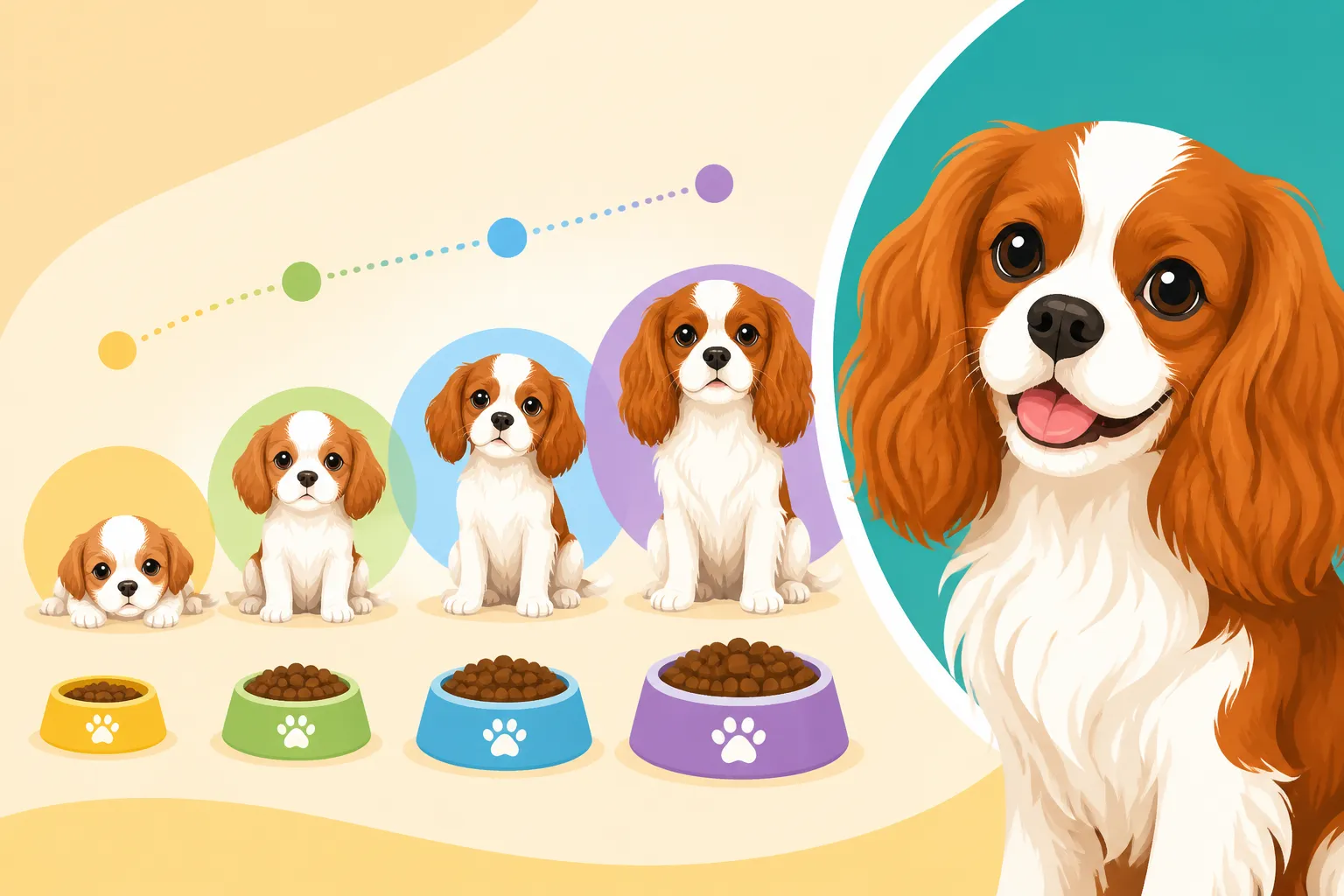
When your Cavalier puppy first arrives home, usually around 8 to 10 weeks old, they're typically just weaned or recently weaned from their mother's milk. Their digestive systems are still developing, and they need very frequent, small meals to avoid blood sugar dips and keep their energy stable. At this age, most breeders will have them on a consistent feeding routine, and it's always best to stick to the food they've already been eating to avoid any immediate tummy upsets. If you plan to switch foods, do so very gradually over several days.
For puppies in this age bracket, I usually recommend four meals a day. Divide their total daily recommended portion into four smaller meals, spaced out throughout the day. For example, if your puppy's food bag suggests a total of 1 cup per day, you'd give them 1/4 cup at breakfast, lunch, dinner, and then a final small meal before bed. This ensures a steady supply of nutrients and energy. Always have fresh water available, especially after meals and play. This is a critical period for growth, so consistency is key. For more on what to prepare, check out What to Buy Before a Cavalier Puppy Arrives.
3 to 6 Months: Growth Spurts and Energy Needs
As your Cavalier puppy moves from 3 to 6 months old, you'll notice they're still growing like a weed, albeit perhaps a little less dramatically than those first few weeks. Their energy levels might seem limitless! During this phase, you can often transition from four meals a day down to three. Again, take the total daily recommended amount from your puppy food bag and divide it into three equal servings. This usually means breakfast, lunch, and dinner.
This period is marked by continued bone and muscle development, so maintaining a high-quality puppy food is absolutely essential. Don't be surprised if your puppy seems to eat a fair amount for their size; they're putting all that fuel into growing. However, it's crucial not to overfeed, even if they act like they're starving. Always refer to the guidelines on your specific food bag, adjusting slightly based on their individual metabolism and activity level. You'll want to keep an eye on their weight to ensure they're not getting too chunky, as excess weight during puppyhood can put strain on developing joints and lead to Cavalier Weight Gain and What It Costs the Heart later on. By six months, many Cavaliers will have reached a significant portion of their adult height and weight. For more on this, look into The Weight a Cavalier Reaches at Six Months.
6 to 12 Months: Approaching Adulthood
Once your Cavalier puppy hits the 6-month mark, they're truly entering their adolescent phase. While they might look more like a miniature adult dog, they're still very much a puppy in terms of development. You can now typically reduce their meals to twice a day – once in the morning and once in the evening. Continue to use a high-quality small breed puppy food. It's too early to switch to adult food, even if they seem nearly full-grown; their internal systems and bone density are still maturing.
During this stage, your puppy's growth rate will begin to slow down, but they're still burning a lot of energy through play and exploration. Monitor their body condition closely. You should be able to feel their ribs easily without seeing them, and they should have a discernible waist. If they're looking a bit pudgy, slightly reduce their portions; if they're too lean, you might offer a tiny bit more. Always measure food accurately using a standard measuring cup or kitchen scale. This age is also a good time to ensure they've had all their Vaccinating a Cavalier Puppy and annual check-ups. Most Cavaliers will reach their full size and weight between 10 and 12 months, which is usually when you'll start considering the transition to adult food.
| Age Range | Recommended Meals Per Day | Typical Daily Total (Example: 1 cup) | Meal Breakdown (Example) | Key Considerations |
|---|---|---|---|---|
| Weaning – 12 Weeks | 4 | 1 cup | 1/4 cup, 4 times a day | Rapid growth, small tummy, stable blood sugar, consistency |
| 3 – 6 Months | 3 | 1.5 – 2 cups | 1/2 – 2/3 cup, 3 times a day | Continued growth, higher energy, monitor weight |
| 6 – 12 Months | 2 | 1.5 – 2 cups | 3/4 – 1 cup, 2 times a day | Slowing growth, approaching adulthood, transition prep |
Note: The "Typical Daily Total" is an example. Always refer to the specific guidelines on your chosen puppy food packaging and consult your veterinarian for personalized advice.
Portion Control and Monitoring Your Cavalier's Weight
One of the biggest challenges for Cavalier owners is portion control. These dogs are notorious for their love of food, and it's easy to spoil them with extra treats or a slightly larger meal. However, maintaining an ideal body weight is paramount for a Cavalier's long-term health, especially given their predisposition to certain conditions like Mitral Valve Disease in the Cavalier King Charles Spaniel. Overfeeding a puppy can lead to skeletal issues during development and set the stage for obesity later in life, which can put immense strain on their tiny hearts and joints.
Why Free-Feeding is a No-Go for Cavaliers
While it might seem convenient to just leave a bowl of kibble out for your Cavalier puppy to graze on all day, this practice, known as "free-feeding," is generally not recommended, especially for this breed. Cavaliers, like many small dogs, are often food motivated and can quickly become overweight if given unlimited access to food. An overweight puppy is not a healthy puppy. It places unnecessary stress on their developing joints and organ systems, potentially exacerbating future health problems.
Scheduled meal times, on the other hand, allow you to precisely control your puppy's calorie intake, ensuring they get the right amount of nutrients without overdoing it. It also helps establish a routine, which can be invaluable for Cavalier Puppy Toilet Training Indoors and general behavior. When you feed on a schedule, you can monitor how much your puppy is eating, spot changes in appetite early, and assess their interest in food. If your puppy suddenly isn't finishing meals, it could be a subtle sign of illness, which you'd miss if they were free-fed.
The Visual and Hands-On Check
So, how do you know if you're feeding the right amount? The guidelines on the food bag are a great starting point, but every puppy is an individual, and their metabolism and activity levels vary. This is where the visual and hands-on check comes in. First, visually assess your Cavalier from above: they should have a clear waistline that tucks in behind their ribs. From the side, their abdomen should also tuck up slightly. If they look like a little furry sausage or a barrel, they're likely overweight.
Next, get hands-on. Gently run your hands along their sides. You should be able to easily feel their ribs without having to press hard, almost like feeling the back of your hand. If you can see their ribs, they might be too thin. If you have to press firmly to feel them, or can't feel them at all, they're carrying too much weight. This quick check, performed regularly, is far more accurate than relying solely on a number on a scale. It's a skill that will serve you well throughout your Cavalier's life, helping you keep them at their ideal body condition.
Adjusting Rations Based on Activity and Growth
Your Cavalier puppy's feeding needs aren't static; they'll fluctuate based on their individual growth rate, activity level, and even the weather. A particularly energetic puppy who spends more time playing and exploring will naturally burn more calories than a more sedate sibling. Likewise, during a growth spurt, they might genuinely need a bit more food to fuel their development. It's your job to be observant and adjust their rations accordingly.
If your puppy is very active, you might slightly increase their portion within the recommended range on the food bag. If they're having a lazy week or you notice them gaining weight, a slight reduction might be necessary. It's always about making small, incremental adjustments and then monitoring their body condition over a few days or a week. Never make drastic changes to their food intake. Consulting your veterinarian during routine check-ups, like those for Annual Cardiologist Exams for a Cavalier, is also invaluable. They can offer personalized advice on your puppy's ideal weight range and feeding plan, ensuring optimal health as they mature.
Transitioning to Adult Food and Beyond
The day will come when your sweet Cavalier puppy isn't quite so much of a puppy anymore. Those gangly limbs fill out, the puppy fluff gives way to a silky adult coat, and they settle into a more mature rhythm. This transition from puppy food to adult food is an important milestone in their nutritional journey. Done correctly, it's seamless; rushed, it can lead to digestive upset and stress for both of you.
When to Make the Switch
Determining the exact right time to switch your Cavalier from puppy food to adult food can feel a bit like a guessing game, but generally, most Cavaliers are ready between 10 to 12 months of age. The key indicators are typically when they've reached their full adult size and their growth plates have closed. For a small breed like the Cavalier, this usually happens a bit earlier than for giant breeds, but it's rarely before 10 months. Some veterinarians might even suggest continuing puppy food until 12 months for a slightly slower-maturing individual, to ensure maximum skeletal development.
The reason for this careful timing is simple: adult food has different nutritional ratios, typically lower in calories, protein, and fat compared to puppy food. Switching too early means they might miss out on crucial nutrients still needed for brain development and bone maturation. Switching too late can contribute to unnecessary weight gain, as the higher calorie content of puppy food isn't appropriate for an adult who is no longer growing at such a rapid pace. If you're unsure, a quick chat with your vet during one of their Routine Vet Bills for a Cavalier appointments will give you peace of mind and specific guidance.
The Gradual Transition Process
Once you've decided it's time to make the switch, don't just dump a bowl of new food down. A sudden change in diet is almost guaranteed to cause an upset stomach, leading to diarrhea or vomiting. The key to a successful transition is gradual introduction over approximately 7-10 days. This allows your Cavalier's digestive system to slowly adjust to the new ingredients and nutrient profile.
Here's a typical transition schedule:
- Days 1-2: Mix 25% new adult food with 75% old puppy food.
- Days 3-4: Mix 50% new adult food with 50% old puppy food.
- Days 5-6: Mix 75% new adult food with 25% old puppy food.
- Days 7-10: Feed 100% new adult food.
During this period, keep a close eye on your Cavalier's stool consistency and overall demeanor. If they show any signs of digestive upset, slow down the transition and keep them on the current mix for an extra day or two before progressing. There's no rush! For more in-depth advice on this process, you might find The Ten Days It Takes to Change Cavalier Food helpful. Many owners find it easy to manage this transition when ordering their food online from places like Chewy, as they can conveniently order both puppy and adult formulations at the same time.
What Happens if You Switch Too Soon or Too Late
Switching your Cavalier puppy to adult food too soon can have several undesirable consequences. As mentioned, puppy food is packed with higher levels of protein, fat, and critical vitamins and minerals vital for rapid growth. If they transition prematurely, they might not receive adequate nutrition to support the completion of their skeletal development, muscle growth, and overall maturation. This could potentially affect their long-term health, leading to deficiencies or sub-optimal growth.
Conversely, waiting too long to switch can also pose problems. Puppy food is calorie-dense, designed for growth, not maintenance. An older, fully grown Cavalier continuing on puppy food is at a much higher risk of becoming overweight or even obese. Excess weight puts additional strain on their joints, exacerbates potential heart conditions like MVD, and generally reduces their overall quality of life and lifespan. The aim is to find that sweet spot when they've finished growing but before the extra calories become a burden. A fresh food option like Ollie, which often allows for custom meal plans, can sometimes help fine-tune nutrition through these transitional stages.
Common Feeding Mistakes and How to Avoid Them
Even with the best intentions, it's easy to fall into common feeding traps that can undermine your Cavalier puppy's health. As doting pet parents, we sometimes project our own eating habits or desires onto our dogs, forgetting that their nutritional needs are fundamentally different from ours. Avoiding these pitfalls is just as important as choosing the right food.
Overfeeding and Underfeeding
The most prevalent mistake is either overfeeding or underfeeding. Overfeeding is particularly common with Cavaliers because of their endearing, pleading eyes and seemingly insatiable appetites. Those extra few kibbles or an abundance of treats quickly add up for a small breed. The consequences of overfeeding are significant: accelerated growth, which can put stress on developing joints and lead to orthopedic problems, and the far more common issue of puppy obesity, which, as we've discussed, predisposes them to adult health problems. It's a tough love scenario, but resisting those puppy dog eyes is vital for their long-term well-being.
Underfeeding, while less common, is equally detrimental. A puppy who isn't getting enough calories and nutrients will fail to thrive. You might notice poor coat quality, low energy levels, or a failure to gain weight at a healthy rate. This can often happen if owners drastically cut portions based on general advice without considering their specific puppy's activity or the calorie density of their chosen food. The solution to both is diligent measurement, consistent meal times, and regular body condition checks, combined with veterinary guidance. Don't eyeball it; use a measuring cup or scale.
The Allure of Table Scraps
It's almost impossible to resist sharing a tiny morsel of your dinner with your Cavalier puppy, especially when they give you that look. But honestly, feeding table scraps is a habit best avoided entirely. Human food, even seemingly innocuous items, often contains ingredients that are either unhealthy or downright toxic for dogs. High levels of fat, sugar, and salt are common in our meals, none of which are good for a developing puppy. Onions, garlic, grapes, raisins, chocolate, and artificial sweeteners like xylitol are absolute no-gos and can cause serious illness or even death.
Beyond the health risks, offering table scraps can create a picky eater who turns up their nose at their perfectly balanced puppy food. It can also lead to begging behavior at the dinner table, which can be incredibly annoying for you and your guests. Instead of human food, offer appropriate, healthy puppy treats in moderation, or use small pieces of their own kibble as rewards. This teaches them good manners and keeps their diet consistent and safe.
Hydration and Water Intake
While food gets most of the attention, proper hydration is just as critical for your Cavalier puppy's health and development. Puppies are more susceptible to dehydration than adult dogs, and inadequate water intake can quickly lead to serious health issues, especially if they experience vomiting or diarrhea. Always ensure your puppy has constant access to fresh, clean water. This means multiple water bowls around the house, especially near their eating and sleeping areas, and one that is shallow enough for them to drink comfortably without getting their long ears soaked.
Change their water daily, and clean their bowls regularly to prevent bacterial buildup. If your puppy seems reluctant to drink, you might try adding a splash of low-sodium chicken or beef broth (ensure it contains no onions or garlic!) to their water to entice them. During and after play sessions, always encourage them to drink. A well-hydrated puppy has healthy digestion, proper organ function, and optimal energy levels.
Special Considerations for Cavalier Puppies
Cavaliers are wonderful, unique little dogs, and sometimes their specific characteristics require a bit more attention when it comes to feeding. From dealing with a finicky eater to supporting their burgeoning dental health, being proactive about these considerations will contribute significantly to their overall well-being.
Picky Eaters and Encouraging Appetite
While many Cavaliers are enthusiastic eaters, some can be a bit on the picky side. This can be incredibly frustrating when you're trying to ensure they get all the nutrients they need. Before labeling them as "picky," rule out any underlying health issues with a vet visit. Sometimes, a lack of appetite can be the first sign of illness. Once health issues are excluded, consider a few strategies.
First, ensure you're not inadvertently spoiling their appetite with too many treats or table scraps. Stick strictly to meal times. You can try moistening their kibble with a little warm water or low-sodium chicken broth to make it more aromatic and palatable. Warming canned wet puppy food (ensure it's specifically for puppies) can also increase its appeal. Some owners have success with fresh, gently cooked options, available from services like Ollie, that can sometimes tempt even the most discerning palate. If they don't eat within 15-20 minutes, pick up the bowl and offer it again at the next scheduled meal. This teaches them that food is available at certain times, not on demand. For puppies who truly refuse their kibble, A Cavalier Puppy That Will Not Eat explores various approaches to encourage them.
Managing Loose Stools or Upset Tummies
It's almost a rite of passage for new puppy owners to deal with a loose stool or upset tummy at some point. Puppies have sensitive digestive systems, and even minor changes can cause a reaction. Common culprits include stress from a new environment, dietary changes (especially if not done gradually), ingesting something they shouldn't have, or parasites. If you notice persistent loose stools, diarrhea, or vomiting, especially with lethargy, loss of appetite, or blood, contact your vet immediately. Puppies can dehydrate quickly.
For mild, transient upset, you might try a bland diet for a day or two: plain boiled chicken (no skin or bones) and white rice. Once their tummy settles, gradually reintroduce their regular puppy food over several days. Probiotics formulated for dogs can also be beneficial in restoring gut health. Always ensure they have access to plenty of fresh water. If you've just switched foods, remember The Ten Days It Takes to Change Cavalier Food rule for gradual transitions. Discuss any persistent digestive issues with your vet to rule out conditions like food sensitivities or other underlying health problems.
Early Dental Health and Chews
Cavaliers have notoriously crowded mouths, making them highly susceptible to Cavalier Dental Disease in a Crowded Jaw from a young age. Starting good dental hygiene habits during puppyhood is crucial. While actual tooth brushing might be a challenge with a wiggly puppy, introducing safe chews can be a great starting point. Choose chews specifically designed for puppies and appropriate for their size. Look for options that are digestible and won't splinter, reducing the risk of choking or internal injury.
Look for dental chews from reputable brands available at stores like Amazon or Chewy that are designed to help scrape away plaque. However, be mindful of calorie content; these chews are often high in calories and should be factored into their daily intake. Supervising your puppy with any chew toy is paramount to prevent them from swallowing large pieces or getting stuck. Starting early makes a huge difference; the sooner you get them accustomed to oral care, the better their chances of maintaining healthy teeth throughout their lives. Even gentle play with a soft toothbrush can help them get used to the sensation for future brushing.
Disclaimer
This article is for general informational purposes only and does not constitute professional advice. Laws, prices and regulations vary by location and change over time. Consult a qualified professional for guidance on your specific situation.