The AKC Standard for the Cavalier King Charles Spaniel
If you're a Cavalier King Charles Spaniel owner, or dream of becoming one, you've probably heard talk of the "AKC Standard." For many, it sounds like something only show dog enthusiasts need to bother with, but the truth is, this detailed blueprint of the breed is incredibly helpful for every Cavalier parent. It's not just about winning ribbons; it's about understanding the ideal physical and behavioral traits that make a Cavalier a Cavalier, and knowing what to look for when you're choosing a puppy or even assessing your adult dog's health and well-being. This guide will walk you through the nuances of the AKC Standard, demystifying what it means for your beloved companion.
Understanding the AKC Standard: Why It Matters to Cavalier Owners
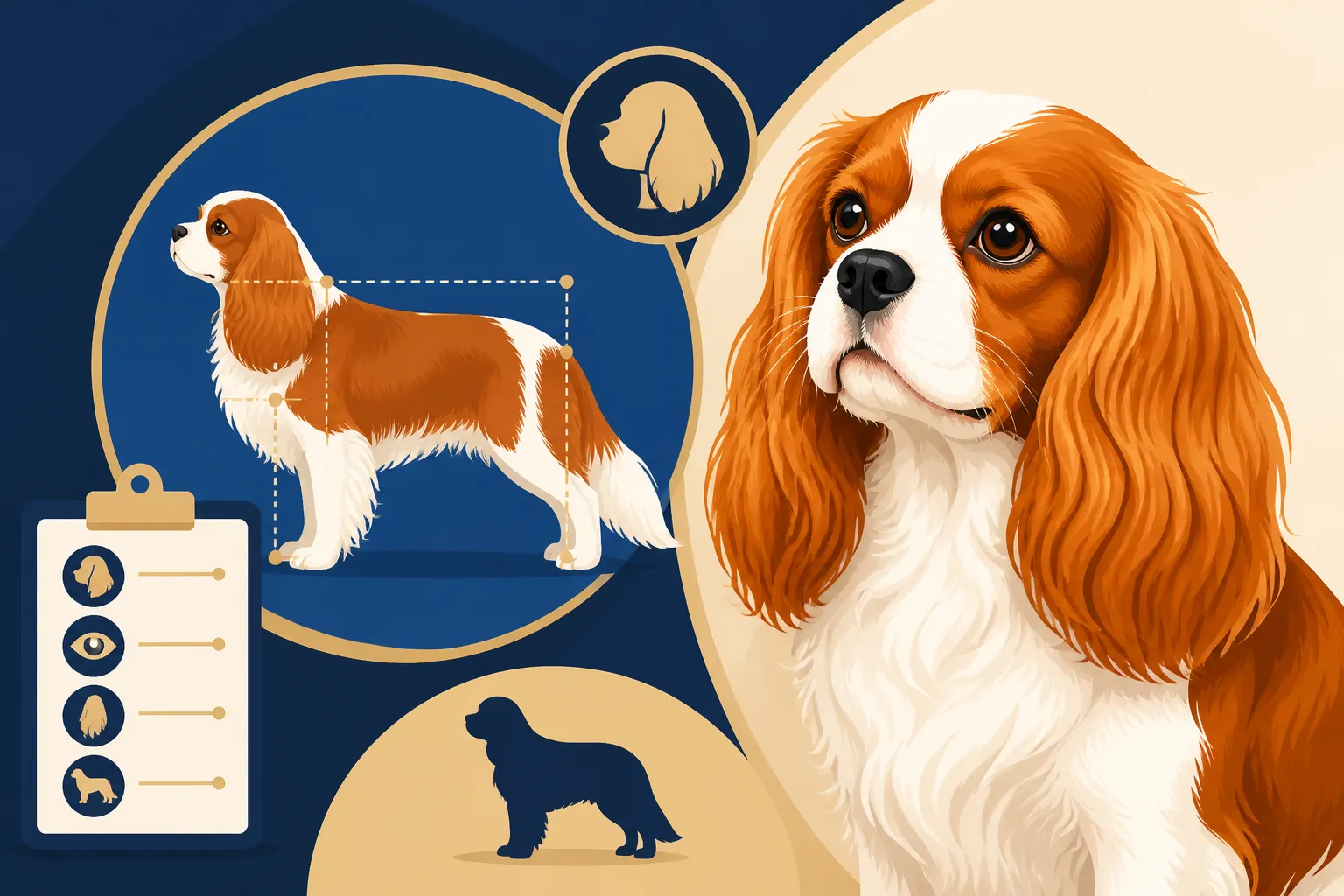
The American Kennel Club (AKC) breed standard for the Cavalier King Charles Spaniel serves as the official description of the ideal specimen. Think of it as the original recipe for what a Cavalier should be, outlining everything from their charming personality to the exact shape of their head and the color of their coat. While it's primarily used by breeders and judges to ensure the breed maintains its distinctive characteristics and health over generations, its value extends far beyond the show ring. For us everyday Cavalier owners, it's a fantastic educational tool.
More Than Just a Show Ring Guide
When you're looking at a Cavalier, whether it's a bouncy puppy or a dignified senior, the standard helps you appreciate the subtle features that define the breed. It explains why their eyes should be large and round, why their ears should be set high, and even the "gay, fearless, and sporting" attitude they should possess. Knowing these details can deepen your understanding and appreciation of your own dog, helping you recognize those hallmark traits that drew you to the breed in the first place. It’s also a powerful tool for recognizing when a dog might deviate from the healthy ideal, guiding you towards responsible choices.
For instance, when considering a puppy, a breeder who truly understands and adheres to the standard will prioritize health, temperament, and correct structure, not just a cute face. They understand that a proper muzzle length, as described in the standard, is crucial for breathing and dental health, and that a sound structure supports a long, active life. This understanding helps them select breeding pairs that will produce healthy offspring, embodying the best qualities of the breed.
The Blueprint for a Healthy, Happy Cavalier
Beyond aesthetics, the AKC Standard is intrinsically linked to the health and functionality of the Cavalier. A dog bred true to the standard is typically more likely to be free from certain structural issues that can lead to pain or health problems down the line. For example, the standard calls for a level topline and well-angulated hindquarters, which contribute to efficient movement and reduce strain on joints. Deviations, such as overly straight hind legs, can predispose a Cavalier to conditions like luxating patellas or hip dysplasia.
Similarly, specific facial features described in the standard, like the muzzle length, play a vital role in preventing respiratory issues. Overly short muzzles, while sometimes perceived as "cuter," can lead to brachycephalic airway syndrome, causing breathing difficulties, especially in warm weather or during exercise. The standard, therefore, acts as a guardian of the breed's long-term health, emphasizing functional anatomy alongside beauty. When you understand the standard, you can better advocate for your dog's health and make informed decisions about their care, from nutrition to exercise. It also helps you spot red flags when Reading a Cavalier Puppy's Health Certificates or speaking with a potential breeder.
A Deep Dive into the Cavalier's General Appearance and Temperament
The first impression of a Cavalier King Charles Spaniel is one of undeniable charm and elegance. The AKC Standard emphasizes a dog that is well-balanced, active, and graceful in appearance. They are not meant to be overly delicate or fragile, but rather sturdy and resilient for their size, capable of being both a loving lapdog and an enthusiastic companion on a short walk through the park. This blend of athleticism and affection is a cornerstone of the breed's appeal.
That Signature "Gay, Fearless, and Sporting" Demeanor
Perhaps the most beloved aspect of the Cavalier, and one heavily emphasized in the standard, is their temperament. They are described as "gay, fearless, and sporting," yet with an "affectionate nature." This means they are joyful and outgoing, never timid or aggressive. They possess an innate cheerfulness and a willingness to engage with the world around them, whether it's chasing a leaf in the yard or greeting a new friend with a wagging tail. This "sporting" side harks back to their spaniel ancestors, who were bred to flush birds, giving them a lively spirit and a love for exploring.
However, this exuberance is always tempered by their gentle and loving disposition. A true Cavalier thrives on companionship and is known for its ability to form strong bonds with its human family. They are notoriously tolerant and adaptable, making them wonderful pets for diverse households, including those with children or other animals. This balanced temperament is one of the breed's most defining and cherished characteristics, ensuring they are not just beautiful to look at, but also a joy to live with. It's why Cavaliers Suit Households With Children so well.
Size, Substance, and the Delicate Balance
The AKC Standard specifies a particular size and "substance" for the Cavalier King Charles Spaniel, aiming for a dog that is neither too large nor too small, neither too delicate nor too coarse. The ideal weight is between 13 and 18 pounds, and their height at the withers (the highest point of the shoulder blades) typically falls between 12 to 13 inches. This size makes them perfectly suited as companion animals – small enough to cuddle on a lap, yet robust enough to enjoy an active lifestyle.
"Substance" refers to the dog's bone structure and musculature, indicating that the Cavalier should have good bone density and a well-muscled body, rather than appearing spindly or frail. However, this substance should be proportionate to their overall size, contributing to their balanced and elegant outline without making them appear heavy or clumsy. This careful balance ensures the Cavalier is healthy, agile, and capable of moving with ease and grace, whether trotting through the house or enjoying a stroll outdoors. It's a key part of what makes The Cavalier Size the Standard Asks For so particular.
Head and Expression: The Heart of the Cavalier Look
The head of a Cavalier King Charles Spaniel is arguably its most distinctive feature, contributing immensely to its soft, melting expression. The AKC Standard meticulously describes the ideal head structure, emphasizing specific proportions and features that create that quintessential Cavalier charm. It's a complex interplay of skull, muzzle, eyes, and ears that, when correctly balanced, creates an expression of gentle intelligence and eager affection.
The Large, Round, Dark Eyes and Gentle Expression
The eyes are often called the windows to the soul, and for the Cavalier, they are central to their famous expression. The standard calls for large, round, dark brown eyes that are set well apart, giving the dog a soft, gentle, and eager look. They should not be prominent or bulging, nor too small and almond-shaped. The rims of the eyes should be dark, creating a clear, expressive gaze. A sparkling, intelligent, and friendly expression is paramount; any hint of timidity or aggression in the eyes is considered a fault.
This kind, soulful expression is one of the most beloved traits of the Cavalier, reflecting their affectionate and docile nature. It's the look that melts hearts and draws people in. The cushioning below the eyes is also important, adding to the rounded appearance and contributing to the overall gentle expression. When a Cavalier looks at you with those big, dark eyes, it's hard not to feel completely charmed, and that's exactly what the standard aims to preserve. It’s part of The Eye Shape the Cavalier Standard Calls For.
Muzzle Length and Cranial Structure: Avoiding Extremes
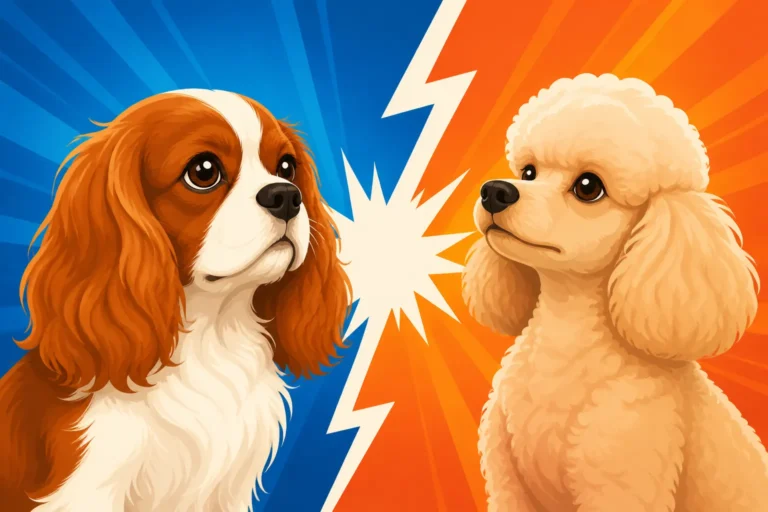
The skull of a Cavalier should be slightly rounded, but not domed or flat. The standard specifically notes that the stop (the indentation between the eyes) should be moderate. Crucially, the muzzle length is defined as being approximately 1.5 inches from the base of the stop to the tip of the nose. This is a critical point that differentiates the Cavalier from its closely related cousin, the King Charles Spaniel (often called English Toy Spaniel in the US), which has a much shorter, "dish-faced" muzzle.
The correct muzzle length is vital not only for the classic Cavalier profile but also for their health. A muzzle that is too short can lead to respiratory problems, difficulty cooling themselves, and dental issues due to overcrowding. The standard aims for a balance where the dog can breathe freely and comfortably. The nose itself should be black and fully pigmented, with well-open nostrils. Any other color or lack of pigmentation is considered a fault. This careful balance in skull and muzzle contributes to both the breed's beauty and its health. You can learn more about The Cavalier's Longer Muzzle and Flatter Skull and its history.
The Importance of a Correct Scissor Bite
A proper bite is often overlooked by casual observers, but it's an important detail in the AKC Standard. The Cavalier should have a perfect, regular, and complete scissor bite. This means that the upper teeth just slightly overlap the lower teeth, fitting closely together like the blades of a pair of scissors. The teeth should be sound and well-placed in the jaw.
Deviations from a scissor bite, such as an undershot jaw (where the lower jaw protrudes beyond the upper) or an overshot jaw (where the upper jaw protrudes significantly over the lower), are considered faults. While minor variations might not significantly impact a dog's health, severe malocclusions can lead to difficulty eating, abnormal tooth wear, and increased susceptibility to dental disease. A correct bite ensures the dog can comfortably chew their food and maintain good oral hygiene, contributing to their overall well-being. This is particularly important for a breed known for Cavalier Dental Disease in a Crowded Jaw.
Ears, Neck, and Body: Building the Cavalier's Profile
Moving beyond the captivating head, the AKC Standard meticulously describes the Cavalier's body, outlining the structure that contributes to their graceful movement, compact build, and overall balanced appearance. Each element, from the neck to the tail, plays a role in defining the breed's silhouette and functional capabilities.
Long, High-Set Ears and Profuse Feathering
The Cavalier's ears are another defining feature, adding to their sweet, expressive face. The standard requires them to be long and set high on the head, though not so high as to appear like "flying ears." They should have abundant feathering, which means the long, silky hair that graces the ears, often sweeping down to the chest. This rich feathering frames the face beautifully and contributes to the breed's regal appearance.
The placement and length of the ears are not just for show; they are characteristic of the spaniel type and are important for breed recognition. However, those long, drop ears also mean extra care is needed. They can trap moisture and debris, making Cavaliers prone to ear infections. Regular cleaning and checking are essential to keep them healthy. A snood, for instance, can keep those lovely ears out of their food bowl at mealtime. Snoods That Keep Cavalier Ears Out of Dinner are a common sight among Cavalier owners to help manage this.
The Neck and Topline: Grace and Strength
The Cavalier's neck should be of a moderate length, neither too long nor too short, and gracefully arched. It should blend smoothly into well-sloped shoulders, giving the dog an elegant carriage. This moderate length allows for good head movement and flexibility, contributing to their active and alert demeanor. A short, thick neck can make a dog appear heavy-fronted and compromise their agility.
The topline, which is the line of the back from the withers to the tail, should be level. It should not dip (be swaybacked) or rise (be roached) over the loin. A strong, level topline is a hallmark of a sound structure, providing good support for the dog's internal organs and ensuring efficient transmission of power from the hindquarters during movement. This contributes to the Cavalier's ability to move with ease and purpose. Any significant deviation from this level topline is considered a fault, as it can indicate underlying structural weaknesses.
Chest, Ribs, and Loin: Compact Yet Balanced
The body of a Cavalier should be compact, with well-sprung ribs. "Well-sprung" means the ribs are nicely curved, providing ample room for the heart and lungs, rather than being flat-sided. This contributes to the dog's overall robust and healthy appearance. The chest should be moderately deep, reaching to the elbows, but not overly broad or narrow. A good chest depth is important for lung capacity, which is essential for an active breed.
The loin, which is the area between the ribs and the hindquarters, should be short and strong. This short loin contributes to the breed's compact, balanced appearance and allows for powerful propulsion from the hind legs. An excessively long loin can lead to a weaker back and less efficient movement. The standard aims for a dog that feels sturdy and substantial when you pick them up, reflecting good bone and muscle, yet remains elegantly proportioned and agile. This compact build is part of why A Cavalier Suits an Apartment so well, as they don't take up too much space.
Legs, Feet, and Tail: The Cavalier's Movement and Balance
The foundation of a Cavalier's elegant movement and overall soundness lies in the structure of its legs, feet, and tail. The AKC Standard outlines specific requirements for these areas, ensuring that the dog can move efficiently, gracefully, and without undue strain, whether they are prancing playfully or simply settling in for a cuddle on the sofa.
Straight Legs and Well-Angulated Hindquarters
The front legs of a Cavalier should be straight and well-boned, standing directly under the shoulders. When viewed from the front, the legs should appear parallel. The pasterns (the area just above the feet) should be strong and slightly sloping. This correct front assembly provides stability and allows for a smooth, balanced reach during movement. Weak pasterns or bowed legs are considered structural faults that can lead to lameness over time.
The hindquarters should be well-muscled and have moderate angulation at the stifle (knee) and hock joints. "Angulation" refers to the bend in the bones, which acts like a shock absorber and provides leverage for powerful propulsion. Over-angulation or under-angulation can both impede proper movement and place excessive stress on joints. When viewed from the rear, the hind legs should be parallel, neither cow-hocked (hocks turned inward) nor bow-legged. This sound leg structure is vital for health, helping to prevent conditions like Loose Kneecaps in a Thirteen-Pound Cavalier and ensuring a long, active life.
Compact, Well-Padded Feet
The Cavalier's feet are described as compact and well-padded, with strong, neatly arched toes. The pads themselves should be thick and resilient, providing cushioning and traction. The standard also mentions that the feet should have "feathering between the toes," which refers to the longer hair growing between the pads. This feathering adds to the breed's characteristic appearance but also requires attention, as it can collect debris, snow, or mats if not properly maintained.
The overall shape and strength of the feet are important for supporting the dog's weight and absorbing the impact of movement. Splayed feet (where the toes spread wide apart) or flat feet are considered faults as they offer less support and can be more prone to injury. Ensuring a Cavalier has proper foot structure is key to their comfort and ability to enjoy walks and play throughout their lives. Regular nail trims and checking the paw pads are part of good care.
The Merry Tail Carriage
The tail of a Cavalier King Charles Spaniel should be set on, carried gaily, but never much above the level of the back. It should also be in balance with the body, meaning it's not excessively long or short. The "gaily carried" aspect refers to a cheerful, enthusiastic wag that is characteristic of the breed's happy temperament. When the dog is alert or excited, the tail might rise higher, but it should not curl over the back to the extent of a Pomeranian or Spitz type.
The standard also states that the tail should be feathered, with long, silky hair. Historically, docking (the surgical removal of part of the tail) was permitted in some regions, but the AKC Standard specifically states that the tail is "never to be docked." This emphasizes the importance of preserving the natural tail, which contributes to the dog's balance, communication, and overall aesthetic as defined by the breed's heritage. A natural, well-carried, feathered tail completes the picture of a charming and balanced Cavalier.
Coat and Color: The Cavalier's Crowning Glory
The luxurious coat of the Cavalier King Charles Spaniel is one of its most eye-catching features. The AKC Standard dedicates specific attention to the coat's texture, length, and the four recognized color patterns, all of which are essential for defining the breed's classic appearance.
The Silky, Feathered Coat
The Cavalier's coat should be of moderate length, silky to the touch, and free from curl. A slight wave is permissible, but tight curls are considered a fault. The "silky" texture is paramount, giving the coat a beautiful drape and sheen. Feathering—the longer, silky hair—is particularly prominent on the ears, chest, legs, and tail, adding to the breed's elegant appearance. This feathering grows more profusely as the dog matures, often becoming quite impressive on adult Cavaliers.
Unlike many breeds, Cavaliers do not have an undercoat. This means while they do shed, their shedding is often manageable, though regular brushing is still essential to prevent mats and keep the coat healthy. The standard specifies that the coat should never be trimmed, with the exception of tidying the hair between the paw pads. Any intentional trimming or sculpting of the coat, beyond light tidying, is considered a serious fault in the show ring, as it alters the natural outline and texture of the Cavalier's coat. This is why Brushing a Cavalier's Feathering Three Times a Week is so important. You can find excellent brushes and combs on Chewy to help maintain that beautiful coat.
The Four Classic Cavalier Colors: Blenheim, Tricolor, Ruby, Black and Tan
The AKC Standard recognizes four distinct color patterns for the Cavalier King Charles Spaniel, each with its own specific description. These colors are:
- Blenheim: This is a rich chestnut red on a pearly white ground. The markings should be evenly broken up on the head, with a unique, clear chestnut spot (known as the "Blenheim Spot" or "Kissing Spot") in the center of the skull. This spot is highly prized and a distinctive hallmark of the Blenheim. The Blenheim Cavalier and Its Lozenge is a fascinating read on this particular marking.
- Tricolor: This pattern consists of black and white markings, well-broken up, with tan markings over the eyes, on the cheeks, inside the ears, and on the underside of the tail. The black and white should be crisp and clearly defined, making for a striking appearance.
- Ruby: A whole-colored dog, meaning it's entirely rich red with no white markings. The red should be uniform and vibrant. Any white patches are considered a fault.
- Black and Tan: This pattern is jet black with tan markings over the eyes, on the cheeks, inside the ears, on the chest, on the legs, and on the underside of the tail. Similar to the Tricolor, the black should be rich and glossy, and the tan markings distinct.
Each color has its own charm, and all are equally valued under the standard, provided they meet the specific requirements for pattern and distribution.
Unacceptable Markings and Why They Matter
While the standard defines the four accepted colors, it also specifies what is considered an unacceptable marking. Any color or combination of colors other than Blenheim, Tricolor, Ruby, or Black and Tan is considered a disqualification in the show ring. This includes colors like merle or chocolate, which can sometimes appear in cross-breeds or from irresponsible breeding practices.
These strict color guidelines exist to preserve the breed's historical appearance and to maintain genetic purity. Unrecognized colors often arise from outcrossings with other breeds, which can dilute the Cavalier's unique traits and sometimes introduce unknown health issues. For the average owner, understanding these color specifics helps in identifying a purebred Cavalier and avoiding breeders who might offer "rare" or "designer" colors that fall outside the established standard, often at inflated prices. It also clarifies why Cavalier Colors That Are Not Recognized should be viewed with caution.
Gait and Movement: The Cavalier's Effortless Flow
Beyond static appearance, the AKC Standard places significant emphasis on how a Cavalier moves, referring to this as "gait." A correct gait is not just about aesthetics; it's a direct indicator of the dog's underlying structure, health, and athletic capability. A well-constructed Cavalier should move with grace, efficiency, and obvious pleasure.
A Free-Moving, Elegant Stride
The ideal Cavalier gait is described as free-moving and elegant, with good reach in the front and plenty of drive from the rear. This means that when the dog moves, its front legs extend forward smoothly, and its hind legs push off with power, propelling it forward with minimal effort. The movement should be straight and true, without any crabbing (moving sideways like a crab) or crossing over of the legs. The topline should remain level and firm during movement, without any noticeable bouncing or rolling.
When a Cavalier moves, it should appear effortless and light on its feet. The standard looks for a dog that can cover ground efficiently and appear enthusiastic in its stride. This reflects a healthy musculoskeletal system—strong bones, well-developed muscles, and healthy joints. Any stiffness, lameness, or awkwardness in gait can be a sign of structural faults or underlying health issues that need attention, and it's something a veterinarian or experienced breeder would readily observe.
The Importance of Soundness in Motion
"Soundness" in movement refers to the structural integrity and health that allows a dog to move correctly and comfortably. A Cavalier with good soundness will not only look beautiful in motion but will also be able to maintain an active lifestyle without undue wear and tear on its body. Poor soundness, on the other hand, can lead to chronic pain, arthritis, and a reduced quality of life. For instance, a Cavalier that Tires on Short Walks might be showing signs of compromised soundness, whether due to heart issues or structural problems.
The standard implicitly encourages breeders to prioritize soundness, as it is a critical component of the breed's overall health and well-being. Dogs with excellent gait and sound structure are more likely to enjoy a full and active lifespan, fulfilling their role as cheerful, sporting companions. When you observe a Cavalier, whether in a show ring or just trotting across the living room, paying attention to their movement can tell you a great deal about their health and how well they conform to the ideal of the breed. It’s a testament to the fact that form truly follows function.
Disqualifications and Faults: What the Standard Cautions Against
The AKC Standard doesn't just describe the ideal Cavalier; it also clearly outlines what constitutes a "fault" or, in more severe cases, a "disqualification." These are critical sections for anyone involved with Cavaliers, as they highlight deviations that either diminish the breed's quality or indicate serious departures from the established type. For owners, understanding these can help in identifying potential health or structural concerns.
Serious Faults That Affect Health and Function
Faults are characteristics that detract from the ideal breed standard but don't necessarily disqualify a dog from competition. However, multiple faults, or a particularly severe fault, can significantly impact a dog's placement. Many faults relate directly to health and function. For instance, a very short muzzle, while not a disqualification in itself, is a serious fault because it can impede breathing and lead to Whether a Cavalier Is a Brachycephalic Breed issues. Similarly, overly prominent eyes might make the dog more susceptible to injury or Cavalier Eye Disease From Dry Eye to Cataracts.
Other faults include an overshot or undershot bite, which can affect eating; ears set too low or too high; and a coat that is curly rather than silky. While these might seem minor, they cumulatively undermine the breed's characteristic appearance and, in some cases, its functionality. Responsible breeders strive to minimize faults in their breeding programs, understanding that even minor deviations from the standard can have long-term consequences for the health and type of the breed. You might consult resources on Chewy for specific grooming tools for a silky coat, for example, but avoiding excessive trimming or styling not permitted by the standard is key.
Disqualifications: Beyond the Breed Standard
Disqualifications are severe departures from the breed standard that deem a dog ineligible for competition. These are typically traits that are considered fundamentally incorrect for the breed, often indicating a mixed lineage, genetic defect, or a characteristic that compromises the breed's integrity. For the Cavalier, disqualifications include any color or combination of colors other than the four recognized patterns (Blenheim, Tricolor, Ruby, Black and Tan). This means if a Cavalier appears to be a merle, chocolate, or any other unlisted color, it cannot be shown.
Another key disqualification is blindness or deafness. While some Cavaliers may develop Deafness and Hearing Loss in Cavaliers later in life due to age or illness, congenital deafness or blindness from birth is a disqualifying factor, as it impacts the dog's ability to function as a typical companion. Aggression or extreme shyness is also a disqualification, contradicting the breed's inherently "gay, fearless, and affectionate" temperament. These disqualifications serve as clear boundaries, protecting the breed's distinct characteristics, health, and temperament, ensuring that the Cavalier King Charles Spaniel remains true to its heritage for generations to come.
Here's a quick comparison of some key aspects from the AKC Standard:
| Feature | Ideal Cavalier Description (AKC Standard) | Why it Matters for Health/Function |
|---|---|---|
| Temperament | Gay, fearless, sporting; affectionate, gentle, intelligent. | Ensures a good companion dog, adaptability, and psychological well-being. |
| Weight | 13-18 pounds (6-8 kg). | Maintains proper size for a toy spaniel, prevents obesity-related issues. |
| Height | 12-13 inches (30-33 cm) at the withers. | Contributes to balanced appearance and agility. |
| Eyes | Large, round, dark brown, set well apart; gentle, eager expression; dark eye rims. | Essential for breed-specific expression; prevents eye injury if not prominent. |
| Muzzle Length | Approximately 1.5 inches from stop to nose tip. | Crucial for clear breathing and proper dental alignment; distinguishes from other spaniels. |
| Bite | Perfect, regular scissor bite. | Allows proper chewing and reduces dental problems. |
| Ears | Long, set high, profuse feathering. | Characteristic of the breed; requires attention to prevent ear infections. |
| Topline | Level. | Indicates sound structure, good support for spine and organs. |
| Coat | Moderate length, silky, free from curl (slight wave permissible); profuse feathering. | Defines breed appearance; requires regular grooming to prevent mats. |
| Tail | Set on, carried gaily but not much above back level; never docked. | Contributes to balance and communication; preserves natural form. |
Disclaimer
This article is for general informational purposes only and does not constitute professional advice. Laws, prices and regulations vary by location and change over time. Consult a qualified professional for guidance on your specific situation.