Why a Cavalier Chases Birds Into the Road
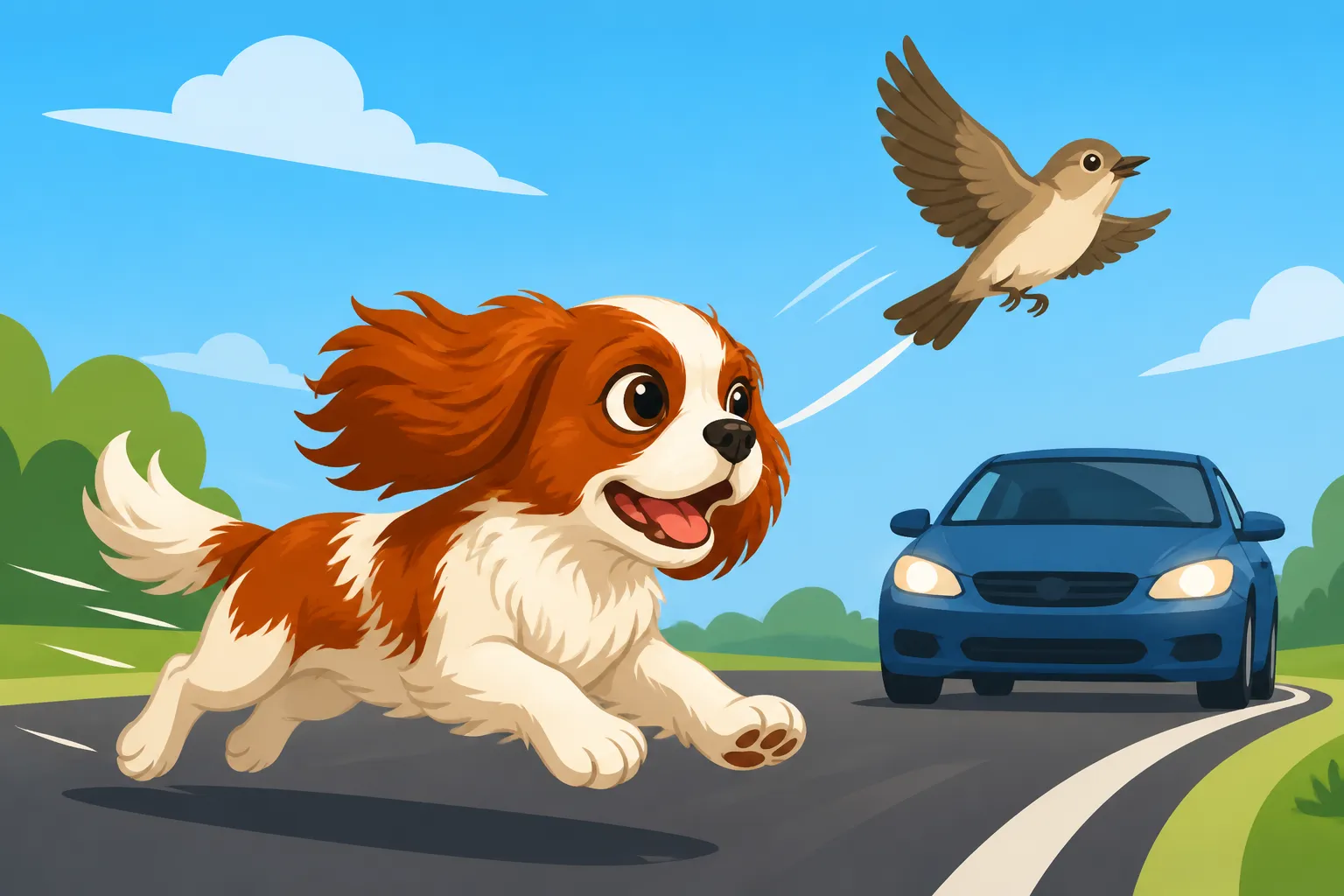
That heart-stopping lunge. The sudden, desperate dash. Many Cavalier King Charles Spaniel owners know the terrifying moment their sweet, cuddly companion spots a bird and seems to completely lose its mind, fixating on the avian target with laser-like precision, often straight towards a busy street. It's a terrifying scenario that highlights a deeply ingrained instinct often overlooked in our charming lapdogs. This guide will delve into why your Cavalier exhibits this powerful urge, the very real dangers it poses, and, most importantly, how you can manage and train your beloved pet to ensure their safety and your peace of mind.
Understanding the Cavalier's Instinctual Drive
It's easy to forget that beneath the soft fur and gentle gaze of our Cavaliers lies a history of working dogs. They may be categorized as a "toy breed" today, but their ancestors were spaniels, bred for flushing game. That heritage, though somewhat dormant, can awaken with surprising ferocity, especially when it comes to fast-moving, small prey like birds.
The Hidden Sporting Spaniel
When you look at a Cavalier curled up on the sofa, purring (well, practically!) with contentment, it's hard to imagine them as anything but a pampered companion. Yet, their very name, "King Charles Spaniel," is a huge clue to their past. Spaniels, across many varieties, were originally developed to assist hunters. They were adept at finding and flushing birds and other small game from dense cover, driving them out into the open for the hunter. This involves a strong sense of smell, keen eyesight for movement, and an undeniable urge to chase.
Even though selective breeding over centuries has largely focused on their companionable qualities, the underlying genetic programming for these hunting behaviors hasn't been completely erased. It’s like a distant echo in their DNA. For some Cavaliers, this instinct might manifest as a curious sniff in the bushes or a playful bounce after a leaf. For others, particularly when presented with a flock of pigeons or a lone sparrow fluttering tantalizingly close, that ancient spaniel switch can flip, and they transform into a focused, driven hunter, seemingly oblivious to their surroundings, including the very real threat of traffic. This isn't naughtiness; it's a powerful, almost involuntary, biological response.
Prey Drive vs. Play Drive
It's crucial to differentiate between a general "play drive" and a deep-seated "prey drive." Play drive is what makes your Cavalier happily chase a ball you throw, engage in a tug-of-war, or wrestle playfully with another dog. It’s fun, easily interruptible, and often involves you directly. Your Cavalier might chase a rolling toy across the living room and stop instantly when you call their name.
Prey drive, on the other hand, is much more intense and less easily diverted. It's the instinct that would lead a predator to hunt and catch its food. When a Cavalier's prey drive is triggered by a bird, they often enter a highly focused state. Their body language changes: ears might flatten, tail might stiffen and wag rapidly, and their entire attention narrows down to that one moving target. In this state, they often become deaf to commands, blind to obstacles, and seemingly immune to pain or fear. The world shrinks to just them and the bird. This heightened focus is why a simple "come!" command, which works wonders in the park, utterly fails when a bird flits across their path near a busy road. The internal reward system for chasing prey is incredibly strong, making it a self-reinforcing behavior that overrides almost everything else.
The Thrill of the Chase
Imagine a moment of pure, unadulterated excitement. That's what the chase feels like for your Cavalier. When they spot a bird and sprint after it, a powerful cocktail of hormones, including dopamine, floods their brain. Dopamine is associated with pleasure, reward, and motivation. This means that every time your Cavalier successfully chases a bird, even if they don't catch it (which, let's be honest, is almost always the case with birds), their brain gets a huge, pleasurable hit.
This "feel-good" chemical rush makes the chasing behavior incredibly reinforcing. It's not just that they want to chase; their brain is actively rewarding them for doing so. This creates a deeply ingrained habit that becomes harder and harder to break the more they practice it. Think of it like a human addiction to a thrill sport—the exhilaration is so strong that it outweighs the potential risks. For a Cavalier, the instinct to chase, combined with this neurological reward, can make them completely reckless, especially near danger zones like roads. They are not deliberately disobeying you; they are simply overwhelmed by a primal urge that feels incredibly good.
Why Birds Are Such Irresistible Targets
Of all the small critters a Cavalier might encounter – squirrels, rabbits, even cats – birds hold a special allure that often proves irresistible, particularly in the immediate vicinity of our homes and parks. Their erratic movements and sudden appearances are powerful triggers that tap directly into that deep-seated hunting instinct.
Movement and Sound as Triggers
Birds are masters of sudden, unpredictable movement. A pigeon pecking innocently on the sidewalk can suddenly erupt into flight with a flapping of wings and a flurry of motion. A small robin might dart from a bush and land a few feet away, then hop erratically before taking off again. These quick, jerky, and often unexpected movements are prime visual stimuli for a dog with a prey drive. Cavaliers, with their keen spaniel eyesight, are highly attuned to such changes in their environment. It’s the suddenness and the swiftness that acts like a siren call.
Beyond movement, the sounds birds make can also be a significant trigger. The flutter of wings, the chirping, squawking, or even just the rustling in the leaves as a bird takes off – these auditory cues can instantly grab a Cavalier's attention, even before they visually locate the bird. Imagine you're walking along, perhaps a little distracted, and suddenly a flurry of sound and motion occurs right next to you. Your Cavalier is likely to react faster, and with more intensity, than you are. This combination of visual and auditory stimuli makes birds an incredibly potent and effective trigger for the chase instinct, often leaving your Cavalier with no time to process any commands you might issue.
The Scent Trail (Even in the Air)
While movement is often the primary visual cue, we shouldn't underestimate a Cavalier's sense of smell. Although not as renowned for scent work as some other spaniel breeds, Cavaliers still possess a vastly superior olfactory system compared to humans. Birds, like all animals, leave scent trails. These might be subtle, carried on the breeze, or more concentrated from where they've been pecking at seeds on the ground.
A Cavalier might initially spot a bird, but their nose can quickly confirm its presence and even direct them to where it's been. Imagine a cool morning, and a bird has just taken flight from a patch of grass. Your Cavalier might catch the airborne scent of bird dander or even the lingering aroma of what the bird was just eating. This adds another layer of sensory input, reinforcing their focus on the target. This blend of visual stimulus (the flight), auditory cues (the chirp or flap), and olfactory confirmation (the scent) creates a multi-sensory experience that is incredibly difficult for a dog to ignore. It makes the chase all the more compelling and the distraction from your voice even more profound.
The Instant Gratification Factor
One of the reasons chasing birds is such a strong, self-reinforcing behavior is the immediate and often consistent "gratification" your Cavalier experiences. Think about it: when your dog chases a bird, what typically happens? The bird flies away. From your Cavalier's perspective, this is a success! The target moved, they pursued it, and it "ran away." Even though they never actually catch the bird, the act of causing it to flee provides an immediate, albeit false, sense of accomplishment.
This instant feedback loop solidifies the behavior. There’s no delay between the action (chasing) and the perceived reward (bird fleeing), which makes it incredibly powerful in terms of behavioral conditioning. If, for instance, your Cavalier lunged for a toy and you took ten minutes to reward them, the connection would be weak. But with birds, the "reward" is instantaneous. This constant, immediate reinforcement makes it very challenging to interrupt the behavior with training, especially if they've had many opportunities to practice. It effectively trains them that chasing birds is a highly rewarding activity, setting the stage for repeat performances every time a feathered friend appears.
The Perils of the Pavement: Road Safety for Cavaliers
The charm and affectionate nature of Cavaliers often make us forget their vulnerability in the urban environment. That playful chase of a bird, which might seem harmless in an open field, becomes a life-threatening gamble when it happens anywhere near a road. It's vital to understand just how ill-equipped Cavaliers are to navigate these dangers.
Cavaliers and Their Lack of Traffic Sense
It's a harsh truth: dogs, including our beloved Cavaliers, simply do not possess an innate "traffic sense." They don't understand the concepts of speeding vehicles, brake distances, or the rules of the road. Their world is one of scents, sounds, and movements, and a car, to them, might just be a big, fast, noisy object, not an imminent threat to life. When a Cavalier is in the grip of prey drive, chasing a bird, this lack of understanding is dangerously amplified. Whether a Cavalier Notices Cars At All
They operate on instinct, and that instinct is to pursue. A car zooming by might cause a momentary startle reaction, but it often doesn't register as something to be avoided at all costs, especially when the dopamine rush of the chase is in full effect. Many dog owners have experienced the sickening realization that their dog, usually so careful, darted straight into the path of a car during a high-excitement moment. For a small breed like a Cavalier, the impact of even a slow-moving vehicle can be catastrophic. They are simply too small and too fragile to withstand such an encounter, making preventative measures not just important, but absolutely critical. This is why the advice on Losing a Cavalier to Traffic and How It Happens is so sobering.
The Blinker Blindness Phenomenon
"Blinker blindness" or "tunnel vision" perfectly describes what happens to a Cavalier in the throes of a chase. When their prey drive is fully engaged, their focus becomes incredibly narrow. It's as if everything outside of the immediate pursuit of the bird simply ceases to exist. They aren't consciously ignoring the road or the approaching vehicle; they are genuinely not perceiving them. Their brain prioritizes the chase above all else, shutting out extraneous sensory information.
This phenomenon is incredibly dangerous. A Cavalier might be ten feet from a busy road, seemingly safe, when a bird lands on the opposite curb. In their blinkered state, the intervening road, the cars, the sounds of traffic – all become irrelevant white noise. Their entire being is oriented towards that bird. This is not defiance; it's a physiological response that makes them utterly vulnerable. Owners often mistakenly believe their dog "knows better," but in these intense moments, "knowing better" is overridden by powerful instinct and neurological shutdown of non-essential information.
The Speed and Impact of a Dash
Cavaliers, despite their small stature, can be surprisingly quick when motivated. A sudden burst of speed from a standstill to full sprint can happen in a fraction of a second. If they spot a bird across a two-lane road, they can cover that distance with alarming rapidity, leaving you with barely any time to react, let alone intervene. What might seem like a manageable distance to you is an open invitation for a sprint to your Cavalier.
Once they've bolted, stopping them is incredibly difficult. Their momentum, combined with their laser focus, means they're unlikely to respond to even your most urgent commands. And, as discussed, their small size makes them incredibly susceptible to severe injury or fatality from vehicular impact. Even a grazing blow can cause broken bones, internal injuries, or worse. The consequences of such a dash are often irreversible, underscoring why managing this behavior, especially near roads, is not just about convenience but about safeguarding your Cavalier's life. The swiftness of their dash is precisely why proactive training and stringent management are non-negotiable for any Cavalier with a strong bird-chasing instinct.
Proactive Prevention: Management Strategies
When it comes to the safety of your Cavalier, especially concerning their bird-chasing tendencies near roads, management is often the first and most critical line of defense. Training takes time, patience, and consistency, but immediate, proactive prevention measures can literally be lifesavers.
The Absolute Necessity of Leash Walking
Let's be unequivocally clear: if your Cavalier has a known tendency to chase birds, especially near roads, they should never be off-leash in an unsecured area. Ever. No exceptions. It's a fundamental rule that prioritizing their safety means accepting that off-leash freedom near traffic is simply not an option. The risk is too high, and the consequences are too dire. Even if your Cavalier has excellent recall in a quiet park, the intensity of their prey drive when a bird appears near a road often overrides all prior training. Whether a Cavalier Can Ever Be Off Leash covers this in detail, emphasizing that some instincts are just too strong to gamble with.
Always keep your Cavalier on a sturdy leash when walking outside your securely fenced property. This applies to sidewalks, parks adjacent to roads, hiking trails, and even seemingly quiet suburban streets. Accidents happen in a blink of an eye, and a secure leash in your hand is the single most effective way to prevent that heartbreaking dash into traffic. Consider it a non-negotiable safety tool, like a seatbelt in a car. Their life literally depends on it.
Harnesses vs. Collars for Safety and Control
For a Cavalier, a properly fitted harness is almost always a superior choice to a neck collar, especially if they are prone to lunging or pulling due to prey drive. A traditional neck collar, when tugged suddenly and forcefully, can put immense pressure on your Cavalier's delicate trachea and neck. Cavaliers are prone to conditions like tracheal collapse and even certain neurological issues, so protecting their neck is paramount. A sudden lunge on a collar could cause injury, or worse, allow them to slip out if they back away or wriggle.
A well-designed harness distributes pressure across their chest and shoulders, which are much stronger and less vulnerable areas. This provides better control, reduces the risk of injury, and significantly lowers the chance of your Cavalier backing out of their gear during a panicked lunge. There are many excellent harnesses available, including no-pull designs that discourage pulling without causing discomfort. Ensure you measure your Cavalier carefully to get the right size; a harness that is too loose can still allow for escapes. Brands found on platforms like Amazon often offer a wide range of styles and sizes, so you can find one that fits your Cavalier's specific needs and body shape perfectly. Look for ones with two points of attachment – one on the back and one on the chest – for maximum control. Harnesses Suited to a Cavalier's Neck provides more specific advice on choosing the right type.
Secure Fencing and Gates
While leashes are essential when out and about, a secure yard provides a crucial safe haven for your Cavalier to explore off-leash. However, a "secure" yard means more than just a visible fence. You need to meticulously inspect your fencing and gates for any potential escape routes. Cavaliers are not typically known as jumpers, but they can be surprisingly agile if motivated, and certainly adept at squeezing through small gaps.
Check for loose fence boards, gaps underneath the fence line where they might dig or squeeze, and ensure all gates latch securely and cannot be easily nudged open. Consider installing a "dig guard" along the bottom of the fence if your Cavalier shows any interest in burrowing. Pay particular attention to the bottom of chain-link fences, where gaps can often exist. For truly determined chasers, a fence that offers a visual barrier (like solid wood or privacy slats) might be more effective than one they can see through, as it reduces visual triggers. Regularly walk the perimeter of your yard, looking for weak spots. Remember, an unsecured yard can lead to the same road dangers as an off-leash walk. Fencing a Yard a Cavalier Will Not Leave offers further insights into creating a truly escape-proof outdoor space.
Training for a Safer, More Attentive Cavalier
While management strategies are your immediate line of defense, training is how you build a long-term foundation of safety and responsiveness. It takes consistent effort and patience, but teaching your Cavalier to pay attention to you, even when faced with irresistible distractions like birds, is incredibly rewarding and profoundly important for their well-being.
Building a Rock-Solid Recall
A strong recall – your Cavalier coming back to you instantly, regardless of distraction – is the holy grail of off-leash safety. While we've discussed that off-leash near roads is generally a no-go for bird chasers, a reliable recall is still critical in securely fenced areas or emergency situations where they might accidentally get loose. The key is to make coming back to you the most rewarding thing ever.
Start in a quiet, distraction-free environment, like your living room or a securely fenced yard. Use a unique, high-value treat (something they absolutely adore, like tiny pieces of chicken or cheese) and a distinct, happy recall word like "COME!" or "HERE!" Say the word with enthusiasm, show the treat, and praise them lavishly when they come. Practice this dozens of times a day in short bursts. Gradually introduce minor distractions, like a toy rolling nearby, and then move to slightly more distracting environments, always ensuring success before increasing difficulty. If they fail, you've pushed too fast; go back a step. The Emergency Word That Stops a Cavalier emphasizes the importance of making this command sacred, never using it for anything negative. Practice in a secure field with a long line (more on those below) before ever considering off-leash in larger spaces. The guidance in Practicing Cavalier Recall in a Secure Field can be invaluable here.
Impulse Control and "Leave It"
Teaching impulse control is paramount for a Cavalier with a strong prey drive. The "Leave It" command is your superpower, instructing your dog to ignore a tempting item. Start simple: place a low-value treat on the floor, cover it with your hand, say "Leave It," and reward them with a different, higher-value treat from your other hand when they look away from the covered treat. Gradually increase the difficulty: uncovered treat, then moving the treat further away, then placing it on the ground and walking past it.
The goal is for them to understand that ignoring the immediate temptation leads to an even better reward from you. Apply this to birds: if you spot a bird before your Cavalier does, immediately say "Leave It" as you gently redirect their attention with a treat, then move them away from the stimulus. This isn't about punishing them for looking at the bird, but about teaching them that listening to you around distractions is incredibly rewarding. Consistency is vital. Every time you practice "Leave It" with a piece of kibble on the floor, you're building the foundation for them to "Leave It" with a bird in the park. For more on this, check out Training a Cavalier Around Food Distraction, which explores how to manage their focus when food is a factor.
Focus and Engagement Training
A Cavalier who is engaged with you is less likely to become fixated on external distractions. Focus and engagement training teaches your Cavalier that you are the most interesting thing in their environment. This involves teaching them to make eye contact on cue ("Watch Me"), to walk politely by your side, and to participate enthusiastically in training games.
Start by holding a treat near your eye and waiting for your Cavalier to make eye contact, then reward. Gradually extend the duration of eye contact. Practice walking on a loose leash, rewarding them for staying by your side. Use short, frequent training sessions (5-10 minutes) to keep their attention. The key is to be more exciting and rewarding than the environment itself. If they understand that looking at you leads to good things, they are more likely to check in with you, even when there are tempting distractions like birds. This proactive engagement shifts their default behavior from scanning for prey to checking in with their handler. The advice in Teaching a Cavalier to Watch You on Walks is highly relevant for building this crucial connection and attentiveness in distracting outdoor environments.
Tools and Resources to Aid Your Training
Embarking on a training journey, especially with a specific challenge like bird-chasing prey drive, means arming yourself with the right tools and knowledge. These aren't just accessories; they're essential aids that can make a profound difference in your Cavalier's safety and your training success.
Long Lines and Secure Play Areas
A long line is an indispensable training tool for any Cavalier with a prey drive. It's essentially a very long leash (15-50 feet) that allows your dog to experience a sense of freedom and practice recall commands in a controlled, safe manner. This is particularly useful in securely fenced areas or very open, low-traffic environments where true off-leash play isn't quite safe yet. You can find excellent quality long lines on platforms like Amazon, in various lengths and materials.
Attach the long line to your Cavalier's harness (never a collar for safety!) and let them explore. When a distraction appears, or simply as part of your recall practice, step on the line to prevent them from bolting, then reel them in gently while giving your recall command. Reward heavily when they reach you. This allows you to interrupt a nascent chase, reinforce your recall, and prevent them from reinforcing the "success" of a full chase. It's a bridge between being always on a short leash and eventually achieving reliable off-leash behavior in appropriate settings. Long Line Practice for a Cavalier provides detailed guidance on how to use this tool effectively and safely, stressing the importance of supervision.
High-Value Treats and Toys
Motivation is everything in dog training, especially when competing with a primal drive like chasing birds. Standard kibble might work for basic commands in a quiet living room, but when a bird is fluttering, you need to pull out the big guns. This means high-value treats that your Cavalier absolutely adores and rarely gets otherwise. Think small pieces of cooked chicken, cheese, hot dogs, or commercially available soft, meaty training treats. The smellier and more delicious, the better.
Similarly, specific high-value toys can be used as a reward for successful "Leave It" or recall. A favorite squeaky ball, a tug toy, or a flirt pole (a wand with a toy at the end that mimics prey movement, allowing controlled chasing) can be incredibly motivating. Reserve these special rewards only for training around distractions. When your Cavalier successfully ignores a bird and looks at you, the reward needs to be worth their effort. Having a pouch of these irresistible goodies on hand during walks is crucial for reinforcing good choices. The discussion in Treats a Cavalier Will Trade Anything For dives deeper into selecting the perfect motivational rewards for your Cavalier.
Professional Help and Online Programs
Sometimes, despite your best efforts, a Cavalier's prey drive can feel overwhelming, or you might find yourself stuck on a particular training hurdle. This is where professional help can be invaluable. A certified professional dog trainer (CPDT) or a behaviorist can assess your Cavalier's specific drives and tendencies, observe your interactions, and develop a tailored training plan. They can teach you advanced techniques and help you navigate challenging situations safely and effectively.
If in-person training isn't feasible, online dog training programs can be an excellent resource. For instance, programs like those offered by BAXTER & Bella provide structured curricula, video tutorials, and often access to trainers who can answer your questions. These programs can guide you through everything from basic obedience to more advanced impulse control exercises, all from the comfort of your home. Combining structured learning with consistent practice can significantly boost your success rate. Remember, seeking help is not a sign of failure but a commitment to your Cavalier's safety and well-being. Look for reputable trainers who use positive reinforcement methods, as harsh corrections can damage your Cavalier's trusting nature and potentially exacerbate anxieties.
Addressing the Underlying Instincts
Successfully managing and training a Cavalier with a strong bird-chasing instinct isn't just about stopping the behavior; it's also about understanding and appropriately channeling those natural drives. You can't eliminate an instinct, but you can redirect it into safer, more acceptable outlets, leading to a happier, more fulfilled dog.
Channeling Prey Drive Safely
Your Cavalier has this instinctual need to chase, pounce, and "hunt." Instead of fighting against it, we can provide healthy, controlled outlets for this drive. This is crucial for their mental and physical well-being. One excellent tool is a flirt pole. This is essentially a long stick with a lure (a toy, a piece of fabric) attached to a rope. You can use it in a safe, open space to let your Cavalier chase, pounce, and "catch" the lure. This allows them to fulfill that predatory sequence in a controlled environment, burning off energy and satisfying their urges without any risk. The lure can simulate the erratic movements of a bird, making it incredibly engaging.
Another great option is fetch or retrieve games, especially with toys that bounce unpredictably. This allows them to run, chase, and bring the "prey" back to you. Even simple hide-and-seek games with toys or treats can engage their seeking and finding instincts. The key is to engage their predatory drive with you as part of the game, rather than letting them self-reward by chasing real birds. This strengthens your bond and teaches them that you are the source of satisfying, exciting play.
Environmental Enrichment and Mental Stimulation
A bored Cavalier is often a Cavalier looking for trouble, or at least for self-entertainment. If their minds aren't stimulated, those inherent drives might surface in undesirable ways, like fixating on birds. Providing ample environmental enrichment and mental stimulation can go a long way in reducing the intensity of their bird-chasing focus.
Think beyond just physical exercise. Engage their brains with puzzle toys that dispense treats, teaching them new tricks (even simple ones like "shake a paw" or "spin"), or participating in scent work games around the house. You can hide treats and let them sniff them out, tapping into their natural olfactory abilities. Even changing your walking routes regularly can provide new sights, sounds, and smells to keep their minds engaged. A Cavalier who is mentally tired and satisfied is often less prone to becoming hyper-focused on external triggers. This proactive approach helps to keep their brain occupied in positive ways, making them less likely to default to that deeply ingrained bird-chasing impulse.
Consistency is Key
There's no magic wand for managing prey drive. It's not a one-time fix but an ongoing commitment that requires unwavering consistency from everyone in the household. Every time your Cavalier successfully chases a bird, they are reinforcing that behavior. Every time you successfully interrupt a chase and redirect them to you for a reward, you are reinforcing the desired behavior. The scales need to tip heavily in favor of the desired behavior.
This means that every walk, every yard visit, every training session is an opportunity to reinforce the rules. If one person in the family lets the Cavalier off-leash near a road "just this once," or another isn't vigilant about the "Leave It" command, it can undermine weeks or months of progress. Consistency builds habits, for both you and your dog. It's about creating a predictable environment where your Cavalier learns what is expected of them and understands that listening to you always leads to the best outcome. This commitment over time is what truly helps reshape their responses to those tempting feathered friends.
Real-World Scenarios and Troubleshooting
Even with the best intentions and training, real life throws curveballs. Birds appear unexpectedly, your Cavalier might have an off day, or you might be dealing with an older dog whose habits are deeply ingrained. Navigating these real-world challenges requires adaptability and a deep understanding of your Cavalier's individual quirks.
What to Do When a Chase Begins
Despite all your preventative measures and training, that moment might still happen: your Cavalier spots a bird and is off like a shot. Your immediate reaction is crucial.
- Do NOT YELL or CHASE: Yelling your dog's name or chasing after them can often have the opposite effect. Yelling can sound like encouragement in the heat of the moment, and chasing just reinforces the prey drive – "Oh, a game! Everyone's chasing now!" It can also cause them to run further and faster away from you.
- DROP THE LEASH (if safe, with a long line): If you are using a long line and your dog bolts, drop the line. Do not let it yank your arm or cause you to fall. The long line will trail behind them, often snagging on something or simply providing a visual barrier that helps them "snap out of it" enough for you to calmly approach.
- Use Your Emergency Recall (Once!): If you have an established emergency recall word (different from your everyday "come," and only used for true emergencies), use it once in a calm, clear, but urgent voice. If they respond, praise and reward lavishly. If they don't, move to step 4.
- RECALL and REDIRECT (Calmly): If they haven't gone too far and are not directly in danger, try to get their attention by making a novel sound (a sharp whistle, a clap) or dropping to one knee with wide, inviting arms. As soon as you get their attention, even for a split second, start backing away from them, making happy noises and showing a high-value treat. Most dogs will eventually orient back to their owner, especially if you are moving away, which can trigger their instinct not to be left behind. Once they return, reward, but avoid scolding. Your goal is to make coming back positive, regardless of the "bad" behavior that preceded it.
- Assess and Learn: After the immediate danger is over, calmly assess what happened. Was the leash too loose? Was the distraction too strong? Did you miss an early warning sign? Use it as a learning opportunity for future prevention.
"My Cavalier Just Won't Listen!": Addressing Common Frustrations
It's incredibly frustrating when your dog seems to tune you out completely. You pour hours into training, and then a tiny bird renders all that effort seemingly useless. First, take a deep breath. It's not about them being stubborn or malicious; it's about instinct and overwhelming temptation.
- You're Asking Too Much, Too Soon: The most common reason for failure is asking for a perfect recall or "Leave It" in a highly distracting environment before it's rock-solid in less distracting ones. Go back to basics. Practice in your living room, then a quiet backyard, then a deserted corner of the park, then a slightly busier area. Build up gradually, celebrating every small success.
- Rewards Aren't High-Value Enough: Are you truly using their absolute favorite, rarely-given treats? If you're competing with the dopamine rush of a chase, your reward needs to be incredibly compelling.
- Inconsistency is Creeping In: Is everyone in the household on the same page? Are you sometimes letting little things slide? Consistency is paramount.
- Too Much Pressure: Avoid punishing your Cavalier for not listening. This can make them associate coming to you with negativity, making them less likely to respond. Focus purely on positive reinforcement for desired behaviors. If they fail, it's a training opportunity for you to re-evaluate your methods.
- Consider Professional Guidance: If you're genuinely stuck, don't hesitate to seek out a certified professional dog trainer or behaviorist. They can spot nuances you might be missing and provide a tailored plan. Programs like BAXTER & Bella also offer ongoing support that can help you troubleshoot specific issues.
Training an Older Cavalier
Training an older Cavalier with established bird-chasing habits presents its own set of challenges, but it's certainly not impossible. "You can't teach an old dog new tricks" is simply not true. It might take more patience and a different approach, but older dogs are still capable of learning. Whether an Adult Cavalier Can Learn Recall Late delves into this more broadly, but here are specific considerations for prey drive.
- Patience is a Virtue: Older dogs have years of ingrained habits. Their neural pathways for chasing birds are deeply entrenched. It will take longer to create new, positive associations and override the old ones. Don't expect instant results. Celebrate even tiny shifts in behavior.
- Focus on Management First: For an older dog, management (leash, harness, secure yard) is even more critical and might remain the primary safety strategy. While you train, always err on the side of caution.
- Short, Frequent Sessions: Older dogs might tire more easily, both mentally and physically. Keep training sessions very short (3-5 minutes), but do them frequently throughout the day. This keeps them engaged without overwhelming them.
- High-Value Rewards are Non-Negotiable: Just like with puppies, older dogs need compelling reasons to change old habits. Use the absolute best treats and praise.
- Gentle Reinforcement: Older Cavaliers, like their younger counterparts, respond best to positive, gentle reinforcement. Avoid harsh corrections, which can create anxiety and damage your bond.
- Health Check: Sometimes, a sudden increase in distracted behavior or "not listening" can be a sign of underlying health issues, like hearing loss or even cognitive decline. A vet check-up can rule out any medical reasons for changes in responsiveness.
| Strategy / Tool | Primary Benefit for Bird Chasing | How It Helps | Best Used For |
|---|---|---|---|
| Secure Leash | Absolute Safety & Prevention | Physically prevents your Cavalier from reaching the road or fleeing. | Every walk outside a secure, fenced area. |
| Well-fitted Harness | Prevents Escape & Injury | Distributes pressure across the chest, reduces risk of slipping out, protects neck. | Daily walks, especially with a lunge-prone Cavalier. |
| "Leave It" Command | Impulse Control | Teaches your Cavalier to disengage from tempting distractions on cue. | Preventing chases before they start, everyday temptations. |
| Recall Training | Emergency Response & General Control | Teaches your Cavalier to return to you reliably, even with distractions. | Safe off-leash areas, accidental escapes, general obedience. |
| Long Line | Controlled Freedom & Recall Practice | Allows "off-leash" experience while maintaining safety, enables interruption of chases. | Secure fields, large fenced yards, building recall reliability. |
| Flirt Pole | Safe Prey Drive Outlet | Channels chasing and pouncing instincts into a game, provides mental & physical exercise. | Backyard play, controlled energy release. |
| High-Value Treats | Motivation & Reinforcement | Makes listening to you more rewarding than chasing a bird, helps override instinct. | All training sessions, especially around distractions. |
| Secure Fencing | Home Safety | Prevents escape from the yard, reduces opportunities for unsupervised chasing. | Home environment, yard access. |
Disclaimer
This article is for general informational purposes only and does not constitute professional advice. Laws, prices and regulations vary by location and change over time. Consult a qualified professional for guidance on your specific situation.