Whether a Cavalier Can Be a Service Dog
Many Cavalier King Charles Spaniel owners adore their sweet, devoted companions and often wonder if their intelligent and affectionate dogs could extend their companionship into the vital role of a service dog. It’s a completely natural thought, given how tuned in Cavaliers are to our emotions, but the path to becoming a service dog is incredibly demanding and requires a very specific set of traits, training, and robust health. This guide will thoroughly explore what makes a service dog, how the Cavalier King Charles Spaniel measures up to those expectations, and the realistic challenges and possibilities.
Understanding What Makes a Service Dog
When we talk about service dogs, it's not just about a well-behaved pet. There's a profound difference that comes with extensive training, legal protection, and a specific purpose. It's a role that demands unwavering focus, resilience, and a deep understanding of their handler's needs.
The Legal Definition and Public Access Rights
In many places, a service animal is legally defined as a dog (or miniature horse, in some cases) that has been individually trained to do work or perform tasks for a person with a disability. This isn't about emotional support or comfort, as valuable as those things are; it's about concrete, mitigating tasks. Think of a guide dog leading a visually impaired person or a mobility assistance dog retrieving dropped items for someone in a wheelchair. These tasks must be directly related to the handler's disability.
This legal distinction is incredibly important because it grants service dogs and their handlers specific public access rights that typical pets do not have. They can accompany their handlers in public places where animals are generally prohibited, like restaurants, stores, and on public transportation. However, with great privilege comes great responsibility. The dog must be impeccably behaved, house-trained, and under the handler's control at all times, never disrupting the public or posing a threat. Any barking, jumping, or unruly behavior in public can lead to the service dog being asked to leave, which is why the training is so intense and thorough. It’s not just about what they can do, but what they must not do.
Essential Traits for Service Dog Work
Becoming a service dog requires an almost superhuman combination of intelligence, temperament, and physical soundness. These aren't qualities you can simply train into any dog; they are deeply ingrained traits that are then honed through years of dedicated work.
Firstly, temperament is paramount. A service dog must be bombproof. They need to be calm, confident, and unfazed by novel sights, sounds, smells, and people. Imagine navigating a bustling airport, a crowded supermarket, or a noisy city street. A service dog cannot be reactive, fearful, or easily distracted. They need to ignore other dogs, tempting food dropped on the floor, and excited children who want to pet them. This requires an inherent placidness and an unshakeable focus on their handler. Dogs with a tendency towards shyness, nervousness, or even excessive exuberance often struggle in these high-stimulus environments.
Secondly, intelligence and trainability are non-negotiable. Service dogs learn an extensive repertoire of commands and tasks, often involving complex sequences and problem-solving. They need to be eager to please, quick to learn, and capable of retaining vast amounts of information. This isn't just basic obedience; it’s advanced task work, often requiring them to differentiate between specific objects or respond to subtle cues from their handler. A dog that is easily bored or has a low work ethic might find the repetitive nature of training, and the precision required, to be overwhelming.
Finally, physical soundness is critical. A service dog is a working animal, and their physical health must be robust enough to perform their tasks for many years. This means strong joints, good vision, excellent hearing, and no chronic conditions that could lead to pain or early retirement. Imagine a dog that needs to provide deep pressure therapy but develops hip issues, or a medical alert dog with an underlying heart condition that could compromise its ability to perform. Breeders of service dog candidates often have extremely stringent health testing protocols to ensure the longevity and capability of their working lines. The DNA Tests Every Cavalier Should Have is an excellent resource for understanding common health concerns that could impact a potential service dog.
Cavalier King Charles Spaniels and Service Work: The Pros and Cons
So, where does our beloved Cavalier fit into this demanding world? They possess many wonderful qualities, but also some inherent challenges that need to be honestly considered.
Strengths That Make Cavaliers Seem Suitable
Cavalier King Charles Spaniels are renowned for their affectionate, gentle, and eager-to-please nature. These are traits that immediately make them seem like strong candidates for any role involving human interaction and loyalty. Their primary strength lies in their profound ability to bond deeply with their owners. They truly are "Velcro dogs" and thrive on close companionship, which can translate into an intense focus on their handler. This innate desire to be close and to please is a fantastic foundation for a service dog, especially in roles where constant proximity and attunement to their handler are essential.
Their gentle disposition means they are rarely aggressive or overly assertive, making them generally safe and approachable in public settings. They tend to be good with children and other animals, which is crucial for public access. A Cavalier's calm demeanor can also be a huge asset in stressful situations, offering a steady, comforting presence. For someone dealing with anxiety or panic attacks, that quiet, steady presence can be invaluable. Their sensitivity allows them to pick up on subtle emotional shifts in their handler, which could be beneficial for certain alert tasks.
Furthermore, Cavaliers are intelligent and can be quite trainable using positive reinforcement methods. They respond incredibly well to praise and food rewards, making them a joy to work with for those who understand Training a Cavalier With Praise Rather Than Pressure. Their smaller size can also be an advantage for certain tasks, especially in confined spaces like airplane cabins or crowded stores, and they are generally accepted as lap dogs, which can be beneficial for deep pressure therapy or comfort tasks in a discreet manner. The compact size means they are less intimidating than larger breeds, and easier to manage physically for many handlers.
Challenges a Cavalier Might Face in Service Roles
Despite their charming qualities, Cavaliers do present some significant challenges when it comes to service dog work. The biggest hurdle, frankly, is their size and physical limitations. While their small stature can be an advantage in some respects, it severely limits the types of tasks they can perform. They simply cannot provide mobility support, brace a handler, pull a wheelchair, or carry heavy medical equipment. Tasks requiring significant physical strength or stature are out of the question for a breed that typically weighs between 13 and 18 pounds. The Cavalier Size the Standard Asks For highlights these limits.
Another major consideration is breed-specific health issues. Cavaliers are unfortunately predisposed to several serious conditions that can significantly impact their longevity and ability to perform service work. Mitral Valve Disease (MVD) is incredibly common, with many Cavaliers developing a heart murmur by middle age. Mitral Valve Disease in the Cavalier King Charles Spaniel details this serious condition. Syringomyelia (SM), a neurological disorder caused by a malformation of the skull, can lead to chronic pain and neurological deficits, making consistent work incredibly difficult. Syringomyelia and Chiari Malformation in Cavaliers explains the severity of this. Eye conditions, patellar luxation, and hip dysplasia are also seen in the breed. A service dog needs years of reliable, pain-free work, and these prevalent health concerns make that a much higher risk for a Cavalier. Investing two years and significant funds into training a dog only for it to be sidelined by health issues at an early age is a devastating prospect for a handler who relies on their service animal.
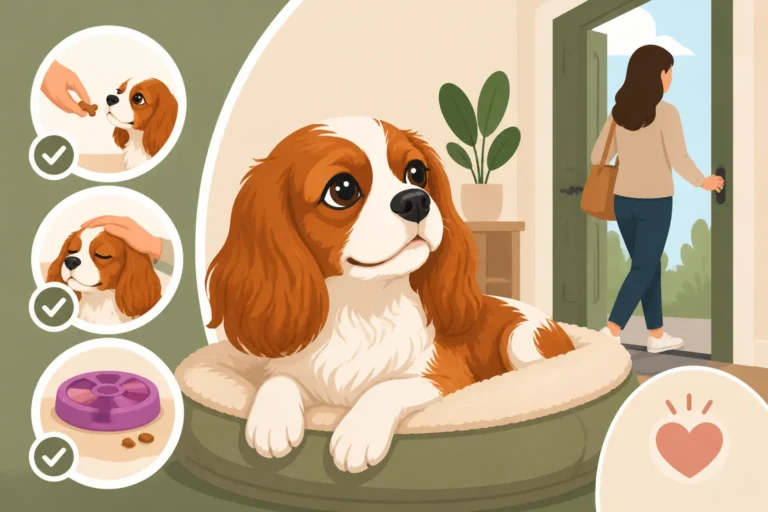
Finally, while their affectionate nature is a strength, it can also be a challenge. Cavaliers are so people-focused that they can be easily distracted by friendly strangers wanting to interact. A service dog needs to ignore all external stimuli and maintain focus on its handler, which can be tough for a dog bred to be a charming companion who loves everyone. Their tendency to be "velcro dogs" also means they often struggle with separation anxiety, which can be problematic if the handler needs to leave the dog for any period, even short ones. Whether a Cavalier Cannot Be Left All Day delves into this trait.
Specific Service Roles a Cavalier Might (or Might Not) Excel In
Given their unique blend of traits, Cavaliers are not suited for every type of service work, but they could potentially shine in very specific niches. It’s about matching the dog's inherent abilities to the demands of the role.
Psychiatric and Medical Alert Roles
This is where a Cavalier King Charles Spaniel is most likely to find success in service work. Their small size, gentle demeanor, and deep emotional sensitivity can be highly advantageous in psychiatric service roles. A Cavalier could be trained to perform tasks like:
- Deep Pressure Therapy (DPT): While they can't provide the same weight as a larger dog, a Cavalier lying on their handler's lap or chest during a panic attack can offer a comforting weight and warmth, helping to ground the individual. This is a common and effective task.
- Interrupting Destructive Behaviors: A Cavalier can be trained to nudge, paw, or lick a handler to interrupt behaviors like skin picking, head banging, or dissociative episodes. Their persistent yet gentle nature makes them excellent for this.
- Alerting to Anxiety or Panic Attacks: Their sensitivity to human emotions means they can often pick up on subtle physiological changes (like increased heart rate or changes in breathing) that precede an attack. With proper training, they can alert their handler, giving them time to prepare or seek a safe space.
- Retrieving Medication or a Phone: For someone experiencing a debilitating episode, a Cavalier could be trained to fetch a specific medication bag or a cell phone, especially items kept within easy reach. The training for this involves teaching them to recognize specific items and bring them to hand, often using positive reinforcement techniques that can be found in programs like BAXTER & Bella, which emphasize clear communication and reward-based learning.
- Guiding to an Exit or Safe Space: In some instances, a Cavalier could be trained to lead a disoriented handler to a predetermined exit or a quiet corner of a room during an overwhelming situation. This is more about directional guidance than heavy physical assistance.
- Grounding and Reality Checks: Simply having their presence, a soft ear to rub, or a paw to hold can help bring a person back to the present moment during disorienting or overwhelming experiences.
For these types of roles, their affectionate and non-threatening presence is a significant advantage, and the physical demands are minimal, sidestepping many of the breed's limitations. However, it still requires a Cavalier with an exceptionally stable temperament, one that isn't easily overwhelmed by public environments or external distractions.
Mobility and Guide Dog Limitations
When it comes to mobility assistance or guide dog work, Cavaliers are almost universally unsuitable due to their inherent physical characteristics.
- Mobility Assistance: Tasks like bracing, pulling a wheelchair, or helping a person stand up require a dog of substantial size and strength, usually a large breed like a Labrador Retriever, Golden Retriever, or German Shepherd. A Cavalier's delicate frame simply cannot bear the weight or exert the force necessary for these crucial tasks. Asking a small Cavalier to perform such strenuous work would not only be ineffective but could also lead to severe injury for the dog, especially given their predispositions to joint issues like patellar luxation or hip dysplasia. Loose Kneecaps in a Thirteen-Pound Cavalier explains why this is a concern.
- Guide Dog Work: Guide dogs for the visually impaired need to be tall enough to allow the handler to hold a harness and comfortably navigate obstacles, indicating changes in elevation, overhead obstructions, and pathways. They must have excellent stamina for long walks and the confidence to override a handler's mistaken commands if it means ensuring safety. A Cavalier's short stature means a handler would have to stoop uncomfortably to hold a guide harness, and they would be unable to effectively signal overhead hazards. Their energy levels, while generally good for a toy breed, typically don't match the sustained endurance required for daily guide work over varied terrain. A Cavalier That Tires on Short Walks touches on their stamina.
In essence, while their hearts might be willing, their bodies are not built for these physically demanding service roles. It’s critical to choose a service dog breed that is physically capable of the tasks required without risking their own health or the safety of their handler.
Training and Health Considerations for a Cavalier Service Dog
Considering a Cavalier for service dog work means confronting some very real challenges related to both the intensity of training and the breed's inherent health predispositions. It's a journey not to be undertaken lightly.
The Rigors of Service Dog Training
Service dog training is a marathon, not a sprint. It typically begins when a puppy is very young, often around 8-10 weeks old, and continues for 18-24 months, sometimes even longer, amounting to thousands of hours of dedicated work. This isn't just basic obedience; it’s an advanced curriculum focused on specific tasks, public access manners, and maintaining focus under extreme distraction.
Early Socialization and Foundation: A service dog candidate needs unparalleled early socialization. This means positive exposure to a vast array of people, places, sounds, and textures, all done calmly and safely. A program like BAXTER & Bella offers excellent resources for building a strong foundation in a puppy, focusing on critical early learning and socialization skills, which are essential stepping stones before specialized service tasks. The goal is a dog that is confident, not fearful or reactive, in any environment. Socializing a Cavalier Puppy Gently offers more insight into this.
Task Training: This is where the specific work for the handler's disability comes in. For a Cavalier, this might involve scent detection for medical alerts (e.g., blood sugar changes), retrieving small items, or providing DPT. Each task is broken down into tiny steps and practiced relentlessly until the dog performs it reliably on cue, even when the handler is incapacitated or in distress. Consistency and precision are key.
Public Access Training: This is arguably the most challenging aspect. A service dog must ignore everything in public: other animals, dropped food, loud noises, people trying to interact, children, and more. They must walk politely on a loose leash, lie quietly under a table in a restaurant for hours, and respond instantly to their handler's commands. This requires immense self-control and an unshakeable bond with their handler. Many otherwise wonderful dogs simply cannot handle the constant pressure and distractions of public access. Equipping a Cavalier with the right gear, such as a comfortable, well-fitting harness (you can find many options on Amazon) rather than a collar, is crucial for both their comfort and your control during these training sessions. Harnesses Suited to a Cavalier's Neck can help you choose.
Recalls and Proofing: A service dog must have an ironclad recall, meaning they will come back to their handler instantly, regardless of distraction. They also need "proofing," which means performing tasks reliably in every conceivable environment and situation. This extensive training demands a dog with exceptional intelligence, an unwavering desire to work, and immense resilience.
Health Concerns and Their Impact on Service Work
As mentioned earlier, the health of a Cavalier King Charles Spaniel is perhaps the most significant hurdle to their widespread suitability as service dogs. The sheer prevalence of certain genetic conditions creates a higher risk for early retirement or inability to perform tasks.
Mitral Valve Disease (MVD): MVD is progressive heart disease that leads to heart failure. While medication can manage it for a time, it ultimately shortens a dog's lifespan and can cause symptoms like coughing, fatigue, and difficulty breathing. A service dog needs to be able to work consistently for many years. A Cavalier developing MVD in their middle age, especially if it progresses rapidly, could leave a handler without their vital support animal much sooner than anticipated. How Cavalier Heart Disease Progresses Stage by Stage can give you a deeper understanding. Regular annual cardiologist exams for a Cavalier are crucial, particularly for one being considered for service work. Annual Cardiologist Exams for a Cavalier outlines what these involve.
Syringomyelia (SM): This debilitating neurological condition causes fluid-filled cysts (syrinxes) within the spinal cord, leading to chronic pain, phantom scratching, and neurological deficits. A dog suffering from SM, even mild cases, would be incredibly uncomfortable performing repetitive tasks, wearing a vest or harness, or maintaining prolonged positions. The pain alone would make consistent service work unethical and impossible. Pain Relief for a Cavalier With Syringomyelia talks about managing this condition, which is something a working dog really can't afford to have.
Other Conditions: Patellar luxation, hip dysplasia, and certain eye conditions can also compromise a service dog's ability to perform. Chronic pain or vision impairment can make public access dangerous for both dog and handler.
Because of these pervasive health challenges, reputable service dog organizations rarely select Cavaliers for their programs. The financial and emotional investment in training a service dog is too high to risk it on a breed with such well-documented health issues. While a private individual might choose to train their own Cavalier, they must be acutely aware of these health risks and have a robust plan in place for potential medical bills and early retirement. Cavalier Lifespan and What Cuts It Short offers a sobering perspective on what impacts their working life.
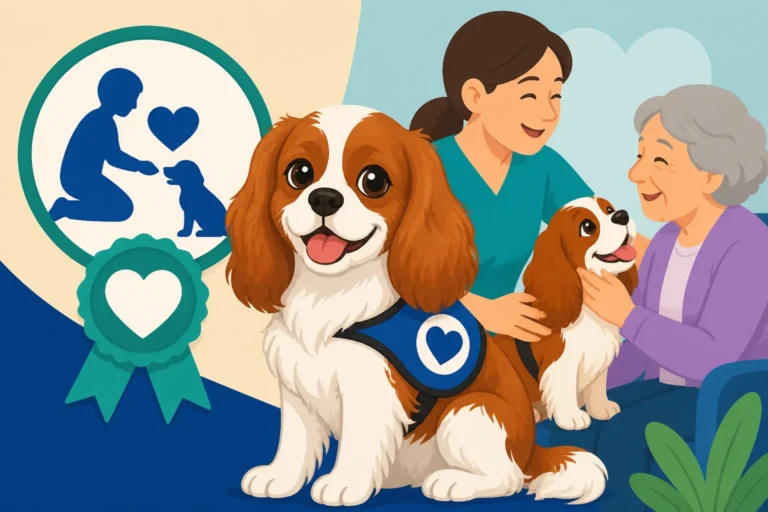
Ultimately, while a Cavalier King Charles Spaniel possesses an amazing heart and a desire to please, their physical limitations and specific breed health predispositions often mean they are better suited to being beloved companions and therapy dogs, rather than full-fledged service dogs. The demands of service work are incredibly high, and it's essential to prioritize the dog's well-being and the handler's reliable access to necessary support.
Disclaimer
This article is for general informational purposes only and does not constitute professional advice. Laws, prices and regulations vary by location and change over time. Consult a qualified professional for guidance on your specific situation.