Calorie Needs for an Eighteen-Pound Cavalier
Figuring out exactly how much to feed your precious Cavalier can feel like a constant puzzle, especially when you know how prone our little Velcro dogs are to packing on the pounds. It's truly frustrating when food labels offer a wide range, leaving you to guess if your 18-pound Cavalier is getting too much or not enough, and the consequences of getting it wrong can be serious for their health. This comprehensive guide will walk you through calculating the right calorie intake, understanding the many factors that influence their needs, and practical tips for keeping your Cavalier at a healthy, happy weight.
Understanding Your Cavalier's Baseline Calorie Needs
When you're looking at that sweet face begging for just one more bite, it's easy to forget that every calorie counts, especially for a small breed like our Cavaliers. The challenge often starts with simply understanding where to begin when it comes to daily food intake. Most commercial pet foods provide a general feeding guideline, but these are often broad strokes, not tailored to your individual dog's specific metabolism or lifestyle. This generic advice can lead to overfeeding, particularly for a breed already predisposed to weight gain.
The General Formula for Dog Calories
To get a truly personalized estimate, veterinarians and nutritionists often start with a formula based on your dog's weight. It begins with calculating their Resting Energy Requirement (RER), which is the number of calories your dog needs just to lie around and maintain basic bodily functions – think breathing, sleeping, and keeping warm. The formula often looks something like (weight in kg ^ 0.75) x 70. Now, don't let the math scare you; there are plenty of online calculators that can do this for you! Once you have the RER, you then multiply it by a factor to get their Maintenance Energy Requirement (MER), which accounts for their activity level, age, and whether they are spayed or neutered. This MER is your dog's true daily calorie target.
Applying the Formula to an Eighteen-Pound Cavalier
Let's put this into perspective for your 18-pound Cavalier. First, convert 18 pounds to kilograms (18 lbs ≈ 8.16 kg). Using the RER formula, this Cavalier would have an RER of roughly 360-380 calories. Now, for the MER, the multiplier can range significantly. A sedentary, spayed or neutered adult dog might have an MER factor of around 1.4-1.6 times their RER, placing their daily needs somewhere between 500-600 calories. However, a highly active, intact adult dog could require 1.8 times or more, pushing their needs above 650 calories. It's clear that there isn't a single, magic number, and this range gives you a powerful starting point to work from, rather than just guessing based on a cup measurement on the bag. This foundational understanding helps you make more informed decisions about their daily meals.
Why Eighteen Pounds Might Already Be on the Heavier Side
While 18 pounds might not sound like a lot, for many Cavaliers, it's already pushing the upper limits of a healthy weight range, or even venturing into overweight territory. The breed standard typically calls for a weight between 13 to 18 pounds, but this range encompasses a spectrum of body types and bone structures. A slender, finer-boned Cavalier at 18 pounds could easily be overweight, whereas a more robust, heavily-boned dog might carry it better. The real indicator isn't just the number on the scale, but how they look and feel. We'll delve more into body condition scoring later, but for now, understand that 18 pounds often means a careful approach to calorie management is essential. Many What an Overweight Cavalier Weighs can face unnecessary health burdens if they exceed their ideal body weight.
Factors That Influence Calorie Requirements
It would be wonderfully simple if every 18-pound Cavalier needed the exact same amount of food, but that's simply not the case. Just like with humans, a dog's individual metabolism, lifestyle, and overall health play a huge role in their daily caloric needs. Ignoring these factors is often how those extra pounds creep on, or conversely, how a dog might not be getting enough to fuel their activities. It's a dynamic equation that changes throughout their lives.
Age and Life Stage Adjustments
A Cavalier's calorie needs shift dramatically as they move through different life stages. A bustling puppy, with boundless energy and rapid growth, requires significantly more calories per pound of body weight than an adult dog. They're literally building their bodies from the ground up! As they mature into adulthood, usually around 10-12 months, their growth slows, and their calorie requirements per pound will decrease. Then, when they reach their senior years, typically around 7-8 years old for a Cavalier, their metabolism often slows down, and their activity levels naturally decrease. At this point, their calorie needs will likely drop again to prevent weight gain. Feeding a Senior Cavalier Less Food correctly is crucial to prevent unnecessary strain on their aging bodies.
Activity Levels and Energy Expenditure
This is perhaps one of the most obvious, yet often misjudged, factors. A Cavalier who enjoys leisurely strolls around the block and spends most of the day napping on the sofa (a very common Cavalier pastime!) will need far fewer calories than one who's regularly joining you on longer hikes, attending agility classes, or engaging in extended play sessions at the park. Be honest about your dog's activity level. A "weekend warrior" Cavalier doesn't need the same calories as a competitive canine athlete. Overestimating their activity can easily lead to caloric excess.
Spay/Neuter Status and Metabolic Changes
A common, yet often overlooked, factor is whether your Cavalier has been spayed or neutered. The hormonal changes that occur after these procedures can significantly impact a dog's metabolism, often leading to a decrease in their caloric needs. Studies have shown that a spayed or neutered dog may require 20-30% fewer calories than an intact dog of the same weight and activity level. If you continue to feed the same amount of food after spaying or neutering, weight gain is almost inevitable. It's one of the key moments where a dietary adjustment is necessary. For example, Cutting a Cavalier's Calories After the Spay is a smart move to pre-empt weight problems.
Underlying Health Conditions
Certain health conditions can also influence your Cavalier's caloric requirements. For instance, a dog with an endocrine disorder like hypothyroidism might have a slower metabolism and gain weight easily, requiring a very careful calorie-restricted diet. Conversely, a dog recovering from surgery or managing a chronic illness that leads to muscle wasting might need a calorie-dense diet to support healing and maintain body mass. Critically for Cavaliers, those with Mitral Valve Disease in the Cavalier King Charles Spaniel need their weight managed meticulously to reduce strain on their heart. While a specific diet might not cure heart disease, managing weight can significantly improve quality of life and potentially slow progression. Whether Diet Slows a Cavalier's Heart Disease is a question many owners ponder, and while it's not a cure, good nutrition and weight are foundational to managing the condition. Always consult your veterinarian for specific dietary recommendations if your Cavalier has any health concerns.
The Risks of Overfeeding an Eighteen-Pound Cavalier
We all adore our Cavaliers, and showing our love often involves treats and generous meals. However, for a breed so prone to certain health challenges, allowing an 18-pound Cavalier to become overweight carries significant and often heartbreaking risks. It's not just about aesthetics; it's about their quality of life and potentially how long they'll be by your side. Understanding these dangers can be a powerful motivator to keep their weight in check.
Exacerbating Joint Problems
Cavaliers are already predisposed to certain joint issues, such as patellar luxation (loose kneecaps) and hip dysplasia. When an 18-pound Cavalier carries extra weight, it places undue stress and strain on these delicate joints. Imagine trying to walk around all day with a heavy backpack strapped to you – that's what it feels like for your dog. This constant pressure can accelerate the degeneration of cartilage, worsen existing conditions, and lead to earlier onset and more severe arthritis. A Cavalier with perfectly healthy joints can develop problems, and one with a mild existing issue can see it become debilitating much faster. For owners dealing with Cavalier Knees, Hips and Joint Problems, managing weight is often the first, and most critical, piece of advice from their vet.
Impact on Mitral Valve Disease
Perhaps one of the most devastating consequences of an overweight Cavalier is the increased strain it puts on their heart, especially given the breed's overwhelming predisposition to Mitral Valve Disease (MVD). This progressive heart condition is the leading cause of death in Cavaliers, and obesity makes it worse. An overweight dog's heart has to work harder to pump blood throughout a larger body mass, increasing its workload and accelerating the progression of MVD. It’s like asking an engine already under stress to pull an even heavier load. Maintaining an ideal body weight is one of the most impactful things you can do to support your Cavalier's heart health. It can genuinely extend the period your dog lives comfortably before symptoms become severe, as explored further in Why an Overweight Cavalier Fails Faster.
Increased Risk of Other Health Issues
Beyond joint problems and heart disease, being overweight significantly elevates your Cavalier's risk for a host of other serious health concerns. Obese dogs are more susceptible to developing diabetes, a condition that requires lifelong management with insulin injections. They are also at a higher risk for certain types of cancer, pancreatitis (a painful inflammation of the pancreas), and complications during anesthesia should they ever need surgery. Their respiratory system can be compromised, leading to increased panting and difficulty breathing, especially in warmer weather or during even mild exertion. Ultimately, all these factors contribute to a reduced quality of life and, tragically, can shorten your Cavalier Lifespan and What Cuts It Short. It's a stark reminder that loving them well means feeding them appropriately.
How to Accurately Determine and Measure Food Portions
Once you have a good understanding of your Cavalier's estimated calorie needs, the next critical step is translating that number into actual food portions. This is where many owners unintentionally go wrong, often leading to either under or overfeeding, even with the best intentions. Precision matters a great deal when every calorie can impact a small dog like an 18-pound Cavalier.
Reading and Interpreting Food Labels
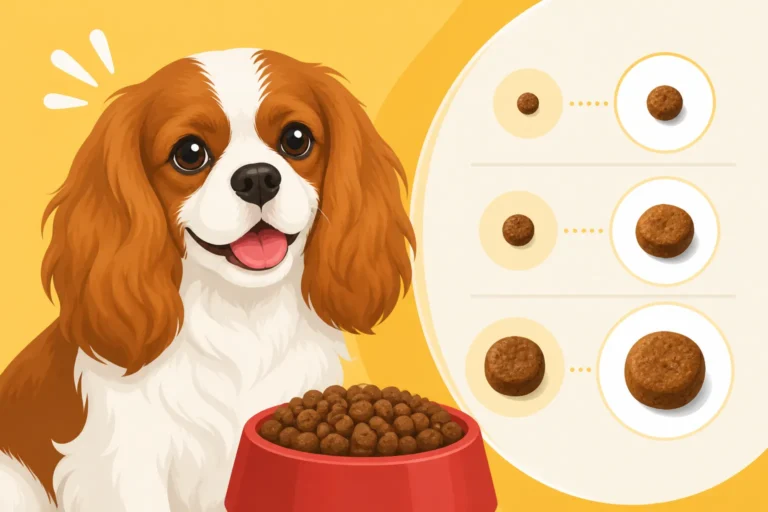
The first place to look is always your dog food bag or can. Reputable manufacturers will provide a "guaranteed analysis" and, most importantly for calorie control, a caloric density statement. This will tell you how many calories are in a specific unit of food, usually expressed as "kcal/kg" or "kcal per cup" (for dry kibble) or "kcal per can/tray" (for wet food). Don't just look at the percentage of protein or fat; the calorie count is your key figure. Be aware that "cups" can vary wildly depending on the density and shape of the kibble, so while it's a guide, it's not the most precise measurement. For instance, a "cup" of a dense, small kibble might weigh more and contain more calories than a "cup" of a larger, lighter kibble, even if the bag volume is the same. Always cross-reference with the calorie figure provided on the bag for the most accurate calculation.
The Importance of a Kitchen Scale
This is perhaps the single most important tool in accurately managing your Cavalier's weight. Forget the scoop that came with your dog food, and even standard measuring cups can be surprisingly inaccurate. The only way to truly know how many calories you are feeding is to weigh the food. A simple digital kitchen scale, easily found on Amazon or at most home goods stores, can measure your dog's kibble in grams or ounces.
Here's how it works:
- Find the caloric density: Look for the kcal/kg on your food bag (e.g., 3500 kcal/kg).
- Calculate daily grams: Divide your Cavalier's target daily calories (e.g., 550 kcal) by the kcal/kg, then multiply by 1000 to get grams. So, (550 / 3500) * 1000 = ~157 grams.
- Weigh each meal: Measure out 78-79 grams for each of two daily meals.
This level of precision is truly transformative for weight management. For a more detailed look into this, consider Weighing a Cavalier's Ration on a Kitchen Scale.
Splitting Daily Meals
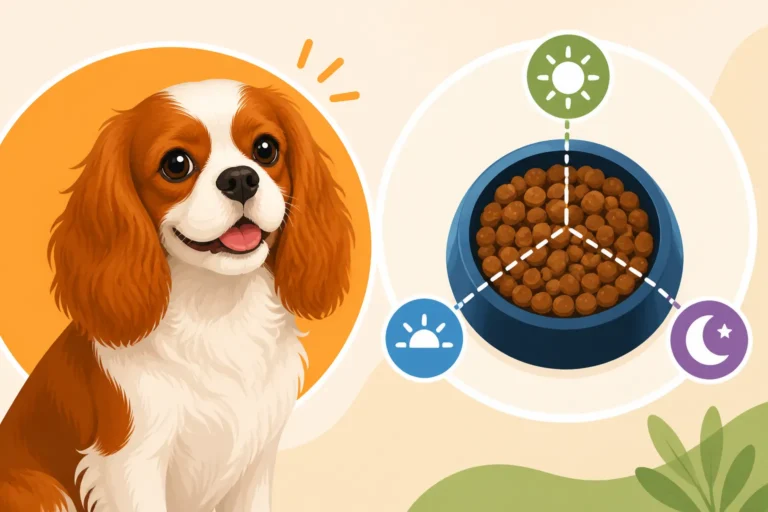
For an 18-pound Cavalier, especially one managing their weight, it's generally best to divide their total daily food allowance into at least two, if not three, smaller meals. This approach offers several benefits. Firstly, it helps to keep their blood sugar levels more stable throughout the day, preventing drastic peaks and crashes that can leave them feeling ravenously hungry. Secondly, it can help manage satiety; feeling full twice a day is often better than one large meal that quickly leaves them wanting more. Thirdly, for Cavaliers prone to sensitive stomachs or bloat, smaller, more frequent meals can be easier to digest. Finally, if your Cavalier is on medication that needs to be given with food, splitting meals provides more opportunities to administer doses easily. Even How Much to Feed an Adult Cavalier Daily can be simplified by distributing the quantity over the day.
Choosing the Right Food and Treats for Calorie Control
The type of food and treats you offer your Cavalier plays an enormous role in their calorie intake, perhaps even more than you realize. Not all dog foods are created equal, and making wise choices can make calorie management much simpler and more effective, reducing the need for drastic portion reductions. It's about feeding smart, not just feeding less.
Quality of Kibble and Wet Food
When selecting a primary food source for your 18-pound Cavalier, look beyond flashy marketing and focus on high-quality, nutrient-dense options. A good quality food will have real meat as the first ingredient, followed by digestible carbohydrates and healthy fats. Foods with a lot of fillers or by-products might be less calorically dense but also less satisfying, leading your dog to feel hungrier and potentially eat more. Consider options that offer complete and balanced nutrition tailored for small breeds or general adult maintenance.
Some owners opt for fresh, human-grade dog food services like Ollie, which provides pre-portioned meals based on your dog's exact weight, age, and activity level – taking much of the guesswork out of calorie counting. This can be a fantastic way to ensure precise nutrition without you having to calculate every gram. For those sticking with traditional kibble or wet food, reputable brands can be found easily on platforms like Chewy or Amazon, where you can read reviews and compare nutritional information directly. Always check the caloric content per serving, not just the ingredient list.
Mindful Treat Selection
Treats are often the biggest culprit when it comes to accidental calorie creep. It's so easy to hand out a handful of treats throughout the day without realizing the caloric impact, especially for a small dog like a Cavalier. If your 18-pound Cavalier is getting 500-600 calories from their meals, and then you add a few high-calorie biscuits, you could be pushing them significantly over their daily limit.
The solution isn't to stop giving treats entirely, but to be mindful and choose wisely. Look for Low-Calorie Treats for a Cavalier That Gains Easily specifically designed for weight management or opt for healthy, single-ingredient options. Many vegetables make excellent, low-calorie treats:
- Baby carrots: Crunchy and satisfying.
- Green beans: A favorite for many dogs.
- Cucumber slices: Hydrating and low cal.
- Apple slices (without seeds): A sweet treat in moderation.
You can also break larger treats into tiny pieces to make them last longer and reduce the caloric impact of each reward. Think of treats as very small caloric contributions, not substantial additions to their diet.
Avoidance of Table Scraps
This is a tough one for many owners, especially with those adorable Cavalier eyes staring up at them during dinner. However, table scraps are a major no-no for weight management and overall health. Not only are human foods often very high in calories, fats, and sodium (all detrimental for a Cavalier, especially one with potential heart concerns), but many are also dangerous. Foods like chocolate, grapes, onions, garlic, and even certain artificial sweeteners are toxic to dogs and can lead to emergency vet visits. Even seemingly harmless bits of chicken skin or fatty meat can trigger pancreatitis. When you consider Kitchen Foods That Put a Cavalier in the ER, it's clear that the risk far outweighs the momentary joy of sharing. Stick to dog-specific treats and their regular meals. If you absolutely must share a tiny, appropriate piece of human food, ensure it's cooked plain, completely free of seasonings, and accounted for in their daily calorie allowance.
Monitoring Weight and Adjusting Diet Over Time
Feeding your 18-pound Cavalier the right amount isn't a "set it and forget it" task. Their needs can change with age, season, activity level, and health status. Regular monitoring and a willingness to adjust their diet are crucial for maintaining their ideal weight and, by extension, their long-term health and happiness. This proactive approach can prevent minor weight fluctuations from becoming major health issues.
Regular Weight Checks at Home
Making regular weight checks a part of your routine is one of the easiest ways to catch potential weight gain or loss early. Aim to weigh your Cavalier once a month, or at least every other month. For a small dog like a Cavalier, you can easily do this yourself using a standard bathroom scale. Simply weigh yourself first, then pick up your Cavalier and weigh yourself again while holding them. Subtract your weight from the combined weight, and you have your dog's weight. Record this number in a notebook or on your phone so you can track trends over time. Seeing a creeping increase of even a quarter or half-pound month after month can alert you that adjustments are needed before it becomes a significant problem.
Body Condition Scoring (BCS)
While the number on the scale is important, a more accurate assessment of your Cavalier's ideal weight comes from Body Condition Scoring (BCS). This involves visually assessing and physically feeling your dog to determine their fat reserves. It's less about a specific number and more about their physical shape.
Here’s a simplified guide to checking your Cavalier's BCS:
| Score | Description | How to Feel/See |
|---|---|---|
| Ideal (4-5/9) | Well-proportioned; ribs easily felt but not seen; obvious waist. | Run your hands along their sides – you should feel ribs distinctively under a thin layer of fat. From above, you should see a clear waist tucking in behind the ribs. |
| Underweight (1-3/9) | Ribs, pelvic bones, and vertebrae easily visible; no discernible fat; severe waist. | Ribs, spine, and hip bones are prominent, with no fat cover. The waist is extremely pronounced. |
| Overweight (6-7/9) | Ribs difficult to feel; waist barely discernible or absent; fat deposits over lumbar area and tail base. | Ribs are hard to feel without significant pressure. The waist is either straight or bulging, not tucked. You might notice fat pads over their lower back and the base of their tail. Feeling a Cavalier's Ribs Under Feathering is key here. |
| Obese (8-9/9) | Massive fat deposits; no waist; distended abdomen. | You can't feel ribs at all. There is no waist, and their belly may sag. Heavy fat deposits are obvious everywhere. |
Your goal is to keep your 18-pound Cavalier in that ideal 4-5 range. If they're on the higher end of the 13-18 lb breed standard, their BCS becomes even more important. A lean, 18-pound Cavalier might be perfectly healthy, but an 18-pound Cavalier with a BCS of 7/9 is definitely overweight.
When to Consult Your Vet for Dietary Changes
While these guidelines provide a great starting point for managing your Cavalier's weight, always involve your veterinarian, especially if you're making significant dietary changes or if your Cavalier has underlying health conditions. Your vet can:
- Confirm your Cavalier's ideal weight and BCS.
- Help you calculate precise caloric needs based on their unique health profile.
- Recommend specific prescription diets if medical conditions (like MVD or pancreatitis) necessitate them.
- Rule out any medical reasons for unexplained weight gain or loss.
- Provide advice on Whether Exercise Is Safe for a Cavalier With MVD and other health considerations that impact their diet.
Don't hesitate to bring your weight logs and BCS observations to your routine check-ups. They are invaluable tools for your vet to help you ensure your beloved Cavalier lives the longest, healthiest, and happiest life possible.
Disclaimer
This article is for general informational purposes only and does not constitute professional advice. Laws, prices and regulations vary by location and change over time. Consult a qualified professional for guidance on your specific situation.